
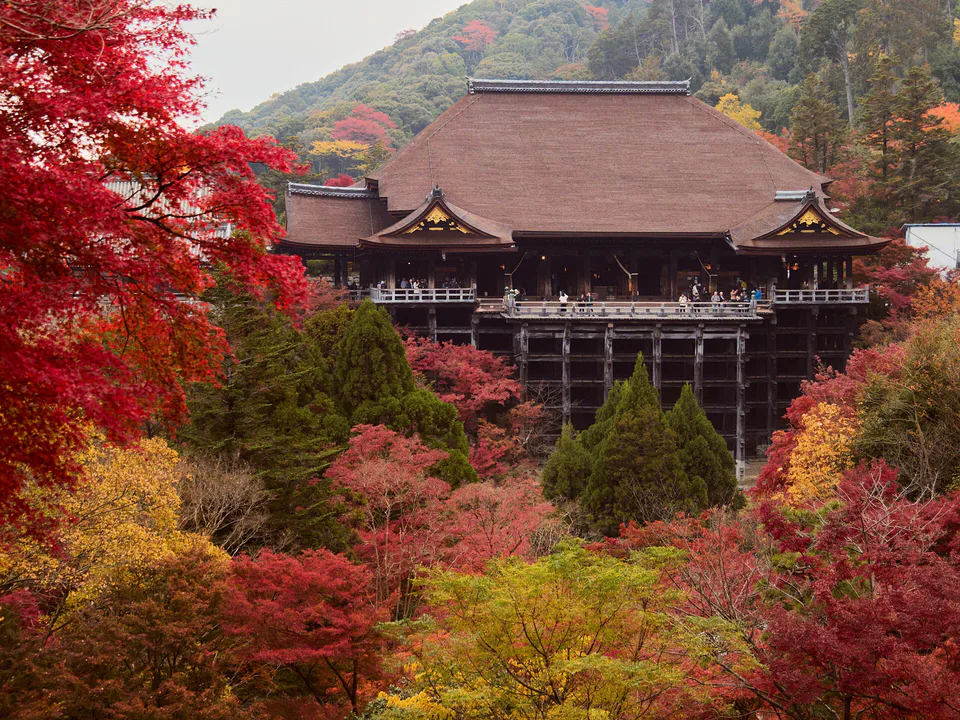
For a first Japan autumn trip, I would choose Tokyo in most cases, Kyoto when temple foliage is the main reason for travelling, and Hokkaido or Tohoku only when mountain autumn itself is the priority. Tokyo is the safest first choice because one hotel gives you several elevation bands, rail-heavy transport, indoor fallbacks and easy route changes when colour is early, late or hidden by rain. Kyoto can deliver a denser “classic Japan in autumn” experience, but crowds, hotel demand and bus/walking pressure make mistakes more expensive.
As of August 25, 2026, Japan Meteorological Corporation’s public autumn page still shows its 2025 forecast series as the latest public autumn forecast. That means no responsible first-trip guide should pretend the exact 2026 peak week is already known. Choose a region by its ability to absorb timing error, then refine the exact day trips when 2026 forecasts and live colour reports are available.
↔ Scroll table left or right
First-trip priority | Start with | Why | What can reverse it |
Lowest-risk first independent trip | Tokyo | Multiple day-trip elevations, strong rail recovery, museums/shopping/gardens if weather fails | Your trip is specifically about Kyoto temples or early-season mountains |
Temple gardens and traditional streets are the trip | Kyoto | High density of autumn sites and useful evening illuminations | You dislike crowds, have limited mobility or need a more forgiving transport network |
September–October mountain colour | Hokkaido / Tohoku | Earlier and higher-elevation foliage than Tokyo/Kyoto | The group wants a simple car-free first trip with low schedule risk |
Mountain + historic town + rail route | Chubu / Hokuriku | Strong elevation progression through Alps, Takayama, Kanazawa and related corridors | You have only 4–5 days or dislike luggage/seasonal-bus planning |
Late November, onsen and slower pace | Kyushu | Later foliage possibilities plus strong food/onsen backup value | You want the classic Tokyo/Kyoto first-trip landmarks more than regional travel |
For a first trip, rank regions by how well they fail—not by their best photograph
Most autumn comparisons rank destinations at their best: a red temple, a perfect gorge, a mountain reflected in a lake. A first-time traveller needs a different scorecard because the trip is booked before the exact weather and colour are known.
I would rank a region on four things:
Timing tolerance: if foliage is one week early or late, can you move higher, lower or to a different nearby day trip without changing every hotel?
Transport recovery: if you miss one train or bus, is there another practical route, or does the whole afternoon disappear?
Bad-weather substitute: if wind or rain kills the outdoor plan, is the day still worth travelling?
Base flexibility: can one hotel support several good days, or must the itinerary keep changing rooms to chase the colour?
This is why Tokyo can beat a more spectacular mountain region for a first trip. The mountain may have the higher ceiling; Tokyo has the higher floor.
Tokyo is the best default because one base covers several autumn products
Tokyo is not the recommendation because its urban foliage is automatically better than Kyoto or Tohoku. It is the recommendation because a single Tokyo hotel can support several different responses to imperfect timing.
If the season is running early, a cooler or higher excursion such as Okunikko, Mt. Takao, Kawaguchiko or Nagano can become the active day. If lowland colour is already strong, Tokyo gardens, ginkgo avenues and city parks reduce the need for a long excursion. If the weather is poor, museums, shopping, food districts and indoor attractions still justify the hotel night.
That creates a powerful first-trip advantage: you can change the day without changing the whole route.
Tokyo also lets the hotel base follow the expensive movement. Shinjuku is strong when western day trips and highway buses dominate. Tokyo Station is stronger when Shinkansen and eastern/northern rail days matter. Ueno can fit Narita access and northern Tokyo. The airport and autumn day trips should serve the base decision, not dictate it blindly.
Choose Tokyo when: this is your first independent Japan trip, you have 5–7 days, you are car-free, or family/older travellers need strong recovery options.
Do not choose Tokyo by default when: your travel dates are clearly too early for the Kanto lowlands and the trip’s only purpose is mountain foliage. In that case, forcing Tokyo into the itinerary creates a long positioning trip before autumn even begins.
Kyoto is the strongest “autumn is the main event” choice—but mistakes cost more
Kyoto is the better first choice when the traveller’s image of Japan autumn is specifically temple gardens, Higashiyama streets, Arashiyama and evening illuminations. The density is hard to reproduce elsewhere: several meaningful autumn stops can fit inside one city rather than requiring a mountain transfer every day.
But density creates its own failure mode. The same famous corridors attract concentrated demand. Kyoto’s official tourism guidance actively publishes congestion forecasts and encourages visitors to shift sightseeing times, which is a useful reminder that a “short distance” on a map can still become a slow crowded trip.
The practical consequence is that Kyoto days should be narrower than many first-timers expect. One geographic corridor per day is more resilient than Arashiyama in the morning, Kiyomizu in the afternoon and a distant illumination at night. The extra attraction is usually paid for with queues, buses and tired walking rather than free time.
Choose Kyoto when: temple foliage is the core reason for flying to Japan, you can book the hotel early, and you are willing to start early or use evenings strategically.
Choose Tokyo instead when: the group needs easier weather backups, lower walking pressure, or the autumn trip is only one layer of a broader first-Japan experience.
Hokkaido is not “too hard” for a first trip—it is simply a different product
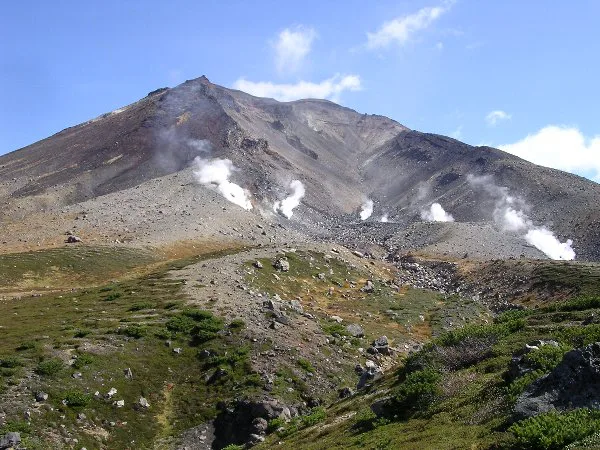
Hokkaido becomes the correct first-autumn destination when the date is early enough that Tokyo and Kyoto are weak foliage bets and the traveller genuinely wants mountains, onsen and landscape photography.
The error is treating “Hokkaido” as one simple base. Sapporo, Asahikawa, Daisetsuzan, Biei and southern Hokkaido solve different parts of the route. New Chitose gives the stronger flight-recovery network and easy Sapporo access; Asahikawa reduces ground distance for Daisetsuzan-side travel. Even then, the final mountain bus or ropeway can be more important than the intercity train.
Asahikawa Airport’s published Asahidake bus information is a good example: the service is explicitly not connected to flights. A perfect airport-to-mountain map can therefore fail if the flight and bus simply do not line up.
Choose Hokkaido when: the trip is in September or early/mid October, mountains are more important than Tokyo/Kyoto landmarks, and you can tolerate weather-led day changes.
Avoid it as the automatic first choice when: the group expects a dense sightseeing city every evening or does not want to plan around rural transport and colder conditions.
Tohoku offers exceptional autumn value, but the itinerary must respect sparse transport
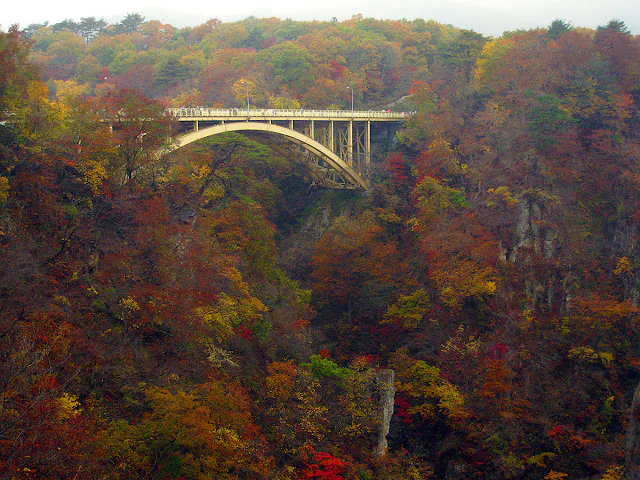
Tohoku can be more rewarding than Tokyo or Kyoto for an October foliage specialist, but it has a lower tolerance for casual scheduling. Oirase, Hakkoda, Naruko, Yamadera and other corridors do not all belong to one hotel base. The intercity railway may be easy; the final rural sector is often the constraint that decides the day.
This is where first-time travellers often misuse a JR Pass or regional rail map. A fast Shinkansen gets you to the regional gateway, but it does not create another mountain bus after the last departure. The correct order is: reserve or verify the scarce transport first, then optimise the rail sector around it.
Choose Tohoku when: October mountain colour is the main purpose, you prefer gorges/onsen over major-city nightlife, and you are comfortable protecting fixed transport.
Do not choose it simply because it is “less crowded.” Lower crowd pressure does not compensate for an itinerary built around impossible same-day transfers.
Chubu and Hokuriku are best for travellers who enjoy route design
Central Japan can create one of the richest autumn progressions: high mountains, Takayama, Shirakawa-go, Kanazawa, Matsumoto and lower valleys. It can also become a luggage-and-bus puzzle if every famous place is added to the same week.
The key first-trip question is whether each hotel move opens at least two useful blocks of the itinerary. If moving from Nagoya to Takayama creates an evening in the old town plus a next-morning mountain or Shirakawa-go route, the move has a job. If you change hotels for one attraction and immediately backtrack, the foliage is not paying for the logistics.
Tateyama Kurobe also gives this region a hard seasonal boundary: the official 2026 Alpine Route season runs through November 30. A December route therefore cannot rely on the same elevation-chasing toolbox that works in October.
Choose Chubu/Hokuriku when: you have 7–10 days, can forward luggage or travel light, and route-building is part of the appeal.
Choose Tokyo/Kyoto instead when: you want the first trip to work with one or two hotel bases and minimal seasonal-bus dependence.
Kyushu is the late-season alternative when onsen and food matter even if the leaves disappoint
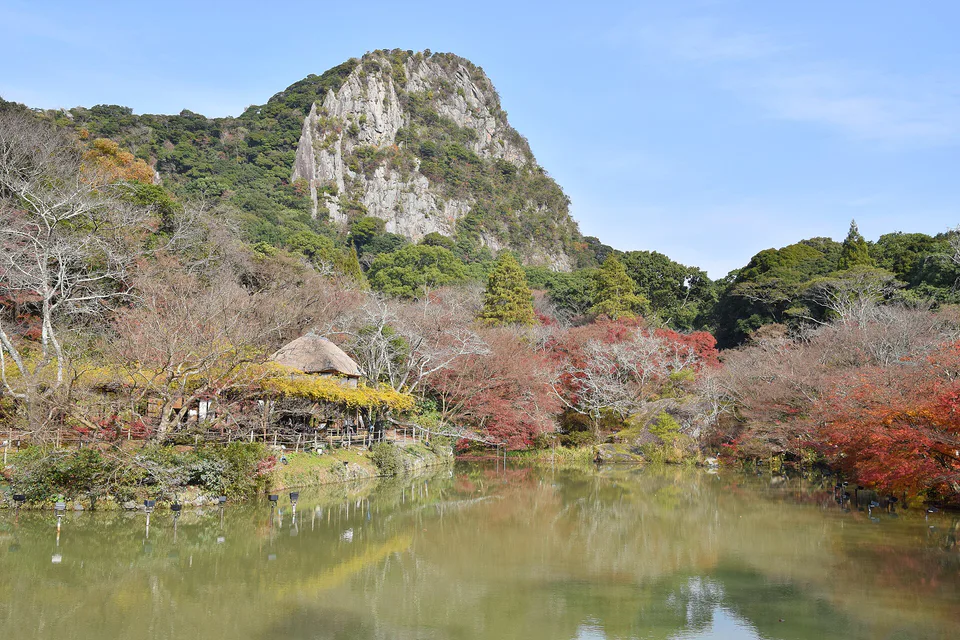
Kyushu is a strong first-autumn choice for travellers going later in the season who also value onsen, food and regional cities. Its advantage is not simply “fewer Kyoto crowds.” It is that Beppu, Yufuin, Fukuoka, Nagasaki and Kumamoto still provide a complete trip if one mountain foliage day is weak.
The mistake is using Fukuoka as a base for the entire island. Fukuoka is an excellent northern gateway, but Yufuin, Beppu, Kuju, Takachiho and Unzen pull in different directions. Use the next day’s hard transport to decide the hotel order, rather than commuting back to Hakata because one airport is convenient.
Choose Kyushu when: late November timing fits better than early-season mountains, onsen/food are equal priorities, and the traveller prefers a slower regional trip.
Do not choose it only to avoid crowds if Tokyo/Kyoto landmarks are still the real first-trip goal. Avoiding one problem by creating regret is not a better itinerary.
Five, seven and ten days need different answers
Five days: choose one major base and at most one destination night. Tokyo + Kawaguchiko, Kyoto + one nearby overnight, or Sapporo/Asahikawa with one mountain stay are enough. A first five-day trip should not try to prove it can cross half of Japan.
Seven days: two bases can work when each has a separate job. Tokyo + Nikko/Fuji, Kyoto + Osaka/Nara, or Sapporo + Asahikawa are coherent because the second base opens more than one useful time window.
Ten days: three bases become defensible, especially with an open jaw. Tokyo → Alps → Kyoto, or Asahikawa → Sapporo → Hakodate can work when the route keeps moving in one direction.
The rule is not “one hotel every three nights.” Every hotel move should either protect an early/late sightseeing window, remove a repeated transport leg, or move the trip’s geographic centre forward.
Families and older travellers should choose the region with the strongest Plan B
A mountain walk that is merely disappointing in rain for two fit adults can become a bad day for a family with a stroller or an older traveller with limited walking tolerance. That makes the Plan B part of the destination, not an afterthought.
Tokyo scores highest because museums, shopping, city parks and rail alternatives stay available. Kyoto remains strong but requires more careful crowd and walking management. Kyushu can work well when onsen and food are genuine substitutes. Remote mountain corridors score lower unless the group would enjoy the gateway town or ryokan even if the outdoor objective disappears.
This does not mean “families should avoid mountains.” It means the mountain day should be one of several reasons the hotel night is worthwhile.
Final verdict: Tokyo has the highest floor; Kyoto has the densest classic autumn payoff
Choose Tokyo for the safest first autumn trip: one base, many elevation choices, good weather recovery and easy integration with a broader first-Japan itinerary. Choose Kyoto when temple foliage itself is the trip and you accept higher crowd and hotel-pressure costs. Choose Hokkaido or Tohoku when the dates are earlier and mountain autumn is the priority, not because they are generically “better” foliage destinations. Choose Chubu/Hokuriku when you enjoy route design and luggage planning. Choose Kyushu for a later, slower trip where onsen and food still carry the holiday if foliage timing is imperfect.
The best first autumn destination is not the one that produces the best photograph on its perfect day. It is the one where an imperfect day still leaves you with a trip worth taking.
Related planning
References
Japan Meteorological Corporation — public autumn foliage forecast page · Kyoto City Official Travel Guide — congestion guidance and forecast tools · Tateyama Kurobe Alpine Route — 2026 operating season. Checked August 25, 2026. Recheck the 2026 foliage forecast, live colour and seasonal transport for the exact dates.