
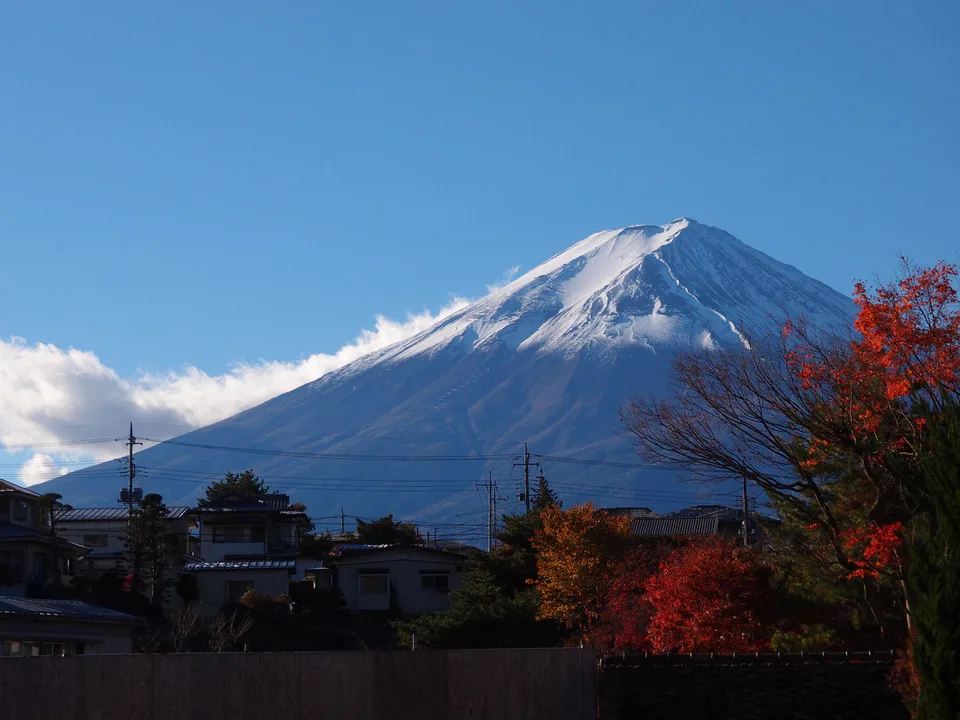
For a seven-day autumn trip, choose one foliage region rather than trying to follow the leaves across Japan. After an international arrival and departure, most travellers have only five or six useful sightseeing days. My default is therefore one regional route, no more than two formal hotel bases, and one movable day for colour, rain, wind or mountain-access changes.
As of August 26, 2026, JNTO's public national autumn-leaves forecast page still presents the 2025 forecast rather than a nationwide 2026 forecast. JNTO's evergreen guidance remains useful for the broad pattern: colour starts in colder northern and higher-elevation areas and moves south and downhill from roughly late September into early December. Do not convert a hot summer or a warm week into an invented “the leaves will be X days late” rule. Until a current forecast and local colour reports are available, treat the date bands in this guide as planning ranges, not promises.
ValueNavi Autumn Route Resilience Score
This score measures how well a seven-day route survives ordinary autumn uncertainty. It does not rank scenery. ValueNavi weights date-window tolerance 25%, gateway efficiency 20%, fallback density 20%, transport resilience 15%, hotel-move simplicity 10%, and weather flexibility 10%. Each dimension is scored 0–10 under the assumption that the broad seasonal window already fits.
Regional route | Resilience score | Why | Main reversal condition |
|---|---|---|---|
Tokyo + Fuji | Tokyo gives very strong bad-weather and poor-Fuji fallback while the scenic branch stays short. | The date is clearly too early for the Kanto/Fuji band. | |
Kyoto + Kansai | Dense same-city substitutes and strong rail coverage reduce single-point failure. | The trip is overfilled with distant Kansai side trips or the date is too early. | |
Kyushu | Fukuoka, food and onsen keep the trip useful even when one foliage branch disappoints. | You are chasing early colour through several remote mountain branches. | |
Hokkaido | Strong city bases can absorb weather, but mountain wind, first snow and island-scale repositioning raise risk. | A northern gateway already fits and you limit the trip to one mountain corridor. | |
Tohoku | Exceptional foliage corridors often depend on lower-frequency final buses, shuttles or rural rail. | You are a repeat visitor who deliberately accepts timetable risk for one specific gorge or mountain. |
A lower score is not a recommendation to avoid a region. It means more of the seven-day holiday depends on exact timing or a small number of transport/weather conditions. If foliage drama is the main purpose, accepting that risk can be rational.
ValueNavi Gateway Tax: how much of the week disappears before sightseeing starts?
Gateway Tax = non-sightseeing positioning time on the arrival/departure edges + extra domestic repositioning caused solely by the chosen region. For a seven-day trip, I treat roughly 6+ hours of avoidable gateway tax as a warning and 10+ hours as a strong reason to reject the route unless that region is one of the main reasons for travelling. These are ValueNavi editorial thresholds, not transport-operator rules.
This is why open-jaw flights can change the winner. A Tohoku or Kyushu route that looks wasteful from a Tokyo round trip may become clean when the international gateways support one-way progression. Conversely, a beautiful remote route can be the wrong seven-day choice if it charges the same half-day positioning cost twice.
ValueNavi Forecast Dependency: how much does the route need one narrow colour window?
↔ Scroll table left or right
Route pattern | Dependency | Planning response |
One high-elevation mountain corridor is the main reason for the trip | High | Keep at least one movable day and a lower-elevation substitute from the same base. |
Tokyo/Fuji or Kyoto with several city-level alternatives | Medium | Book the base; keep the most weather-sensitive branch movable. |
Kyushu where food/onsen/city time are equal goals | Lower | Use live colour reports to choose the remote branch rather than rebuilding the whole trip. |
The principle is simple: the more your trip still works without perfect leaves, the less aggressively you need to lock the itinerary before a current forecast exists.
The four-veto test: eliminate regions before choosing one
When two regions both appear to fit your dates, do not break the tie with a prettier photograph. Run four vetoes. A region that fails two of them should normally leave the shortlist.
↔ Scroll table left or right
Veto | Question | What a failure looks like |
Date fit | Does the broad seasonal band fit without needing an exact 2026 peak-date prediction? | You are choosing Kyoto in early October or high Hokkaido in late November and hoping weather rescues the mismatch. |
Gateway penalty | Can you reach the region without sacrificing large parts of both Day 1 and Day 6/7? | A Tokyo round trip is being used to justify a remote northern or southern route with two long positioning days. |
Single-point transport failure | If one rural bus, ropeway or road fails, does the whole outdoor day disappear? | Your only worthwhile day depends on one final bus or one weather-sensitive mountain operation. |
Fallback density | If the headline foliage is poor, is there still a good trip from the same hotel base? | Bad colour or rain turns the region into an expensive transfer with no strong city, food, onsen or lower-elevation alternative. |
This test changes the recommendation for real travellers. Tohoku can beat Tokyo–Fuji on scenery but lose for a family that dislikes rural timetable risk. Kyoto can beat Kyushu on temple foliage but lose if the trip is in early November and the flights already enter through Fukuoka. Hokkaido can match an early date but still be the wrong week if reaching it consumes the first and last useful days.
First choose by date; then let the gateway overrule the date
Use the calendar only to create a shortlist. Late September and early October normally point toward Hokkaido and high elevations. October makes Tohoku increasingly attractive. November brings Tokyo/Fuji and then Kyoto/Kansai into stronger contention. Later November into early December keeps Kyushu and lower western areas relevant. These are broad historical patterns, not a 2026 peak forecast.
Then apply the gateway. A seven-day trip cannot afford to pay the same long positioning cost twice. If fixed flights arrive and depart Tokyo, Tokyo–Fuji has a structural advantage over a region that requires another flight or half-day rail transfer in each direction. If the international ticket can be open-jaw, the answer can reverse: entering one gateway and leaving another may turn a previously wasteful route into a clean one-way progression.
A useful rule is: if a region only works because you are counting both arrival day and departure day as full sightseeing days, eliminate it. Those edge days should absorb flight delays, immigration, luggage and the final airport buffer.
↔ Scroll table left or right
Regional route | Best fit | Main reason to reject it | Fallback strength |
Hokkaido | Early autumn; northern gateway already fits | Too much island repositioning or mountain-weather dependence | Medium to high if based in Sapporo/Asahikawa |
Tohoku | October; scenery is the main purpose | Group dislikes reserved/low-frequency rural transport | Medium; depends heavily on city-base choice |
Tokyo + Fuji | First trip, car-free, low failure cost | Date is clearly too early for the targeted Kanto/Fuji band | Very high because Tokyo survives poor Fuji weather |
Kyoto + Kansai | Later autumn; temples, gardens and illuminations | Trip is being overloaded with distant Kansai side trips | High if the hotel base is well chosen |
Kyushu | Later autumn; food and onsen matter as much as leaves | Early dates require chasing remote elevation | Very high on the Fukuoka–Yufuin–Beppu spine |
Route 1: Hokkaido — choose one mountain corridor, not the whole island
Use Hokkaido when your dates are early enough that northern or high-elevation colour is the reason for the trip, and when New Chitose or Asahikawa already fits the flight plan. The mistake is using seven days to combine Sapporo, Otaru, Hakodate, Furano, Asahidake and Sounkyo simply because they are all in Hokkaido.
Choose one primary mountain corridor and one resilient city base. An Asahikawa-centred trip can hold Asahidake or Sounkyo as the weather-sensitive anchor and keep Biei, Higashikawa or city time as the lower-risk substitute. A Sapporo-centred later route can pair the city with Jozankei rather than crossing half the island.
The red-team condition is wind or first snow. A rental car improves local flexibility but does not make a ropeway operate or a mountain road safe. If the itinerary has no useful lower-elevation day from the same base, the route is too brittle for a one-week trip.
For a tighter regional build, use the 5-day Hokkaido autumn itinerary and add arrival/departure buffers rather than adding another distant Hokkaido city.
Route 2: Tohoku — best scenery density, highest timetable tax
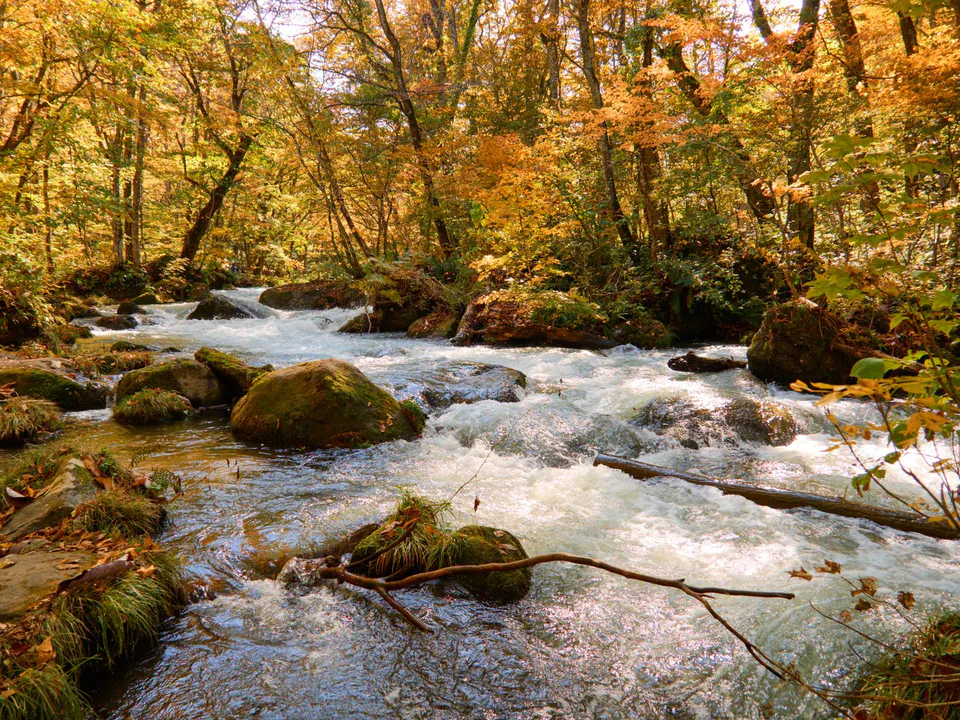
Tohoku is strongest when October colour and mountain or gorge scenery are the main reason for travelling. It is also the route where a first-time visitor can most easily underestimate the last mile. The Shinkansen spine is fast; the final bus, shuttle or local train may not be.
A southern version can use Sendai plus one destination night around a foliage corridor. A northern version can use Morioka, Hachinohe or Aomori as the resilient city node and add one rural night. Do not make Naruko, Kurikoma, Hachimantai, Hakkoda, Oirase and Kakunodate all mandatory in seven days.
Count single points of failure. If one sold-out seat or missed final bus destroys Day 3, that is one. If Day 4 has another independent rural connection that must also work, that is two. For a seven-day first trip, two consecutive single-point-of-failure days are already aggressive. Either add a city recovery day between them or choose Tokyo–Fuji/Kyoto if low-friction travel matters more than maximum foliage drama.
Route 3: Tokyo + Kawaguchiko — the lowest failure-cost first trip
Tokyo–Fuji is the easiest default for many first-time visitors because one bad weather outcome does not destroy the week. Tokyo still supplies gardens, food, neighbourhoods, museums and rail-accessible autumn options if Mount Fuji is hidden by cloud.
Use Tokyo for four or five nights and Kawaguchiko for one or two only when the lake stay buys something the city cannot: sunrise/evening lake hours, a ryokan experience, or a second Fuji-weather window. The second Kawaguchiko night should be treated as a weather option, not as an automatic upgrade. If you would use both days identically even with clear weather, one night may be enough.
This route also handles luggage well. Leave or forward the main suitcase and take a smaller overnight bag to the lake. Families and older travellers benefit because the high-risk scenic branch is short while most nights remain in a transport-rich base.
The answer reverses when the date is wrong. A convenient Tokyo gateway cannot manufacture Kanto foliage weeks earlier than its seasonal window. If your fixed dates are clearly early, move the region north rather than booking Tokyo because it feels operationally easier.
Route 4: Kyoto + Kansai — protect early and late hours, not a temple checklist
Kyoto–Kansai is strongest when the later-autumn city foliage window fits and the trip is genuinely about temples, gardens and evening illuminations. The hotel base matters because the most valuable Kyoto hours are often early morning and evening; sleeping far away can erase the reason you chose Kyoto.
Keep most nights in Kyoto and add Osaka only when the second hotel performs a specific job, such as repeated Osaka evenings, USJ or a final KIX sequence. One Nara day does not normally justify a hotel move. More importantly, do not spread each day across unrelated Kyoto districts simply because a map makes the city look compact.
Use one geographic corridor per major half-day. An early Higashiyama block can pair with a nearby evening rather than with Arashiyama plus northern Kyoto plus an illumination on the same day. In peak foliage weeks, fatigue and transit are part of the crowd cost.
If you only have three strong Kyoto sightseeing days inside the week, the 3-day Kyoto autumn itinerary is a better planning layer than adding more distant Kansai destinations.
Route 5: Kyushu — choose it when the trip is still good without perfect leaves
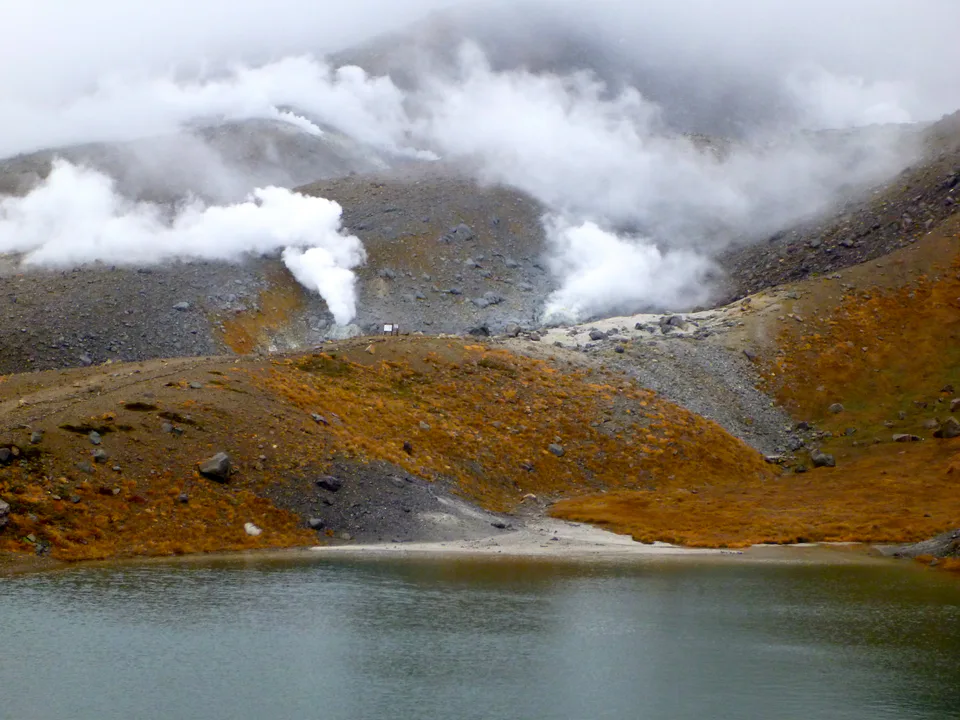
Kyushu becomes more attractive later in autumn when the trip also values food, onsen and city time. Its resilience is the main reason to choose it over a more fragile mountain chase. Fukuoka can absorb rain or a foliage miss; Yufuin and Beppu can still justify their nights through accommodation and bathing.
Keep the core on a Fukuoka–Yufuin–Beppu spine and add only one remote mountain branch after live conditions support it. Aso, Unzen, Takachiho or Yabakei should not all become compulsory just because each can show autumn colour at some point.
Ryokan timing is the hard edge. A half-board Yufuin night is not a flexible city hotel. If dinner and bathing are the reason for paying the premium, arrive early enough to use them. The Beppu vs Yufuin stay comparison is the next decision once the Kyushu route wins.
If two regions survive, choose the one with the smaller failure budget
This is the missing tiebreaker for many autumn plans. Give the route one failure point for each day whose main purpose disappears if a single external dependency fails: one mountain ropeway, one low-frequency bus, one view that needs clear weather, or one fixed ryokan arrival that cannot move.
Then ask how many of those failures can be exchanged with another day without changing hotels. A Tokyo–Fuji route may have one major weather-sensitive branch and four or five resilient city days. A rural Tohoku route may have two or three consecutive timetable-sensitive days. A Kyoto route may have crowd pressure but many same-city substitutions. A Kyushu route may have one remote branch while Fukuoka/Beppu remain useful.
For a seven-day trip, I would normally choose the lower-failure-budget route when scenery preference is close. The exception is a repeat visitor explicitly travelling for one difficult mountain or gorge. In that case the risk is the purpose, not an accident.
Book hard commitments and soft commitments differently
Because a nationwide 2026 foliage forecast is not yet public on JNTO's current forecast page, do not pretend every booking deserves the same rigidity.
Hard commitments: international/open-jaw flights, limited rural transport, a ryokan night whose dinner is the product, and scarce special-access reservations.
Soft commitments: city hotels with workable cancellation, ordinary rail tickets that do not need months-ahead locking, and indoor/city days that can swap positions.
The booking strategy should preserve one movable outdoor day. If every hotel, ticket and restaurant has already fixed all seven days before a current foliage forecast exists, the itinerary has lost the flexibility that autumn travel needs most.
Passes and luggage come after the route wins
Seven days do not automatically justify a nationwide JR Pass. Price the journeys you would genuinely take, then compare regional passes and point-to-point tickets. Buses, ropeways, private railways, ferries and rental-car days should not be counted toward imaginary JR break-even unless the exact pass covers them.
Luggage should follow the same principle. Keep the main suitcase in or forward it between resilient city bases, then carry a smaller bag for one- or two-night mountain/onsen branches. Do not let a large suitcase turn a good rural itinerary into three unnecessary taxi rides and a missed final bus.
What to cut first when the week starts going wrong
Use a fixed deletion order so a delay does not turn into six improvised decisions.
Delete the optional third foliage corridor.
Delete the destination that requires the longest one-way positioning move.
Delete a second night whose only purpose was “another chance” if the forecast no longer supports it.
Keep the main regional base, airport buffer and any accommodation experience you specifically paid to use.
When colour is late, move higher or farther north inside the same region before changing regions. When upper colour is finished, descend before flying south. The objective is not to rescue every planned photograph; it is to protect the seven-day holiday.
Final verdict
Late September/early October: shortlist Hokkaido or high-elevation routes, then reject any option whose gateway costs too much of the week. October: Tohoku is the high-reward choice if you accept rural transport risk. November: Tokyo–Fuji is the easiest low-failure-cost first trip, while Kyoto–Kansai becomes stronger as its later city-foliage window approaches. Later November into early December: Kyushu gains value because the trip still works through food, onsen and cities even when leaf timing is imperfect.
If two regions still tie, choose the one with fewer single points of failure and the better bad-weather fallback. Seven days is long enough to see autumn well. It is not long enough to spend half the trip repositioning after a forecast.
Compare flexible hotel options after choosing the region
References
Japan National Tourism Organization — current public autumn-leaves forecast page (still the 2025 forecast at the August 26, 2026 check) · Japan National Tourism Organization — autumn travel guidance · Japan National Tourism Organization — weather and seasonal overview. Exact 2026 foliage timing remains weather-dependent; replace these broad planning bands with newer official forecasts and live local reports when they are published.