
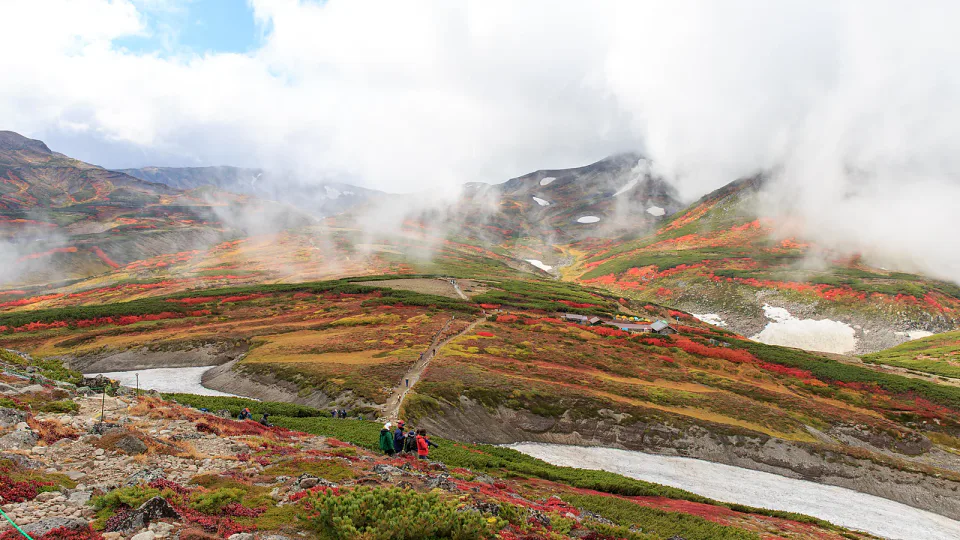
A five-day Hokkaido autumn trip should not try to circle the island. Once arrival and departure are counted, most travellers have only four useful sightseeing days. Choose one foliage band, one airport axis and no more than two hotel bases. As of 25 August 2026, the nationwide foliage forecast is still not open, but Asahidake has entered the first local-monitoring phase: its operator described the mountain on 19 August as moving toward autumn. That makes a September itinerary a live-watch problem rather than a fixed historical-date problem.
The four workable versions are still clear: early/mid September = Asahikawa + high Daisetsuzan; 12–23 September can add a properly reserved Ginsendai day; late September/early October = Asahikawa + Sounkyo; mid-to-late October = Sapporo + Jozankei; late October/early November = Hakodate + Onuma. The spare day is weather insurance, not permission to add a third mountain.
↔ Scroll table left or right
Your dates | Best two-base shape | Main outdoor anchor | What can break it |
1–10 Sep | Asahikawa + Asahidake Onsen or stay Asahikawa | Asahidake / Kurodake watch | Too early, wind, cloud, limited return transport |
12–23 Sep | Asahikawa + Sounkyo | Kurodake plus optional reserved Ginsendai day | Ginsendai reservation/return deadline, first snow |
Late Sep–early Oct | Asahikawa + Sounkyo, final flight buffer if needed | Lower Daisetsuzan / Sounkyo / Biei | Upper colour finished while lower zones remain useful |
Mid Oct | Sapporo + Jozankei | Jozankei / Hoheikyo / Sapporo parks | Trying to combine separate outer-valley transport products |
Late Oct–early Nov | Hakodate + optional Onuma | Onuma / Hakodate lowlands | Adding Sapporo despite a short southern window |
Day 1 should buy positioning, not one last mountain
The wrong airport can waste more time than a hotel location can recover. Use Asahikawa Airport when high Daisetsuzan is the main purpose, New Chitose for Sapporo/Jozankei, and Hakodate Airport for the southern version. An open-jaw arrival/exit can be more valuable than adding another hotel.
New Chitose is not automatically the better northern gateway just because it has more flights. The current reservation-only Taisetsu Liner shows only two regular New Chitose Airport departures under the April 2026 timetable—14:25 and 16:25 from the domestic terminal—reaching Asahikawa Station at 17:05 and 19:05. If your flight does not fit that pattern, the “direct airport bus” has little itinerary value and you are back to a longer rail/road chain. For a five-day Asahidake or Sounkyo trip, compare Asahikawa Airport before accepting that extra positioning cost.
Do not plan a final ropeway after landing. Day 1 should be arrival, luggage, food and the transfer to the first useful base. Days 2 and 3 should hold the main outdoor day plus a weather swap. Day 4 is the lower-elevation or city recovery day. Day 5 stays close enough to the departure airport that one delayed road or train does not threaten the flight.
If the arrival itself is late, use the New Chitose late-arrival guide rather than compressing the first mountain into darkness.
Version 1: early September — Asahikawa + Asahidake watch
For 1–10 September, I would keep Asahikawa as the main base and treat Asahidake as the first mountain to monitor. Its operator's 19 August seasonal-transition update is useful because it tells you where to watch; it does not guarantee that your date will have strong colour.
Use one of Days 2–3 for the clearest Asahidake attempt and keep the other for Biei/Higashikawa or Kurodake only if current operation and colour justify the extra travel. The common mistake is making Asahidake, Kurodake and Biei all mandatory. That removes the only weather buffer.
The current Asahidake Ropeway ride takes about 10 minutes one way. From June 1 through October 20 it normally departs every 15 minutes, and the current June–October adult round-trip fare is JPY 3,500. Those published intervals make the ropeway itself relatively flexible; the harder part is the bus/road connection and mountain weather. Work backward from the final practical return rather than assuming a frequent ropeway means a flexible whole day.
For car-free travellers, work backward from the Route 66 return rather than from the desired photo time. For drivers, a car adds flexibility but does not remove fog, wind, first snow or night-driving fatigue.
Version 2: 12–23 September — Asahikawa + Sounkyo, with Ginsendai only if reserved
This is the period where the 2026 access rules matter most. Ginsendai is under autumn vehicle control from 12–23 September. The official system is not a generic walk-up shuttle: car-free travellers can reserve the Sounkyo charter, while private vehicles use a separate reserved timed-access system.
The charter currently lists Sounkyo departures at 06:00 and 07:00, reaching Ginsendai at 07:00 and 08:00. Returns leave Ginsendai at 15:00 and 15:30. The published fare is JPY 2,500 one way / JPY 5,000 return and capacity is 40 per bus. The fixed return changes the hiking day: set the turnaround from the bus, not from how far you hope to climb.
Sounkyo therefore earns the second base when it does at least two jobs: it gives you the cleanest charter start or early Kurodake attempt, and it gives you onsen/gorge value if weather kills the mountain. Do not move hotels merely because one historical foliage calendar says Ginsendai should be red.
For the detailed date split — including the small summer shuttle through 6 September and the 7–11 September transition gap — use the Ginsendai 2026 access guide.
Version 3: late September to early October — descend before you move farther
When the upper Daisetsuzan zone is past peak or icy, do not spend a five-day trip chasing another summit at similar elevation. Use lower Sounkyo, Biei, foothill routes and Asahikawa while current colour moves downward.
Kurodake remains useful because it can be shortened at the 5th station, but the date changes the product. In 2026 the summer chairlift runs through October 15 and then closes for seasonal maintenance from October 16 through November 30. The ropeway itself continues 08:00–16:00 from October 16 through November 8 before its own November maintenance closure. A late-October plan can still use the ropeway and lower mountain; it cannot assume the summer chairlift to the 7th station is available.
This is a useful stop-loss rule: if your trip has crossed the October 15 chairlift boundary, do not preserve an early-October itinerary by force. Use the lower gorge, onsen and lower elevation, or move the whole route south with the season.
Version 4: mid-October — Sapporo + Jozankei
This is the lowest-friction five-day version for many first-time visitors. Sapporo provides airport resilience, restaurants, indoor alternatives and multiple low-elevation fallbacks. Jozankei can be a day trip or one-night onsen stay.
The current 2026 Koyo Kappa Bus runs from October 1–21 with departures at 09:15, 11:15, 13:15 and 15:15. It costs JPY 700, takes about 70 minutes under the current Japanese schedule, seats 45 and can only be reserved on the day at the Jozankei Tourist Information Center on a first-come basis. That is exactly the kind of transport detail that should change an itinerary: the bus is a useful enhancement, not a reserved anchor you can safely build the whole day around months in advance.
The overnight is worth paying for when it buys ryokan dinner, onsen and a second morning. A four-night Sapporo base can be better when luggage is heavy, the flight schedule is tight or nobody values the ryokan hours enough to justify a move. Do not change hotels merely to be geographically closer to a JPY 700 sightseeing bus whose seat is allocated that morning.
Do not turn Jozankei, Hoheikyo and Sapporo Kokusai into one “area” because they appear close on a map. Each can require its own transport timing and usable-day calculation.
Version 5: late October to early November — Hakodate + Onuma
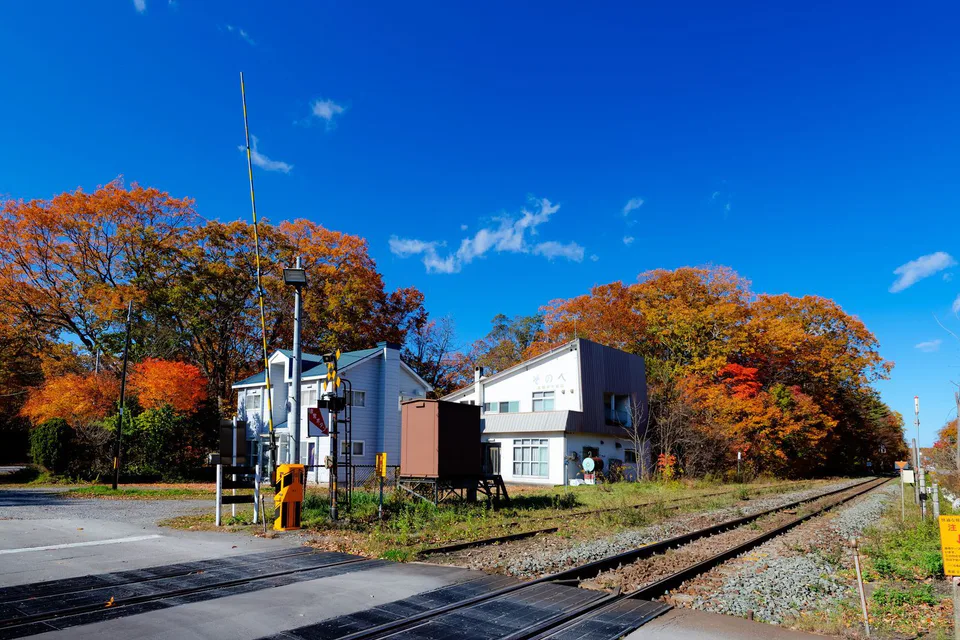
Use Hakodate as the weather-resistant base and Onuma as the main outdoor day. Kosetsuen, Goryokaku, Motomachi and city food give the southern route enough backup value when colour or weather disappoints.
Stay overnight in Onuma only when dawn lake views, cycling or resort time are themselves part of the trip. Otherwise a Hakodate Station base plus JR day trip usually preserves more flexibility. Do not add Sapporo simply because it is famous if the open-jaw flight and foliage window already point south.
Open-jaw flights are the minimum condition for a north-plus-south five-day route
If you insist on combining northern Hokkaido and Hakodate in five days, do not pay for the same long positioning move twice. An open-jaw structure—arrive via Asahikawa or New Chitose and leave via Hakodate, or the reverse—is the minimum condition before I would even test the itinerary.
Even then, ask what the long intercity transfer buys. If most of Day 3 becomes positioning, a five-day foliage trip has been reduced to two or three strong outdoor blocks. That may be acceptable for a traveller who enjoys rail travel; it is not the default recommendation for someone whose priority is autumn scenery.
Asahikawa and Hakodate are both excellent foliage gateways in different seasonal windows. They are not automatically good partners in the same short itinerary.
Do not buy the 5-day Hokkaido Rail Pass because the trip lasts five days
JR Hokkaido currently prices the consecutive five-day Hokkaido Rail Pass at JPY 22,000 when pre-purchased and JPY 23,000 when purchased at a designated station. It covers JR Hokkaido rail travel within the pass rules, but it does not turn the mountain last miles in this article into JR journeys. Jozankei, the Ginsendai charter, Asahidake road/bus access, Kurodake ropeway and other local transport still need separate planning. JR Hokkaido's limited express trains are now all-reserved, so a pass holder must still obtain a reserved-seat ticket before boarding.
Use a simple break-even rule: add the qualifying JR fares you would genuinely buy anyway and compare that number with JPY 22,000. Do not invent extra train trips to make the pass win.
JR Hokkaido's own current examples are a useful reality check. A Sapporo–Furano round trip via Asahikawa plus Sapporo–Otaru totals JPY 14,480 on ordinary tickets, far below the five-day Hokkaido Rail Pass; JR instead highlights its cheaper Sapporo–Furano Area Pass for that pattern. By contrast, Sapporo–Hakodate round trip plus Sapporo–Otaru totals JPY 23,140, only slightly above the JPY 22,000 five-day pass. The latter is a route with genuinely heavy long-distance JR mileage.
For this article's four main shapes:
Sapporo + Jozankei: the five-day Hokkaido Rail Pass usually solves the wrong problem.
Asahikawa + Asahidake: the mountain day is mostly a last-mile bus/road problem; the pass only gets interesting if the wider trip contains enough long JR sectors.
Asahikawa + Sounkyo: same logic—do not count a non-JR mountain transfer toward imaginary rail-pass value.
Hakodate + Onuma: local/regional tickets are usually the first comparison unless you also add a long JR intercity movement.
The rail pass is a mileage product. The itinerary is a calendar product. Both saying “five days” is not evidence that they belong together.
Car vs public transport: buy flexibility only where you can use it safely
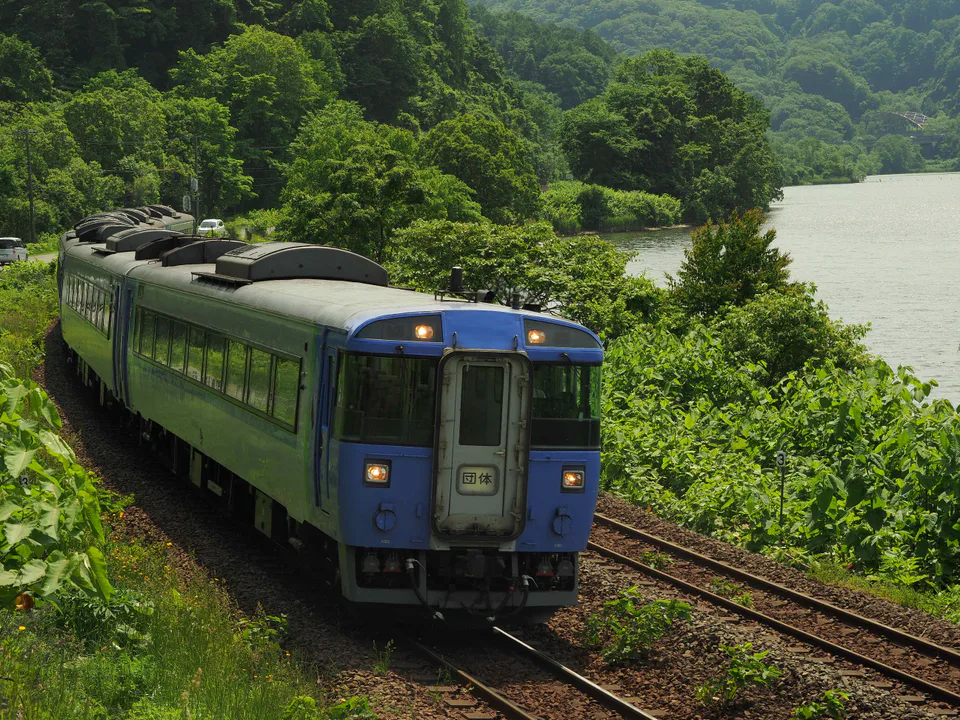
A car is valuable when two to four people need scattered rural stops and the driver is comfortable with left-side traffic, long distances and early-winter conditions. Add protection, NOC exposure, fuel, parking, one-way fees, winter tyres when required and luggage capacity before declaring the car cheap.
Public transport is stronger when the itinerary naturally follows Asahikawa/Sounkyo or Sapporo/Hakodate corridors. The Hokkaido Rail Pass can cover qualifying long JR sectors, but it does not solve the mountain buses, ropeways, Ginsendai charter or most local final miles.
First snow changes the car decision immediately. A prepaid rental is not a reason for an inexperienced driver to keep a mountain route after frost or snow arrives.
Luggage and hotel moves: the second base needs two jobs
Use a day pack in the mountains and leave or forward the main suitcase where practical, but never assume same-day delivery. Keep medication, insulation, rain shell and one overnight set with the traveller.
A mountain/onsen hotel move should buy at least two useful sessions: an early mountain start + onsen dinner, a fixed charter + next-morning Kurodake chance, or dawn Onuma + resort time. If it only saves one bus ride, keep the city base.
If the second base is being rejected only because of luggage, use the Japan luggage-forwarding guide to solve the luggage problem rather than distorting the geographic route.
Final verdict
For five days, choose one seasonal band, one airport axis and at most two bases. In early September, watch Asahidake rather than forcing a historical peak date. During 12–23 September, add Ginsendai only when the correct 2026 reservation system is secured. From October 16, remember that Kurodake's summer chairlift has entered maintenance. In mid-October, treat Jozankei's same-day autumn buses as useful options rather than guaranteed pre-booked anchors. Later in the season, move down and south instead of protecting one famous mountain after its usable window has passed.
Do not buy the Hokkaido Rail Pass because the trip has five calendar days, and do not erase the weather buffer to make the pass or a second mountain look efficient. If the itinerary only works when every bus, ropeway, road and foliage report is perfect, it is too ambitious for five days. The spare day is the feature that makes the itinerary resilient.
Compare five-day Hokkaido hotels on Booking.com
Related planning
References and verification date
Asahidake Ropeway — current operation and seasonal updates · Kurodake Ropeway / chairlift — 2026 operation · Kamikawa Town — 2026 Ginsendai autumn vehicle control · Jozankei Tourist Association — 2026 autumn buses · JR Hokkaido — Hokkaido Rail Pass prices and conditions · JR Hokkaido — current ordinary-fare examples · Taisetsu Liner — 2026 New Chitose–Asahikawa timetable. Checked 25 August 2026. Foliage, weather, roads and mountain transport can change quickly.