
The best 10-day Japan autumn-leaves itinerary is usually not the route with the most famous foliage spots. It is the route that follows one direction through two different foliage bands without backtracking. In September, keep the trip in Hokkaido or a high alpine region. In October, a north-to-south Tohoku route can finish in Tokyo. In late October and early November, use a high-to-low Chubu, Nikko or Fuji sequence. From mid-November into early December, Tokyo plus Kyoto/Kansai is usually much more rational than chasing northern mountains.
For 2026 there is one important planning signal but not yet a precise national peak-date answer. The three-month outlook released on August 25 points to a warmer-than-normal autumn across much of Japan. That increases the risk that some colour change runs later than historical averages, but it does not justify saying that Kyoto, Nikko or Hokkaido will peak on a specific 2026 date. Build the route from geography first, then use the latest local foliage reports shortly before travel.
↔ Scroll table left or right
Your travel dates | Best route family | Second foliage band | Do not add |
September to early October | Hokkaido or one high-alpine region | Lower elevation inside the same region | Kyoto purely for autumn leaves |
Mid October | Tohoku north-to-south | Tokyo / Nikko only if the route keeps moving south | Hokkaido + Kyoto in the same 10 days |
Late October to early November | Chubu high-to-low, or Tokyo + Nikko + Fuji | Tokyo or Kansai lowlands | Several disconnected mountain regions |
Mid to late November | Tokyo → Kyoto/Kansai | Lower city gardens / nearby hills | Northern Tohoku foliage chase |
Early December | Late Tokyo, Kyoto, Setouchi or Kyushu lowlands | Urban gardens and lower elevations | High-mountain itinerary built around leaves |
The core rule: use a foliage ladder, not a foliage checklist
Autumn colour moves through Japan in two useful directions: generally from colder north to warmer south, and from higher elevations to lower ones. A ten-day trip should exploit that movement rather than fight it.
The strongest structure is:
Pick the first foliage band that has the best historical fit for your exact dates.
Pick one second band that is either farther south or lower in elevation and lies on the way to your departure city.
Keep one day movable so rain, cloud, wind or colour timing can change the order without changing the whole country.
This is more robust than booking ten famous leaf spots. If the first mountain area is early, you can move down in elevation. If it is late, you can stay higher. The trip survives because the second option is nearby and in the same travel direction.
The weak version is Hokkaido → Tokyo → Kyoto simply because all three appear on autumn-leaves lists. In ten days that creates flights or long rail transfers between three separate tourism systems, three hotel clusters and three weather patterns. You gain theoretical foliage coverage but lose usable mornings and evenings.
2026: treat the warm-autumn outlook as a delay risk, not a peak-date forecast
Weathernews reported the Japan Meteorological Agency three-month outlook on August 25, 2026: autumn temperatures are expected to run above normal across much of northern through western Japan. That is useful planning information because warm conditions can slow the transition into autumn colour.
But a seasonal temperature outlook is not the same thing as a foliage forecast. It cannot tell you today that a particular temple or mountain valley will be at peak colour on your exact travel date.
For ValueNavi planning, this changes the risk posture rather than the destination list:
Do not book a late-October route that depends on one historically early lowland site already being at peak.
Keep a higher-elevation option when travelling early in the season.
For November, keep lower-elevation urban gardens as a later-colour fallback.
Recheck local foliage reports close to departure instead of rebuilding the national itinerary every time one forecast shifts by a few days.
Ten days should usually mean no more than three or four hotel bases
A foliage trip is already transport-heavy. Every extra hotel adds packing, checkout, luggage storage, station navigation and another check-in. I would normally cap a ten-day trip at three major bases, or four when one of them is an onsen/mountain stay that creates a unique evening and morning.
A useful test is: does the hotel move unlock hours that a day trip cannot?
Oirase or an alpine onsen stay can justify a move because dawn, evening, dinner or an early shuttle are part of the product.
Moving Tokyo hotels simply to save one suburban foliage commute usually does not.
One night in Kawaguchiko can make sense when Fuji visibility and a lake morning are the purpose; another one-night stop immediately afterward creates transfer debt.
If more than four hotel names are required to describe the route, the itinerary needs a stronger reason than “it is on the way.”
Route family 1 — September to early October: stay north or stay high
For September foliage, the trip should be built around Hokkaido or one high-elevation alpine system, not around a north-to-Kyoto national sweep.
Example 10-day shape: Asahikawa 2 nights → Sounkyo 3 nights → Sapporo 4 nights.
The logic is high-to-low within one island. Use Asahikawa for the airport and an Asahidake/Biei decision. Use Sounkyo only if Kurodake and the mountain stay are genuine priorities. Finish in Sapporo so a delayed or closed mountain day can fall back to city parks, Jozankei, Otaru or another lower route without another flight.
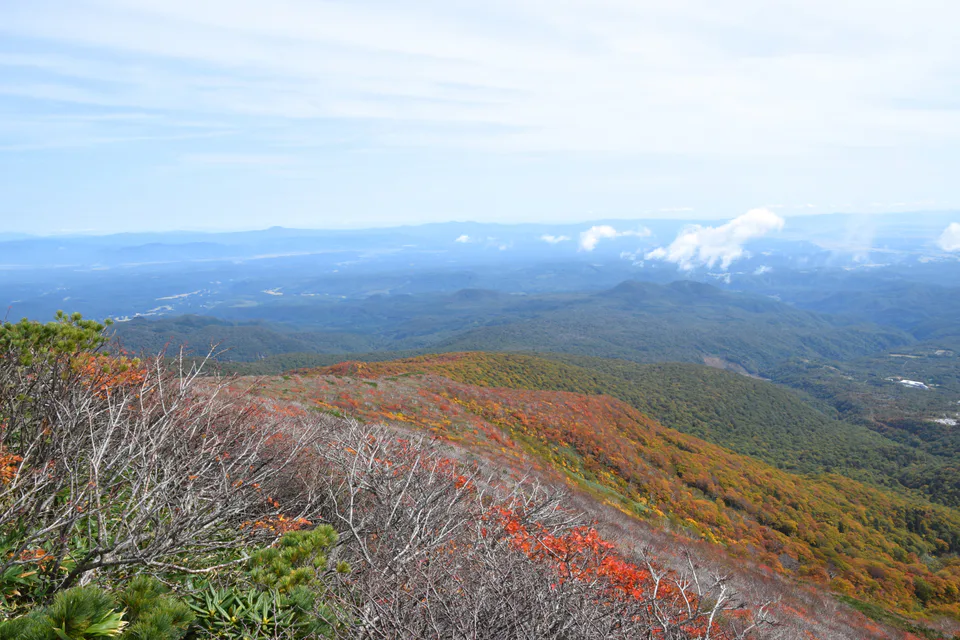
The most important deletion is Hakodate or eastern Hokkaido. Both can be excellent, but ten days is too short to turn Hokkaido into a map-completion exercise while also chasing changing colour.
If Daisetsuzan access is disrupted, the correct reaction is usually to move lower within Hokkaido, not to buy a last-minute flight to Honshu.
Route family 2 — October: Tohoku should move in one direction
Mid-October is where a Tohoku route can outperform a Tokyo/Kyoto itinerary, but only if the travel geometry is linear.
Example 10-day shape: Sendai 2 nights → Morioka/Hachinohe 2–3 nights → Oirase/Towada 2 nights → Aomori 1 night → Tokyo 1–2 nights.
Do not treat every Tohoku gorge as a day trip from one base. Mountain buses, stream walks, lake boats and seasonal road conditions make the last mile much more important than the Shinkansen time between cities.
For Oirase specifically, an overnight can be rational when it buys early and late gorge hours or hotel-only transport. If the visit is only a daytime photo stop, a city hotel may be better. The Oirase Keiryu Hotel decision guide tests whether one or two nights actually earn the premium.
The second region should be Tokyo only when it lies naturally after Tohoku. Tohoku → Tokyo is a continuation. Tohoku → Kyoto → Tokyo is a loop.
Route family 3 — late October to early November: choose Chubu or Tokyo–Nikko–Fuji, not both
This is the easiest period to overbuild because Chubu, Nikko, Kawaguchiko, Hakone and Kyoto can all look plausible in the same search session.
Choose one of two structures:
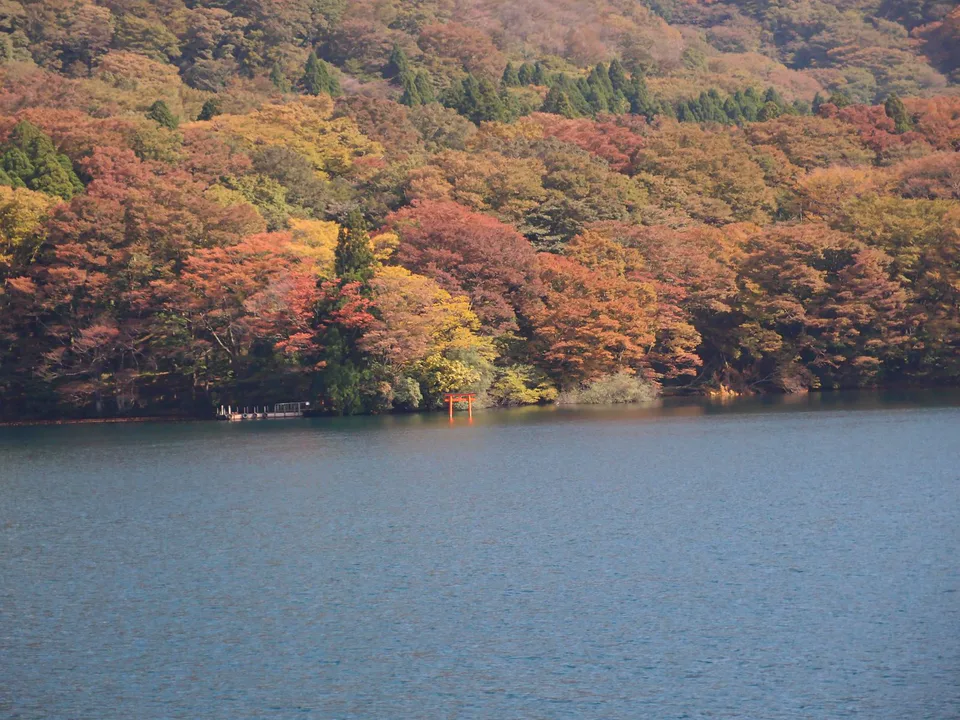
Option A: Chubu high-to-low
Example: Toyama 2 → Takayama 2 → Matsumoto 2–3 → Nagoya/Kyoto 2–3.
The route works because elevation can fall as the trip progresses. Tateyama, Kamikochi, Shinhotaka or a Takayama-area mountain day should not all be mandatory. Pick one or two alpine anchors and keep Matsumoto, Takayama or Kanazawa as weather-resilient urban/cultural time.
If the mountain day is closed, do not automatically replace it with another mountain three hours away. Use the city already booked.
Option B: Tokyo + Nikko + Kawaguchiko
Example: Tokyo 4–5 → Nikko 2 → Kawaguchiko 1–2 → Tokyo 1–2.
This is easier for a first independent Japan trip because Tokyo is the recovery hub between two weather-sensitive excursions. Fuji visibility and Oku-Nikko weather can fail on different days; keeping one Tokyo flex day lets the trip move without cancelling hotels across Japan.
Do not add Hakone automatically. Use Hakone vs Kawaguchiko and choose the one that solves the trip rather than collecting both because they are near Fuji on a national map.
Route family 4 — mid-November to early December: Tokyo → Kyoto is the safe first-trip line
Once the season moves into lower elevations, a first-time trip can stop behaving like an expedition. Tokyo and Kyoto provide large inventories of gardens, temples, urban backups, indoor sights and rail options, so one poor-weather day does not threaten the entire trip.
Example 10-day shape: Tokyo 4 nights → Kyoto 5 nights. Use one day as a movable buffer rather than assigning every day to a named leaf spot before the trip begins.
The key is not to insert five day trips. In Tokyo, choose one or two from Takao, Okutama, Nikko, city gardens or a Fuji-region overnight depending on date and weather. In Kyoto, group leaves by geography and elevation rather than crossing the city repeatedly.
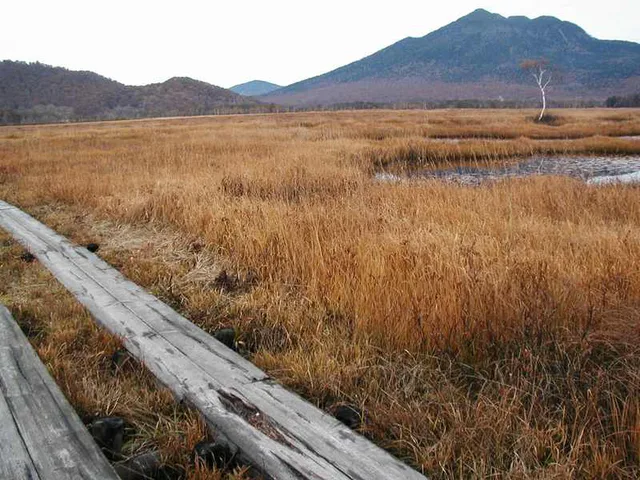
If the dates are very late, Kyushu can replace Tokyo or extend Kansai. A Fukuoka → Yufuin/Beppu → Kyoto line can work because it moves toward later lowland colour while adding onsen and food value. But Beppu vs Yufuin should decide whether the onsen night is a transport base or an accommodation experience.
Open-jaw flights are most valuable when they remove a whole return journey
An open-jaw ticket is not automatically worth paying more for. Its value appears when it deletes a major backtrack.
Good examples:
Asahikawa in → New Chitose out.
Sendai/Aomori direction → Tokyo out.
Tokyo in → Osaka/Kansai out for a November Tokyo–Kyoto trip.
Fukuoka in → Kansai out for a late Kyushu–Kyoto line.
Weak example: paying a large open-jaw premium when both ends are already connected by a simple short rail trip and the flight schedule is worse.
Use a simple calculation: open-jaw premium versus the cash cost + luggage effort + hotel hours lost to the backtrack it removes. This is especially important for long-haul travellers with only ten Japan days; a half-day return to the original gateway can cost more than the train ticket.
Use one movable day, not one completely empty day
A flex day does not need to sit blank in the calendar. Give it a low-risk default—city garden, museum, food neighbourhood, shopping or laundry—and mark it as the day that can be replaced by the weather-sensitive mountain or Fuji trip.
This avoids two common problems:
booking two weather-sensitive day trips back-to-back with no escape;
creating an “empty” day that travellers later overfill with another distant destination.
The flex day is insurance. If the weather is good all week, use the easy default. If the mountain clears, spend the day where visibility matters.
When foliage is early or late, change altitude before changing region
This is the most useful failure rule in the entire itinerary.
If the colour is running early, move lower in the same region. If it is running late, move higher—provided the high-elevation transport is still operating. That can mean upper versus lower Nikko, alpine versus city Chubu, mountain versus Sapporo-area Hokkaido, or higher versus lower Kyoto districts.
Changing altitude costs a local transfer. Changing region can cost a Shinkansen ride, a flight, a new hotel and half a day. The national chase should be the last resort.
Do not buy the rail pass until the route is finished
A pass is a pricing tool, not an itinerary generator. Finish the route first, list the actual qualifying journeys and then compare the relevant pass with individual fares and advance-purchase products.
A ten-day foliage trip often mixes transport types: Shinkansen, local rail, mountain buses, ropeways, hotel shuttles, ferries and perhaps a short rental car. A national or regional rail pass can cover only part of that chain.
If a pass looks poor after you delete an unnecessary cross-country train, that is usually good news: the itinerary became more efficient.
For a national-pass decision, use the JR Pass vs individual tickets framework rather than assuming autumn travel automatically means “buy a pass.”
Luggage strategy: the mountain should not inherit the long-haul suitcase
For a ten-day long-haul trip, the most useful luggage move is often sending the main case between major bases and carrying one or two nights of clothing into a mountain or onsen stop.
This is especially valuable for:
Sounkyo or another bus-dependent Hokkaido stay;
Oirase/Towada;
Takayama/Kamikochi/Shinhotaka sequences;
Kawaguchiko or a ryokan stop between large city hotels.
But forwarding is not same-day teleportation. Confirm the receiving hotel, lead time and cutoff before sending. Use the Japan luggage-forwarding guide and carry medicine, valuables and next-day essentials with you.
Red-team test: when this 10-day foliage strategy is wrong
This route-selection method is designed for travellers who want autumn colour to influence the trip but still want a resilient Japan holiday. It becomes less appropriate when:
you are a repeat visitor whose only purpose is photography at one specific mountain;
you can change flights and hotels at the last minute with little penalty;
you have a rental car and are comfortable making weather-led daily mountain decisions;
a festival, wedding, race or other fixed-date event matters more than foliage timing.
In those cases, build around the fixed event or specific photographic target first. For everyone else, the cost of chasing theoretical peak colour across Japan is usually higher than the value gained.
Final verdict
For ten days, choose one primary foliage region and one second band that lies naturally farther south or lower in elevation. Keep the trip moving in one direction, cap the stay at roughly three or four hotel bases, and protect one movable day.
September usually means Hokkaido or high alpine Japan. October favours a linear Tohoku trip or one mountain region. Late October and early November favour Chubu or Tokyo–Nikko–Fuji. Mid-November onward is where Tokyo–Kyoto/Kansai becomes the strongest first-trip structure. In early December, stop chasing high mountains and let lowland cities do the work.
The 2026 warm-autumn outlook means you should be especially cautious about treating historical dates as guarantees. Keep the geography stable and adjust elevation locally when the real foliage reports arrive. A ten-day autumn trip succeeds by having several good answers inside one route—not by trying to contain all of Japan.
Tohoku Autumn Leaves Itinerary: 5 or 7 Days, JR EAST PASS and Hotels
Japan Autumn Leaves Early or Late: 30-, 14- and 7-Day Adjustment Plan
Sendai Tanabata Festival 2026: Fireworks, Three-Day Plan and Where to Stay
Japan Autumn Leaves with Seniors and Children: Easy Routes and Hotels
Kenrokuen Autumn Leaves 2026: Early Entry, Illumination, Transport and Hotels
References
Weathernews — August 25, 2026 summary of the Japan Meteorological Agency three-month outlook. The outlook signals a warmer-than-normal autumn across much of Japan; it is not a site-specific foliage-peak forecast. Regional transport, ropeway, bus and attraction operations should be rechecked for the exact travel date. Historical foliage windows in this article are planning ranges, not guaranteed 2026 peak dates.