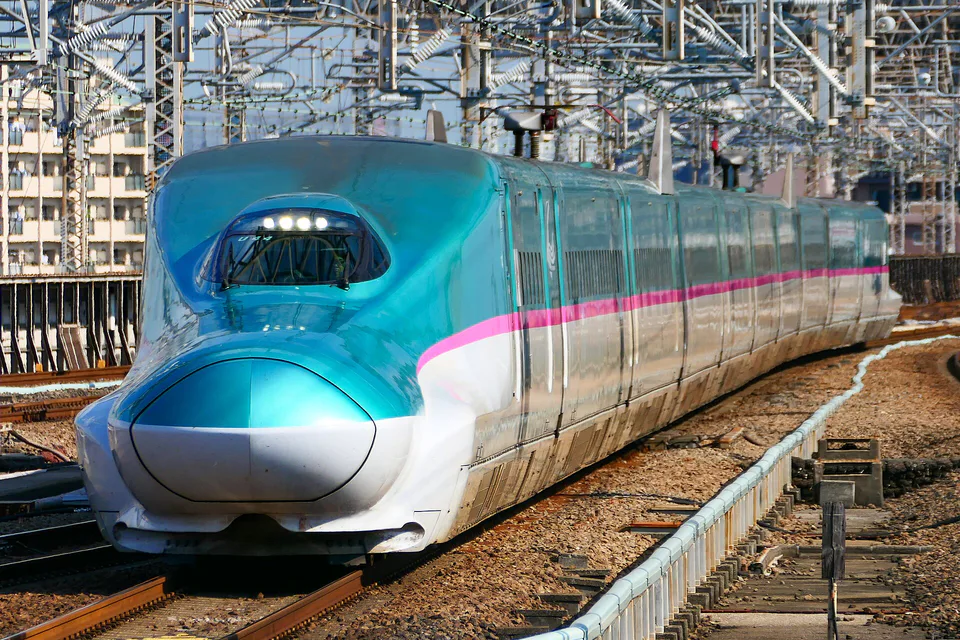
For a typical 14-day first trip built around Tokyo, Kyoto and Osaka, I would not buy the 14-day nationwide JR Pass. The current Ordinary pass is ¥80,000 (about US$503 at the August 26, 2026 reference exchange rate) through the official online service, and the route usually does not generate enough covered long-distance rail spend to clear that threshold. Even adding Hiroshima and returning to Tokyo is not automatically enough.
The more useful question is not “Am I in Japan for 14 days?” It is: how much covered JR travel is left after you fix the cities, airports and actual train dates? A Tokyo-in/Kansai-out open-jaw trip can remove one of the most expensive rail legs before you calculate anything. And if your rail-heavy part fits inside seven consecutive days, a 7-day pass may be the real comparison—not the 14-day version.
Checked August 26, 2026. Approximate USD figures use ¥10,000 ≈ US$62.82 only for orientation; exchange rates and card conversion rates move. JR Pass prices, Smart EX products, seasonal fares, seat availability, exclusion dates and Nozomi/Mizuho add-ons are date-sensitive, so recheck the official pages for your travel dates.
ValueNavi break-even test: how much does the 14-day pass still need to earn?
This table uses current Smart EX regular-season Ordinary Car reserved-seat Nozomi fares for the named Shinkansen sectors. It is a benchmark, not a quote for every date: Smart EX reserved fares can move with off-peak, peak and super-peak seasons, and local city transport is excluded because it depends on your exact itinerary.
↔ Scroll table left or right
Route shape | Named Shinkansen benchmark | Gap to ¥80,000 pass | ValueNavi verdict |
Tokyo → Kyoto, then Osaka; fly home from Kansai | Tokyo → Kyoto: ¥13,970 (~US$88) | ¥66,030 | Individual tickets. A 14-day national pass is solving travel you are not taking. |
Tokyo → Kyoto → Hiroshima → Shin-Osaka; fly home from Kansai | ¥13,970 + ¥11,740 + ¥10,750 = ¥36,460 (~US$229) | ¥43,540 | Still individual tickets first. Hiroshima alone does not make the 14-day pass close. |
Tokyo → Kyoto → Hiroshima → Shin-Osaka → Tokyo | Above route + ¥14,520 = ¥50,980 (~US$320) | ¥29,020 (~US$182) | Calculate, but the 14-day pass is still behind. You need roughly ¥29,000 more covered travel just to reach the online pass price. |
This is the key information gap in many JR Pass comparisons. “Tokyo, Kyoto, Hiroshima and back to Tokyo” sounds rail-heavy, but a four-sector Shinkansen itinerary can still sit almost ¥30,000 below the 14-day pass before you start counting local JR rides.
Local JR use can narrow the gap, but it should be counted from a real itinerary—not invented after the fact. If you need to add multiple optional day trips just to make the spreadsheet reach ¥80,000, the pass is not driving a good decision.
A 14-day trip can actually be a 7-day-pass problem
The nationwide Ordinary 7-day pass costs ¥50,000 (about US$314) through the official online service. That is dramatically closer to a rail-heavy Tokyo → Kyoto → Hiroshima → Osaka → Tokyo sequence than the ¥80,000 14-day pass.
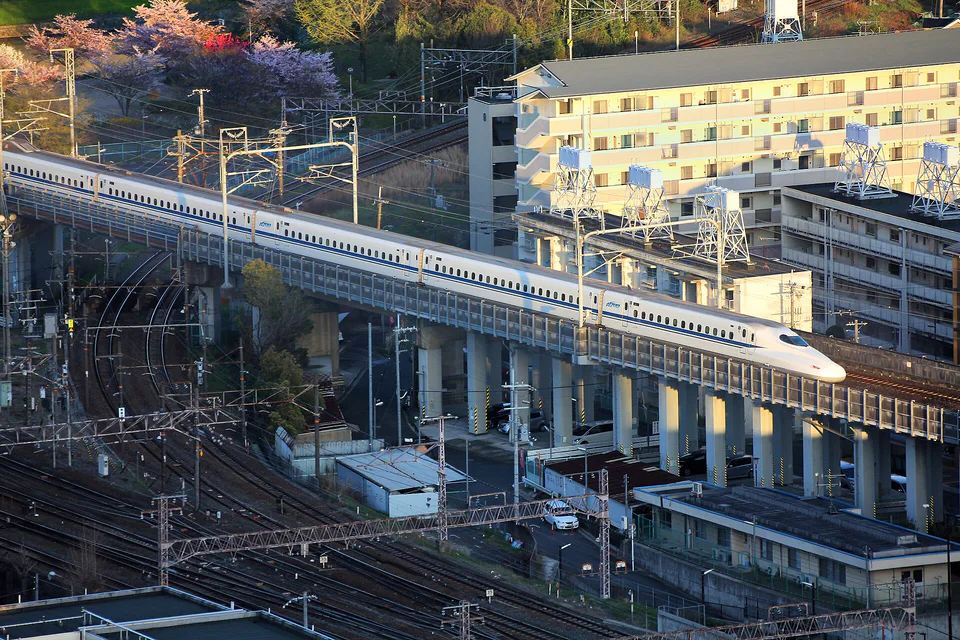
Using Smart EX regular-season Hikari/Sakura benchmark fares for the same four long-distance sectors gives roughly ¥49,170: Tokyo → Kyoto ¥13,650, Kyoto → Hiroshima ¥11,100, Hiroshima → Shin-Osaka ¥10,220, and Shin-Osaka → Tokyo ¥14,200. Those are precisely the train categories the JR Pass can cover without a Nozomi/Mizuho add-on.
So if those four rail-heavy moves fit inside seven consecutive days, I would compare a 7-day pass before even considering the 14-day one. The trade-off is obvious: you must concentrate the expensive JR travel inside the 7-day validity window. If your Tokyo return happens eight or nine days after the first long-distance train, the strategy falls apart.
This also explains why “14 days in Japan” is such a weak pass-selection rule. Pass validity should match the rail-intensive window, not the vacation length.
14-day JR Pass vs individual tickets: the decision in 30 seconds
↔ Scroll table left or right
Trip shape | Start with | Why |
Tokyo → Kyoto → Osaka, fly home from Kansai | Individual tickets | Open-jaw flying removes the expensive rail return. |
Tokyo → Kyoto/Osaka → Tokyo, no other distant region | Individual tickets | A simple Kanto–Kansai return is still far below ¥80,000. |
Tokyo → Kansai → Hiroshima → Tokyo, with long-distance legs spread across 8+ days | Individual tickets, then calculate | Even the core four-sector benchmark is around ¥50,980, leaving a large gap. |
Same rail-heavy route compressed into 7 consecutive days | Compare the 7-day JR Pass | Its ¥50,000 price sits near the covered Hikari/Sakura benchmark. |
Tokyo + Kansai + Hiroshima + another distant JR region | Calculate the 14-day pass seriously | A second distant region can finally provide enough additional covered mileage. |
If the city sequence itself is not settled, decide that first with Japan Itinerary for First-Time Visitors: 10, 12 or 14 Days? The pass should fit the itinerary; the itinerary should not be stretched to justify the pass.
Open-jaw flights act like a rail discount
A Tokyo arrival and Kansai departure can be more important to the rail calculation than several days of local JR travel. If you fly home from Osaka instead of returning to Tokyo by Shinkansen, you remove a Shin-Osaka → Tokyo sector that is about ¥14,520 (~US$91) on the current Smart EX regular-season Nozomi benchmark.
That is why a Golden Route open-jaw itinerary is usually a poor match for the nationwide 14-day pass. The expensive fixed rail movement is mostly one-directional: Tokyo toward Kansai. Once that return disappears, the pass has to recover an even larger amount from smaller rides.
If you are deciding whether to spend more nights in Kyoto or Osaka, solve that separately with Kyoto vs Osaka: Where Should First-Time Visitors Stay?. Accommodation geography and pass value are related, but buying a pass should not force you into an inferior city sequence.
October 1, 2026 changes the overseas-agency price, not the official online price
The official JAPAN RAIL PASS price page currently shows the 14-day Ordinary pass at ¥80,000 (~US$503) for online purchase. An overseas agency Exchange Order also costs ¥80,000 through September 30, 2026, but rises to ¥84,000 (~US$528) for purchases made on or after October 1, based on local time at the point of purchase.
This is not a blanket October price increase. It is a purchase-channel difference. The official online 14-day Ordinary price remains ¥80,000 on the current price page.
For the Tokyo → Kyoto → Hiroshima → Shin-Osaka → Tokyo benchmark above, the gap is already ¥29,020 against the online pass. Against a post-October overseas-agency pass, the gap becomes ¥33,020 (~US$207). That is too large to dismiss as a convenience premium unless your itinerary contains substantial additional covered travel.
The same channel difference affects the 7-day pass: ¥50,000 online, versus ¥53,000 (~US$333) for an overseas-agency Exchange Order bought from October 1, 2026.
Do not compare the pass only against full-price tickets
Smart EX is the official online reservation service for the Tokaido, Sanyo and Kyushu Shinkansen, and its advance products can make individual tickets cheaper than the regular-season benchmarks above.
EX Hayatoku 21 currently lists Tokyo → Kyoto at ¥12,430 (~US$78) and Tokyo → Hiroshima at ¥15,390 (~US$97) for eligible Ordinary Car reserved-seat trains from March 13, 2026 onward. The trade-off is flexibility: seats are limited, the product has exclusion periods around busy travel dates, and the reservation cannot simply be changed to another train after booking; you must refund and book again.
This means “individual tickets” is not one fixed number. A fair comparison should ask:
What would the normal ticket cost on my actual date?
Is a Smart EX advance product available for that section?
How much flexibility am I giving up for the lower price?
Could a 7-day or regional pass fit the expensive part more precisely?
If your dates are fixed 21+ days ahead, individual-ticket pricing can move further away from the 14-day pass. If your dates are fluid, the standard Smart EX service is more relevant because it allows reservation changes under its conditions up to shortly before departure.
Ignore old comparisons that still count the Smart EX round-trip discount
One specific 2026 failure mode is using an outdated fare article. The official Smart EX page states that the Smart EX round-trip discount product ended on March 31, 2026.
So if a comparison still assumes you can buy the old Smart EX round-trip product for a post-March 2026 journey, its numbers are stale. Use the current one-way Smart EX products, current Hayatoku products or standard rail fares instead.
This cuts both ways: outdated information can make individual tickets look too cheap or too expensive. The only defensible comparison is one built from products that still exist for your boarding date.
The Nozomi issue is a time-and-flexibility cost, not just a surcharge
The nationwide JR Pass does not include unrestricted Nozomi or Mizuho travel by default. Pass holders can use them only with the separate JR Pass-only Nozomi/Mizuho ticket.
Current official examples are ¥4,960 (~US$31) per ride for Tokyo/Shinagawa → Kyoto or Shin-Osaka, and ¥6,500 (~US$41) for Tokyo/Shinagawa → Hiroshima.
You can avoid the add-on by using covered Hikari, Sakura or other eligible services, but that can reduce departure frequency or require a different timetable. JR Central notes that Nozomi is both faster on the Tokaido Shinkansen and much more frequent, with up to 13 trains per hour in its published explanation.
That matters when the spreadsheet says the pass is only marginally cheaper. If you repeatedly pay Nozomi add-ons, the financial advantage shrinks. If you avoid them, the time and schedule trade-off can become the real cost.
For a couple with a fixed dinner reservation, a family trying to minimize transfer friction, or anyone with a tight hotel check-in window, I would not treat a ¥1,000–¥3,000 theoretical saving as decisive if it forces clearly worse train options.
When the 14-day pass actually becomes a strong candidate
I would move from “probably no” to “calculate seriously” only when the itinerary adds enough real covered travel to erase the remaining gap.
That usually means some combination of:
a Tokyo ⇄ Kansai round trip;
Hiroshima on top of that;
a second distant JR region within the same 14-day validity period;
several covered limited-express journeys that you would buy anyway;
a route whose ticket total clears ¥80,000 by a comfortable margin rather than a few hundred yen.
The third point is the important reversal condition. Hiroshima plus a Tokyo return is not automatically enough; our current benchmark still leaves roughly ¥29,000 to recover. Add another distant region that you genuinely planned to visit and the 14-day pass can become rational. Without that, it is easy to overbuy.
When I would still choose individual tickets even near break-even
If the pass and realistic ticket total are close, I usually prefer the option that leaves the itinerary more flexible. A pass does not reimburse the opportunity cost of choosing covered trains over the most convenient train, nor does it cover every subway, private railway or urban transport ride in Japan.
I would lean toward individual tickets when:
you fly into Tokyo and out of Kansai;
the trip has long stays in only two or three bases;
the rail-heavy days can be booked with Smart EX advance fares;
your preferred departures are Nozomi-heavy and you would repeatedly buy add-ons;
your break-even calculation depends on optional day trips that may disappear once you are tired;
a 7-day or regional pass targets the expensive window more precisely.
Large luggage is not a reason to buy a 14-day pass
Ticket strategy and luggage friction are separate problems. The difficult part of a multi-city trip is often hotel-to-station movement, navigating large stations, carrying bags through transfers and dealing with oversized-baggage rules—not how the fare was paid.
If luggage is what makes the route feel complicated, solve that directly with Japan luggage forwarding. Paying ¥80,000 for a nationwide rail product does not make a 29-inch suitcase easier to move through Tokyo Station or Shin-Osaka.
The most expensive mistake is changing the itinerary to justify a sunk cost
The worst JR Pass failure mode is not losing a few thousand yen on the pass itself. It is buying it first, then adding long day trips or awkward rail returns because every unused day feels “wasted.”
Reverse the sequence:
Fix arrival and departure airports.
Fix the cities you genuinely want to visit.
Mark the long-distance rail sectors you would take even without a pass.
Check whether those expensive sectors fit inside seven consecutive days.
Price current Smart EX, advance and standard ticket options for your dates.
Add only local JR and limited-express journeys you are genuinely likely to take.
Compare with the correct 7-day or 14-day pass price for your purchase channel.
Only then decide whether any convenience premium is worth paying.
What would make my recommendation reverse?
My default recommendation—individual tickets for a common 14-day Tokyo/Kyoto/Osaka itinerary—reverses in two main situations.
First, the expensive rail section compresses into seven consecutive days. Then the ¥50,000 7-day pass can be much more relevant than the 14-day product.
Second, the 14-day itinerary adds enough genuine long-distance JR travel to exceed ¥80,000 comfortably. A second distant region is the kind of change that can do that; simply adding Hiroshima and returning to Tokyo may not.
The reverse is equally important. A route that once looked pass-friendly can stop being one if you switch to an open-jaw flight, find an eligible Smart EX advance fare, replace a long train with a flight, or remove one optional detour.
Route first. Validity window second. Ticket product third.
Final verdict
For a standard 14-day first trip centered on Tokyo, Kyoto and Osaka, buy individual tickets unless your own route calculation proves otherwise. An open-jaw trip ending in Kansai is especially weak for the nationwide pass because it removes the expensive return to Tokyo.
Even Tokyo → Kyoto → Hiroshima → Shin-Osaka → Tokyo is not an automatic 14-day-pass win. On the current regular-season Smart EX Nozomi benchmark, those four Shinkansen sectors total about ¥50,980 (~US$320), leaving roughly ¥29,020 before the ¥80,000 online pass breaks even.
The hidden alternative is the 7-day pass. If the rail-heavy section fits inside seven consecutive days, its ¥50,000 online price is much closer to the covered Hikari/Sakura value of the same route. If the expensive travel is spread across the full two weeks, individual tickets usually remain the cleaner starting point.
After October 1, 2026, also check where you are buying. The official online 14-day Ordinary price remains ¥80,000, while overseas-agency Exchange Orders rise to ¥84,000. A route that only works after adding optional trips is not a strong 14-day JR Pass itinerary.
References
JAPAN RAIL PASS — official prices and October 1, 2026 overseas-agency Exchange Order pricing
JR Central — official Nozomi/Mizuho special ticket for JAPAN RAIL PASS holders
Smart EX — current standard reservation service and fare tables
Smart EX — notice that the round-trip discount product ended March 31, 2026