
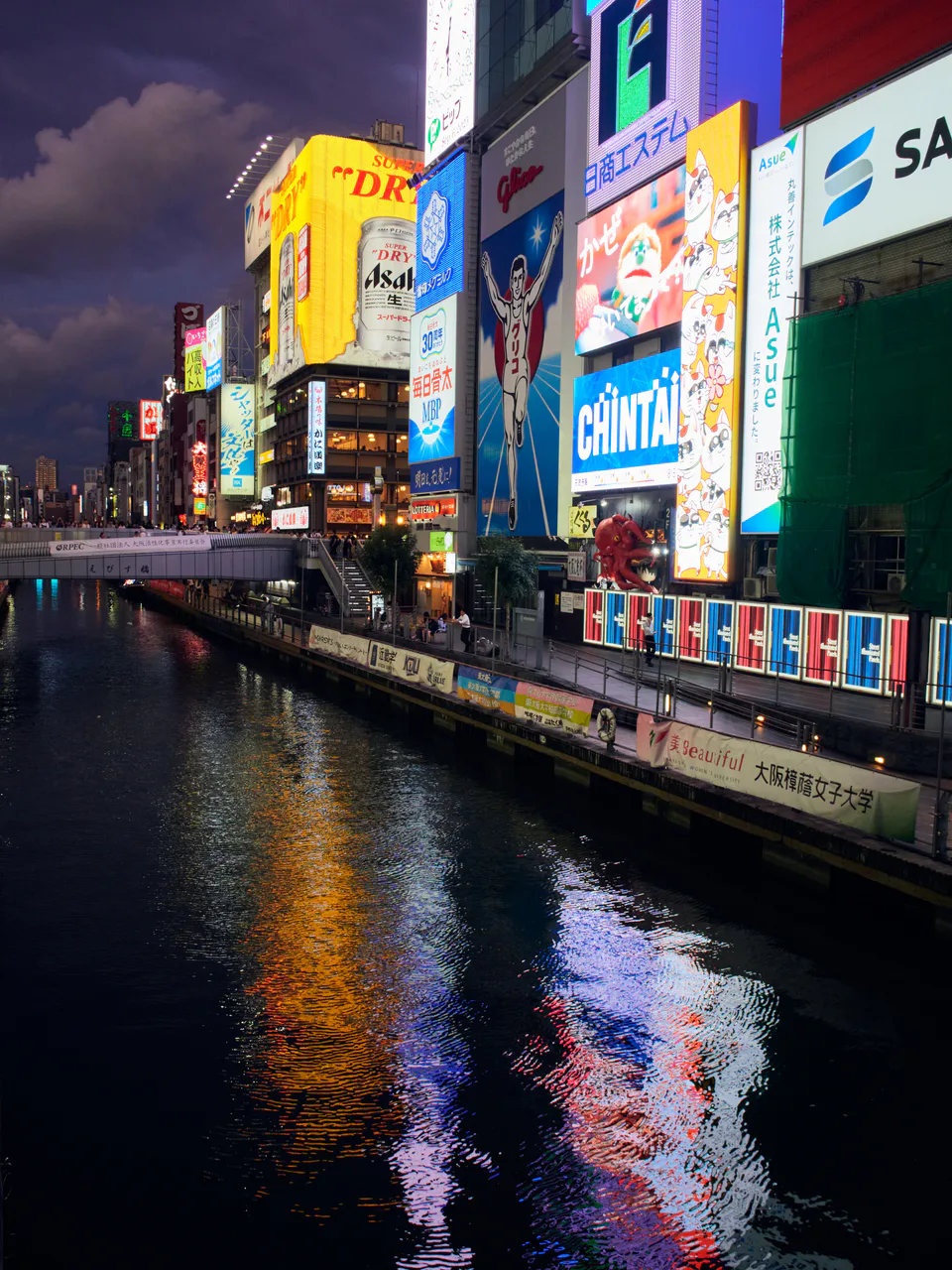
For most first-time visitors who care more about Kyoto’s temples, gardens and historic neighbourhoods than Osaka nightlife, I would sleep in Kyoto first rather than commute in from Osaka every morning. Choose Osaka instead when USJ, late food and nightlife, repeated Osaka-side rail days or a Namba-to-KIX departure matter more. Do not decide from the city names alone, though. Kyoto Station, Kawaramachi/Gion, Umeda and Namba solve different transport problems, and the best base can change when you replace “Kyoto vs Osaka” with the exact station pair you will use.
The most useful rule is not “three nights here, three nights there.” Count the anchor mornings you want in Kyoto and the late or early endpoints you have in Osaka. If one city owns most of those time-sensitive moments, make it the main base. Add a second hotel only when that move removes at least two expensive cross-city journeys you would otherwise repeat.
↔ Scroll table left or right
Your real trip pattern | Start with | Why |
Two or more early Kyoto sightseeing mornings | Kyoto | You protect the least replaceable hours of Kyoto instead of spending them commuting in |
USJ + late Osaka evening, or repeated Osaka-side days | Osaka | The hotel removes repeated end-of-day or early-morning crossings |
Only three Kansai nights | One base | A hotel move needs a very strong reason in such a short stay |
Four to six nights with meaningful time in both cities | Split only if the second hotel deletes at least two costly crossings | One USJ day alone is often not enough; USJ + late Osaka + KIX may be |
Final night before KIX from Namba | Osaka gets stronger | Nankai’s Rapi:t links Namba and KIX in roughly 34–39 minutes |
Final night before KIX from Kyoto Station | Kyoto can still be rational | HARUKA runs directly between Kyoto and KIX in about 75 minutes, so an Osaka move is not automatically required |
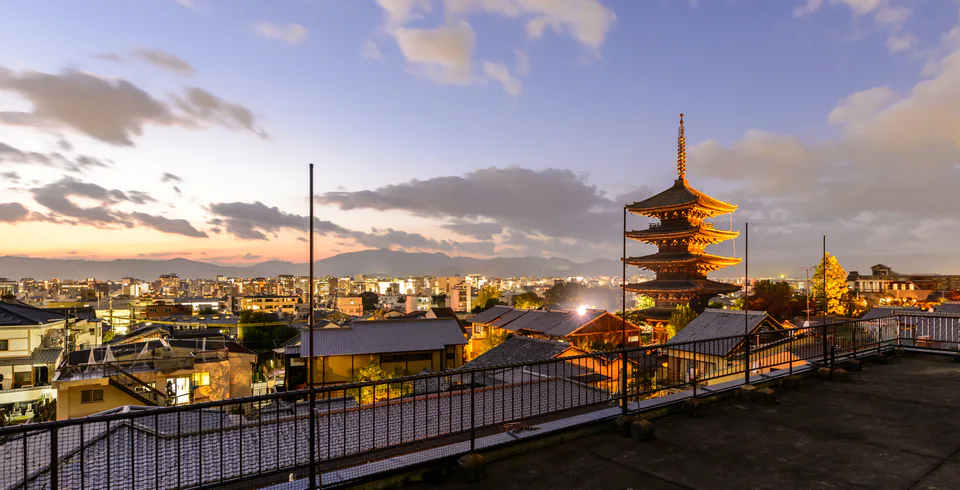
Kyoto wins when you are buying the first and last useful sightseeing hours
Kyoto’s strongest advantage is not that Osaka is far away. It is that many Kyoto days are more valuable at the edges of the day. Kyoto City’s official tourism guidance actively encourages visitors to shift sightseeing times to avoid congestion, and its current congestion forecast covers places such as Fushimi Inari, Gion/Kiyomizu and Arashiyama by time of day. The city’s tourist information centre also notes that reception at many temples and shrines often closes around 16:00.
That creates a simple planning asymmetry: an early Kyoto hour can be more useful than an extra late Kyoto hour. If you want two or three mornings built around Higashiyama, Fushimi Inari, Arashiyama or other Kyoto sights before the busiest part of the day, sleeping in Kyoto protects those hours. Commuting from Osaka may look cheap on a route planner, but it spends the exact part of the day that is hardest to replace.
This is why I would not tell a first-time visitor to stay in Osaka simply because Osaka hotels are cheaper on one set of dates. A nightly saving is real, but so is the opportunity cost of starting two Kyoto days later than intended.
If Kyoto clearly wins, the next decision is not “which Kyoto hotel?” but which Kyoto area should do the work. Kyoto Station is a transport base; Kawaramachi/Gion is a central-evening and east-Kyoto base. They should not be treated as interchangeable.
Osaka wins when your time-sensitive moments happen after dinner or around USJ
Osaka becomes the better base when the expensive part of the day is the return, not the start. If you want Dotonbori, bars, late dining or multiple evenings around Namba, sleeping in Kyoto means every good Osaka night ends with a cross-city journey and another local connection after you arrive back.
USJ creates the same problem in the opposite direction. Universal Studios Japan’s official rail access is built around Universal City Station and Osaka-side connections. One USJ day does not automatically justify moving hotels, but two park days—or a USJ day combined with a late Osaka night—can make an Osaka base materially more resilient.
For first-time visitors, the important distinction is frequency. One inconvenient commute is often cheaper than one hotel move. The same inconvenient commute repeated three times is a different product.
If USJ is the reason Osaka wins, do not stop at “stay in Osaka.” Compare Universal City, Umeda and Namba. A central Osaka hotel and a USJ-area hotel solve different mornings.
Replace “Kyoto vs Osaka” with the exact station pair before you book
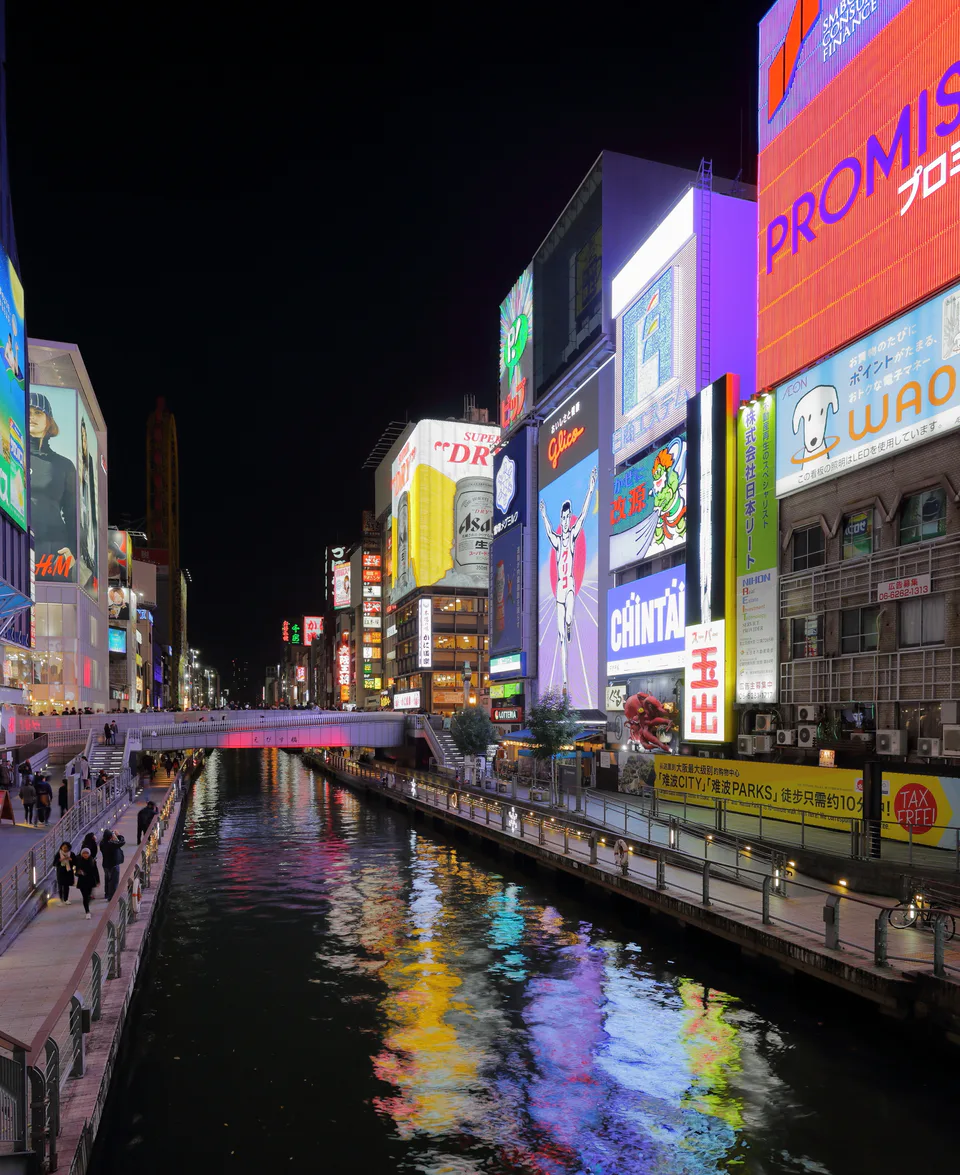
City-level comparisons hide the most important transport fact: the useful travel time depends on where the hotel sits inside each city.
For a JR-based comparison, official Kansai Airport tourism information gives roughly 29 minutes between JR Osaka Station and Kyoto Station by Special Rapid service. That sounds close enough to make either city interchangeable. It is not. A hotel in Gion is not Kyoto Station, and a hotel in Namba is not Osaka Station.
For another real station pair, Hankyu’s current timetable shows a Kyoto-kawaramachi to Osaka-umeda Limited Express example at about 43 minutes. That service can be excellent if your Kyoto hotel is around Kawaramachi and your Osaka target is Umeda. It is much less relevant if your day starts at Kyoto Station and ends in Namba.
The lesson is not that one railway is best. It is that the “Kyoto–Osaka commute” has several geometries. Before paying for a hotel, write down the actual station nearest the hotel and the actual station nearest the evening or morning anchor. Compare that pair.
↔ Scroll table left or right
Base | What it is unusually good at | What can make it the wrong choice |
Kyoto Station | JR day trips, HARUKA to KIX, luggage-heavy rail days | You may still spend local travel time reaching east-Kyoto evenings and neighbourhoods |
Kawaramachi / Gion | Higashiyama access, central Kyoto evenings, Hankyu toward Osaka-Umeda | Less convenient if most of your Kansai movement is JR-based from Kyoto Station |
Umeda / Osaka Station | JR regional movement, Kyoto day trips, northern Osaka | It does not give you Namba nightlife or Nankai KIX access for free |
Namba | Late food/nightlife and direct Nankai KIX access | Repeated Kyoto sightseeing mornings become a longer door-to-door problem than the headline intercity rail time suggests |
KIX does not automatically mean “move to Osaka for the final night”
This is one place where the common shortcut needs correcting. Kansai International Airport currently lists the HARUKA at about 75 minutes between KIX and Kyoto. It also lists Nankai Rapi:t at about 34 minutes to Namba on the fastest pattern, with other Rapi:t services around 39 minutes.
So yes: Namba has a very strong KIX advantage. But “Osaka is better for KIX” is too broad. If your Kyoto hotel is beside Kyoto Station, your luggage is already there and the HARUKA schedule fits your flight, moving to Osaka purely to shorten the airport train can create an unnecessary checkout, baggage transfer and second check-in.
The final Osaka night becomes compelling when it performs two jobs at once. For example: Osaka dinner + Namba night + simpler KIX morning. If its only job is “make the airport train shorter,” compare that gain with the friction of moving hotels.
If Namba is doing the work, test the station premium rather than assuming every hotel called “Namba” gives the same departure route. The Swissôtel Nankai Osaka airport-access guide shows what true station-level convenience looks like.
The second hotel should delete at least two expensive crossings
A split stay is not valuable because four or five nights “feels long enough.” It is valuable when the second hotel removes repeated friction that matters.
I would use this test: do not add the second hotel unless you can name at least two cross-city movements that it deletes or materially improves.
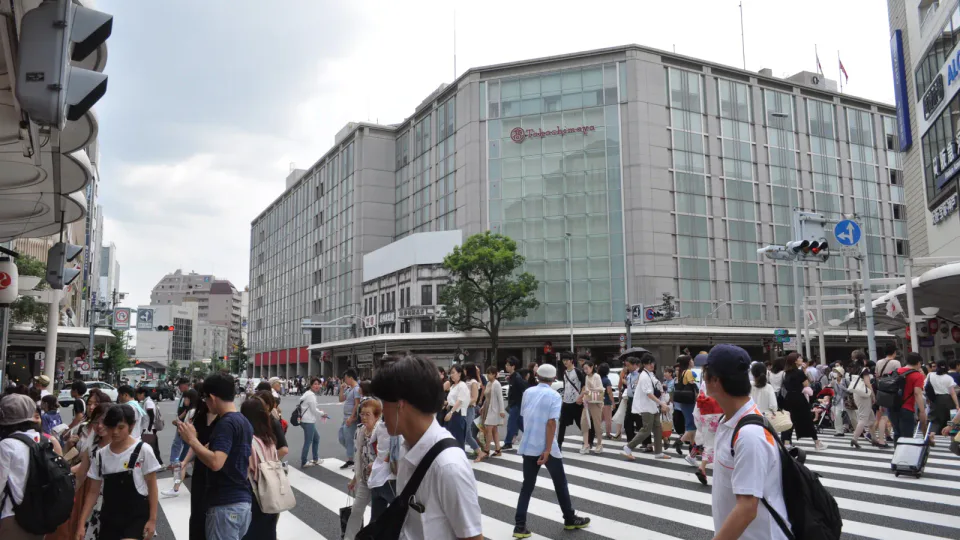
Weak reason: one Osaka dinner during a four-night Kyoto stay. Take the train.
Weak reason: one USJ day, but the next morning returns to Kyoto anyway. The hotel move may simply replace the commute.
Strong reason: USJ day + late Namba evening + KIX departure the next morning. One Osaka move now fixes three separate pieces of the trip.
Strong reason: two Osaka-side days after three Kyoto sightseeing days. The itinerary has changed geographic centre, so the hotel can change with it.
This is a better rule than splitting nights symmetrically. A 3+2 pattern can be excellent; a 3+3 split can be pointless. The question is what the move removes.
Three Kansai nights: pick one base unless the trip is built around a hard exception
With only three nights, the default should be one hotel. You have too little Kansai time to make a routine checkout, luggage hand-off and second check-in automatically worthwhile.
For a first trip dominated by Kyoto, stay in Kyoto and day-trip Osaka. For a trip dominated by USJ, Osaka nights and KIX, stay in Osaka and day-trip Kyoto. Split only when the trip contains a hard operational reason—such as a very early park strategy or a departure pattern that the first hotel handles badly.
This is also where first-time visitors often overestimate how much “variety” a hotel change adds. Kyoto and Osaka are close enough to visit from one another. You do not need to sleep in both merely to claim you experienced both.
Four to six nights: count anchor mornings and late endpoints
For a longer Kansai stay, count two things before deciding:
Kyoto anchor mornings: days when you genuinely want to be in a Kyoto sightseeing area early rather than arrive after a cross-city commute.
Osaka late/early endpoints: USJ starts, late Namba evenings, repeated Osaka Station departures, or a Namba-oriented KIX morning.
If Kyoto wins 3–1, keep most nights in Kyoto. If Osaka wins 3–1, make Osaka the main base. If both sides have two or more meaningful anchors, a split is finally solving a real itinerary problem.
This framework also survives price changes. Hotel rates move every day; the number of time-sensitive mornings and evenings in your itinerary does not.
Nara usually does not decide the Kyoto-vs-Osaka hotel question
Nara is reachable from either side of Kansai, so it normally should not be the reason you move from Kyoto to Osaka. If Kyoto already wins, keep the Kyoto room and use the Nara one-day itinerary. If Nara itself deserves slower time, decide day trip versus overnight directly.
The same principle applies to many regional days: do not let a destination that works from both cities overpower stronger morning, evening and airport constraints.
Large luggage makes a split more expensive—but not always wrong
A hotel move costs more when two people are travelling with several large suitcases. You have packing, checkout, station movement, storage or forwarding, transport and another check-in. That does not mean “never split.” It raises the amount of friction the second hotel must remove before the move becomes worthwhile.
If you are already sending luggage ahead with takkyubin, a Kyoto-to-Osaka move can become much lighter. But luggage forwarding should support a geographically sensible itinerary; it should not be used to justify a hotel change that has no clear job.
When the recommendation reverses
“Stay in Kyoto for a first trip” reverses when Kyoto is not actually the centre of the itinerary. If you have one Kyoto day, two Osaka days, USJ and a KIX departure, an Osaka base is more coherent even if you love temples.
“Stay in Osaka for KIX” reverses when you are already beside Kyoto Station. A direct HARUKA to the airport can be cleaner than moving hotels for one night.
“Use one base” reverses when a second base deletes multiple time-sensitive crossings. USJ + late Osaka + KIX is the classic example.
“Kyoto is better for sightseeing” reverses when your Kyoto days are deliberately late-starting. If you do not care about early temple hours or crowd avoidance, the value of sleeping in Kyoto falls.
Those reversals matter more than a generic “both cities are good” conclusion because they tell you when the default stops working.
Final verdict
For a first Kansai trip centred on Kyoto temples, gardens and historic districts, make Kyoto the main base—especially if you have two or more mornings you want to start there early. Choose Osaka when USJ, late food/nightlife, repeated Osaka-side travel or a Namba-oriented KIX departure creates more time-sensitive endpoints on the Osaka side.
For three nights, use one base unless there is a hard exception. For four to six nights, do not split just because the stay is longer: make the second hotel earn its existence by deleting at least two expensive cross-city movements. And before booking, replace the city names with the actual station pair—Kyoto Station, Kawaramachi/Gion, Umeda or Namba—because that is where the real answer often changes.
Sapporo Snow Festival: Odori vs Susukino — Where Should You Stay?
Nikko vs Kinugawa Onsen: Where Should You Stay for One or Two Nights?
Early Shinkansen from Osaka: Should You Stay in Shin-Osaka or Move Only for the Last Night?
References
Kyoto City Official Travel Guide — congestion forecast · Kyoto Online Tourist Information Center — sightseeing hours · Kansai International Airport — current rail access times · Hankyu Railway — Kyoto-kawaramachi timetables · Universal Studios Japan — official rail access. Checked August 25, 2026. Train patterns and schedules can change; verify the exact travel date.