

One early Shinkansen does not automatically make Shin-Osaka the best place to stay for your whole Osaka trip. For most first-time visitors, the better sequence is: choose the area that works for the nights you will actually spend in Osaka, then decide whether the final night is worth moving closer to the Shinkansen.
The last-night move is most valuable when it removes a failure-prone morning: large suitcases, children, older parents, a fixed onward connection, a traveller who hates early transfers, or a departure early enough that one missed connection would matter. It is usually poor value when you are travelling light, the train is replaceable, and your final Osaka evening still belongs to Namba, Shinsaibashi or Umeda.
30-second decision: stay put, move one night, or base in Shin-Osaka?
↔ Scroll table left or right
Your situation | Best default | Why |
One early Shinkansen, solo/couple, light luggage | Keep your original Osaka hotel | One morning transfer usually costs less than one hotel move |
One early Shinkansen, large luggage, kids or older parents | Consider moving only the last night | Reduces the number of things that can fail before a fixed train |
Final evening is a major Dotonbori/Umeda night | Stay in the original area | Do not sacrifice the final evening just to simplify one morning |
Two or more Shinkansen mornings | Promote Shin-Osaka to a real base candidate | The same convenience now repeats instead of happening once |
Critical onward connection with little tolerance for delay | Last-night move becomes stronger | The cost of a failed morning is much higher |
If you have not chosen your main Osaka area yet, start with where to stay in Osaka for first-time visitors or Namba vs Umeda. Shin-Osaka is usually a second decision unless Shinkansen use is repeated.
The ValueNavi model: Hotel Move Tax vs Departure Risk
This decision has two invisible costs that travel guides often separate even though you have to pay one or the other.
Hotel Move Tax = packing + checkout + luggage storage/transport + finding the new hotel + check-in + losing continuity on the final Osaka day.
Departure Risk = morning transfer + station navigation + luggage friction + group coordination + the cost of missing or nearly missing the train.
The move is worth doing only when the Departure Risk you remove is larger than the Hotel Move Tax you create. That sounds obvious, but it changes the answer for different travellers even when the train departure is identical.
The Room-to-Platform Fallacy: a hotel near Shin-Osaka does not erase the station
A common mistake is to compare “hotel to Shin-Osaka Station” with “Namba/Umeda to Shin-Osaka” and assume the entire difference becomes usable sleep. It does not.
Even after moving nearby, you still need to check out, use lifts, walk with luggage, enter the correct part of the station, pass the appropriate gates and reach the platform with a sensible boarding buffer. Staying in Shin-Osaka removes a city transfer; it does not remove station friction.
Osaka Metro officially lists Shin-Osaka as M13 on the Midosuji Line with transfers to JR and Shinkansen. Namba is M20 on the same Midosuji Line. That is useful context: the alternative to moving hotels is not an exotic cross-city journey, but it is still a transfer you may or may not want to manage with luggage before a fixed departure.
Use a Departure Risk Budget, not a vague “leave early” rule
ValueNavi treats the morning as a backwards-planning problem:
Train departure time − platform buffer − station navigation − city transfer − hotel exit friction = latest comfortable hotel-door time.
Do not use one generic buffer for everyone. Add time when:
you have multiple large suitcases;
one traveller walks more slowly;
a child may need breakfast or a toilet stop;
the group is unfamiliar with Japanese stations;
the train is tied to another non-flexible booking;
you know you become stressed when a morning schedule is tight.
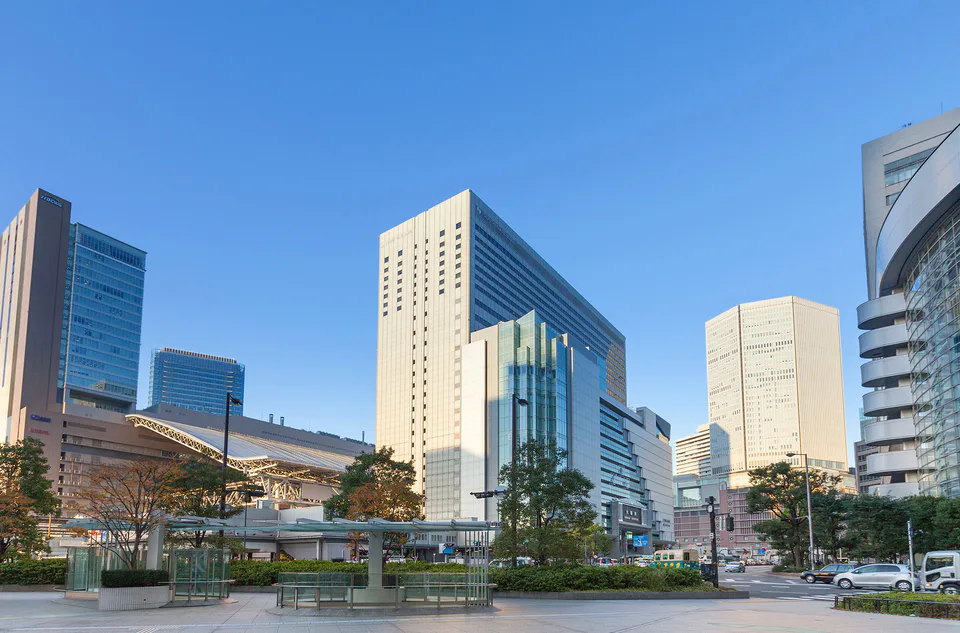
If the backwards calculation produces a hotel-door time that feels unpleasant but still realistic, staying put may be fine. If it produces a morning your group is unlikely to execute reliably, the last-night move has real value.
The Break-Even Test: what exactly are you buying by moving?
A final-night Shin-Osaka hotel is best understood as departure insurance. The insurance pays off when it removes a morning failure mode that matters.
↔ Scroll table left or right
What the move buys | High value when… | Low value when… |
One fewer transfer with luggage | Heavy luggage / stroller / mobility limits | One carry-on each |
More predictable morning | Fixed onward connection | Flexible train choice |
Lower coordination burden | Family or multi-room group | Solo traveller |
Less pre-departure anxiety | Traveller sleeps poorly before timed transfers | Comfortable with early public transport |
If you cannot name a specific morning problem the move solves, you are probably paying the Hotel Move Tax mostly for reassurance.
Umeda: set a higher threshold before moving
A Umeda base keeps paying you back through Osaka Station access, shopping and dining; the final-night move should remove a meaningful departure risk, not just look closer on a map.
If you already stay around Osaka Station/Umeda, the case for changing hotels is weaker than it is from a more distant or more nightlife-oriented base. Umeda already works well for JR-heavy itineraries and gives you a strong final evening without forcing a hotel change.
The question is not “is Shin-Osaka closer to the Shinkansen?” Of course it is. The useful question is whether that extra proximity is worth repacking your entire room one more time.
If you are choosing among Osaka Station hotels, use the Osaka Station hotel comparison first. Only after the main base is settled should you decide whether the final night needs to move.
Namba: the last-night move has a stronger case, but the whole-stay move usually does not
Namba earns much of its value at night: Dotonbori, Shinsaibashi, dining and the broader Minami area. If those are why you chose Namba, moving the whole Osaka stay to Shin-Osaka to prepare for one departure usually reverses the logic of the trip.
A better structure is:
keep the nights that benefit from Namba;
protect the final evening if it still matters;
move only the last night if the next morning’s risk is genuinely high.
This is the One-Problem / One-Night Rule: if Shin-Osaka is solving one departure morning, do not automatically let it redesign four nights.
Parents, children and groups: friction multiplies faster than distance
A transfer that is trivial for one light-packing adult can be the hardest part of the day for five people with different walking speeds and luggage. This is why the map alone is a poor decision tool.
For a family, morning friction can include:
waking several people at different speeds;
breakfast timing;
a stroller or multiple small bags;
toilet stops;
keeping tickets and luggage together;
finding the correct station route without splitting the group.
For this profile, moving to Shin-Osaka on the last night can be rational even if the pure time saving is modest. What you are buying is not minutes; you are buying fewer failure points.
Solo traveller with light luggage: the move often fails the test
At the opposite extreme, a solo traveller with one small bag, a flexible train and confidence using Osaka transport gets much less value from the move. Packing, checking out and re-checking in may take more attention than simply leaving the original hotel earlier.
The verdict flips only if the train is unusually important, the original hotel is awkwardly placed, or the final night is intentionally quiet anyway.
Two or more Shinkansen mornings: use the Repeat-Use Multiplier
One of the clearest reversal conditions is repetition. If you use Shin-Osaka on two or three mornings, the convenience is no longer a one-off insurance purchase.
ValueNavi’s Repeat-Use Multiplier asks:
How many times does this hotel location save the same friction during the stay?
If the answer is “once,” Shin-Osaka is usually a final-night candidate. If the answer is “three mornings,” it can become a full-stay candidate. Repetition is what moves Shin-Osaka from a tactical hotel to a strategic base.
The final evening has a price too
Moving hotels is easiest to justify when your final Osaka evening is already low-value: laundry, packing, an early dinner and sleep. In that scenario, Shin-Osaka can act as a clean transition night.
The same move becomes much worse if the last night contains a high-value plan:
a Dotonbori dinner you specifically chose;
late shopping in Shinsaibashi;
an Umeda night view or reservation;
a concert or meetup;
the only free evening left in Osaka.
This is the Final-Evening Opportunity Cost. Saving morning friction is not automatically a win if you destroy the one Osaka evening you still care about.
Trip length changes the answer
↔ Scroll table left or right
Osaka stay length | Last-night move | Why |
2 nights | Usually avoid | A hotel change consumes too much of a short stay |
3–4 nights | Conditional | Worth it only if departure risk is clearly high |
5–7 nights | Easier to justify | One move represents a smaller share of the trip |
Repeated Shinkansen use | Consider Shin-Osaka as a full base | The same benefit repeats |
A two-night split such as Namba → Shin-Osaka can turn almost every day into a check-in or checkout day. On a week-long stay, one final transfer night is much easier to absorb.
Do not let hotel facilities distort a transfer-night decision
Once you decide to move, choose the final-night hotel by tomorrow morning’s tasks rather than by resort-style features. The practical checklist should be:
easy luggage route to the station;
simple checkout;
bed setup that works for the actual group;
breakfast that does not conflict with departure time;
enough room to repack without turning the floor into a suitcase obstacle course.
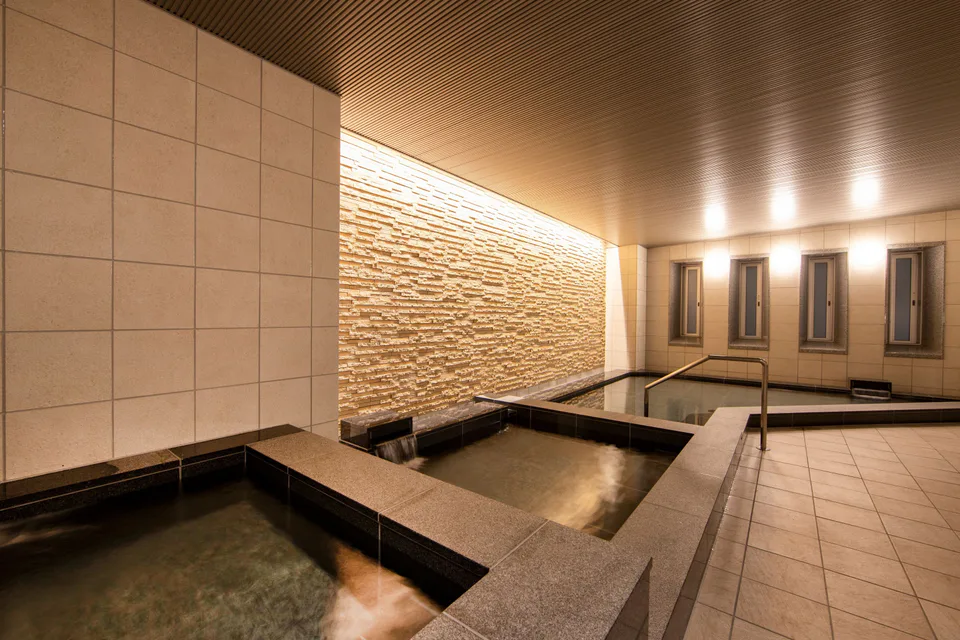
A public bath, view or breakfast buffet only has value if your schedule leaves time to use it. Do not count an amenity in the “benefit” column if the early train makes it unavailable in practice.
Three scenario tests
Scenario 1: couple in Namba, one 08:00-ish Shinkansen, carry-ons only
ValueNavi verdict: stay in Namba. Protect the final Osaka evening and leave earlier. The group is small, the luggage is light and the failure cost is manageable.
Scenario 2: family of four, two large suitcases, stroller, fixed onward booking
ValueNavi verdict: move only the final night. The move removes enough morning coordination risk to justify the Hotel Move Tax.
Scenario 3: three consecutive Shinkansen day trips or onward journeys
ValueNavi verdict: reconsider the whole base. Shin-Osaka’s convenience now repeats, so treating it as merely a final-night hotel understates its value.
ValueNavi scorecard
Plan | Osaka evening value | Departure resilience | Hotel-move friction | Best for |
|---|---|---|---|---|
Stay in Namba/Umeda throughout | 10/10 | 6–8/10 | Light luggage, flexible travellers | |
Move to Shin-Osaka for final night | 6–8/10 | 9/10 | Families, luggage-heavy groups, critical early trains | |
Stay in Shin-Osaka throughout | 5–7/10 | 10/10 | Repeated Shinkansen use |
The scores are editorial tools, not official ratings. The useful point is the pattern: Shin-Osaka gets stronger as departure friction repeats or becomes more expensive to fail.
When the default verdict is wrong
“Stay in the city and move only if necessary” becomes a bad recommendation if your group has mobility constraints, you need several Shinkansen departures, the train anchors a non-refundable onward itinerary, or the final evening has little value anyway.
Conversely, “move the last night for peace of mind” becomes a bad recommendation if you are on a two-night Osaka trip, travelling light, and would sacrifice your best evening just to remove a manageable morning transfer.
Final verdict
For one early Shinkansen, do not choose Shin-Osaka for the whole Osaka stay by default. Choose Namba, Umeda or another city base for the nights that actually use those areas. Then make a separate final-night decision.
Move only when the morning risk you remove — luggage, group coordination, fixed connections or stress — is worth more than the packing, check-in and final-evening value you lose. If Shin-Osaka matters on several mornings, that is the point where it stops being “departure insurance” and becomes a genuine base.
Official transport references
Transport structure checked on 27 August 2026. Always confirm your actual train time and service status before departure.