
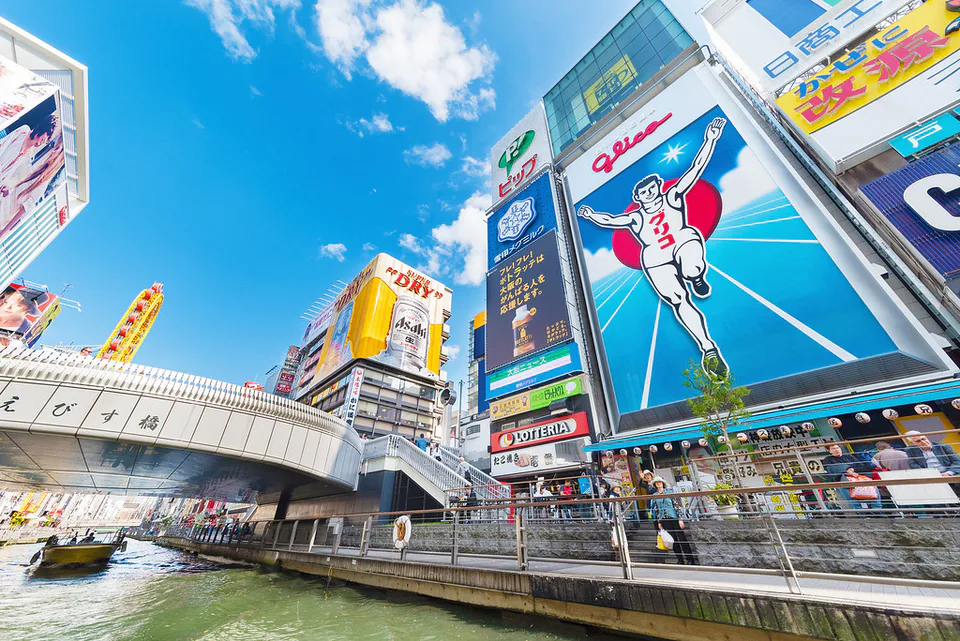
For a typical first trip where Osaka itself is a major part of the stay, Namba is the best default. It keeps Dotonbori, Shinsaibashi, late food and much of Minami usable after dinner, while Nankai gives it strong Kansai Airport access. Choose Umeda instead when Osaka is mainly your base for repeated Kyoto, Kobe or Himeji days. Choose Tennoji when a calmer southern base, family practicality and KIX access matter more than nightlife. Honmachi is the compromise when Namba and Umeda are genuinely tied. Universal City is a specialist USJ base, not the default answer to “where should I stay in Osaka?”
The first-time mistake is choosing from an area reputation instead of your repeated route. Your hotel is used every morning and every night. One airport transfer, one Kyoto day or one USJ day should not outweigh four evenings unless that day creates a genuinely hard timing problem.
↔ Scroll table left or right
Your first-trip pattern | Best area to check first | Why | Main reason to choose somewhere else |
Osaka food, shopping, Dotonbori, nightlife | Namba | The useful evening ends near the hotel | You have several long regional day trips from Osaka Station |
Kyoto / Kobe / Himeji on 2+ days | Umeda / Osaka Station | Repeated rail departures and tired returns matter more than one Namba night | Most Osaka evenings still finish in Minami |
Family, quieter base, KIX and south-side routes | Tennoji | Strong JR/Metro connectivity without sleeping inside the busiest nightlife zone | You specifically want Dotonbori outside the hotel every night |
Namba and Umeda are genuinely 50/50 | Honmachi | Central Midosuji compromise with access in both directions | You are using “central” to avoid deciding which end of the day matters more |
Two serious USJ days or park-first trip | Universal City | The park commute is now a repeated hard movement | USJ is only one normal day in a 4–5 night Osaka stay |
Very early Shinkansen | Usually keep main base; consider Shin-Osaka only for final night | It solves one departure morning, not the whole holiday | Your train is late enough that Namba/Umeda has comfortable margin |
Namba is the first-time default when Osaka itself is the experience
Namba wins for a simple reason: many of the things first-time visitors want to do after 18:00 are already in or around Minami. Dotonbori, Shinsaibashi, Hozenji and Namba shopping can become a walk-home evening rather than another rail journey.
That matters because a hotel area should protect the hours that are hardest to reproduce. A daytime ride across Osaka is easy to absorb. A 23:00 transfer with shopping bags, a tired child or a group still deciding where to eat is a different cost.
Namba also has a real KIX advantage. Kansai International Airport currently lists Nankai services at roughly 34 minutes by Rapi:t α, 39 minutes by Rapi:t β and 43 minutes by Airport Express between KIX and Namba. That is useful on arrival/departure days, especially with luggage.
But airport access is a tie-breaker, not the entire case. The stronger reason to stay in Namba is that the same location improves several ordinary evenings. If your trip is five nights and only one night is spent in Minami, do not choose Namba solely because the airport train is fast.
If Namba clearly wins, narrow the room decision with the Namba hotel comparison or the MIMARU Osaka Namba Station guide for a four-person layout.
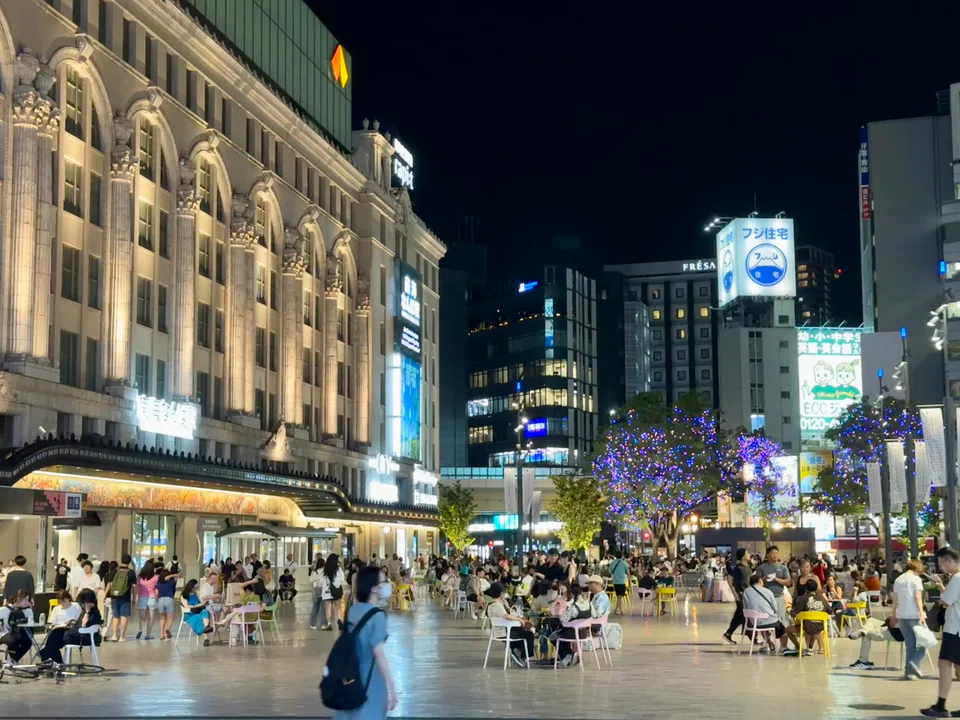
Umeda is the better default when Osaka is functioning as a Kansai rail base
Choose Umeda when the hotel’s main job is to launch repeated days outside central Osaka. JR Osaka Station and Hankyu Osaka-Umeda make the area useful for different Kyoto/Kobe geometries, while Osaka Station is also a major regional hub.
The important word is repeated. One Kyoto day does not make Umeda automatically better. Two or three external days can, because the station advantage is paid twice each time: once in the morning and once again when you return tired.
Umeda is not an “early-to-bed business district.” Osaka Station City, department stores, Grand Front and Kitashinchi give the north side a full evening ecosystem. The trade-off is simply that Dotonbori and Shinsaibashi are no longer outside the door.
First-time visitors often overvalue a map-centre concept and undervalue the return journey. If three nights will end in Namba but only one morning starts toward Kyoto, Namba may still be the better total base. If three mornings leave Osaka Station for Kyoto/Kobe/Himeji, Umeda’s operational value rises quickly.
Use Namba vs Umeda when these two remain close, then use the Osaka Station hotel comparison once Umeda wins.
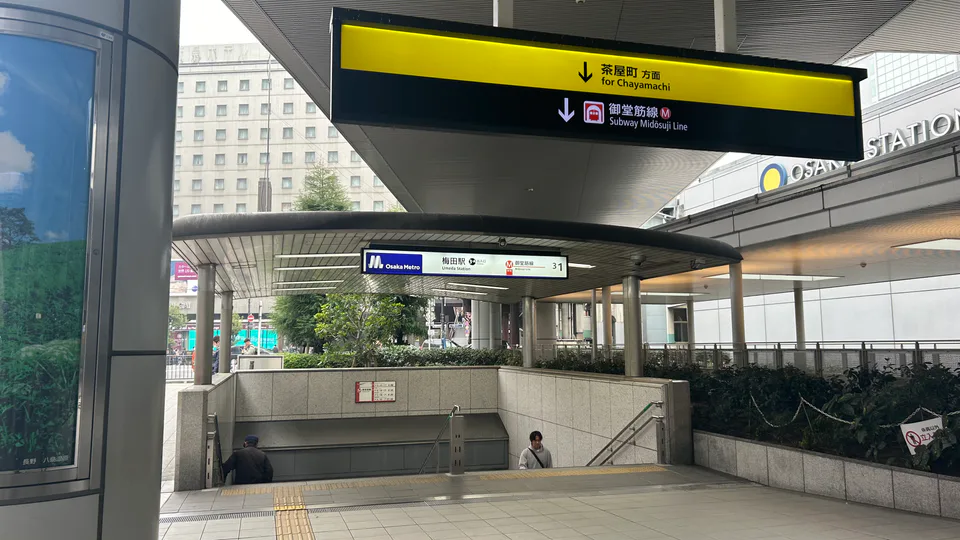
Tennoji is not “budget Namba” — it is a different first-trip strategy
Tennoji makes sense when you want a southern Osaka base without sleeping in the middle of Minami. It has JR and Osaka Metro connections, works well for Tennoji/Abeno and Shinsekai, and has strong airport geometry: KIX currently lists the HARUKA at about 30 minutes to Tennoji and the Kansai Airport Rapid Service at about 45 minutes.
That makes Tennoji especially useful for families, older travellers or visitors who value a calmer return at night but still want straightforward access to central Osaka.
The trade-off is experiential. A first-time visitor whose mental image of Osaka is late Dotonbori, Shinsaibashi shopping and spontaneous eating will still travel north-west to Namba repeatedly. If that is the trip, choose Namba and accept the busier environment rather than using Tennoji as a cheaper substitute.
Choose Tennoji because its route and atmosphere fit you, not because one hotel rate is lower on one date.
Honmachi is the compromise — but compromise should be earned
Honmachi sits on Osaka Metro’s Midosuji corridor between Umeda and Namba, which makes it appealing when the trip genuinely splits between north and south. It can also offer good hotel value compared with the busiest tourist nodes.
But “central” can become a way to avoid making the real decision. If four evenings end in Namba, Honmachi simply inserts an extra ride. If four mornings start from Osaka Station, it does the same in the opposite direction.
I would choose Honmachi only when:
Namba and Umeda score almost evenly on your actual itinerary;
the hotel itself is materially better value, larger or more practical;
you are comfortable using the Metro as the first/last movement most days.
It is a rational compromise, not a universal “best of both worlds.”
Universal City is excellent when USJ is the trip — and unnecessary when it is one day
Universal Studios Japan’s official access is built around JR Universal City Station. Staying there removes the morning park commute and the tired return after closing, which can be extremely valuable for children, first-time park visitors and anyone planning multiple serious park days.
The key threshold is repetition. One normal USJ day inside a four-night Osaka stay usually does not justify a hotel move. Two park days, or one park day where both an aggressive morning and a very late finish matter, can.
This is why Universal City should be treated as a specialist base. It is not “far from Osaka”; it is simply optimised for a different job. A park-side hotel gives back the most value when the park is using both ends of your day.
If USJ controls the accommodation choice, use the USJ one-day vs two-day hotel decision rather than comparing it as though it were another Namba neighbourhood.
Shin-Osaka is usually a final-night tool, not a first-time base
Shin-Osaka is excellent at reducing uncertainty before an early Shinkansen. That does not mean it is where a first-time visitor should spend four nights.
The station is not where most first-time Osaka evenings naturally end. Staying there for the whole trip can save one departure morning while adding a small last-mile cost after multiple dinners and sightseeing days.
If the Shinkansen is truly early, a final-night move can be rational, especially with young children, older parents or several large suitcases. If the train is mid-morning, keep the better Osaka base and travel to Shin-Osaka once.
Use the Shin-Osaka early-Shinkansen guide to decide whether that one night has a real job.
The exact station exit can matter more than the area name
“Namba” is not one station. Nankai Namba, Osaka-Namba, Metro Namba and JR Namba do not put you at the same door. “Umeda” can mean directly connected to JR Osaka Station or a long underground route from the platform you actually use.
For first-time visitors with luggage, compare the final 300–800 metres before comparing a five-minute train advantage. Ask:
Which railway do I arrive on?
Which exit has an elevator?
Is the hotel connected indoors?
Will I repeat this walk after dinner?
Can two large suitcases actually fit in the room once I arrive?
An area recommendation is only the first filter. A poorly positioned hotel can throw away the advantage of the neighbourhood.
Three or four nights: one base is the first-time default
For a normal three- or four-night Osaka block, stay in one hotel. Namba and Umeda are connected well enough that changing rooms simply to “experience both sides” rarely pays back the fixed cost of packing, checkout, luggage handling and another check-in.
Split only when the second hotel performs a specialist job:
two USJ days;
a genuinely early Shinkansen;
a very awkward KIX departure;
a family room configuration unavailable in the main base.
If the second hotel only saves one ordinary train ride, keep the first room.
Five to seven nights: the room itself starts to matter more
On a longer stay, laundry, suitcase space, separate beds, a bath and a useful desk can become more important than shaving five minutes from one station route. This is especially true for families and long-haul travellers carrying more luggage.
A five-night stay in a 17 m² room beside the perfect station may be worse than a 28–35 m² room five minutes farther away. Once the transport difference is small, let the room solve the next constraint.
The broader Osaka stay decision hub is useful when a long trip is complex enough that you are considering a specialist second base.
Final verdict: Namba first, unless your itinerary gives another area a repeated job
For a standard first Osaka visit, start with Namba. Move the answer to Umeda when repeated regional rail days dominate; to Tennoji when a calmer southern base and KIX/family practicality matter; to Honmachi when Namba and Umeda are genuinely tied and the hotel value is better; or to Universal City when USJ is important enough to control more than one hard movement.
Do not let a single airport transfer, one Kyoto day or one early train choose every night. The best first-time base is the one that makes the ordinary days easy, then handles the exceptional day well enough.
Osaka Long-Stay Hotels for 5–7 Nights: Laundry, Kitchens and When Not to Change Areas
Where to Stay in Osaka for Couples: Choose Your Evening Before the Hotel
Sapporo vs Chitose for the Last Night: Where to Stay in Hokkaido
Happo vs Echoland: Where Should You Stay in Hakuba for Skiing?
References
Kansai International Airport — current rail access times · Universal Studios Japan — official rail access · OSAKA-INFO — official Osaka transport overview. Checked August 25, 2026. Train services, station works and park operations can change; verify the exact travel date.