
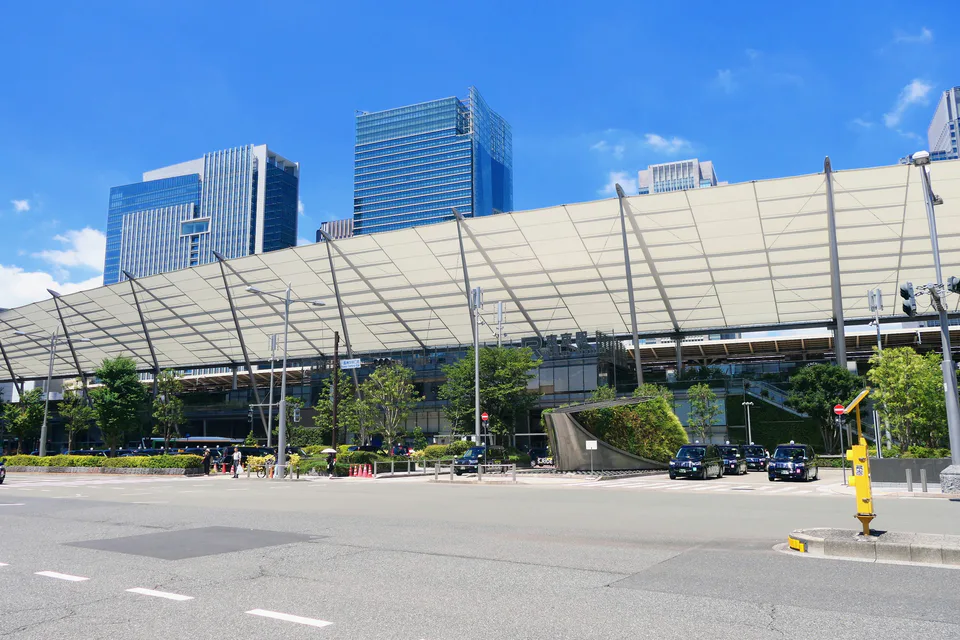
If you have no fixed constraints on a first Tokyo trip, start with Shinjuku—but only as a default, not as a universal winner. Move the answer to Shibuya when several evenings finish there; to Ueno when Narita is both your arrival and departure edge and east Tokyo dominates; to Tokyo Station when a short stay ends with an early Shinkansen or heavy-luggage transfer; to Ginza when you want a calmer central base; and to Asakusa when early and late hours in traditional east Tokyo are part of the experience.
The most useful rule is to separate hard edges from repeated friction. An airport transfer or Shinkansen departure happens once or twice. The journey back to your hotel may happen five nights in a row. A district that saves 45 minutes on arrival can still be the wrong five-night base if it adds 20–25 minutes to every evening you actually care about.
↔ Scroll table left or right
Your trip pattern | Start with | What it removes | What can reverse it |
Mixed first trip, west-Tokyo evenings, varied day trips | Shinjuku | Repeated west-side travel and some suburban/highway-bus friction | Round-trip Narita, early Shinkansen or a hotel on the wrong side of the station |
Shibuya / Harajuku / Omotesando / Ebisu dominate | Shibuya | The final ride after dinner or nightlife | Tokyo is only a short stop before an early intercity departure |
2–3 Tokyo nights, Kyoto/Osaka next, large luggage | Tokyo Station | One city transfer before the Shinkansen | Most Tokyo evenings finish in Shinjuku or Shibuya |
Narita both ways + Ueno/Asakusa/Akihabara-heavy trip | Ueno | Two long airport edges plus east-side daily travel | Several late west-Tokyo nights outweigh the airport saving |
Central dining/shopping, mixed east-west days, quieter evenings | Ginza | Large-station stress while keeping central access | You need a major JR hub or nightlife at the hotel door |
Sensoji mornings, Kappabashi, Skytree and east-Tokyo atmosphere | Asakusa | Travel to the traditional-Tokyo hours you actually want | Shinjuku/Shibuya dominate several days and nights |
Use the five-night test: one hard transfer should not automatically beat four repeated evenings
Most Tokyo hotel advice overweights the first and last day because airport journeys look intimidating on a map. That is rational for a very short stay. It becomes less rational as the number of hotel returns grows.
Use this sequence before choosing an area:
Write down both airport edges. Haneda or Narita, arrival time, departure time and the transport you would realistically use with luggage.
Write down the next city. If Kyoto, Osaka or another Tokaido Shinkansen destination follows Tokyo, note whether departure time is actually early enough for Tokyo Station proximity to matter.
Mark fixed regional departures. Hakone from Shinjuku, a highway bus, Disney, Nikko or another day trip can make one station more useful than a generic central location.
Mark where at least three evenings will finish. This is the most frequently ignored line.
Only then compare hotels. A better room cannot repair a district that repeatedly sends you across Tokyo at 22:30.
A useful boundary follows: one hard edge is usually a tiebreaker; two hard edges can shape the base. One Narita arrival should not automatically choose Ueno for a six-night west-Tokyo trip. Narita arrival and Narita departure on a three-night east-Tokyo trip can.
Narita shows why repeated-friction maths is more useful than a generic ranking
Current official references make the trade-off visible. Keisei publishes a fastest Skyliner time of about 41 minutes between Narita Airport Terminal 2·3 and Keisei Ueno. GO TOKYO currently gives roughly 1 hour 35 minutes by train between Narita and Shinjuku.
Those are station-to-station reference times, not aircraft-door-to-hotel promises. But they are useful for a planning calculation. On two Narita airport edges, Ueno can save roughly 100 minutes of published rail time versus using Shinjuku both ways.
Now add repeated evenings. GO TOKYO gives about 24 minutes from Shinjuku to Ueno on the JR Yamanote Line. Four late evenings finishing around Shinjuku create about 96 minutes of station-to-station return travel before hotel walks are counted.
Two Narita edges:
Ueno advantage ≈ 100 minutes

Four Shinjuku → Ueno late returns:
24 min × 4 ≈ 96 minutes
This is not a universal formula and it does not include waiting or walking. It demonstrates the decision principle: round-trip Narita can genuinely justify Ueno on a short trip, but a single Narita arrival usually cannot justify five nights of repeated west-to-east returns.
Shinjuku: the default wins through repeated utility, not because it is “central”
Shinjuku is not geographically central Tokyo. Its strength is that many first-time itineraries repeatedly use west Tokyo and several outbound transport systems from the same district. GO TOKYO currently lists Shinjuku on JR, Keio, Odakyu, Tokyo Metro and Toei services, with Shinjuku Expressway Bus Terminal on the south side. It gives about 14 minutes to Tokyo Station by JR Chuo Line Rapid and about seven minutes to Shibuya on the Yamanote Line.
Choose Shinjuku when: Shibuya/Harajuku/Meiji Jingu are major days; several evenings finish around Shinjuku; Hakone or an Odakyu route appears; or Busta Shinjuku is a real departure point. In those itineraries, the hotel removes several small pieces of friction rather than one dramatic journey.
The main failure mode is treating “Shinjuku Station” as one point. East, west and south are different hotel products. A five-minute map radius can still put the room on the wrong side of a huge station for the train, airport bus or nightlife you use most.
With two large suitcases, young children or a traveller who finds giant stations stressful, I would sometimes choose a slightly less connected district with a simpler final route. Transport breadth only has value when the group can use it without paying for the complexity every day.
If Shinjuku has already won, narrow the decision by station side. Hotel Gracery Shinjuku vs HOTEL GROOVE SHINJUKU is a Kabukicho-side comparison; Hotel Gracery Shinjuku vs JR Kyushu Hotel Blossom Shinjuku makes the east-side nightlife versus south-side transport trade-off clearer.
Shibuya: choose it when the hotel keeps working after sightseeing ends
Shibuya is strongest when the neighbourhood itself stays useful into the evening. GO TOKYO’s current guide positions Shibuya around fashion, art, cafés, bars and restaurants; Harajuku and Omotesando also sit naturally in the same west-Tokyo cluster. Official reference times currently put Shinjuku only about seven minutes away by Yamanote Line.
That seven-minute figure produces an important insight: Shibuya versus Shinjuku is often decided by the final hotel walk and evening pattern, not by the headline rail network. If the hotel is three minutes from the route you use and your dinners finish nearby, a smaller network can still produce the easier trip.
Shibuya gets weaker when it is being asked to solve a transfer job it does not need to solve. GO TOKYO currently gives about 23 minutes from Tokyo Station and about 1 hour 40 minutes by train from Narita. If Tokyo is only a two-night stop before an early Shinkansen, staying in Shibuya for “vibe” can create a final-morning transfer that contributes little to the short stay.
Choose Shibuya when several nights really end there, not because Shibuya Crossing appears once on Day 2. If a specific hotel is the next decision, sequence MIYASHITA PARK is a useful reminder that hotel operating rules such as a 17:00 check-in can matter more than another railway line.
Tokyo Station: strongest when one difficult morning is genuinely difficult
Tokyo Station is the right first check for a short Tokyo stop that continues west on the Tokaido Shinkansen. It is also easier to justify with large luggage because you can remove one city transfer before the long-distance journey.
The mistake is paying a large station premium for five or six nights because of one ordinary 10:00 Shinkansen on the final day. GO TOKYO places Shinjuku about 14–15 minutes away from Tokyo Station by the fastest straightforward JR route. That is not zero, but it is also not enough on its own to outweigh several nights where you would rather be west.
I would give Tokyo Station much more weight when at least two of these are true:
Tokyo is only two or three nights;
the Shinkansen departure is early;
two 28–30 inch suitcases make another rail transfer genuinely unpleasant;
the arrival side also works well from your airport or previous city;
your Tokyo sightseeing is central/east rather than nightlife-heavy west Tokyo.
If the only argument is “we leave for Kyoto eventually,” keep comparing. Once Tokyo Station itself wins, Hotel Metropolitan Tokyo Marunouchi vs Hotel Ryumeikan Tokyo tests whether the shortest station walk is worth the room and price trade-off.
Ueno: the best example of an airport advantage that can actually shape the whole stay
Ueno becomes unusually strong when Narita appears at both ends of a short trip. Keisei Ueno gives direct Skyliner access, while JR and Tokyo Metro make Ueno useful for Tokyo Station, Akihabara and the rest of eastern/northern Tokyo. GO TOKYO currently gives about eight minutes from Ueno to Tokyo Station on the Yamanote Line.
Choose Ueno when: Narita is both arrival and departure; Ueno Park or its museums matter; Asakusa/Akihabara/Tokyo Station are repeated destinations; or the trip is only two to four nights and simplifying the airport edges has unusually high value.
Reject Ueno when: three or four nights end around Shinjuku/Shibuya and the airport advantage occurs only once. The 24-minute Ueno–Shinjuku reference time is small for one outing but large when repeated late at night.
Do not use “Ueno is cheaper” as the reason. Hotel pricing changes by date. The transport geometry is durable; the room-rate stereotype is not.
Once Ueno wins, compare the last few minutes rather than reopening all of Tokyo. Mitsui Garden Hotel Ueno vs NOHGA is the more useful next decision.
Ginza: the central compromise is valuable when you want fewer station problems
Ginza is not the obvious winner on a railway map, which is exactly why it can work. GO TOKYO currently lists Ginza Station on the Ginza, Marunouchi and Hibiya lines, with Yurakucho and Higashi-ginza adding useful nearby options. Tokyo Station is about three minutes by Marunouchi Line or roughly a 15-minute walk from the Ginza area.
This makes Ginza strong for a mixed itinerary: Tsukiji, Marunouchi, Nihombashi, central museums, dining and shopping, with neither east nor west Tokyo owning every day. It is also useful for travellers who would rather have several simple subway options than navigate Shinjuku Station twice a day.
The premium is wasted when the district’s actual strengths are not used. If you do not care about shopping, central dining or the calmer evening environment and every night ends in Shibuya, Ginza becomes a pleasant place you commute back to.
Ginza is therefore a lifestyle-and-centrality choice, not a transfer-maximisation choice. For an early Shinkansen, Tokyo Station still removes more risk. For repeated nightlife, Shinjuku or Shibuya keeps more of the evening close to the room.
Asakusa: pay for the morning and evening hours, not for a “traditional Tokyo” label
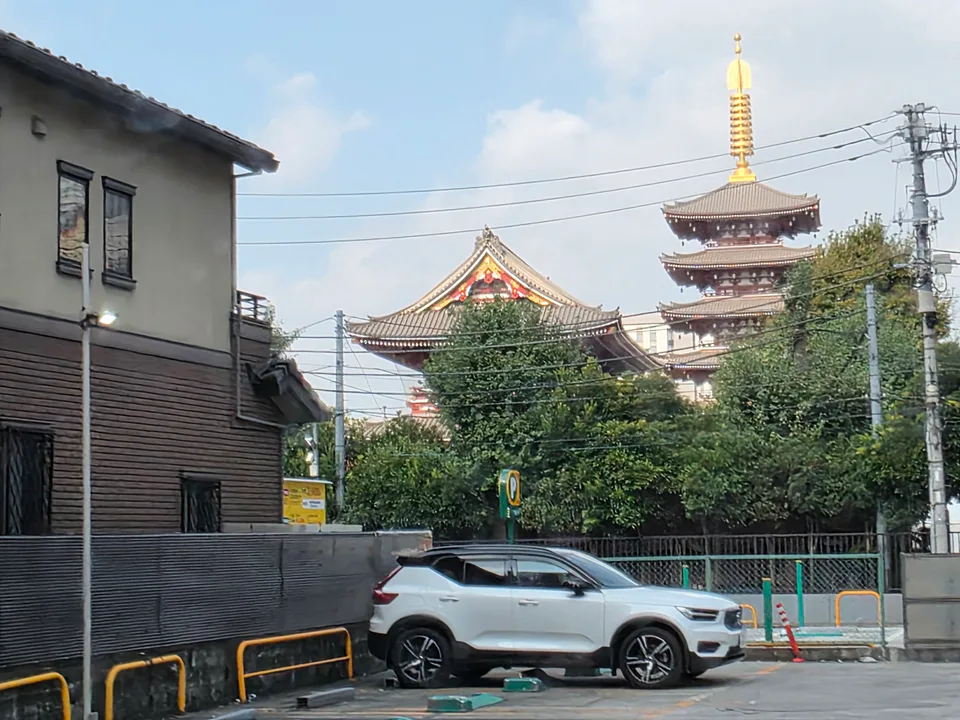
Asakusa is the most experience-led base here. The official GO TOKYO guide lists Tokyo Metro Ginza Line, Toei Asakusa Line and Tobu Skytree Line access, with about 20 minutes to Tokyo Station and 35 minutes to Shinjuku on current reference routes.
Those numbers make Asakusa a poor generic west-Tokyo base and a very strong specialised east-Tokyo base. If you genuinely want Sensoji before the main crowds, a late walk after the commercial day has quietened, Kappabashi, Skytree and the Sumida side, the hotel is buying time periods that a Shinjuku day trip does not reproduce as easily.
The answer reverses when “traditional Tokyo” is only one half-day. If Days 2–5 are Shibuya, Harajuku, Shinjuku, concerts and west-side dinners, sleeping in Asakusa converts one atmospheric morning into repeated cross-city travel.
Also remember that central Asakusa is not a JR hub. That is not inherently bad—the subway network is useful—but it matters for travellers who reflexively plan every Tokyo day around JR lines or a rail pass.
Haneda should usually be a tiebreaker; Narita can be a base-shaper
Haneda is much closer to central Tokyo, and the official Tokyo tourism guidance treats it as the more centrally located airport. For most normal daytime arrivals, “we fly into Haneda” is not a strong enough reason to choose all five hotel nights around one airport railway.
Narita is different because the ground journey is long enough for a direct express route to change a short trip materially. This is why Ueno can jump several positions when Narita appears twice.
Use this airport rule:
Haneda + normal arrival/departure: use the airport as a tiebreaker after the daily itinerary.
Narita once: normally still a tiebreaker on a long Tokyo stay.
Narita both ways on a 2–4 night stay: let airport access carry much more weight.
Very late arrival or very early departure: stop using generic daytime travel times and solve the exact service window separately.
If the arrival itself is late enough to threaten the city transfer, use the Narita late-arrival guide or the equivalent Haneda decision before choosing the whole Tokyo base.
Large luggage and children make the hotel entrance more important than the area name
Two hotels in “Shinjuku” can produce completely different arrival days. One may be beside the route you use; another may require crossing the station, changing levels and walking several more blocks. The same applies in Shibuya and Tokyo Station.
For a family or anyone with large wheeled luggage, check:
the exact railway/operator you will use on arrival;
the station exit closest to the hotel;
whether the route is step-free in the direction you actually travel;
whether the final walk is realistic with the bags you have;
and whether the same entrance still works late at night.
Do this before comparing breakfast, room décor or another five square metres. A hotel feature is used once or twice a day; a bad arrival route can start the trip with a predictable failure.
Do not split a normal four- or five-night Tokyo stay just to “experience two areas”
A Shinjuku + Asakusa split sounds like it solves east and west Tokyo. Usually it adds checkout, packing, luggage storage, another transfer and a second check-in so that you can save a few train rides.
I would split only when the second hotel performs a different operational job, for example:
two consecutive Tokyo Disney days where moving closer materially protects early park mornings;
a final airport night for a genuinely early flight;
the Tokyo stay is actually two separate visits around an intercity trip;
or one hotel segment is a destination stay rather than merely another neighbourhood.
Otherwise, choose one base and accept that Tokyo is large. A 20-minute train ride is often cheaper than rebuilding the hotel system halfway through the stay.
Trip length changes the answer more than most “best area” lists admit
Two or three nights: hard edges dominate. Ueno or Tokyo Station can beat a more entertaining district because the arrival and onward departure consume a larger share of the stay.
Four or five nights: repeated evenings and day clusters dominate. Shinjuku, Shibuya or Ginza often become stronger because the hotel is now part of several complete days rather than one transfer day.
Six or seven nights: room function starts to matter much more. Laundry, luggage space, desk/seating, breakfast pattern and whether you genuinely like returning to the neighbourhood can justify choosing a slightly less “efficient” station.
This is why a one-night or two-night recommendation should not be copied into a week-long Tokyo trip. The longer the stay, the more often the hotel must solve ordinary life rather than just transport.
Four first-trip patterns that produce different winners
Three nights, Narita in and out, east-Tokyo sightseeing
Start with Ueno. Two airport edges are important enough to shape the short stay, and Asakusa/Akihabara/Tokyo Station remain convenient. Shinjuku only wins if west-Tokyo evenings are actually the main product.
Five nights, Haneda arrival, Hakone next, Shibuya/Shinjuku evenings
Start with Shinjuku. The airport should not dominate five nights, while west-side returns and the Odakyu/Hakone edge repeat or matter more. Shibuya can still beat it when most evenings end there and the Hakone departure is not particularly early.
Two nights before Kyoto with two large suitcases
Start with Tokyo Station. The hotel is mainly a short-stay logistics tool, and removing one city transfer before the Shinkansen has higher marginal value than living inside nightlife for only two nights.
Five nights built around Sensoji mornings, Skytree, Kappabashi and east Tokyo
Start with Asakusa or Ueno. Asakusa wins when atmosphere outside sightseeing hours is a major reason for the trip; Ueno wins when Narita/JR and broader transport matter more.
Final verdict: choose the repeated problem you want the hotel to remove
Shinjuku is the best first check when the itinerary is still broad, but it is not the best answer to every first Tokyo trip. Shibuya wins when west-Tokyo evenings are the repeated problem. Tokyo Station wins when a short stay is dominated by an intercity edge. Ueno wins when Narita appears twice and east Tokyo fits the sightseeing. Ginza wins when you want central access without giant-station intensity. Asakusa wins when the traditional-Tokyo hours around the hotel are part of the product.
The red-team question is simple: what would make this district lose? If Ueno only has one Narita arrival but four Shinjuku nights, it can lose. If Tokyo Station only saves one ordinary 10:00 Shinkansen transfer during a six-night west-Tokyo stay, it can lose. If Shinjuku puts your family on the wrong side of the station every day, its huge network can become a liability rather than an advantage.
Choose the district after the route pattern, then choose the hotel after the exact station entrance. That order removes more Tokyo friction than searching for the “best hotel” across the entire city.
Next decision
Choosing Shinjuku? Compare Hotel Gracery Shinjuku vs HOTEL GROOVE SHINJUKU or Hotel Gracery vs JR Kyushu Hotel Blossom by station side.
Choosing Ueno? Use Mitsui Garden Hotel Ueno vs NOHGA. Choosing Tokyo Station? Use Hotel Metropolitan Tokyo Marunouchi vs Hotel Ryumeikan Tokyo. If the Tokyo stay length itself is still uncertain, solve how many days in Tokyo before paying a location premium for a trip that may change shape.
Official references and verification date
Checked August 25, 2026 against GO TOKYO — Shinjuku access, GO TOKYO — Shibuya access, GO TOKYO — Ueno access, GO TOKYO — Ginza access, GO TOKYO — Asakusa access, GO TOKYO — Tokyo Station and Marunouchi and Keisei Skyliner. Published journey times are planning references rather than hotel-door guarantees; recheck exact airport and early/late services for the travel date.