
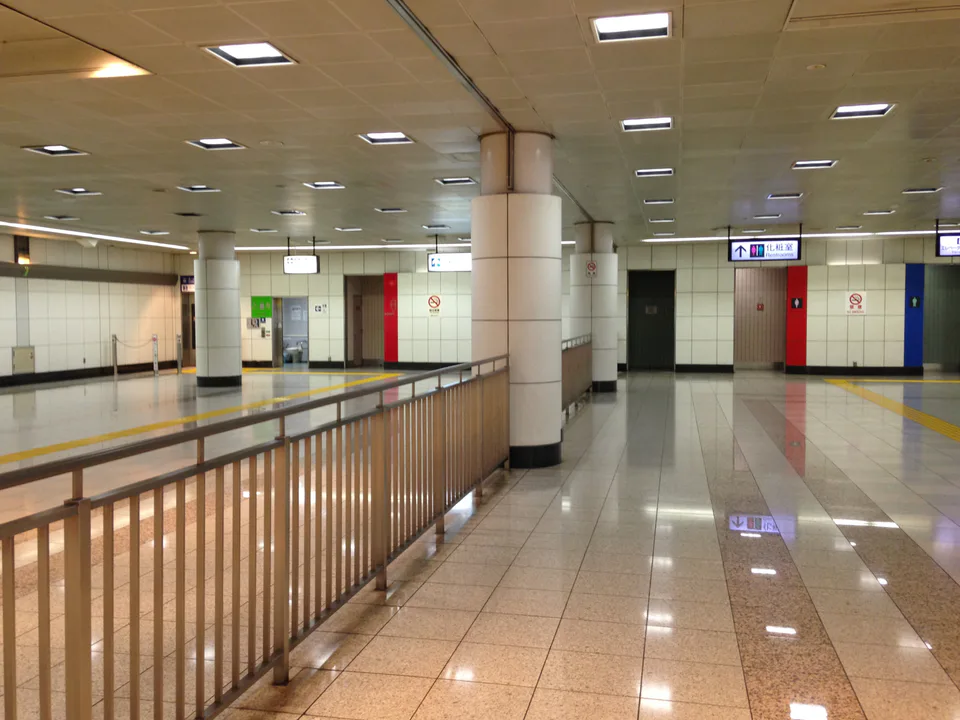
For a late international arrival at Narita, I would usually continue into Tokyo only when you reach the public arrivals area early enough that your specific city route still has a real buffer. Once the plan depends on the final premium train, the final bus, or a second late-night transfer after reaching Tokyo, staying at or near Narita becomes the more resilient first-night choice. The decision point is when you are landside with your bags—not the scheduled landing time.
Narita is less forgiving than Haneda because the airport is much farther from central Tokyo and Terminal 3 adds its own station-access penalty. The current Keisei timetable lists the final Skyliner from Airport Terminal 2·3 Station at 23:03, while Narita Airport says the walk from the Terminal 3 arrivals information counter to that station takes about 13 minutes. The current TYO-NRT low-cost bus keeps Tokyo Station viable slightly later, with final departures at 23:20 from Terminal 3, 23:25 from Terminal 2 and 23:30 from Terminal 1.
Checked August 25, 2026. Keisei currently lists a 23:03 final Skyliner from Airport Terminal 2·3 Station to Nippori/Ueno, followed by a 23:11 Access Express whose listed destination is Keisei-Takasago. Narita Airport currently states that Terminal 3 is about a 13-minute walk from the Airport Terminal 2·3 Station ticket gates. TYO-NRT currently lists its final Tokyo-bound departures at 23:20 from T3, 23:25 from T2 and 23:30 from T1. The final TYO-NRT service is not reservable and is paid at the bus stop by cash or transport IC card; credit cards are not accepted on that final departure. Schedules can change, so recheck the exact date.
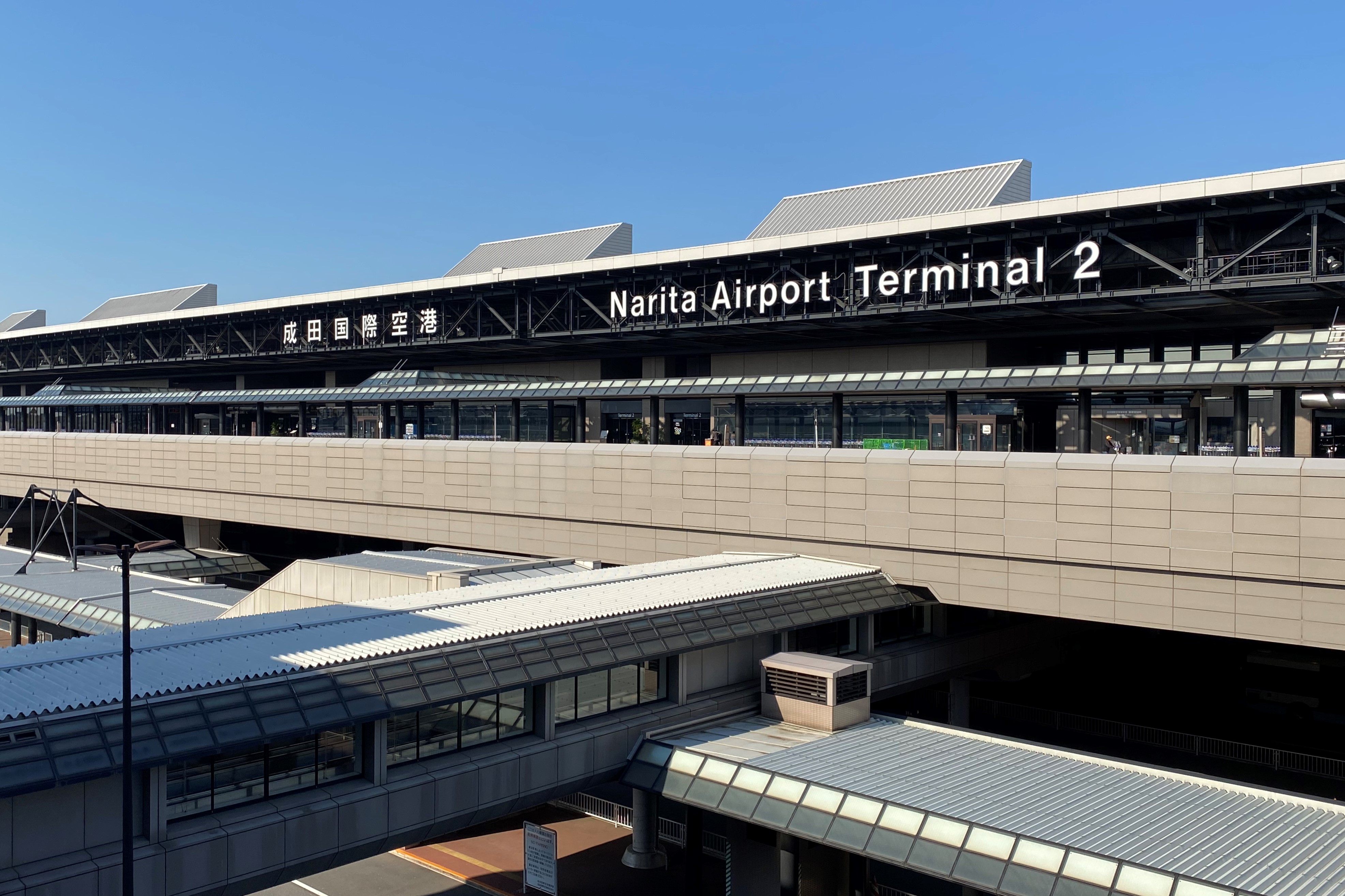
Narita late arrival: the 30-second decision
↔ Scroll table left or right
Your situation after customs | Default decision | Why |
Landside well before about 22:30 | Tokyo is usually reasonable | You still have margin for normal rail or bus options, assuming the Tokyo hotel is simple from the final stop |
Terminal 3 around 22:30–23:00 | Recheck the exact route; bus may be safer than rail | T3 adds about 13 minutes to reach the rail station, while the final TYO-NRT bus leaves T3 at 23:20 |
After 23:00 but already near the correct TYO-NRT stop | Tokyo only if Tokyo Station is genuinely useful | The final bus can still work, but it is a narrow, non-reservable last-service plan |
Final bus no longer realistic | Stay at / near Narita | The city option shifts toward taxi or terminal waiting instead of a normal first-night transfer |
Children, stroller, several large bags, or fixed early plans next morning | Bias toward Narita | Every late-night hand-off and lost hour of sleep costs more |
The 22:30 line above is a ValueNavi planning rule, not an official airport cutoff. It is deliberately conservative because the published departure time is only useful if immigration, baggage, walking, ticketing and boarding all leave enough margin.
ValueNavi Arrival Resilience Score: Narita penalizes terminal distance more heavily
This uses the same ValueNavi model as our other airport-arrival guides: last-service slack (30%), hotel-door fit (25%), luggage/hand-off burden (20%), next-morning positioning (15%), and fallback depth (10%). It is an editorial planning score, not an official airport, bus or railway rating.
Narita scenario | Arrival Resilience Score | Why | Main failure mode |
|---|---|---|---|
Narita-area hotel once the final city options are tight | Removes last-service risk and protects sleep | Creates another hotel move into Tokyo next morning | |
Skyliner to Ueno/Nippori with 30+ minutes of usable station-ready slack | Direct premium rail to a useful hotel area with real timing margin | Score falls sharply if the hotel needs another late connection | |
TYO-NRT to a hotel near Tokyo Station with 25+ minutes of boarding slack | Direct terminal boarding and a useful city endpoint avoid the T3 station walk | Final service is non-reservable and requires the correct payment method | |
Final TYO-NRT used as Plan A after 23:00 | The route still exists, but almost all fallback depth has disappeared | A late customs exit, wrong stop or payment issue can collapse the plan | |
T3 final Skyliner attempt with under 20 minutes to departure | The published 13-minute station walk consumes most of the apparent margin | There is almost no allowance left for tickets, navigation or a slow walking pace |
ValueNavi Arrival Slack formula: usable slack = final useful departure time − landside-with-bags time − terminal-access penalty − boarding allowance. For Terminal 3 rail, the official 13-minute walk is a real input, not background detail. Example: landside at 22:35 for the 23:03 Skyliner gives 28 raw minutes; subtract the 13-minute T3 walk and only 15 minutes remain before ticketing and boarding. On our shared scale, that is already at the amber/red boundary.
That same 22:35 landside time can therefore produce two different answers: rail is fragile, while the 23:20 TYO-NRT departure from Terminal 3 has a larger raw window and no station walk. The bus only scores well if Tokyo Station is genuinely useful for the hotel.
For price context, the current TYO-NRT adult one-way fare is ¥1,500 (about US$9.40), with a designated late-night/early-morning fare of ¥3,000 (about US$18.90). Exchange rates move; the yen fare is the booking reference.
A 22:00 landing is not a 22:00 transport decision
The most common mistake is building the first night from scheduled touchdown. After an international arrival, you still have taxiing, deplaning, immigration, checked baggage and customs. Narita adds another complication: the amount of terminal walking depends on where you arrive.
A route is fragile when it works only if every stage is fast. If the plan requires a 23:03 Skyliner and the flight is scheduled to land at 22:15, you are not really booking “a train into Tokyo.” You are booking a chain of assumptions about the runway, immigration queue, baggage belt and your ability to reach the station without delay.
Use the public arrivals area as the decision point. Once you have your bags, look at the live departure that still makes sense for your actual Tokyo neighborhood. If the remaining option has no buffer, the airport-area hotel is buying certainty rather than merely convenience.
Terminal 3 changes the last-train calculation by about 13 minutes
Narita Airport currently says it takes about 13 minutes to walk from the Terminal 3 arrivals information counter to the ticket gates at Airport Terminal 2·3 Station. That is materially different from arriving in Terminal 2 and being much closer to the station.
This matters because the current final Skyliner from Airport Terminal 2·3 Station is 23:03. A traveler standing landside in Terminal 3 at 22:50 does not have thirteen theoretical minutes before the train; the walk itself is already about thirteen minutes before allowing for ticket purchase, navigation or luggage.
For T3, I would therefore stop treating rail as the automatic late-night answer earlier than I would for T2. If Tokyo Station works for the hotel, the direct TYO-NRT bus can become the more resilient final option because it departs from Terminal 3 itself at 23:20.
The final Skyliner and the final city-capable train are not the same thing
Keisei’s current Airport Terminal 2·3 Station timetable lists the last Skyliner at 23:03 for Keisei-Ueno. It then lists an Access Express at 23:11 whose destination is Keisei-Takasago.
That distinction is important. The Skyliner is a straightforward airport-to-Nippori/Ueno product. A later train that ends at Keisei-Takasago may still be useful, but it can require another connection and more late-night judgment. A traveler whose hotel is in Ueno should not value the 23:11 departure as though it were simply “another Skyliner.”
The decision should therefore be based on the last service that gets you to a useful place with a tolerable final mile—not the last train that physically leaves the airport.
The 23:20–23:30 TYO-NRT bus is a real rescue route, not a general safety net
The current TYO-NRT timetable lists final Tokyo-bound departures at 23:20 from Terminal 3, 23:25 from Terminal 2 and 23:30 from Terminal 1. This makes Tokyo Station a more realistic late-night target than many other neighborhoods once premium rail becomes tight.
But the final service has operational catches. The bus is not reservable from the airport, and the final departure is handled directly at the bus stop. The operator currently states that payment for the final airport departure is by cash or transport IC card and that credit cards are not accepted.
That creates a failure mode ordinary timetable comparisons miss. “A bus exists at 23:20” is not the same as “I can safely plan around it before I have cleared customs.” To treat the final bus as your Plan A, you should already be landside, know the correct stop, have a valid payment method and have enough time to board without running across the terminal.
If any of those conditions fail, the airport hotel is no longer competing with a normal Tokyo transfer. It is competing with a taxi, a terminal wait or a very improvised first night.
Tokyo Station, Ueno and Shinjuku should not use the same cutoff
Narita’s late-arrival answer changes with the Tokyo neighborhood. Ueno and Nippori are naturally aligned with the Skyliner. Tokyo Station is naturally aligned with TYO-NRT. Shinjuku, Shibuya and other districts can require another rail or taxi leg after the airport service has already consumed most of the night.
This is why “I can still get into Tokyo” is not enough. The relevant question is “can I still get from the airport to the hotel door without adding another fragile hand-off?”
If the hotel is beside Ueno or Nippori and you can comfortably catch the Skyliner, continuing into Tokyo is strong. If the hotel is a short walk from Tokyo Station and the final TYO-NRT is comfortably within reach, the bus can work. If the hotel is in western Shinjuku and reaching it requires a late taxi after the airport transfer, the value of finishing the journey that night falls quickly.
The next morning can reverse the answer
Staying near Narita protects the arrival night but creates a second hotel move the next day. Going straight to Tokyo does the opposite: it makes the arrival night longer but can eliminate the first-morning transfer entirely.
Compare the whole block from customs to the first meaningful task the next morning. If you stay near Narita, the morning may be: breakfast → checkout → shuttle or local transfer → train/bus into Tokyo → luggage storage → finally start sightseeing. If you go to Tokyo that night, you may sleep later and wake up already positioned.
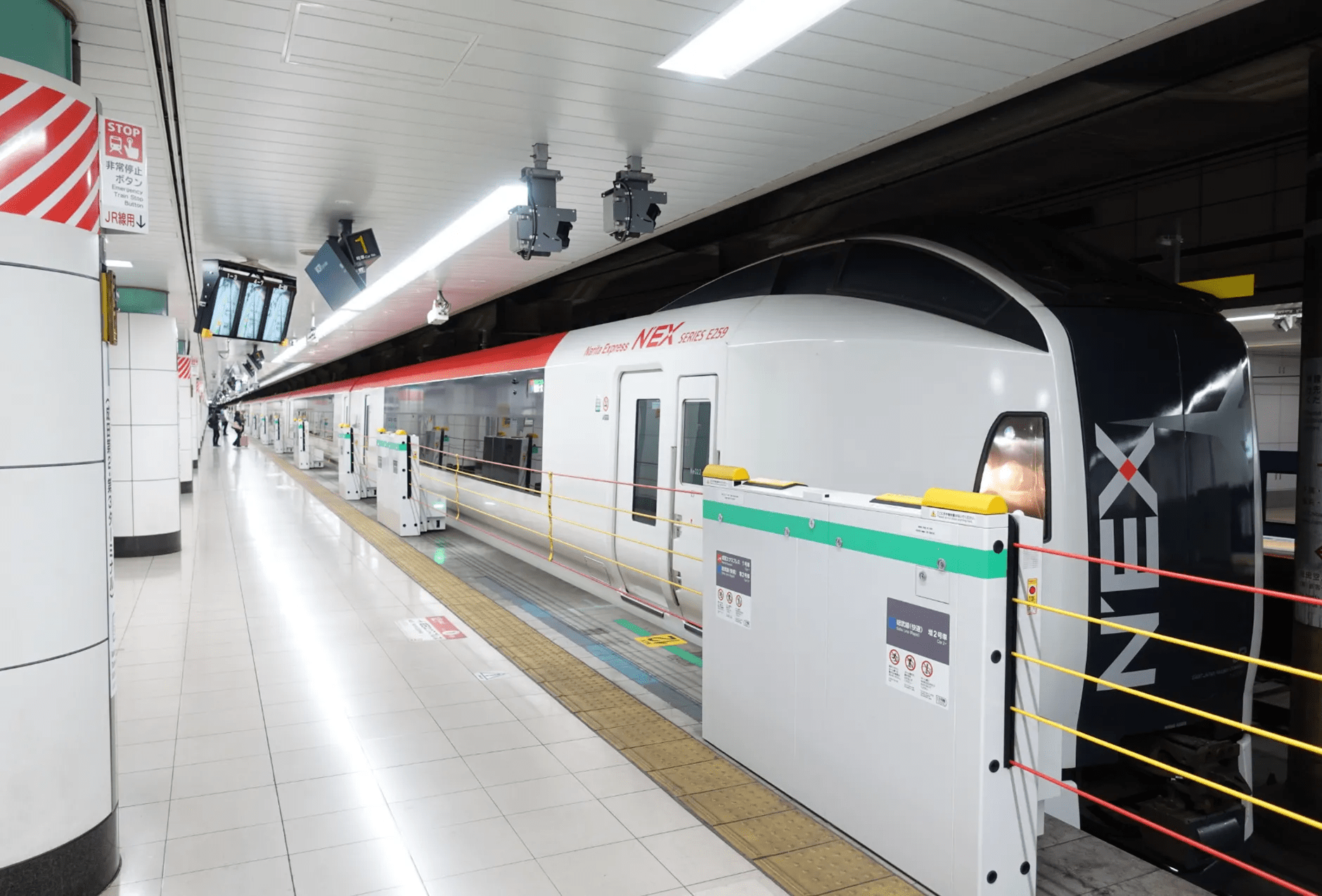
That makes the city option stronger when the Tokyo hotel will be your base for four or five nights and tonight’s transfer is still clean. It makes the airport option stronger when continuing to Tokyo would push bedtime deep into the night, especially before a fixed first-day reservation, Tokyo Disney morning or long intercity transfer.
Use a two-night friction test instead of comparing one room rate
Think of the choice as two different bundles:
Narita-first bundle: shorter and safer transfer tonight + more sleep + one hotel move tomorrow.
Tokyo-first bundle: longer transfer tonight + less sleep + no hotel move tomorrow.
The Narita hotel is worth paying for when the late-night transfer cost is greater than the next-morning move. Tokyo is worth finishing tonight when one clean transfer removes a disproportionately messy morning.
This also explains why the answer changes with trip length. On a one-night Tokyo stop, staying near Narita may be more rational because avoiding one hotel move has limited value. On a five-night Tokyo stay, finishing the transfer can be worth more—provided it is still robust.
Families should count hand-offs, not only minutes
A solo traveler with one carry-on can tolerate a route that a family with a sleeping child, stroller and three suitcases should reject. Count every transfer after customs: baggage trolley to station or bus, platform or curb wait, bags on and off, possible connection in Tokyo, then the walk to the hotel.
Each hand-off is small when everyone is rested. After a long-haul flight at 23:00, the same chain can become the most exhausting part of the trip. A route with one extra transfer is therefore not “only ten minutes worse” for every traveler.
For heavy luggage, also separate the first night from the rest of the trip. Luggage forwarding can simplify later hotel changes, but your checked bags still have to reach the first bed tonight.
Narita town is only a useful middle option when it removes a real problem
Staying around Narita Station or at an airport-area shuttle hotel can be cheaper than the most convenient airport-connected option while still avoiding a late ride into central Tokyo. But it is not automatically a clever compromise.
If the next morning’s first job is simply “go to the Tokyo hotel where we will stay for five nights,” adding a Narita-town hotel can create an extra shuttle/taxi plus another rail journey for little strategic benefit. If the airport terminal options are sold out, your group wants a proper room, or the next morning continues east rather than straight into central Tokyo, the middle option becomes more defensible.
If you are choosing between an on-airport capsule and a shuttle hotel, use Narita Capsule Hotel vs Shuttle Hotel after you have already decided not to continue into Tokyo.
Terminal overnight waiting is a disruption fallback, not the baseline plan
Narita does keep specific parts of its terminals open overnight, but the details vary by terminal and floor. Terminal 3’s first and second floors are currently available 24 hours. In Terminal 1, the international-arrivals first floor and B1 are available 24 hours; in Terminal 2, several arrival/lower-floor areas are available 24 hours.
Narita also notes that Terminal 2 has a 24-hour capsule hotel directly connected to Parking P-2 and recommends booking in advance because it can be full. That is a much stronger recovery option than assuming terminal seating is equivalent to a hotel room.
Waiting in the terminal can be rational when every hotel is sold out or a major disruption destroys the original plan. It should not be counted as “free accommodation” when the next day matters. The cost you are avoiding is a room; the cost you may be creating is a badly compromised first day.
A practical Narita cutoff by terminal

I would use these as planning rules rather than promises:
Terminal 1 or 2, landside before roughly 22:30: Tokyo is usually still a normal option if the hotel fits a direct route.
Terminal 3, landside after roughly 22:30: stop assuming rail is best; the 13-minute station walk makes the direct Tokyo Station bus comparatively stronger.
Any terminal after 23:00: continue only if you can clearly name the final service, boarding point, payment method and hotel-door plan.
Final TYO-NRT no longer realistic: stay near Narita unless you deliberately budget a taxi.
These are ValueNavi decision thresholds derived from the current published schedules. They are deliberately more conservative than “can I physically catch the last departure?” because international arrivals are variable.
When I would stay near Narita
I would choose the airport area when at least two of these are true:
I expect to reach the public arrivals area around 23:00 or later.
I am arriving at Terminal 3 and rail requires a tight walk to Airport Terminal 2·3 Station.
The Tokyo hotel needs another transfer after Ueno, Nippori or Tokyo Station.
The group has children, a stroller or several large bags.
The next morning has a fixed start and sleep is more valuable than avoiding one hotel move.
The recommendation can reverse if a door-to-door taxi has already been budgeted, because that removes most of the last-service and hand-off risk. But that is a different cost comparison from normal rail or bus.
When I would continue into Tokyo
I would continue when the actual landside time leaves genuine slack, the airport service lands close to the hotel, and that hotel will remain the base for several nights. Ueno/Nippori with a comfortable Skyliner margin and Tokyo Station with a comfortable TYO-NRT margin are the cleanest examples.
The benefit is not merely “sleep in Tokyo.” It is waking up already positioned and avoiding another checkout, luggage move and hotel arrival the next morning.
If the whole trip structure is still unsettled, use Japan Itinerary for First-Time Visitors: 10, 12 or 14 Days? before optimizing the first night in isolation.
Final verdict
At Narita, use your landside-with-bags time as the decision point. If you still have a comfortable direct route to the neighborhood where you are actually staying, going into Tokyo can save an unnecessary hotel move the next morning. Once the plan relies on the final departure, a Terminal 3 station sprint, or another late transfer after reaching Tokyo, stay near Narita and buy back sleep. The final TYO-NRT bus keeps Tokyo Station viable later than the last Skyliner, but it should be treated as a narrow last-service option—not a blanket reason to force the city transfer.
Late Arrival at New Chitose Airport: Airport Hotel, Chitose or Sapporo?
Where to Stay Near Nyuto Onsen: Inside the Onsen Village or Lake Tazawa?
Tokyo Honeymoon Hotels: Don’t Pay for the View Until You Pick the Night You’ll Stay In
Where to Stay for the Saga Balloon Fiesta 2026: Saga, Tosu or Hakata
References
Narita International Airport — Terminal 3 to Airport Terminal 2·3 Station walking time
Keisei Electric Railway — Airport Terminal 2·3 Station current timetable
AIRPORT BUS TYO-NRT — current Narita Airport to Tokyo timetable and final-bus boarding rules
Narita International Airport — terminal use at night and early morning