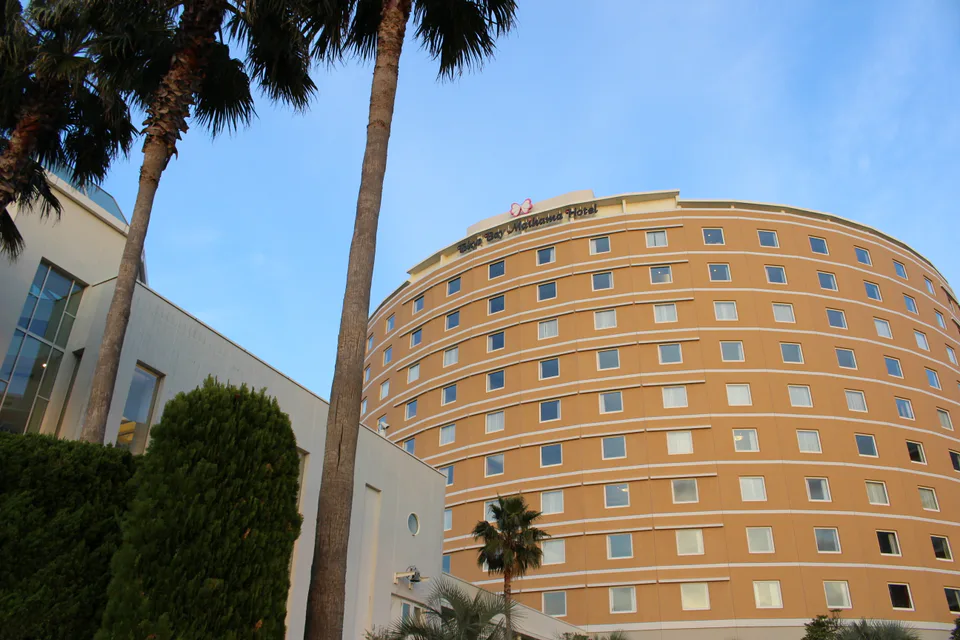
For one Tokyo Disney day inside a wider Tokyo trip, I would usually keep the same central-Tokyo hotel. For two consecutive full park days, I would usually move near the resort. The reason is not simply train time. A one-night move creates packing, checkout, luggage handling and another check-in; two park days create repeated early-morning and late-night journeys when that move starts paying you back. The important exception is that “near Disney” covers very different hotel types, so the room-to-gate journey matters more than the postcode.
Checked August 25, 2026. Happy Entry, shuttle services and affiliated-hotel benefits are hotel-, park- and date-specific. Recheck the exact hotel benefit for your stay dates before paying a resort premium.
If you have not decided whether Disney deserves one day or two, settle that first with 1 or 2 Days at Tokyo Disney. If you only have one day, choose the park with Tokyo Disneyland vs DisneySea before moving hotels around the wrong park.
The 30-second decision: one repeated commute versus one hotel move
↔ Scroll table left or right
Trip pattern | My default | Why | What could reverse it |
1 Disney day inside 4–5 Tokyo nights | Stay in central Tokyo | Avoid checkout, luggage transfer and another check-in | Very young children, a late arrival before the park day, or a Disney Hotel benefit you will actually use |
2 consecutive full park days | Stay near Tokyo Disney | Remove the late return after Day 1 and the early approach on Day 2 | The second day is only a half-day, or the next morning has a fixed early departure from central Tokyo |
Midday nap or room break is part of the plan | Choose by room-to-gate friction, not just “Disney area” | A break only works if returning to the room is genuinely easy | A Partner Hotel shuttle wait can make a midday return less attractive than it looks on a map |
Early Shinkansen after the final park day | Often return to Tokyo after Disney | Protect the less flexible event: the morning train | You value closing-time convenience more than the early departure |
One Disney day usually does not justify changing hotels
A single Disney day creates one outbound journey and one return journey. A split stay creates an entirely different chain: repack, check out, decide what happens to the luggage, travel to the new hotel, check in again and then repeat part of that process when you leave. If your existing Tokyo hotel already works for the other three or four days of the trip, changing hotels solely to avoid one Maihama round trip often solves the smaller problem by creating the larger one.
This matters even more for long-haul visitors who are trying to fit Tokyo, Kyoto and perhaps Osaka or Hiroshima into a limited Japan trip. The hidden cost of a hotel move is not only transport time; it is another point where luggage, check-in timing and the rest of the itinerary have to line up.
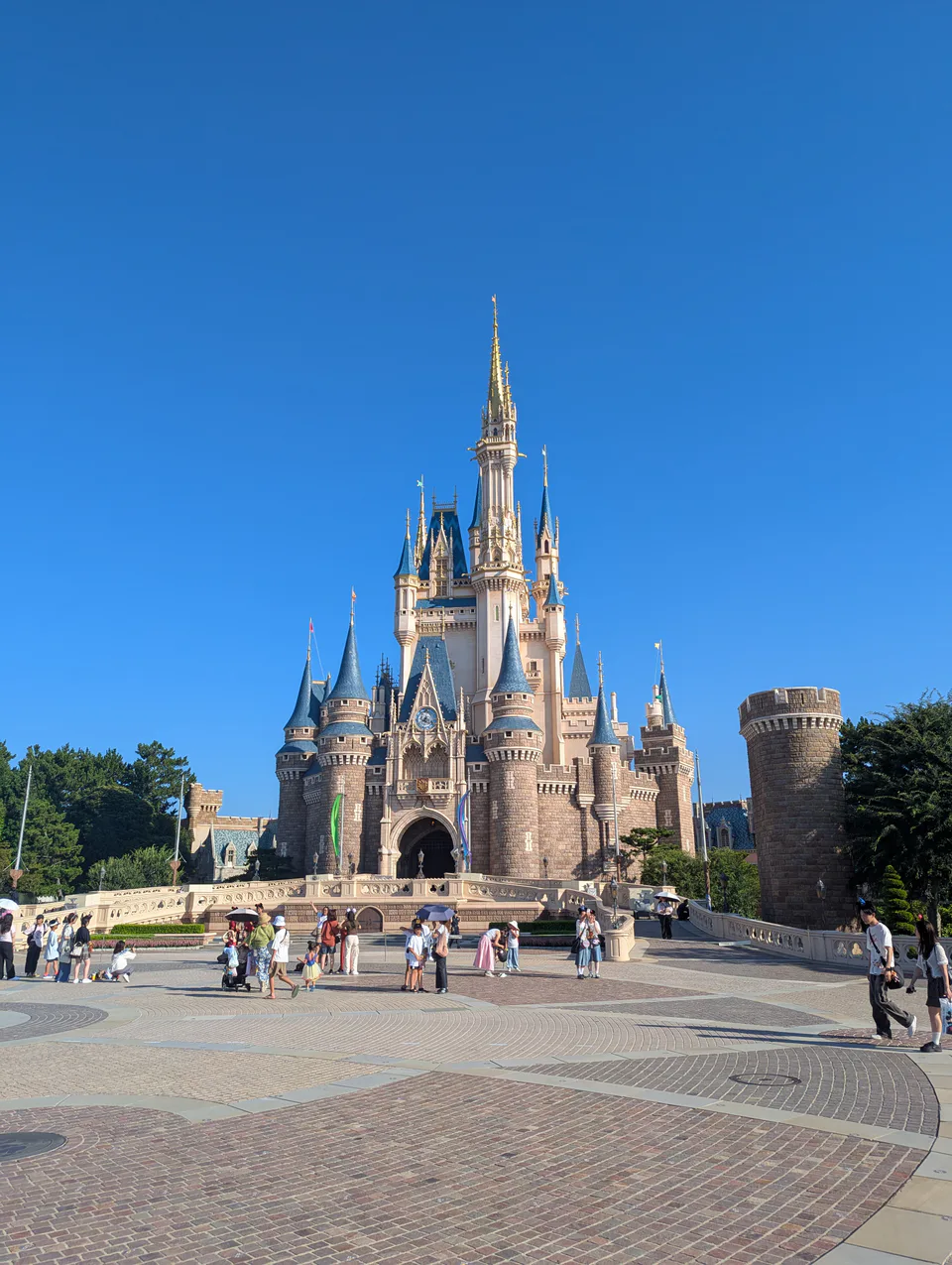
I would make the one-day exception only when the Disney-area night does a second job as well: it removes a difficult late arrival before the park day, gives a family a genuinely useful early-entry benefit, makes a necessary midday room return realistic, or fits the onward route better than staying in Tokyo.
Two consecutive park days are where the maths changes
Two full park days repeat the commute at the least forgiving moments. After Disneyland closes, you still have to get everyone back to the city; a few hours later, you are doing the route in the opposite direction for DisneySea. One deliberate hotel move can remove both of those journeys.
That is why I treat two consecutive opening-to-close days as the strongest general case for moving near Tokyo Disney. The saving is not simply a number of minutes. It appears after a long day on your feet and before another early start, so its practical value is larger for families, older travellers and anyone who plans to stay until the evening entertainment ends.
But a nominal “second Disney day” does not automatically qualify. If Day 2 is only a late-morning visit, shopping stop or half-day before an airport transfer, the location advantage may not be large enough to justify the hotel switch.
“Near Tokyo Disney” is not one location tier
The most important correction to a simple city-versus-resort comparison is that Disney Hotels, Official Hotels and Partner Hotels do not offer the same door-to-door experience.
↔ Scroll table left or right
Hotel layer | Typical access pattern | Best reason to choose it | Decision risk |
Disney Hotels | Closest integration with the resort; exact park access varies by hotel | Hotel experience plus hotel-specific benefits such as Happy Entry | Paying a large premium for a benefit that does not apply to your park or date |
Official Hotels | Mostly Bayside Station area, with complimentary shuttle connection to the Disney Resort Line | Strong resort proximity without necessarily paying Disney Hotel rates | “Near the parks” still includes shuttle and monorail steps |
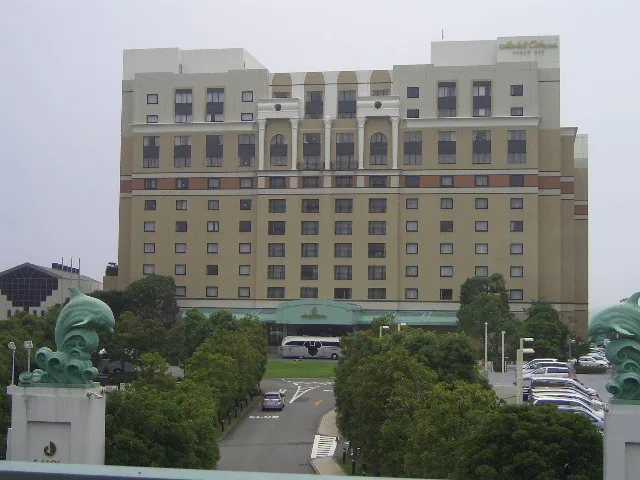
Partner Hotels | Shin-Urayasu area with complimentary direct buses; official guidance describes about 15 minutes for the listed Partner Hotels | Family rooms, value and direct park buses | Traffic, shuttle timing and waiting make midday room returns less frictionless |
So if a parent says, “We need to stay near Disney because our child may nap at 1 p.m.,” I would not stop at the word “near.” I would check the actual room-to-gate sequence. A hotel one transfer away can be excellent for sleeping after the park closes but much less useful for a two-hour midday reset.
Once the resort-area base wins, compare the hotel layers in Tokyo Disney Hotels vs Official & Partner Hotels before choosing a brand.
Happy Entry can justify a premium, but only after four checks
Happy Entry is useful because eligible Disney Hotel guests may enter before other guests, but it is not a generic “stay at Disney and get in early” promise. As of August 25, 2026, the official rules say it can be used during the stay, including checkout day, but not on check-in day. The eligible park depends on the hotel and date.
For Tokyo Disneyland, the current Disney Hotel list receives entry beginning 15 minutes before other guests. For Tokyo DisneySea, eligibility is narrower: Fantasy Springs Hotel and Hotel MiraCosta are included, while Tokyo Disneyland Hotel and Disney Ambassador Hotel are temporarily eligible for DisneySea entry from July 1 through September 14, 2026. DisneySea Happy Entry begins 5 to 15 minutes before other guests depending on operations.
Before paying extra for Happy Entry, check four things:
Hotel: is your exact hotel eligible?
Park: does the benefit apply to Disneyland or DisneySea on your stay?
Date: is your park morning included, and is it not the hotel check-in day?
Use: will you actually arrive early enough to benefit?
There is another subtle point: the official guidance says attractions begin operating after general park opening. Happy Entry can still be strategically valuable because eligible guests can enter, position themselves and use app functions such as purchasing Disney Premier Access once inside, but it should not be described as an extra 15 minutes of normal ride operation.
If Happy Entry is the specific reason you are considering a Disney Hotel, use Is Happy Entry Worth It? before treating the room premium as automatically justified.
For a one-hotel Tokyo trip, test Tokyo Station before creating a split stay
If you want one base for both central Tokyo and Disney, Tokyo Station is the first central location I would test. JR East lists Maihama on the Keiyo/Musashino Line with trains toward Tokyo, so the route does not require a cross-city hotel change. Tokyo Station also becomes useful again if the next stage of the trip is a Shinkansen to Kyoto or Osaka.
The trade-off is inside Tokyo Station itself. JR East publishes a separate Keiyo Line station map, which is a useful reminder that “direct train” does not mean “platform beside every Tokyo Station entrance.” For travellers with a stroller, older relatives or large luggage, the hotel’s exact side of Tokyo Station can matter as much as the rail map suggests.
If the wider Tokyo stay is still between east-side convenience and west-side nightlife, compare Tokyo Station vs Shinjuku. Do not manufacture a Disney hotel move until the whole Tokyo base has been decided.
If you split the stay, the timing of the move matters as much as the hotel
If the purpose of moving is to protect an early park start, checking out of central Tokyo on the morning of that park day defeats much of the value. Packing, checkout and luggage handling are now competing with the exact morning you paid to simplify.
For two full park days, my default split is to move the night before the first park day, then wake up in the resort area. If the first park day follows a Tokyo sightseeing day, this turns the hotel move into an evening logistics task rather than a rope-drop task.
There are useful baggage options within the resort ecosystem. Tokyo Disney Resort lists a baggage delivery service from the Welcome Center near JR Maihama Station for Official Hotel guests, while Partner Hotel baggage delivery is available for a fee from Bon Voyage. These services can reduce luggage friction, but they do not eliminate the need to decide where you sleep and when you check in.
For the exact move timing, use Tokyo Disney Split Stay: When to Move Hotels.
The final Disney night can be the wrong night to stay near Disney
A central Tokyo → Disney hotel → Kyoto sequence looks tidy until you consider the morning after the final park day. If you have an early Shinkansen, sleeping near Disney means starting that morning with another transfer back toward Tokyo Station. In that scenario, I would compare two unpleasant journeys rather than assume “closest to the park” must win:
travel back to Tokyo after a long park day, or
travel from the Disney area to Tokyo Station before a fixed morning train.
The second journey is often less forgiving because the Shinkansen departure is fixed. If the family can tolerate one late return after Disney, moving back toward Tokyo that night may produce a more resilient next morning.
Families of four should let the room overturn the map when necessary
A hotel can be perfectly located and still be the wrong family choice if the fourth guest has a poor sleeping setup or the room becomes unworkable once large suitcases and a stroller are inside. For families, the sequence should be: first decide whether the resort area is worth it, then check real bed capacity and room practicality, and only then rank brand prestige.
If four-person sleeping arrangements are the constraint, use Tokyo Disney Hotels for Families of Four.
Weather increases the value of proximity only when you plan to use the room
Summer heat, heavy rain or a tired child can make a nearby room more valuable because a midday reset becomes more likely. But proximity is not automatically insurance against bad weather. If your family will leave the park once and call the day finished, you do not benefit from repeated back-and-forth access. The location premium is most valuable when you expect to use the room as part of the park day, not merely sleep there afterward.
Final verdict: move only when the location advantage repeats
For one Disney day inside a wider Tokyo stay, keep the central-Tokyo hotel unless the resort-area night solves a second real problem. For two consecutive full park days, especially with early starts and late finishes, moving near Tokyo Disney usually becomes the better trade because one hotel move removes repeated high-friction journeys.
Do not stop at “near Disney.” Choose the hotel layer by the actual job: Disney Hotel for specific hotel benefits and maximum resort integration, Official Hotel for strong resort proximity, or Partner Hotel when room value and direct buses matter more. For families planning midday naps, judge the room-to-gate route rather than the map distance.
Finally, let the next fixed event compete with Disney convenience. If the morning after your last park day is an early Shinkansen, sleeping back in Tokyo can be more rational than paying for one more resort-area night.