If you have already decided to split your Tokyo stay and spend two consecutive days at Tokyo Disney Resort, move to the Disney-area hotel the night before the first park day in most cases. That is the only sequence that protects the first morning, makes a qualifying Disney Hotel stay eligible for Happy Entry on that first park day, and keeps the post-park recovery window free of another hotel change.
Moving after day one can still be rational when the extra resort-area night is materially more expensive, the first park is intentionally lower priority, and the group can separate luggage handling from the late-night hotel move. The important distinction is that “move after day one” does not have to mean dragging suitcases out of the park at night—but it still cannot recover a Happy Entry opportunity that was lost because day one was the hotel’s check-in day.
Checked August 25, 2026. Happy Entry remains unavailable on the day of check-in and is available on eligible stay days including checkout day, subject to hotel, park and date rules. Disney Hotel guests can currently use the Tokyo Disney Resort Welcome Center for baggage delivery to most Disney Hotels on check-in day, and Disney Hotel-to-Disney Hotel baggage transfer is available under current rules. Recheck the live terms for your exact hotels and dates before booking.
If you are still deciding whether a split stay is worth doing at all, solve that first in Stay Near Tokyo Disney or in Tokyo?. If the park count is not fixed, use 1 or 2 Days at Tokyo Disney before optimising hotel nights around a plan that may not need two park days.
The decision in 30 seconds
↔ Scroll table left or right
Your situation | Better move | Why | Main cost |
First park morning matters, or Happy Entry is part of the purchase | Move the night before | The first park day becomes a stay day rather than check-in day | You pay for an extra resort-area night |
Two full park days with children, stroller or several bags | Move the night before | No hotel change is inserted between the two most tiring days | Earlier checkout from the Tokyo hotel |
First park day is relaxed and the previous-night price gap is large | Moving after day one can work | You avoid paying for a resort night whose morning benefit you do not value | Day one is still a check-in day, so no Happy Entry that morning |
Disney Hotel → another Disney Hotel | Changing hotels is less painful than it looks | Current inter-Disney-Hotel baggage delivery can remove the suitcase transfer | You still have a room change and must follow baggage deadlines |
Disney Hotel ↔ Official Hotel | Plan luggage separately | Do not assume the Disney-Hotel transfer system crosses hotel categories | More manual luggage handling |
Why the night before usually wins: it protects the only morning you cannot recover
The cleanest split-stay logic is not “sleep closer because Disney is far away.” It is move the hotel task away from the park day. If you check into the Disney-area hotel the night before, the first park morning starts with one job: get to the gate. Your suitcase is already in the room, everyone knows where breakfast and chargers are, and there is no second lobby to find before an early start.
The same timing matters more if you are paying for a Disney Hotel specifically for Happy Entry. Current rules make the benefit available during the stay, including checkout day, but not on check-in day. If Tuesday is your first park day and you check in Monday night, Tuesday can be an eligible stay day. If you visit the park on Tuesday and only check into the Disney Hotel afterward, Tuesday morning is gone. No luggage strategy can retroactively turn it into a Happy Entry morning.
That is the first deletion-test question for the extra night: what irreplaceable morning does it buy? If the answer is “none”—you plan to enter late, you are not using a qualifying benefit, and day one is deliberately relaxed—the night-before premium becomes much harder to justify.
Moving after day one is less bad if you separate the luggage move from the people move
The weak version of a post-day-one move is obvious: leave a full park at night, retrieve several suitcases, cross the resort, check in, unpack and then wake up early for park day two. That sequence spends the recovery window on logistics.
But there is a better version. For guests checking into most Disney Hotels, the Tokyo Disney Resort Welcome Center next to JR Maihama Station currently accepts baggage for delivery to the hotel from 7:30 a.m. to 4:00 p.m. That means a traveller who is already arriving through Maihama can hand off luggage before entering the park and check into the hotel later without physically carrying the bags after closing.
This does not make the late move equivalent to moving the previous night. You still have to reach Maihama with the luggage in the morning, the first park day is still the hotel’s check-in day, and Happy Entry is still unavailable that morning. What it does is reduce the evening penalty. That makes the later move more credible for two adults with light luggage and a low-priority first morning than for a family trying to maximise rope-drop time.
18:00 the night before and 22:30 after a park day are not the same transfer
A hotel change has a time cost and an energy cost. The same 30-minute transfer feels different at 18:00 after a normal Tokyo sightseeing day than at 22:30 after a long park day. At the earlier time, a missed train, wrong platform or check-in question is inconvenient. At the later time, it consumes the only recovery window before the next early start.
This difference is why the “cheaper room” calculation should not stop at the hotel price. The later move can also create an early exit from the park, a taxi temptation, a rushed dinner or a shorter night of sleep. Those are not guaranteed costs, but they are the failure modes you are accepting in exchange for saving the extra resort night.
For a couple with carry-ons, the trade can be perfectly reasonable. For two adults with two children, a stroller, shopping bags and several suitcases, the saving needs to be larger before I would deliberately put the hotel move after park day one.
Disney Hotel to Disney Hotel is a different problem from changing hotel categories
One of the most useful current rules is easy to miss: if you check out of one Disney Hotel and stay at another Disney Hotel the same day, Tokyo Disney Resort currently offers complimentary baggage delivery to the next Disney Hotel. Baggage is generally delivered by around 3:00 p.m.; Tokyo Disney Celebration Hotel has a later stated delivery target, and drop-off deadlines vary by property.
That changes the calculus for a multi-Disney-Hotel stay. You may still be changing rooms, but you do not necessarily need to spend a park day physically transporting suitcases between them. This is especially relevant for a stay such as Tokyo Disneyland Hotel → MiraCosta or Toy Story Hotel → Fantasy Springs Hotel, where the hotel change is being used to align different park days with different locations.
Do not generalise this into “Tokyo Disney hotels transfer luggage for you.” The official FAQ states that baggage delivery between Disney Hotels and Tokyo Disney Resort Official Hotels ended on May 31, 2024. If your split crosses hotel categories, plan the luggage path separately rather than discovering the limitation on checkout morning.
If you are still choosing hotel type, use Tokyo Disney Hotels vs Official & Partner Hotels. The badge on the hotel changes the benefit system and the baggage workflow, not just the price.
For families, the transfer penalty grows faster than the headcount
A family of four does not simply have twice the moving cost of two adults. The move adds more handoffs, more sleep disruption, more chances to leave something behind and more items that must remain accessible: stroller, medication, chargers, spare clothes, snacks and purchases from the park.
That is why I would normally protect the night between two park days for families. The value is not only “no train.” It is the ability to leave wet clothes, souvenirs and tomorrow’s park bag in the same room after day one instead of converting the evening into another packing cycle.
Room fit still comes first. If you need a genuine four-person setup, check Best Tokyo Disney Hotels for Families of 4 rather than accepting a worse sleeping arrangement just to make the split-stay sequence look tidy.
When I would deliberately move after the first park day
I would accept the later move when four conditions line up:
The previous-night Disney-area rate is materially higher than the Tokyo hotel you already have.
The first park day is not dependent on Happy Entry or an aggressive opening strategy.
The group travels light enough that the hotel change will not damage sleep or the second morning.
You have a clear luggage plan that does not require carrying everything around after park closing.
That is a much narrower case than “the Tokyo hotel is cheaper.” If the saving is modest, you are effectively selling the cleanest park morning and the most valuable recovery period for a small room-rate difference.
If a Vacation Package is involved, compare the whole bundle rather than one room-only night with a package night. Use Vacation Package vs Hotel Only and Room-Only vs Vacation Package booking windows before calling one date “expensive.”
Use a break-even test for the extra resort night
The right question is not “Is the extra night expensive?” It is “What does that extra night replace?” Start with the difference between the resort-area room and the Tokyo room you would otherwise keep, then list the frictions it removes:
the first-morning cross-city trip;
park-day luggage handling;
the risk of losing a usable Happy Entry morning;
a late post-park check-in;
possible taxi or early-exit pressure when the group is exhausted;
sleep lost before park day two.
If most of those items do not apply, the premium is solving very little. If several apply at once, the “expensive” extra night may be buying the most difficult logistics block out of the trip.
Tokyo geography matters too. A Tokyo Station hotel and a Shinjuku hotel do not create the same Disney commute. If your city base is still open, compare Tokyo Station vs Shinjuku before pricing the Disney move in isolation.
Do not optimise the arrival and forget the checkout after park day two
A split stay can look perfect on the way in and fail on the way out. On park day two, you may also be checking out before entering the park. Decide where the luggage will be, when it can be collected and whether the next fixed event is a late park close, a Shinkansen or an airport transfer.
Disney Hotels currently offer a paid Station Delivery Service that can send checked baggage to the Tokyo Disney Resort Welcome Center near JR Maihama Station for later pickup. The service is useful when your next step begins at Maihama, but it does not magically solve every onward journey. For Kyoto or Osaka, luggage forwarding or a final Tokyo night may produce a cleaner sequence than leaving DisneySea at closing and immediately starting a long transfer.
Separate the luggage problem from the hotel problem with the Japan luggage-forwarding guide. A split stay is strongest when luggage can move independently of your most valuable park hours.
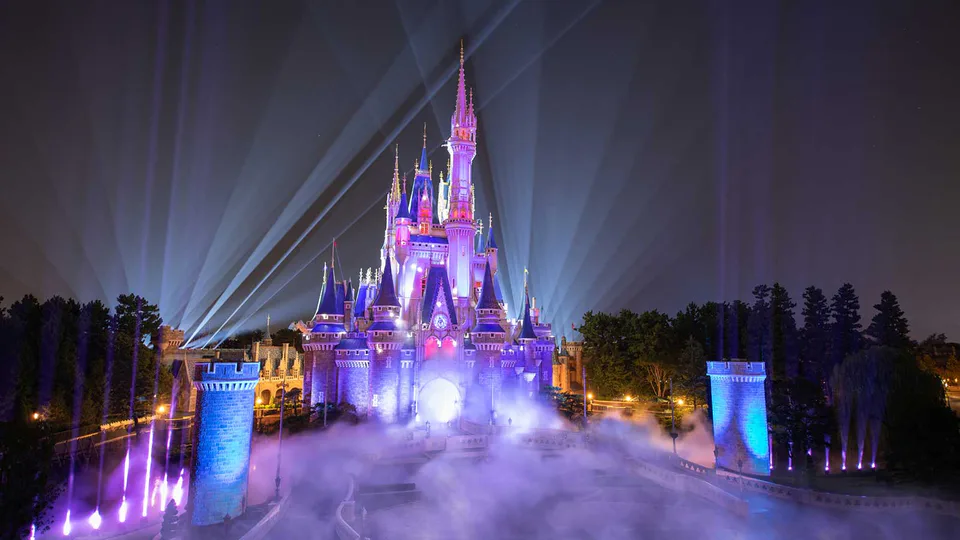
The cleanest two-park sequence is usually Tokyo → Disney hotel → park → same hotel → park
For many first-time visitors doing both parks, the most resilient sequence is:
Tokyo sightseeing → move to Disney area → sleep → park day one → same hotel → park day two → onward destination or final Tokyo night.
This keeps the two highest-step days inside one accommodation block. It also makes the “move night before” premium easy to evaluate because the hotel is being used at exactly the moments when proximity matters: before the first morning, after the first long day and before the second morning.
If you start adding a third resort night that contains no park day, retest the plan. A location premium that pays off twice can stop paying off once the itinerary turns back toward Tokyo sightseeing.
Which park should get the protected first morning?
If one park matters much more than the other, hotel timing should protect that park rather than treating the two days as equal by default. A DisneySea-first group whose must-dos are concentrated around Fantasy Springs may value a different hotel and entrance geography from a Disneyland-first family. Use Tokyo Disneyland vs DisneySea to decide which morning deserves the cleanest start.
The hotel sequence should support the park priorities. It should not choose them for you.
Final verdict
For two consecutive Tokyo Disney park days, move to the Disney-area hotel the night before the first park day unless the extra night is genuinely expensive and the first morning is deliberately low priority. The night-before move protects the one morning you cannot recover, keeps Happy Entry possible when the hotel and park qualify, and avoids spending the post-day-one recovery window on a hotel change.
Moving after day one becomes more defensible when you can hand off luggage separately, but remember what that strategy cannot fix: the first park day is still check-in day. If Happy Entry, rope-drop time or a calm family morning is part of what you are buying, the hotel needs to start the night before.
If you change between Disney Hotels, use the current inter-hotel baggage service to reduce friction. If you cross from a Disney Hotel to an Official Hotel or another hotel category, do not assume that service follows you. The best split stay protects both the first park morning and the exit after the second park day; it does not simply minimise the nightly room rate.