Choose nine hours Narita Airport when the transfer you most need to eliminate is the hotel shuttle: you are a solo traveller or simple adult pair, you can live with capsule-style shared facilities, your luggage setup works, and Terminal 2 is where you arrive or depart. Choose a shuttle hotel when the room itself is part of the recovery plan—privacy, a normal bathroom, children, several large cases, repacking space or a later morning matter more than one extra airport transfer.
The key correction is that neither category is one product. nine hours removes the road shuttle but imposes capsule-specific limits. Narita’s airport hotel list, meanwhile, shows published hotel-bus ride times ranging from roughly 5–10 minutes at some nearby properties to about 30–35 minutes at others, before any wait or loading time. “Free shuttle” therefore tells you almost nothing about how much sleep the transfer will cost.
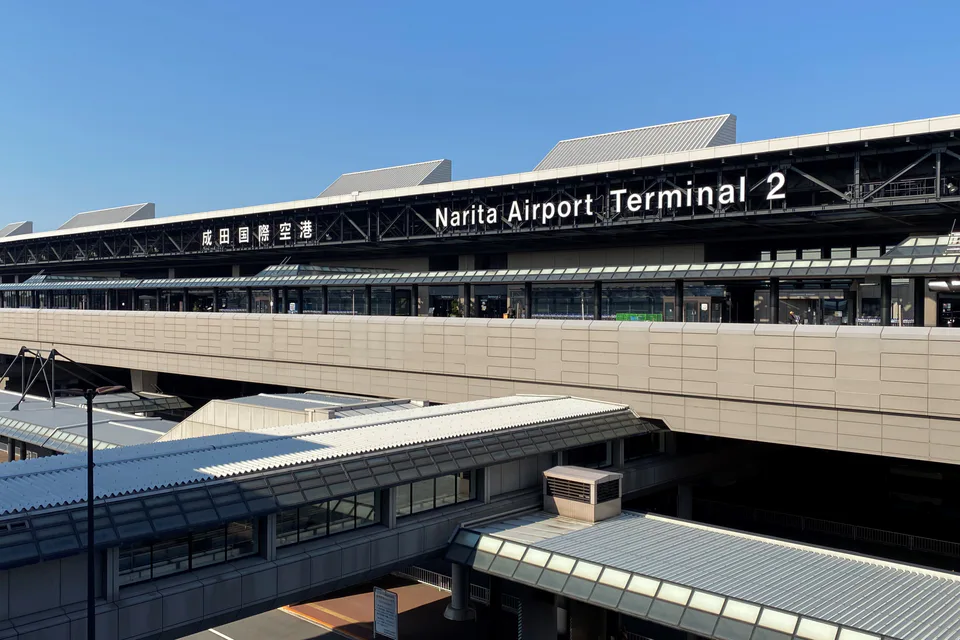
Checked August 25, 2026. Narita Airport lists nine hours Narita Airport at Terminal 2 / B1F / before security, with a 10:00 checkout and 24-hour reception/check-in wording. nine hours’ own current Narita booking page lists overnight check-in as 14:00–05:00, so arrivals that could spill into the early-morning boundary should be confirmed directly with the hotel. nine hours accepts guests aged 6 and above; ages 6–11 require a same-sex guardian and every guest needs a separate capsule. The Narita location does not store oversized luggage; the hotel directs guests to airport baggage storage. Hotel shuttle schedules and routes can change, so verify the exact property rather than relying on the generic category.
Narita capsule hotel vs shuttle hotel: the 30-second decision
↔ Scroll table left or right
Your real constraint | Start with | Why | Main catch |
Solo / simple adult stay, T2, only need 4–8 hours of sleep | nine hours | Removes hotel-shuttle dependency and is directly connected to T2 | Capsule format, shared spaces, 10:00 checkout |
Couple or family with several large cases | Shuttle hotel | A normal room makes opening, repacking and supervising luggage easier | Another timed transfer after arrival |
Child under 6 | Shuttle hotel | nine hours currently accepts guests only from age 6 | Check the hotel’s child/bed policy |
Child age 6–11 travelling without a same-sex guardian | Shuttle hotel | nine hours requires a same-sex guardian for ages 6–11 | This is a hard capsule-eligibility rule, not a comfort preference |
Terminal 3 late arrival | Recalculate both | nine hours is at T2; shuttle hotels also require you to follow the property’s current boarding instructions | Do not call either option “direct from T3” without checking the route |
Early Terminal 2 flight | nine hours gets stronger | No road-shuttle timing or traffic risk before the flight | T1/T3 departures still require an inter-terminal move |
Late-morning / afternoon departure | Shuttle hotel often gets stronger | A normal room may provide more useful recovery time | nine hours has a 10:00 checkout and no late checkout |
nine hours is a transfer-removal product, not a miniature hotel room
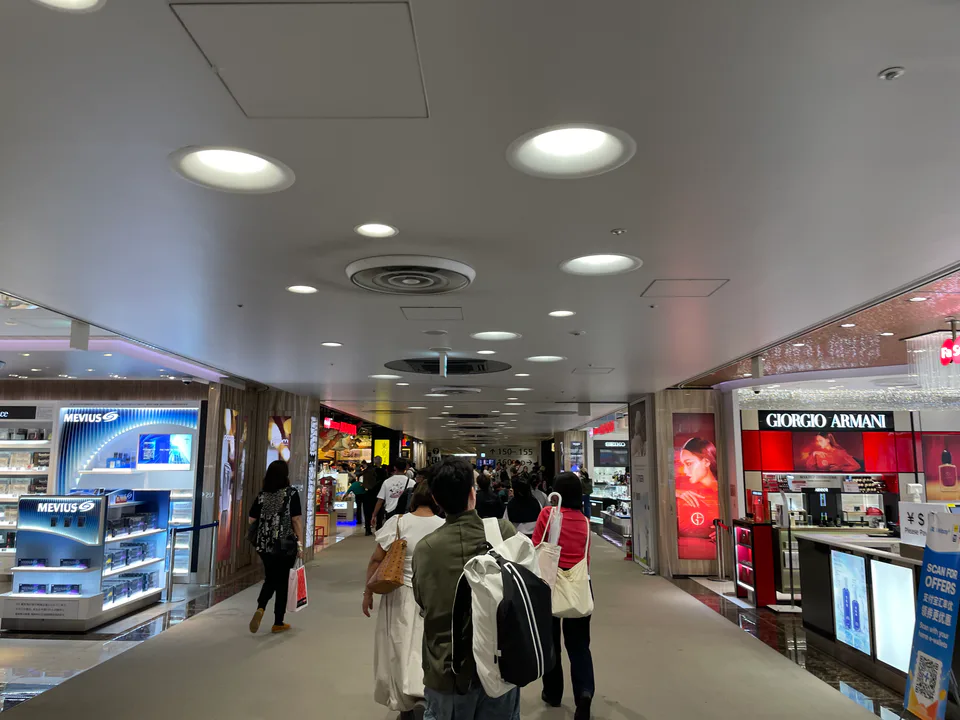
The strongest reason to book nine hours is operational. Narita Airport places it in Terminal 2, B1F, before security. Once you have reached T2, you do not need to wait for a hotel bus, load the luggage, ride to another property and reverse that process the next morning.
That is valuable when the stay is extremely short. A traveler arriving late and departing from T2 early may care far more about deleting two shuttle decisions than about having a desk or private bath. The capsule is doing exactly one job: turning the airport night into the smallest possible landside sleep stop.
But that framing also shows when it is the wrong purchase. If the room needs to function as a place to repack, bathe children, spread out winter gear, work, eat privately or recover for half a day, a capsule has not solved the real problem. It has only removed the shuttle.
“Shuttle hotel” can mean a 5-minute ride or a 35-minute ride
Narita Airport’s current hotel-shuttle list makes the category problem obvious. It publishes Narita Tobu Hotel Airport and Hotel Nikko Narita at roughly 5–10 minutes from Terminal 1 and 10–15 minutes from Terminal 2. Hilton Narita is listed at about 15–20 minutes. ART HOTEL Narita is listed at about 30–35 minutes.
Those are published ride-time ranges, not door-to-door guarantees. They exclude the time you spend reaching the stop, waiting for the bus, loading bags and checking in. But they are enough to show why “free shuttle” is a weak comparison dimension. A 10-minute shuttle hotel and a 35-minute shuttle hotel are fundamentally different late-arrival products.
Use the exact hotel’s current timetable and boarding stop. Narita Airport explicitly warns that hotel-bus operations can change or be suspended and tells travelers to confirm with the hotel.
The shuttle has to be paid in sleep, not only in minutes
Imagine two otherwise similar rooms. Hotel A is about 10–15 minutes from T2 by the airport’s published bus estimate; Hotel B is about 30–35 minutes. The difference is already 15–25 minutes of published riding on the arrival leg before any waiting. At 23:30, that difference is not a sightseeing-time issue. It is sleep.
This is why a cheaper distant shuttle hotel can be a false economy for a one-night sleep stop. If the saving is modest but the transfer consumes another chunk of the night, you may be paying with the only resource the hotel exists to protect.
The answer can reverse for an early-evening arrival. When the family has several awake hours, a 20- or 30-minute bus may be trivial compared with the gain from a real private room. The same shuttle time has different value at 18:00 and 00:30.
Terminal 3 removes the capsule’s “no transfer” advantage
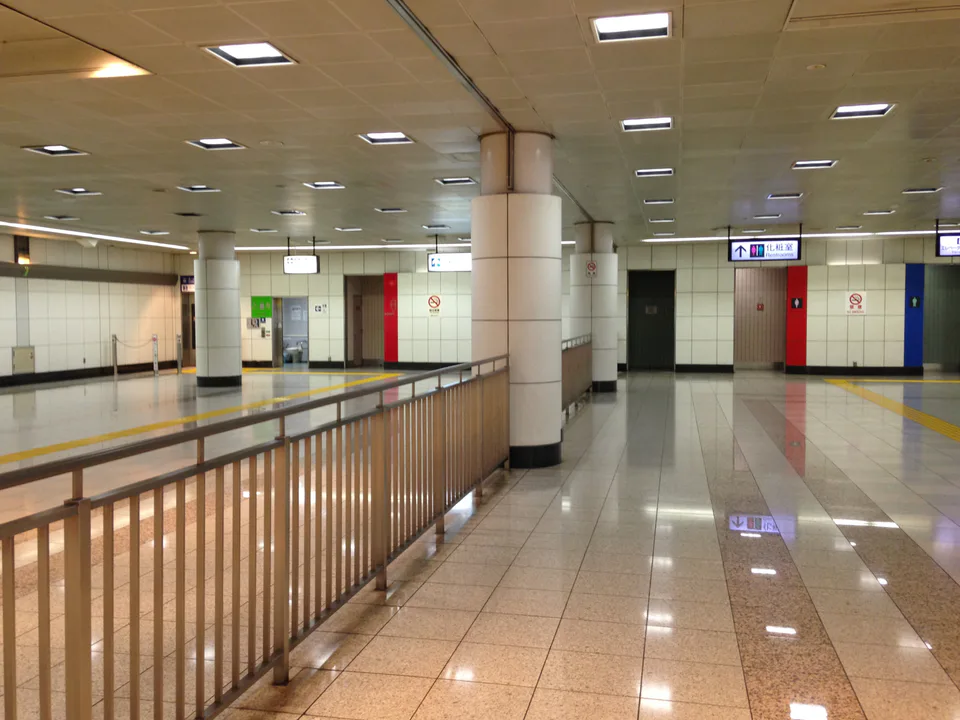
nine hours is connected to Terminal 2, not Terminal 3. Narita currently operates free landside terminal shuttle buses; the published T3→T2 ride time is about three minutes, but that figure does not include walking to the bus stop or waiting, and the airport warns that road conditions can create delays. T2 and T3 can also be connected on foot through the access corridor.
That means a Terminal 3 traveler should not describe nine hours as “inside my terminal.” The capsule can still be the simplest option, but it now includes an inter-terminal movement before sleep.
Shuttle hotels are not automatically better from T3 either. Narita’s airport-wide hotel-shuttle list commonly publishes T1/T2 boarding stops, and hotel operations differ. Check the exact property’s T3 instructions. The useful comparison is the full chain from T3 arrivals to the bed—not the marketing phrase “airport hotel.”
Large luggage can be a capsule veto, not just an inconvenience
nine hours’ current Narita information lists lockers at roughly 36 cm wide × 57 cm deep, with upper/lower heights of 84/90 cm. Its FAQ says large luggage that does not fit must be stored using Narita Airport’s temporary baggage-storage service. The Narita location also does not offer the ordinary before/after-stay baggage-hold service available at some other nine hours properties.
This matters for long-haul travelers. If you arrive with two 29-inch suitcases, a ski bag or several hard cases, do not assume “the capsule is in the airport” means the entire luggage problem disappears. You may create an extra luggage-storage transaction before sleeping and another retrieval task the next morning.
A shuttle hotel can therefore be more operationally efficient despite the bus ride if the normal room lets the group bring everything inside, open the cases once and leave together the next morning.
Children can make nine hours unavailable before comfort enters the debate
The current nine hours rules accept guests from age six. Every guest needs a separate capsule and there is no child rate. For children aged 6–11, use is allowed only with a same-sex guardian. Guests aged 12–17 may stay with a guardian, or require the hotel’s signed-consent process if unaccompanied.
That creates hard family boundaries. A parent traveling alone with an opposite-sex eight-year-old should not treat the capsule as a normal family-room substitute. A family with a four-year-old cannot use it at all under the current age rule.
For families, “shuttle hotel costs more” can therefore be the wrong comparison. The capsule may simply not be an eligible product for the party.
The 10:00 checkout changes the value for later flights
nine hours Narita has a 10:00 checkout and its current site says late checkout is not available. It also closes the facility for cleaning from 10:00 to 14:00, including for consecutive-night guests.
That is perfectly aligned with an early flight or a simple morning onward journey. It is less attractive if the flight leaves in the afternoon and the traveler wanted the room to function as a recovery base through late morning. A normal hotel with a later checkout policy may be more useful even if it requires a bus.
Do not assume a shuttle hotel automatically offers a better checkout time—the exact property must still be checked. The decision point is simply that nine hours has a known hard 10:00 boundary, so later room use cannot be part of its value.
There is a small official-source mismatch around ultra-early check-in
Narita Airport currently describes nine hours as having 24-hour reception and check-in. nine hours’ own current Narita booking page is more specific: overnight check-in is listed as 14:00–05:00, and it asks guests arriving after midnight to contact the property so the reservation is not treated as a no-show.
For an ordinary late arrival before 05:00, this distinction will rarely matter. For a disrupted flight that may place you at the hotel around or after 05:00, do not infer the answer from one line on an airport facility page. Contact the hotel and confirm how the reservation will be handled.
This is a good example of why late-arrival planning should be built around failure conditions, not just headline opening hours.
For an early flight, start with the departure terminal
nine hours is strongest when the next flight leaves from Terminal 2 because the capsule removes road traffic and hotel-shuttle uncertainty. If the flight leaves from Terminal 1 or Terminal 3, you still need an inter-terminal transfer.
A shuttle hotel can occasionally be the cleaner choice if its first hotel bus serves your departure terminal at the right time and the private room materially improves sleep. But this is property-specific. Work backward from check-in/bag-drop time at the correct terminal, then compare the first hotel bus with Narita’s terminal-transfer options.
The mistake is choosing nine hours because it is “at Narita Airport” without checking whether it is actually at the terminal you need.
For a 4–6 hour sleep stop, remove every facility you will not use
Very short stays should be judged by a deletion test. If check-in is after midnight and departure begins at 05:30, a full-service hotel’s restaurant, gym, lobby and room size may contribute almost nothing. In that scenario, eliminating a shuttle can dominate the comparison.
If the stay runs from 19:00 to 10:00, the picture changes. A private bath, proper room, ability to repack and quiet family space may be used for many hours. The shuttle is now a one-time cost buying a genuinely different recovery product.
The correct room is therefore not the one with more amenities. It is the one whose useful features are still available during the hours you are actually awake.
A missed last hotel shuttle is the highest-cost failure mode
A shuttle hotel can look cheaper until the flight arrives near the final bus. Immigration queues or delayed baggage can then remove the transfer you expected to use. The backup may be a taxi, a different hotel or staying in the terminal, any of which can erase the original saving.
This is why I would not choose a shuttle property whose final departure requires every arrival step to go perfectly. The hotel itself may be excellent; the itinerary is fragile.
If the shuttle is comfortably frequent during your arrival window, the risk falls and the private room becomes easier to justify. Rate the timetable before the room amenities.
Final verdict
For a short Terminal 2 sleep stop, nine hours is the cleanest answer when every traveler is eligible for the capsule, the luggage arrangement works and removing the hotel shuttle is worth more than having a private room. Choose a shuttle hotel when privacy, family eligibility, large-luggage handling, repacking space or later room use matters more. For Terminal 3, neither option gets a free “direct” label: nine hours requires a move to T2, while shuttle-hotel boarding must be verified for the exact property. Most importantly, compare the exact shuttle ride and last-bus risk—Narita’s current hotel list ranges from very short airport rides to roughly 30–35 minutes, so the category name alone cannot tell you which stay protects more sleep.
Japan eSIM Late Arrival: Natural Days, 24 Hours and the 11 PM Trap
MiraCosta vs Fantasy Springs Hotel: Which DisneySea Hotel Is Better?
Suzuka Circuit Park Is Better for a 5-Year-Old Than an F1 Fan — Height Rules Decide the Day
Swissôtel Nankai Osaka vs Hotel Royal Classic Osaka: Which Namba Hotel Is Better?
Solaria Nishitetsu Hotel Fukuoka vs CROOM Hakata Gion: Better for 4 Adults?