
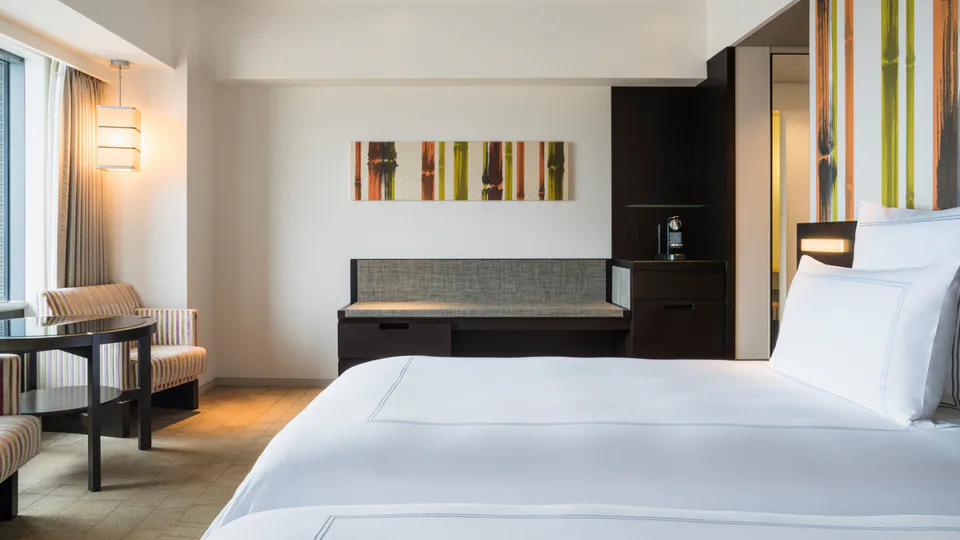
Swissôtel Nankai Osaka vs Hotel Royal Classic Osaka comes down to direct Nankai airport access versus a newer-feeling Namba base with broader Metro convenience.
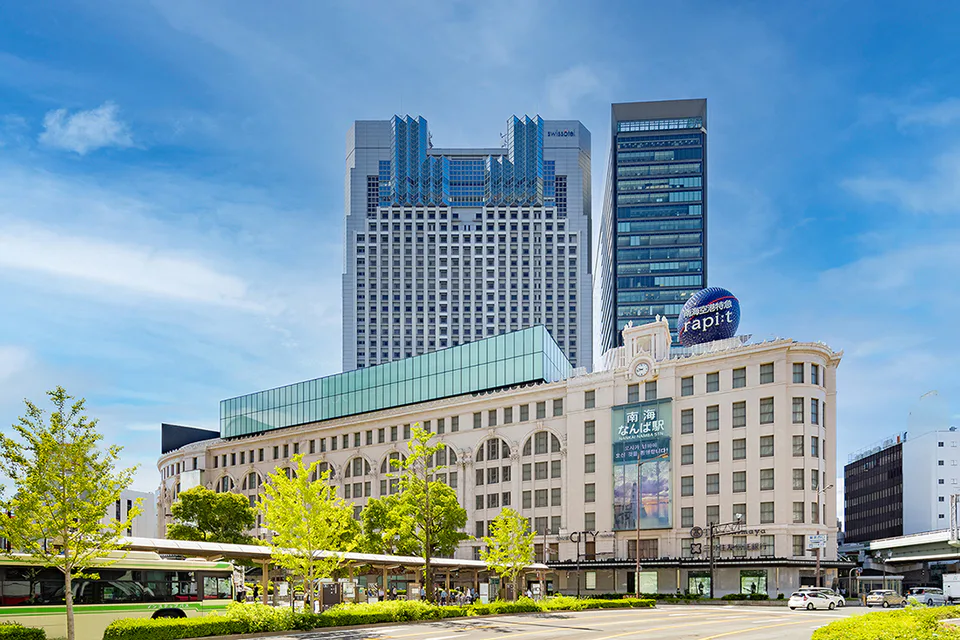
Swissôtel Nankai Osaka. Image: hotel official material used in the verified source article.
Swissôtel Nankai Osaka vs Hotel Royal Classic Osaka is a choice between simpler Nankai airport access and more repeatable Metro convenience. Swissôtel Nankai Osaka and Hotel Royal Classic Osaka are both strong Namba bases, but they remove different kinds of friction. Swissôtel is connected to Nankai Namba Station, so the last part of a Kansai Airport arrival is unusually simple. Hotel Royal Classic Osaka is directly connected to Osaka Metro Namba via Exit Walkway No. 12 and is about a four-minute walk from Nankai Namba. For two travellers with two large suitcases staying three or four nights, the choice is not “luxury versus convenience.” It is whether you want to eliminate two high-stress airport-luggage moments or reduce smaller Metro and checkout friction repeatedly across the stay.
My default: choose Swissôtel when you arrive late or leave early on Nankai services with heavy luggage. Choose Hotel Royal Classic Osaka when arrival is at a normal hour, you will use the Metro repeatedly, and a 12:00 checkout helps on the final day. Do not let a one- or two-square-metre room difference decide the booking by itself.
Swissôtel Nankai Osaka vs Hotel Royal Classic Osaka: the 30-second verdict
↔ Scroll table left or right
Situation | Choose | Why it changes the trip |
Late Nankai arrival / early airport departure | Swissôtel | Connected to Nankai Namba, so the hardest suitcase segment is reduced. |
Several Metro trips each day | Royal Classic | Exit Walkway No. 12 convenience can be used repeatedly, not only on airport days. |
Early hotel breakfast | Swissôtel | Table36 starts at 06:30; Royal Classic's HAFU starts at 07:00 in the source check. |
Late flight on the last day | Royal Classic | 12:00 checkout gives one extra hour versus Swissôtel's 11:00 baseline. |
“Directly connected to Namba” means two different things
Swissôtel's sharpest advantage is Nankai. The hotel is above Nankai Namba, and the current Swissôtel guide lists the Rapi:t Express from Kansai Airport at about 35 minutes. Hotel Royal Classic Osaka's official access page describes it as directly connected to Osaka Metro Namba at Exit Walkway No. 12, while Nankai Namba is approximately a four-minute walk away. Those facts are not interchangeable. A traveller using Nankai twice may value Swissôtel more; a traveller riding the Midosuji Line several times a day may extract more value from Royal Classic.
Think in a timeline. Immigration and baggage reclaim happen before the hotels diverge. The difference begins after the train reaches Namba: finding the correct route, handling lifts and escalators, and walking the final segment with luggage. At 22:30 in rain with two 28-inch suitcases, that last segment carries more weight than it does at 15:00 with cabin bags.
If Swissôtel is already your preferred side of this comparison, use the fuller Swissotel Nankai Osaka decision guide to choose the room tier and spa rights rather than re-solving the location question.
Room size: 32 m² versus 30–31 m² is not a winner
Hotel Royal Classic Osaka lists its Standard Twin at 30–31 m². The Swissôtel source comparison uses a verified 32 m² Twin category. That puts both in the same practical size band for two adults, but a total-area figure cannot prove that two large suitcases can lie open without blocking furniture or the walking route. For a three- or four-night stay, inspect the exact room photos and bed layout instead of turning a one-square-metre difference into a comfort claim the floor plan does not support.
Amenities only count when they enter your actual schedule
Swissôtel has the broader on-property leisure proposition, including pool, gym and Japanese sauna/bath facilities, with access varying by room or rate. That can justify a premium only when you will use it. If every day is 08:00 to 22:00 sightseeing, the facilities are theoretical. Breakfast follows the same rule: a 06:30 start is valuable to an early-start traveller, not to someone who skips hotel breakfast.
Hotel Royal Classic Osaka: Metro convenience that repeats across the stay
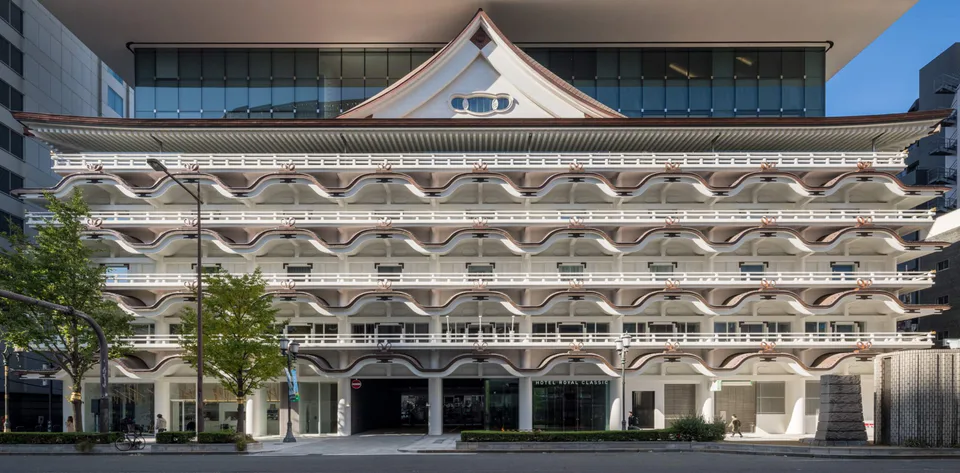
Royal Classic's 12:00 checkout is not a daily benefit, but it can matter on a late-flight final day. Its Metro connection is the opposite: the value can repeat every time you leave, return with shopping, or head out again. A four-night stay magnifies that repeated convenience. If you leave in the morning and do not return until late every day, the gap narrows again.
A four-day stay shows why neither hotel wins every day
Imagine Day 1 arriving at Nankai Namba at 20:30, Day 2 sightseeing and shopping around central Osaka, Day 3 spending all day at USJ, and Day 4 leaving for a late flight. Swissôtel wins the most stressful part of Day 1 and can simplify the heaviest luggage moment on Day 4. Royal Classic can win the repeated Metro movements on Day 2 and gives you the extra checkout hour on Day 4. On the USJ day, the two-hotel difference may shrink to one outbound and one return trip.
That is why I would not create one overall score. Weight the high-pressure moments first. A late arrival plus early departure can make two Swissôtel wins more important than several minor Metro wins. A relaxed arrival plus late departure can reverse the weighting.
Compare the same room conditions before looking at the total
Fix the same dates, two adults, a comparable Twin room, breakfast, taxes and cancellation deadline. Do not compare a non-refundable Swissôtel rate with a flexible Royal Classic rate and call the cheaper number the winner. Prices move by date; the decision is whether the premium buys a benefit you can point to in your itinerary.
Swissôtel Nankai Osaka: check the same-date room
Verify Swissôtel rooms for your dates
Hotel Royal Classic Osaka: check the same-date room
Verify Royal Classic rooms for your dates
Final verdict
I would book Swissôtel for a late Nankai arrival with two large suitcases or an early Nankai departure. I would book Hotel Royal Classic Osaka for a normal-time arrival, three or four nights of repeated Metro use, and a late-flight final day where 12:00 checkout is useful. If most of your trip is actually Umeda, Shin-Osaka or Kyoto, I would stop comparing these two and reconsider the accommodation area first.
FAQ
Which is easier from Kansai Airport?
When you use Nankai to Namba, Swissôtel has the cleaner final segment because it is connected to Nankai Namba. Royal Classic's official access page puts it about four minutes on foot from Nankai Namba. The difference matters most with heavy luggage or a late arrival.
Which is better for two large suitcases?
Both have comparable 30 m²-plus Twin options. Room area alone cannot prove two 28-inch suitcases will open comfortably, so check the exact room photos and furniture layout before booking.
Which is better for a late flight on the last day?
Royal Classic's official checkout is 12:00, one hour later than Swissôtel's 11:00 baseline in the source check. That hour has value only if you actually remain at the hotel late enough to use it.
Sources and freshness
Hotel Royal Classic Osaka official Access and Standard Room pages; Swissôtel Nankai Osaka official hotel, accommodation and Pürovel Spa & Sport pages. Rechecked 16 August 2026. Room inventory, breakfast times, facility access and rate conditions can change, so verify them again before the free-cancellation deadline.
Your next decision
If the hotel comparison makes you question the wider base, decide whether Namba or Umeda fits the trip before comparing another pair of Namba hotels.