
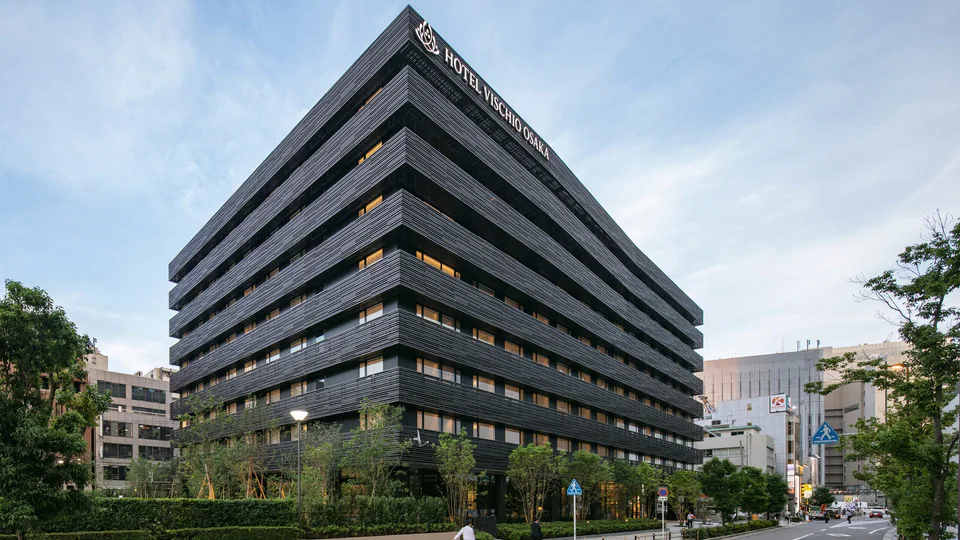
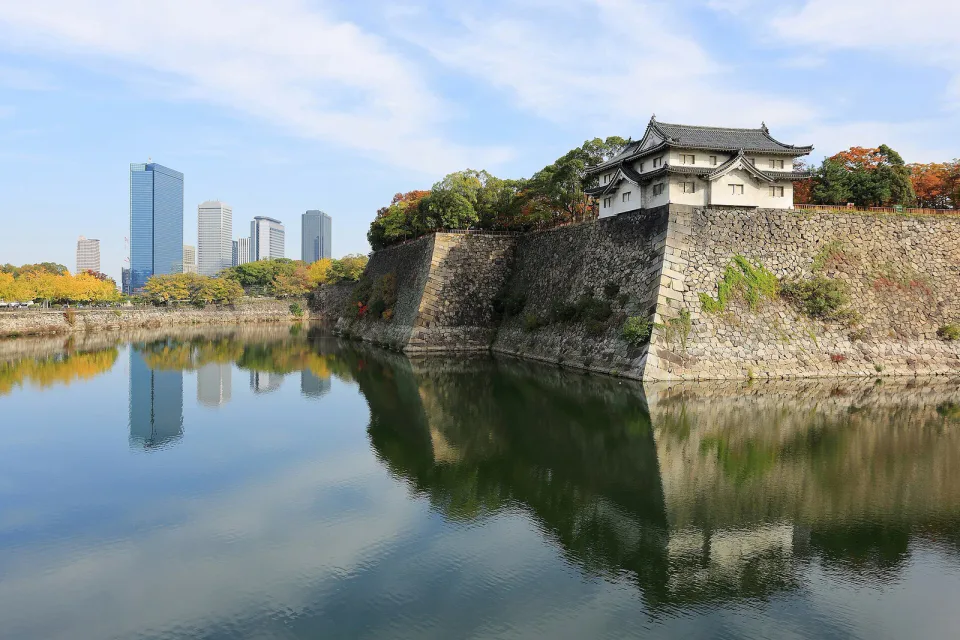
Hotel Vischio Osaka is about five minutes north of JR Osaka Station, which makes it easy to shortlist for an Umeda-based trip. The harder decision is the room ladder. Economy Double starts at 16.6 m², the mid-tier Twins run through 20.5–24.9 m², Deluxe Twin reaches 28.1 m² with a separate washing area and rain shower, and Vischio Twin expands to 41.4 m² for up to four guests. Those are not merely larger versions of the same room.
My first question is therefore not “Is five minutes from Osaka Station convenient?” It is “How often will this trip reuse Osaka Station, and which room function will I actually use every morning and night?” A three- to five-night trip with Kyoto/Kobe day trips and Umeda evenings can recover the location repeatedly. A Namba-heavy trip may not. And if two people need parallel bathroom routines, the 28.1 m² Deluxe Twin can be a more meaningful upgrade than simply moving from 20.5 to 24.9 m².
The 30-second decision
↔ Scroll table left or right
Trip pattern | My starting point | Why |
Kyoto/Kobe day trips + Umeda evenings | Strong fit | JR Osaka Station is reused often enough for the base to pay back. |
Two people, 2 nights, light luggage | Price 20.5–24.9 m² Twins first | You may not need to pay for the separate-bath tier. |
Two people, 4–5 nights, busy mornings | Add 28.1 m² Deluxe Twin | The upgrade buys a different bathroom workflow, not only 3.2 m² more than Superior Twin. |
Namba/Shinsaibashi dominates the trip | Compare another base | Five minutes from Osaka Station does not remove repeated cross-city travel. |
The ValueNavi Umeda-reuse test
A station-near hotel becomes more valuable when the same station is repeatedly part of the itinerary. Count the days that begin or end at JR Osaka Station or Umeda:
↔ Scroll table left or right
Repeated Umeda use | Location value | Interpretation |
1 meaningful use in the stay | Low | Do not pay much simply for the address. |
2 meaningful uses | Medium | Useful, but room quality and another district may still dominate. |
3+ repeated departures/returns | High | The learned five-minute route and Umeda evening access start compounding. |
This is an editorial framework, not a claim that every Umeda stay saves the same number of minutes. Osaka Station is large and multi-level. The hotel’s official “five minutes” begins from the station side, while a real trip still includes platform-to-gate movement, orientation and the final street walk.
If the route includes Kyoto, Kobe and central Osaka, the Osaka–Kobe–Koyasan four-day itinerary is a useful test of whether Umeda is genuinely the centre of gravity. If most evenings are in Namba or Shinsaibashi, the answer can reverse even though the hotel itself has not changed.
Five minutes from JR Osaka Station is not station-connected
The hotel currently lists about five minutes on foot from the north side of JR Osaka Station, with the Central Gate and Bridge Gate among the shortest approaches. That is close, but it remains a walking product. If a traveller expects a hotel physically integrated with the station, compare Hotel Granvia Osaka instead of treating “near Osaka Station” and “inside the station complex” as interchangeable.
The distinction matters most with large luggage, rain or a tight departure. Once you learn the north-side route, repeated returns become easier. But the first stay still requires correct gate choice and orientation. The hotel removes distance; it does not remove Osaka Station itself.
The room ladder has two different kinds of upgrade
Some steps buy mainly more floor area. Others buy a different room function. That is the central decision.
↔ Scroll table left or right
Room | Published area | What the upgrade mainly buys |
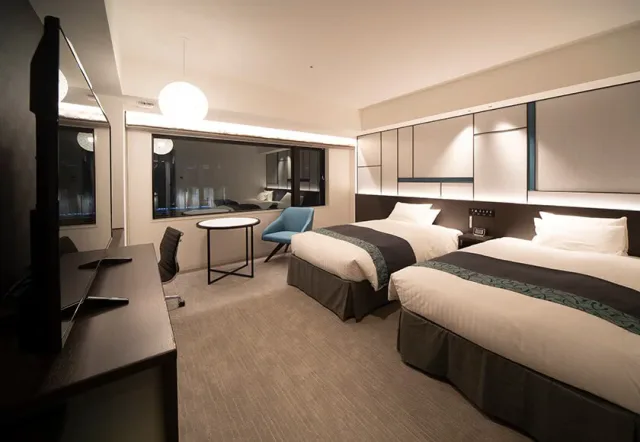
Economy Double | 16.6 m² | Lowest-space entry point; current hotel information also flags its outside-view limitation. |
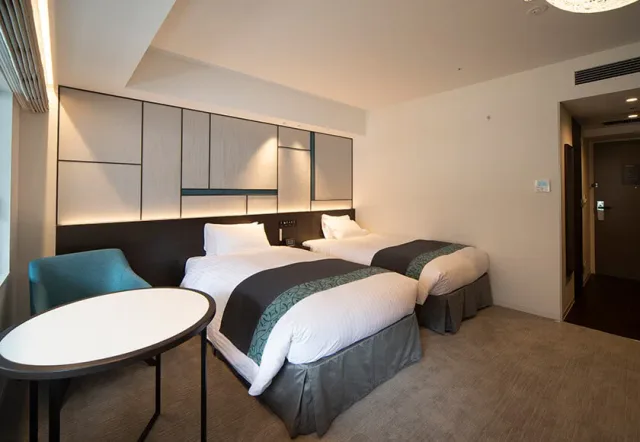
Moderate Twin | 20.5 m² | Practical entry Twin for two travellers. |
Comfort Twin | 23.7 m² | More floor tolerance without jumping to the separate-bath tier. |
Superior Twin | 24.9 m² | Another space step for two travellers. |
Deluxe Twin | 28.1 m² | Separate washing area + rain shower; 2–3 guests. |
Vischio Twin | 41.4 m² | Large group/long-stay space plus separate washing area; 2–4 guests. |
The room-utility ladder: where the percentage jump matters
For two travellers, three comparisons are especially useful:
20.5 → 24.9 m²: +4.4 m², about +21% published area. This is mainly a space upgrade.
24.9 → 28.1 m²: +3.2 m², about +13% published area, but the more important change is the separate washing area and rain shower. This is a function upgrade.
28.1 → 41.4 m²: +13.3 m², about +47% published area. This is a major capacity/space jump and becomes easier to justify for groups or longer stays.
That is why I would not automatically choose the room with the largest square-metre increase. If two people simply want more suitcase space, the 23.7–24.9 m² range may solve the problem. If one person needs to shower while another uses the basin/toilet area, Deluxe Twin changes the morning workflow in a way that a smaller area increase can still justify.
The hotel does not publish enough clear-floor measurements to guarantee that two specific 28-inch suitcases can remain completely open in every category. Use floor area as a comparison, not a luggage promise. If hotel changes are creating the suitcase problem, the Japan luggage-forwarding guide may solve more than another room upgrade.
Economy Double has a different failure mode than “small room”
The current hotel information describes Economy Double as a 16.6 m² entry category and flags its outside-view limitation. If the room is only for sleep, that can be a rational trade. If daylight, checking the weather from the room or spending daytime hours inside matters, the lower rate is buying away something specific—not just 4–8 m².
This is a useful red-team check: before booking the cheapest room, ask what feature disappears. A low price is only better value when the missing feature has close to zero value for your stay.
Four nights reveal when location and room quality pay back
Consider a four-night simulation. Day one: arrive with luggage and learn the north-side station route. Day two: go to Kyoto and return for dinner in Umeda; the location pays back. Day three: shop around Osaka, drop purchases at the room, then go out again; the location pays back a second time. Day four: both travellers prepare at the same time while packing two cases; now room area and bathroom separation matter more than the address.
This is why a location premium and a room premium should not be collapsed into one decision. Umeda convenience earns value outside the room; the Deluxe bathroom earns value inside it. Choose each only when the itinerary uses it.
USJ can reverse the base decision
One USJ day does not automatically make Universal City the better base. If the other days include Kyoto, Kobe and Umeda, staying near Osaka Station can remain balanced. If two or more days are heavily USJ-focused and you expect late park exits, a Universal City hotel can delete more repeated post-park friction.
The same logic applies to Namba/Shinsaibashi nightlife. Hotel Vischio makes the final Umeda return simple; it does not eliminate the cross-city movement before that. If those districts dominate the trip, compare the apartment-style option in MIMARU Osaka Shinsaibashi Central rather than paying for a Umeda benefit you use mainly at bedtime.
Laundry matters more on night four than night one
The hotel lists self-service laundry on the second floor. It should contribute almost nothing to a one-night booking decision. Over four or five nights, especially in summer or before continuing to Kyoto/Kobe, it can reduce how much clothing needs to be packed or forwarded.
If Osaka is only a launch point for an overnight move, the Osaka to Beppu overnight ferry guide is an example where luggage planning may matter more than paying for another hotel-room tier.
Breakfast: JPY 3,500, 07:00–10:00
Verde Cassa currently serves breakfast from 07:00–10:00 with last order at 09:30. The adult price is JPY 3,500 (about US$22 at a recent exchange rate); children aged 4–12 are JPY 2,000 and children 3 or under are free. Keep JPY as the planning reference because exchange rates move.
I would not count breakfast as a hotel advantage on mornings that must leave before 07:00. The correct order is itinerary first, breakfast package second. If the first fixed departure removes the buffet window, paying for it adds cost without adding utility.
Parking is small inventory, not a guaranteed convenience
The hotel currently lists 11 contracted parking spaces on site, first come first served, at JPY 2,200 for 15:00–11:00 (about US$13.80 at a recent exchange rate). That is enough to treat parking as an available option, not enough to assume a space will always exist. Self-drive travellers should keep a fallback rather than letting the parking icon decide the booking.
Three ways to buy the wrong version of Hotel Vischio Osaka
Book Economy Double assuming it is merely a smaller normal Double, without checking the outside-view limitation.
Read “five minutes from JR Osaka Station” as station-connected and underestimate gate/orientation time.
See a separate washing area on an upper room page and assume all Twins share that bathroom setup.
These are more important than star rating or a generic hotel score because each one changes the actual product being purchased.
Lock the room category before comparing platforms
Keep dates, guest count, exact room, bed setup, breakfast, taxes, payment method and free-cancellation deadline aligned. Economy Double, Moderate Twin, Superior Twin, Deluxe Twin and Vischio Twin are different products. Decide which tier solves the trip first; only then compare the same product across platforms.
Booking.com — compare Hotel Vischio Osaka rooms
Trip.com — compare the same room conditions
Agoda — compare the same room and cancellation terms
Final decision
I would book Hotel Vischio Osaka when Osaka Station/Umeda is genuinely reused across the stay and I am willing to choose the room tier deliberately. For two people, the 20.5–24.9 m² Twins are my first space comparison; the 28.1 m² Deluxe Twin becomes more persuasive when bathroom throughput matters because it is a functional upgrade, not merely a small area increase. I would compare another district when Namba/Shinsaibashi or repeated USJ days dominate, and I would compare Hotel Granvia Osaka when station integration—not just a five-minute walk—is the hard requirement.
Osaka Castle Cherry Blossoms: Nishinomaru, Castle Tickets and Night Viewing
Osaka Itinerary: 3, 4 or 5 Days — When to Add USJ, Kyoto or Kobe
Osaka With Kids for 7 Days: Protect Kaiyukan and USJ by Leaving Two Days Deliberately Soft
JR Inn Hakodate: Is a Station-Connected 20 m² Twin Worth It?
Sources
Hotel Vischio Osaka — official website
Hotel Vischio Osaka — official access and parking
Hotel Vischio Osaka — official room overview
Hotel Vischio Osaka — official Deluxe Twin
Hotel Vischio Osaka — official Vischio Twin
Hotel Vischio Osaka — official breakfast information
Hotel Vischio Osaka — official facilities
Room types, rates, availability and cancellation terms can change. USD equivalents are approximate and exchange rates move. This article may contain affiliate links; ValueNavi may earn a commission from qualifying bookings at no additional cost to you.