
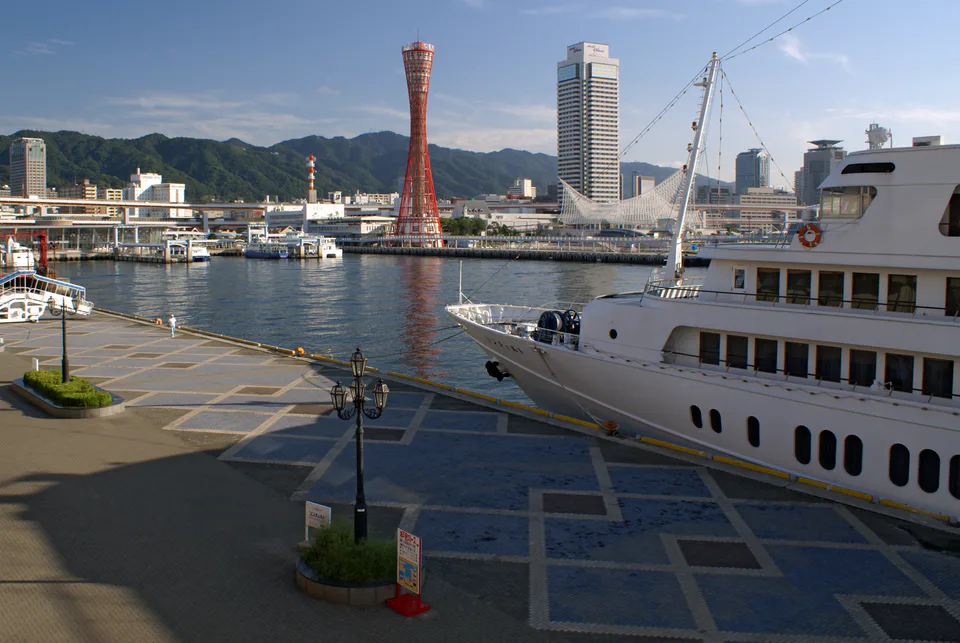
Osaka, Kobe and Koyasan can fit into four days, but only if Koyasan is treated as the fixed-time part of the trip and Kobe as the flexible day trip. The cleanest first-trip sequence is usually Day 1 Osaka, Day 2 Kobe, Day 3 travel light to Koyasan and sleep in a temple lodging, then Day 4 use the mountain morning before returning to Osaka or continuing onward. The itinerary becomes fragile when you add another hotel move, carry a full-size suitcase up the mountain, or put an afternoon flight after Koyasan.
The key distinction is simple: Kobe mostly costs sightseeing time; Koyasan costs timetable flexibility. Kobe can be shortened, reordered or even dropped if the arrival day slips. A shukubo stay has check-in, dinner, bathing and often morning-prayer times, while the mountain itself is reached by Nankai rail, the Koyasan Cable Car and local buses. Protect that fixed chain first, then fit Osaka and Kobe around it.
↔ Scroll table left or right
Your constraint | Best move | Why |
Temple stay is the main reason for the trip | Sleep on Koyasan on Night 3 | The evening, dinner and early morning are the parts a day trip cannot reproduce |
Large suitcase | Leave it in Osaka if returning, or forward it to the next city | Train + cable car + bus is the wrong place to drag unnecessary luggage |
Kobe is optional | Use Kobe as the first cut | Koyasan timing is harder to compress without damaging the overnight experience |
Need an afternoon flight from KIX on Day 4 | Do not sleep on Koyasan the previous night | The mountain morning and multi-leg descent leave too little resilience |
Need a late-evening KIX flight | Koyasan can work with a conservative descent | Official access is via the Nankai system, but transport margin still matters |
Hate changing hotels | Keep Osaka and day-trip Koyasan | You save the hotel move but give up the strongest evening/morning value |
Use Osaka as the buffer, Kobe as the flexible day, Koyasan as the fixed product
A four-day trip works better when each place has a different job. Osaka absorbs the arrival day, main luggage and transport uncertainty. Kobe supplies one full but flexible day. Koyasan supplies the one night whose value depends on being there at the right hours.
This structure is more resilient than treating all three destinations equally. If the inbound flight is late, Osaka can shrink from a castle-and-evening day to dinner and sleep. If rain makes Kobe’s harbour less appealing, you can shorten Kitano or move indoors. If the Koyasan arrival slips past a temple dinner or curfew, however, the most expensive night can lose the exact experience you paid for.
That is why Kobe should normally sit before Koyasan, not after it. Day 2 is the itinerary’s shock absorber. Day 3 should begin with enough time to reach the mountain, check in and still use the afternoon without racing the dinner clock.
Namba vs Umeda: choose the Osaka base by which hard journey matters more
Namba is the cleaner base when Koyasan is the hard movement. Kongobu-ji’s official access guidance routes travellers from Shin-Osaka to Namba for the Nankai Koya Line, and from Kansai Airport via the Nankai system with a change at Tengachaya. Koyasan itself is reached by getting off at Gokurakubashi and transferring to the Koyasan Cable Car.
Umeda / Osaka Station is stronger when repeated JR movement, Kobe, Kyoto or a Shinkansen connection is doing more work. One Kobe day alone does not automatically justify Umeda if the trip’s only fixed overnight transfer is to Koyasan.
A practical rule: put the hotel beside the journey that is hardest to recover if it goes wrong. Kobe has frequent urban rail alternatives. A shukubo dinner does not move because you chose a hotel farther from Nankai Namba.
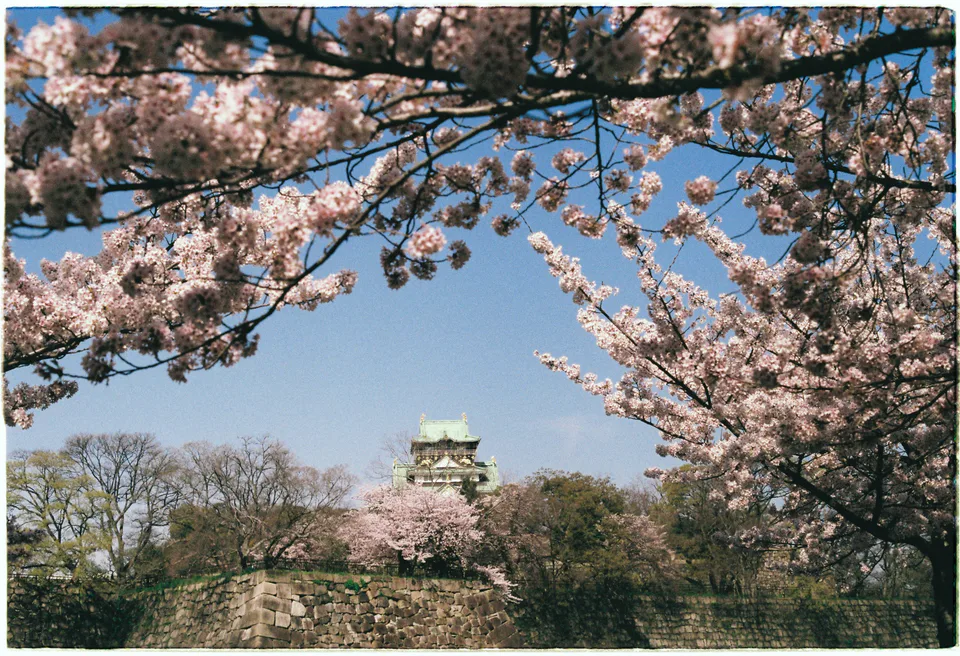
If the north-vs-south Osaka choice is still open, use the Namba vs Umeda comparison before choosing a hotel brand.
Day 1: do one Osaka district well, not five districts badly
If arrival is before lunch, Osaka Castle plus one evening area is enough. If arrival is later, skip the castle and protect the evening. The mistake is trying to fit Osaka Castle, Umeda, Shinsaibashi, Tsutenkaku and Dotonbori into a partial day because Osaka is labelled “Day 1.”
Namba works naturally when the evening is food and shopping and the next major journey is Koyasan. Umeda works better when the hotel or next morning is rail-heavy. The arrival day should reduce complexity, not prove that Osaka has been “covered.”
Day 2: Kobe works best as a downhill route
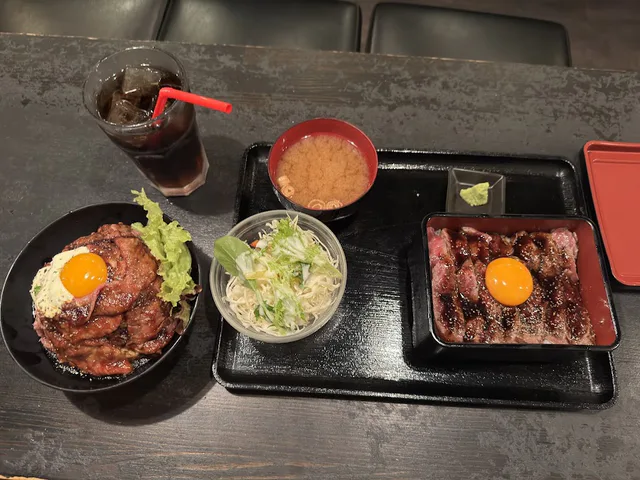
For a first Kobe day, start high and finish by the water: Kitano → Sannomiya / Motomachi → Nankinmachi or the old foreign settlement → Meriken Park / Harborland. That avoids making the tired part of the day the uphill part.
Kobe beef can be the lunch anchor without turning the whole day into a restaurant hunt. If a famous reservation forces you to cross the city twice, the restaurant is no longer supporting the itinerary. The natural route matters more on a four-day trip.
JR, Hankyu and Hanshin can all make sense from Osaka because the useful line depends on the hotel and the part of Kobe you want first. Do not buy a rail strategy from the destination name alone. A hotel near Osaka Station and a hotel near Namba are starting from different networks.
For older travellers or hot weather, shorten Kitano and keep the harbour. Kobe is the flexible day; it should absorb fatigue rather than create it.
Day 3: arrive on Koyasan early enough that the temple stay still has a purpose
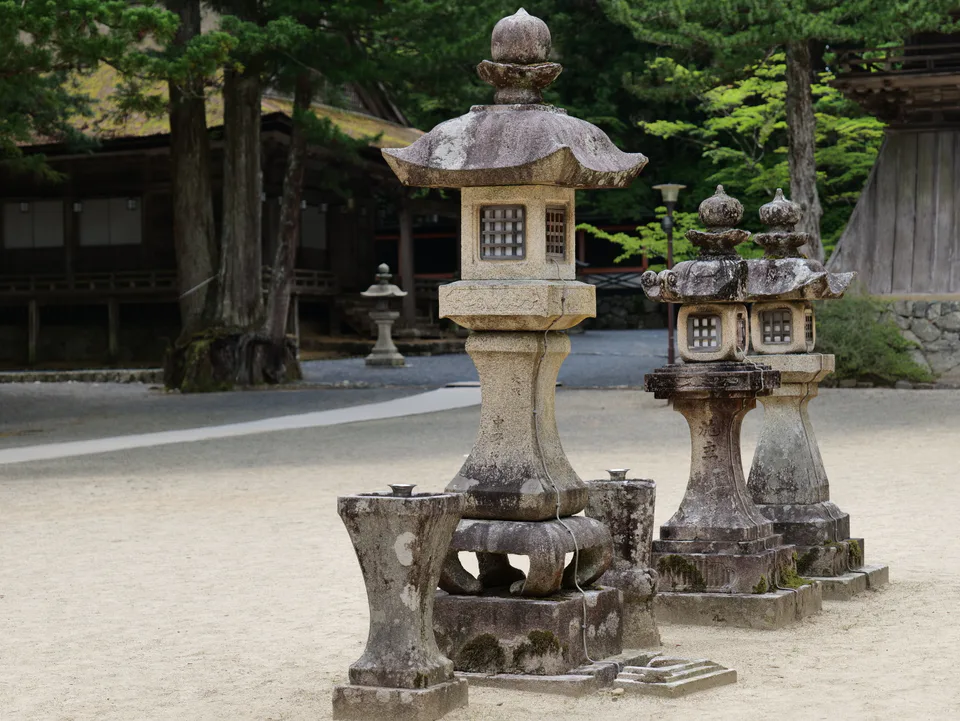
Koyasan is not a normal “check in whenever” hotel night. Exact shukubo meal, bath, curfew and prayer times vary by temple, so those conditions should be confirmed before building Day 3. The booking is strongest when arrival leaves time to check in, see Danjo Garan or Kongobu-ji, return for dinner, then use the evening and early morning without another long transfer.
Do not put a major Osaka attraction on the same morning and assume the mountain begins after lunch. Nankai’s own Koyasan travel material gives approximate Namba–Gokurakubashi/Koyasan travel times of around 80 minutes by Limited Express Koya and longer by other train patterns, before the local mountain bus to the actual temple. The journey has enough moving parts that “late afternoon arrival” can become “arrive at dinner.”
For September 2026 travel, Kongobu-ji has already published specific September worship/viewing restrictions around annual events. Check current temple restrictions for the exact date instead of assuming every hall is available all day.
The Koyasan World Heritage ticket fits an overnight only when the round-trip structure fits your route
Nankai’s current Koyasan World Heritage Digital Ticket is valid for two consecutive days and includes a round-trip train fare to Koyasan Station, a two-day Nankai Rinkan Bus pass inside Koyasan and selected discounts. From Namba / Shin-Imamiya / Tengachaya, the current 2026 digital price is JPY 3,980 for an adult, or JPY 4,910 with an outbound Limited Express Koya ticket.
That makes the product naturally aligned with one night on Koyasan followed by a return to Osaka. But it is a round-trip product tied to the departure/arrival station. If the itinerary is actually continuing somewhere that does not use the return leg as intended, do not buy it merely because “Koyasan pass” sounds appropriate.
The pass decision should follow the route. The hotel move should not be invented to make the pass look economical.
The large suitcase should usually skip Koyasan
The overnight becomes much easier when the mountain bag contains only what you need for one night. If you are returning to the same Osaka hotel, ask that hotel whether it will hold the large case between stays. If you are continuing to Kyoto, Tokyo, Himeji or another city, forwarding the main case can make more sense than returning to Osaka solely to collect it.
This is not because a suitcase is impossible on Koyasan. It is because every unnecessary bag is paid for repeatedly: platform, train, cable car, bus, temple stop and possible stairs or wet ground. In winter, ordinary luggage wheels add even more friction.
Use the Japan luggage-forwarding guide before assuming same-day delivery or hotel acceptance.
Day 4: morning prayer and Okunoin are the return on the hotel change
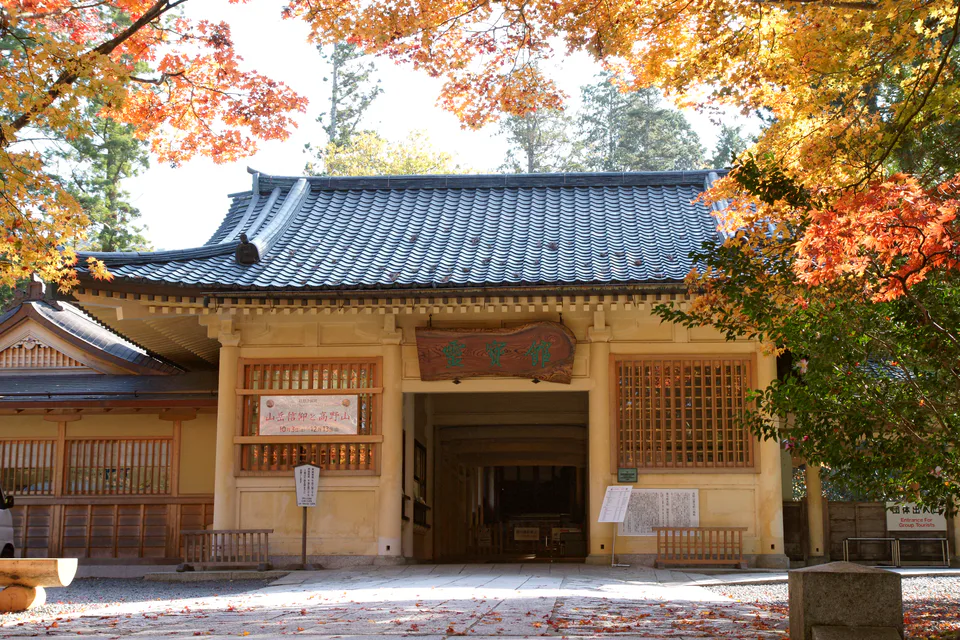
If you move hotels for one night, use the hours that justify the move. Morning prayer, breakfast and an early Okunoin walk are the strongest argument for sleeping on Koyasan rather than day-tripping from Osaka.
Okunoin is not one quick monument. The approach through the cedar forest and cemetery is part of the experience, so the morning should not also carry a long shopping list of extra temples before a time-sensitive flight.
The overnight loses much of its value if Day 4 starts with a late sleep-in and immediate descent. In that case, a Koyasan day trip from Osaka may have been the better product because the hotel change bought no unique time window.
Do not put an afternoon KIX flight after Koyasan
Kongobu-ji’s official access guidance confirms that the rail route between KIX and Koyasan uses the Nankai system, with a connection through Tengachaya on the airport side and the cable-car transfer at Gokurakubashi on the mountain side. That does not make Koyasan an airport hotel.
An afternoon flight leaves too little room for morning prayer, Okunoin, local bus, cable car, train changes, airport check-in and disruption margin. If Day 4 has an afternoon departure, sleep lower down the night before.
A late-evening flight is more plausible, but work backwards from the terminal arrival time and protect a large margin. If the flight is intercontinental or expensive to miss, the final mountain morning should be deliberately short.
When the four-day plan should change
↔ Scroll table left or right
If this is true | Change the plan this way |
Koyasan temple stay is not important | Stay in Osaka all three nights and day-trip Koyasan |
Kobe food/harbour is more important than Koyasan | Consider a Kobe night and make Koyasan a day trip or remove it |
Arrival is late on Day 1 | Keep Osaka simple; do not compensate by overloading Day 2 |
Older travellers dislike steep/long walking | Shorten Kitano and Okunoin; keep the temple stay only if the lodging itself still appeals |
Heavy rain on Koyasan | Protect the shukubo, Danjo Garan/Kongobu-ji and transport; shorten the long cemetery walk |
You need a fifth major destination | Remove Kobe or remove the Koyasan overnight instead of compressing all four |
Final four-day structure
Day 1 — Osaka: arrival, luggage, one major area and one evening district.
Day 2 — Kobe: Kitano downhill through central Kobe to the harbour; keep this as the flexible day.
Day 3 — Koyasan: travel light, arrive before the shukubo’s critical check-in/dinner window, then Danjo Garan / Kongobu-ji as time allows.
Day 4 — Koyasan morning: prayer/breakfast, Okunoin or one priority temple, then descend with margin for the next city.
Final verdict
For a first four-day Osaka–Kobe–Koyasan trip, one hotel change is worth it when it buys a real Koyasan evening and morning. More hotel changes are usually not. Keep Osaka as the transport and luggage buffer, let Kobe remain the flexible full-day excursion, and give the mountain night enough time to respect the shukubo schedule.
The recommendation reverses if the temple lodging is not important or Day 4 contains an early/afternoon flight. In those cases, stay in Osaka and treat Koyasan as a day trip—or remove it. The goal is not to touch three place names in four days. It is to use each destination during the hours that make it different.
Further planning
Koyasan in Autumn and Temple Lodging · Namba vs Umeda · Japan Luggage Forwarding · Where to Stay in Kobe
References
Kongobu-ji — official Koyasan rail access · Nankai — Koyasan World Heritage Digital Ticket · Nankai — 2026 digital ticket prices · Kongobu-ji — current 2026 visiting notices. Checked August 25, 2026. Temple-lodging meal, bath, curfew and prayer times vary by property; confirm the exact shukubo before fixing Day 3.