
For most Osaka-based travellers, Koyasan is worth an overnight stay only when the night buys at least two experiences that a day trip cannot reproduce: shojin ryori dinner, temple curfew and quiet evening, morning prayer, or an early Okunoin visit before the main daytime flow. If autumn foliage is the only reason you are going, a focused day trip is usually the better-value answer. Wakayama’s official tourism site places Koyasan’s main autumn-colour period around late October to early November, and 2026 adds a useful date-specific reason to visit: Kongobuji’s Autumn Special Viewing runs from October 24 to November 10.
The mistake is treating a shukubo as a prettier hotel. It is a time-window product. You accept an early arrival, fixed meal rhythm, simpler facilities and often shared bathing in exchange for access to Koyasan when day-trippers are leaving or have not yet arrived. If you will miss those windows, keep the Osaka hotel and make Koyasan a disciplined day trip.
↔ Scroll table left or right
Your actual trip | Best starting choice | Why |
Foliage is the main goal; you are sleeping in Osaka | Day trip | Late October to early November gives the best historical colour window without paying for a second hotel |
Temple dinner + morning prayer both matter | Stay one night | The overnight creates two unique time windows rather than merely adding a bed |
Only want one major sacred zone plus autumn colour | Day trip | A focused Danjo Garan/Kongobuji or Okunoin day is enough |
Want full Okunoin + central temples + prayer without rushing | Stay one night | The mountain transfer is paid once while sightseeing is spread across two usable blocks |
Older traveller, child, shared-bath concern or strict diet | Conditional overnight | The shukubo itself must pass a comfort and meal-policy check before the cultural value matters |
Large suitcase between Osaka and Kyoto | Overnight bag only | Do not turn a cultural night into a luggage-transfer exercise |
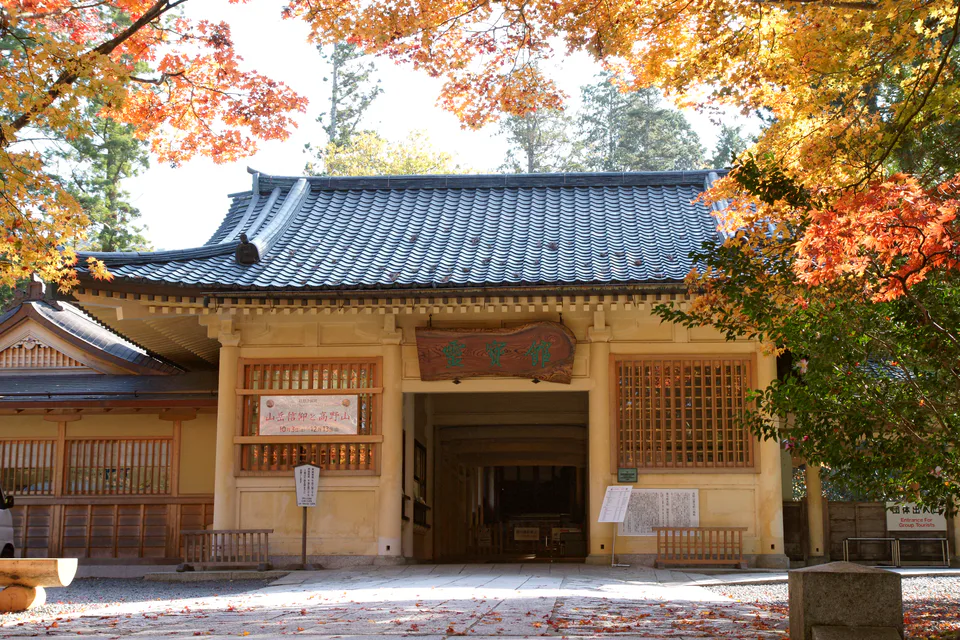
A real autumn scene at Koyasan, not a live 2026 foliage report.
The autumn question and the overnight question are not the same decision
Wakayama’s official tourism information describes Koyasan’s autumn leaves as running from late October to early November. A separate prefectural feature gives a broader recurring range from late October into mid-November. Those are planning bands, not a promise that one exact weekend will be at peak colour.
That distinction matters because the best reason to sleep on Koyasan should survive a weaker-than-expected foliage day. If your only desired outcome is red maples beside temple buildings, live foliage conditions should decide whether you make the trip at all. If the desired outcome is a temple meal, prayer, quiet evening and early sacred-site visit, the stay still has value when the colour is early, late or weather-damaged.
ValueNavi test: remove the leaves from your mental picture. If you would still want the shukubo dinner and morning ritual, the overnight has an independent reason to exist. If the answer becomes “no,” book the day trip and keep the hotel move out of the itinerary.
2026 has one useful fixed date: Kongobuji’s Autumn Special Viewing
Kongobuji has announced an Autumn Special Viewing from October 24 to November 10, 2026. The special access is scheduled from 09:00 to 16:30, with final admission at 16:00, and costs JPY 500 in addition to the ordinary Kongobuji admission. It includes access to the normally closed Oku-den and a different view of Banryutei during the autumn season.
This strengthens a late-October/early-November day trip because it adds a time-limited indoor/cultural component to the foliage. It does not automatically strengthen the overnight. The special viewing happens in normal sightseeing hours, so a traveller can use it without paying for a temple night.
The overnight becomes stronger only when you attach it to something that happens outside the day-trip window: a fixed shukubo dinner, evening atmosphere, morning ceremony or an early start at Okunoin.
A Koyasan day trip is a transport-heavy day, but not necessarily a bad one
Nankai’s current model-course material gives roughly 90 minutes from Namba to Gokurakubashi on GRAN TENKU, followed by about five minutes on the cable car to Koyasan Station and then a local bus into the temple area. Other services can take longer or require different transfers, so think of Koyasan as a two-hour-class door-to-sightseeing journey rather than “90 minutes from Osaka.”
That transport cost is acceptable when the day is focused. It becomes poor value when you try to use the same day for a full Okunoin approach, Kongobuji, Danjo Garan, Daimon, multiple temple interiors and a leisurely lunch.
For a first day trip, choose one anchor plus one secondary zone:
Autumn composition day: Kongobuji + Jabara-michi + Danjo Garan, with Daimon only if time remains.
Spiritual-core day: Okunoin as the anchor, then one compact central-temple stop.
This is the counterintuitive part: the mountain journey is long, but that does not mean the solution is “see more to justify the fare.” Trying to amortise the train cost across too many sacred sites usually makes the day worse.
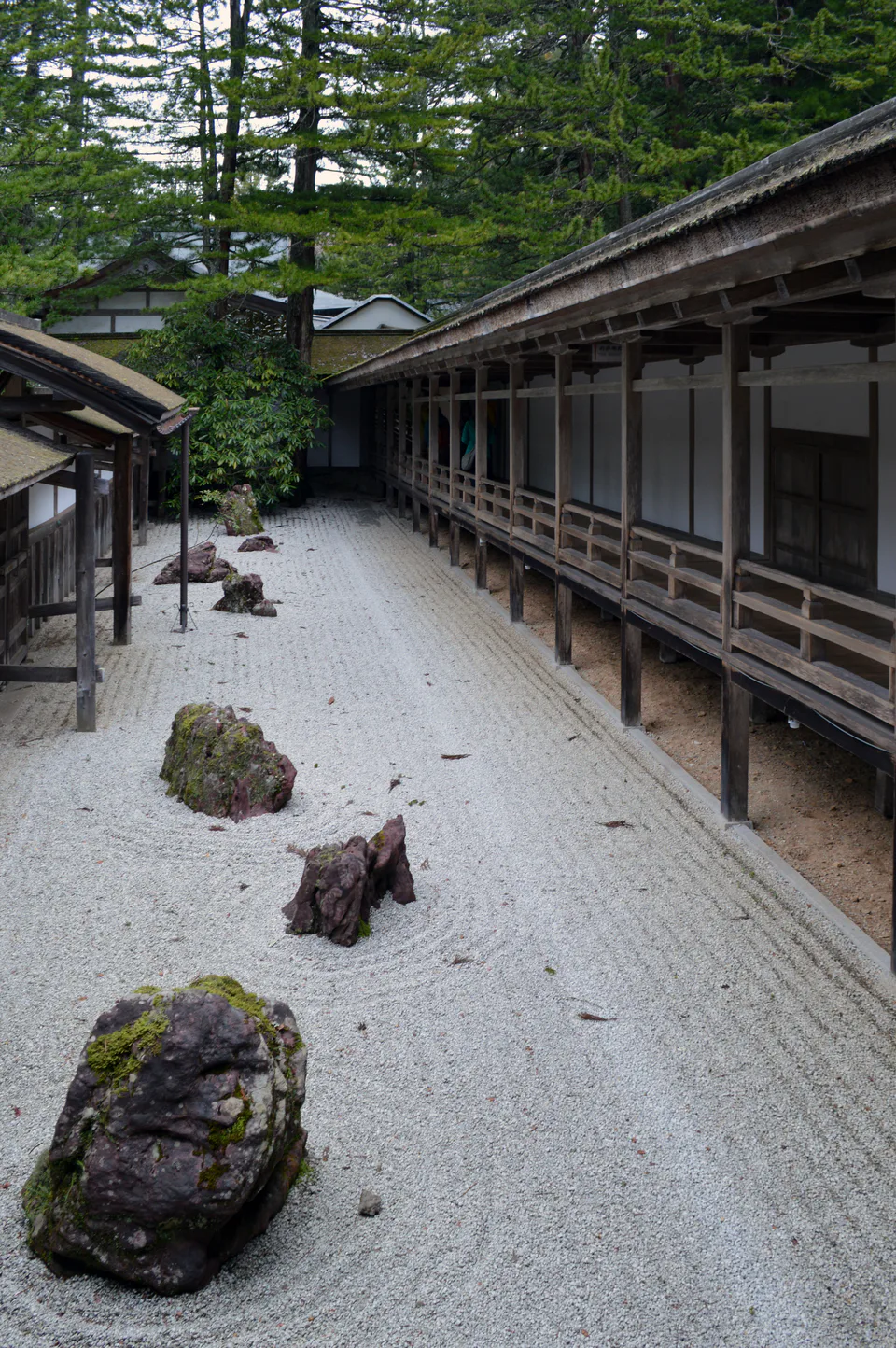
Kongobuji is a useful autumn and bad-weather anchor.
The overnight is worth it when it buys two off-hours windows
The official Koyasan Shukubo Association reservation system is built around a one-night stay with dinner and breakfast, and asks guests to estimate arrival by 17:00. Individual temples commonly publish check-in ending around 17:00, evening curfews and morning Buddhist ceremonies around 06:00–07:00 depending on season and temple.
This creates a practical way to judge value. Count the overnight-only or overnight-easier windows you will actually use:
Arrival-afternoon temple time before check-in rather than reaching the mountain at the end of the sightseeing day.
Shojin ryori dinner as part of the stay rather than looking for a late restaurant.
Quiet evening after most day visitors leave.
Morning Buddhist ceremony at the booked temple.
Early Okunoin or central-temple walk before your return journey.
If you will use only one of those, the hotel move can be expensive relative to the extra value. If you will use three or four, the overnight becomes a different trip rather than a slower version of a day excursion.
A shukubo should be chosen by operating rules, not by a “top 10” ranking
Koyasan temple lodging is too heterogeneous for a useful generic luxury ranking. The official association currently shows rooms from simpler Japanese-style accommodation with shared bath/toilet to higher-priced categories with a private toilet or bath. Prices are normally quoted per person and commonly include dinner and breakfast.
Before choosing a temple, filter in this order:
↔ Scroll table left or right
Filter | Why it can veto the stay |
Arrival deadline / curfew | A late Osaka departure can cost you the meal or make the booking invalid |
Morning ceremony time | If you will skip it, one of the main reasons to stay overnight disappears |
Shared vs private toilet/bath | This can matter more than temple reputation for families and older travellers |
Location | Okunoin-side and central/Danjo Garan-side lodgings create different first/last walks |
Diet and child policy | Shojin ryori does not mean every allergy, child meal or vegan interpretation is automatically covered |
Stairs, futon and heating | The cultural experience is poor value if the sleeping setup makes the night exhausting |
For example, the association currently lists Eko-in with afternoon check-in ending at 17:00 and morning Buddhist ceremonies around 06:30 in summer / 07:00 in winter; Ryusen-in publishes 15:00–17:00 check-in, a 21:00 curfew and morning ceremony around 06:00–06:30. The exact times vary. That is why the correct question is “does this temple’s timetable fit my arrival and morning?” rather than “which temple is ranked number one?”
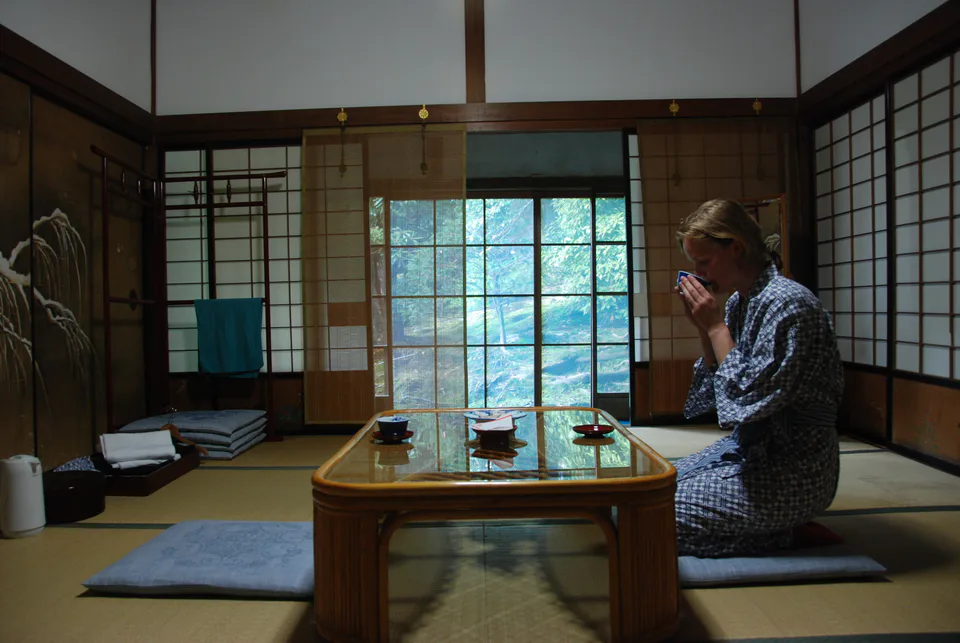
Temple-lodging facilities vary; verify the booked room rather than assuming a hotel-standard bathroom.
For families and older travellers, the cultural upgrade can become a comfort downgrade
Koyasan can work very well for families and older travellers, but “authentic” should not override practical needs. The biggest issues are not the train ride itself. They are the temple’s internal stairs, shared bathing, futon sleeping, early ceremony, dinner timing and the amount of walking you expect to do at Okunoin.
A child who will not sit through an early ceremony, an older traveller who needs a bed rather than a floor futon, or a guest uncomfortable with shared bathing can remove much of the overnight advantage. In that case, a comfortable Osaka hotel plus a bus-supported Koyasan day trip may be the better cultural experience overall.
The answer reverses when the group actively wants the temple routine and the booked room solves the comfort constraints. A private toilet or bath category can be worth paying for because it preserves the experience without forcing every member of the party into the same tolerance level.
Large luggage is one of the strongest reasons not to improvise the overnight
A Koyasan temple night fits best inside a larger Kansai route when the main suitcase stays behind or moves ahead. Carrying a 28- or 29-inch case through Namba, mountain rail, cable car, local bus and a temple entrance adds repeated handling to a stay whose main value is slowness.
If you return to the same Osaka hotel, ask the hotel to hold the main luggage and take one overnight bag. If the route continues to Kyoto or another city, use luggage forwarding when the sending and receiving properties can support the timing.
This is not a universal “never bring luggage” rule. A traveller with one carry-on is fine. The threshold changes when the luggage becomes large enough that every bus transfer and temple entrance starts determining the itinerary.
The 2026 World Heritage Digital Ticket is useful, but it should not decide whether you stay
Nankai currently prices the Koyasan World Heritage Digital Ticket from Namba/Shin-Imamiya/Tengachaya/Sumiyoshitaisha at JPY 3,980 for an adult and JPY 2,000 for a child. The version that includes an outward limited-express ticket is JPY 4,910 adult and JPY 2,460 child. The product includes eligible Nankai/cable-car travel and Koyasan bus use under its conditions.
The ticket is naturally convenient for a return trip with bus use, especially over two sightseeing blocks. But do not reverse the logic and book a temple night because the ticket lasts long enough. Transport products should serve the itinerary; they should not manufacture an overnight need.
The Japan Rail Pass also should not dictate the route. Koyasan’s normal access is built around Nankai, the cable car and local buses. Creating extra transfers only to use a JR product is exactly the kind of pass optimisation that saves money on paper and costs time in the real trip.
Rain and imperfect foliage make the overnight easier to judge
Bad weather exposes whether you booked Koyasan for one photograph or for the place itself. Kongobuji gives you an indoor/cultural anchor; Danjo Garan can be shortened; a long wet Okunoin approach can be reduced rather than completed out of obligation.
If heavy rain or strong wind removes the foliage photography you wanted, the day trip loses more value than the temple stay because the overnight still contains dinner and ceremony. But severe weather can also make the mountain transfer itself unattractive. Check live transport and weather rather than treating a prepaid room as a reason to force the journey.
After the main colour has passed, the same logic applies. If foliage was the only reason for Koyasan, move the autumn priority to a lower-elevation destination. If the sacred sites and temple routine were already the main purpose, leaf fall is a disappointment rather than a trip-killer.
A better one-night sequence
Day 1: leave the main luggage in Osaka or forward it; depart early enough to reach Koyasan with a real afternoon. Use Kongobuji + Danjo Garan or one other compact zone, then check into the shukubo before its stated deadline. Treat dinner and curfew as fixed appointments.
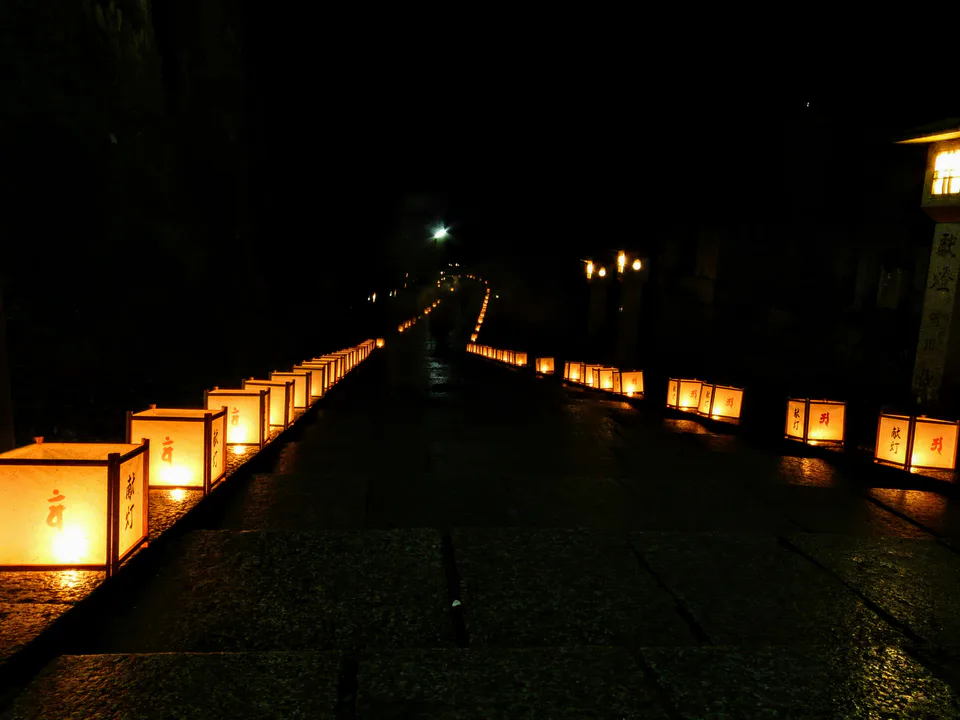
Evening: do not build a long independent night hike merely because you are sleeping on the mountain. Use a formal guided option or a familiar, appropriate route if you want an evening Okunoin experience, and respect the site as a place of worship rather than a night attraction.
Day 2: attend the temple’s morning ceremony if that is part of why you booked it, eat breakfast, then use the morning for Okunoin or the major zone you deliberately did not squeeze into Day 1. Return to Osaka or continue onward before the second day turns into another full checklist.
This sequence works because the overnight splits Koyasan by time quality, not because it doubles the number of attractions.
Okunoin should be treated as a sacred-site visit, not a box to squeeze between trains.
When I would not stay overnight
You mainly want foliage photos and can visit during a good live-colour day.
You will arrive near the shukubo dinner/check-in deadline.
You dislike shared bathing/futon rooms and the acceptable private-facility room is too expensive.
The next morning has a hard Kyoto, airport or Shinkansen commitment that makes the mountain exit stressful.
You are carrying large luggage and have no reasonable storage/forwarding plan.
You would skip both morning prayer and the early-morning walk—in which case the overnight is mostly buying a bed.
Final verdict: pay for the hours, not the address
For autumn foliage alone, I would day-trip Koyasan from Osaka and focus on one or two zones. For the full temple-stay experience, I would stay one night only when I can arrive before dinner, use the morning ceremony or another temple practice, and take advantage of a quiet early or late sacred-site window.
The best 2026 foliage-planning band remains late October to early November, with Kongobuji’s October 24–November 10 special viewing giving that period an extra confirmed cultural reason to visit. But the overnight should survive the red-team test: if the leaves are weaker than expected, does the night still feel worth moving hotels for? If yes, book the shukubo. If no, keep Osaka as the base.
Compare Koyasan stays for your exact date
Related planning
Official sources
Visit Wakayama — Koyasan autumn leaves · Kongobuji — 2026 Autumn Special Viewing · Nankai — Koyasan World Heritage Digital Ticket · Koyasan Shukubo Association — temple lodging and current property rules. Checked August 25, 2026. Foliage condition, transport schedules, temple ceremonies and lodging rules can change by date; recheck the exact travel date before departure.