
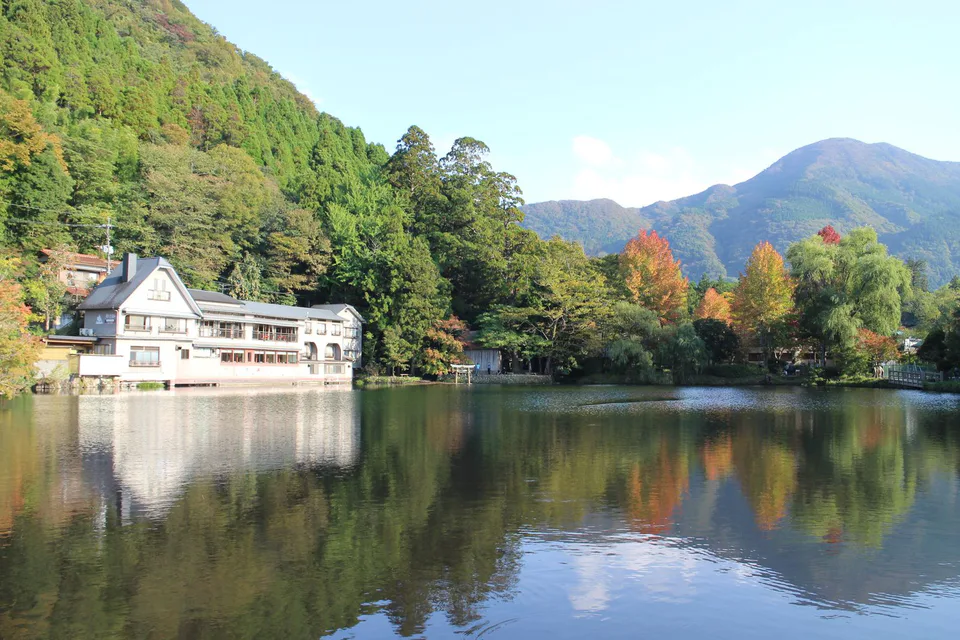
Lake Kinrin alone is not a reason to pay for a Yufuin overnight. The overnight becomes worthwhile when you want three things together: access to the lake before day-trippers arrive, a ryokan/onsen evening, and a slow Yufuin morning that still has value if the famous mist never appears. If your real goal is simply autumn colour, the lake, lunch and Yunotsubo Kaido, a Fukuoka or Beppu day trip is enough.
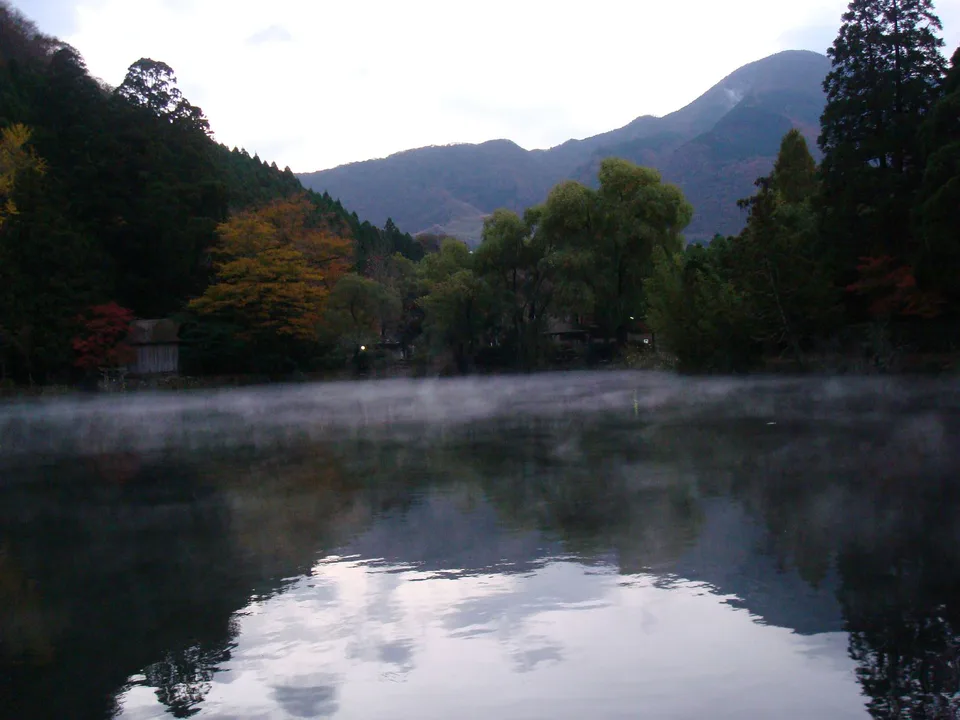
The most important correction is that “autumn morning mist” is not a guaranteed attraction. Yufu City’s official page describes steam rising from the relatively warm lake on cold winter mornings. Yufuin’s official tourism guide broadens that to cold early mornings from autumn into winter. Both support the phenomenon; neither promises it on a specific November date. Book the overnight for the hours it unlocks, not for one photograph the weather may refuse to produce.
↔ Scroll table left or right
Your real purpose | Default plan | Why |
Lake + shopping + lunch | Day trip | The 400 m lake circuit itself is compact; you do not need a hotel to see it in daylight |
Dawn lake + ryokan dinner + onsen | One Yufuin night | The hotel is buying a different time window, not extra attraction count |
Only reason to stay is “maybe there will be mist” | Day trip | Mist is weather-dependent and the official sources do not guarantee it |
Late arrival that misses dinner / bath time | Do not use the expensive Yufuin night | You are destroying the parts that justify the overnight |
Two nights in Oita area | Yufuin + Beppu only if both nights have different jobs | Do not move hotels merely to collect two onsen-town names |
The overnight premium buys dawn access, not guaranteed mist
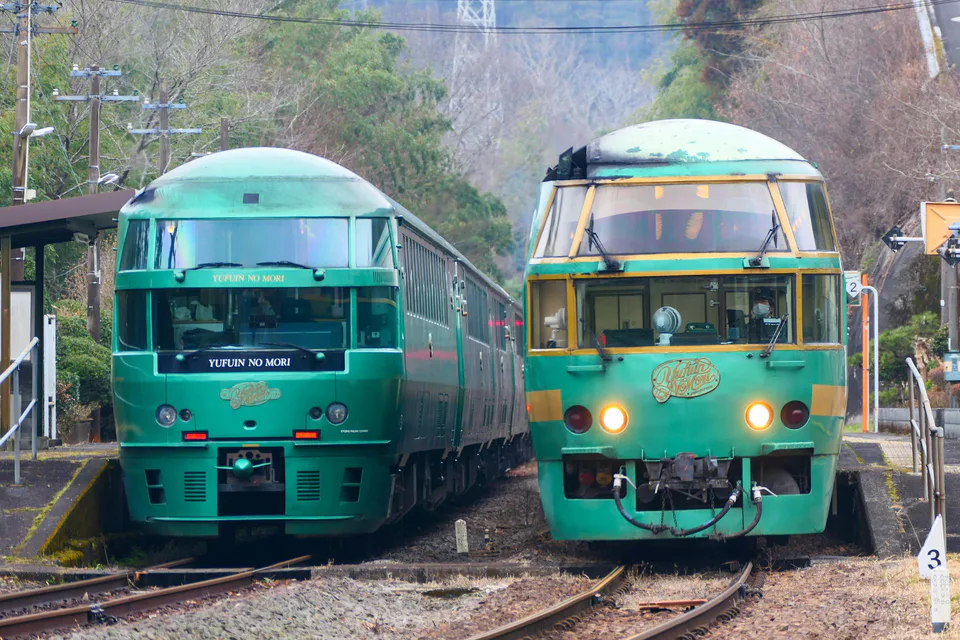
Current JR Kyushu timings make the access difference unusually clear. The first Yufuin no Mori of the day leaves Hakata at 09:17 and reaches Yufuin at 11:31. It is an all-reserved train. That is useful for a comfortable day trip, but it cannot deliver a pre-crowd dawn walk.
This is the strongest objective reason to sleep in Yufuin. You are not paying to make Lake Kinrin physically closer; you are paying to enter a time window that a normal Fukuoka rail day trip cannot reach.
But do not overvalue that window. If you wake to flat grey light, no mist and rain, the overnight still needs to justify itself through the ryokan, breakfast, onsen and quieter town. If removing the mist makes the booking feel pointless, the booking is too dependent on weather.
ValueNavi red-team test: imagine the lake at dawn with no vapour at all. Would you still be happy you slept in Yufuin? If yes, the overnight is defensible. If no, visit by day and spend the hotel budget elsewhere.
Lake Kinrin is a short attraction inside a longer Yufuin day
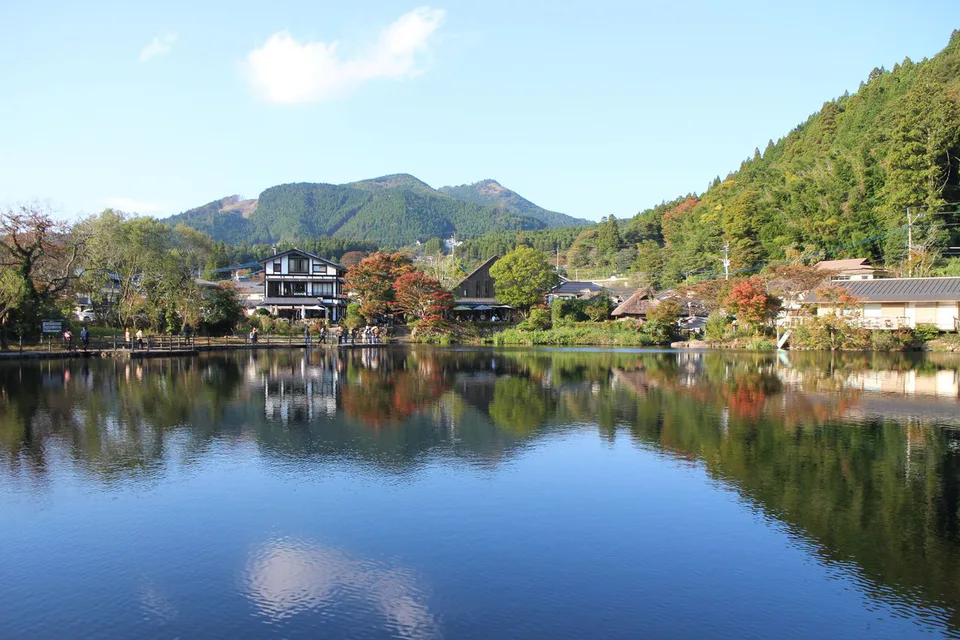
Oita’s official tourism information gives a lake circumference of about 400 metres and an access time of roughly 25 minutes on foot from JR Yufuin Station. That tells you something important: the lake is not a full-day attraction on its own.
A daylight visitor can walk from the station through the town, see the lake, eat and use Yunotsubo Kaido without needing to sleep nearby. The overnight only creates extra value when those early/late hours are part of the purpose.
This also prevents a common planning mistake: choosing an expensive lake-area ryokan because Lake Kinrin appears to be the “centre” of Yufuin. Your hotel should solve the night, not simply minimise the daytime walk to a 400-metre circuit.
Morning mist is a weather bonus, not a bookable amenity
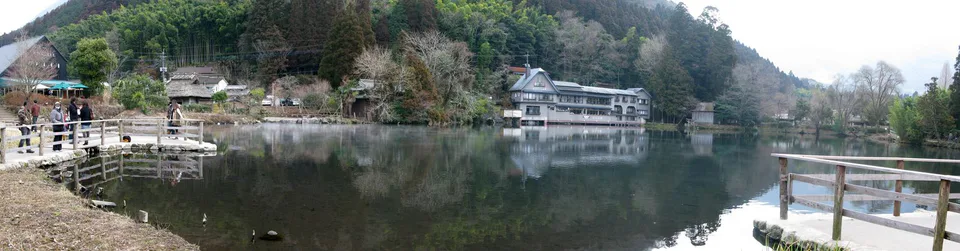
Yufu City explains that spring water and hot-spring water flow into Lake Kinrin, keeping the water relatively warm and allowing visible steam on cold winter mornings. The Yufuin official tourism site says the lake can be wrapped in morning mist on cold early mornings from autumn into winter.
The useful inference is not “November = mist.” It is that cold air over relatively warm water creates the opportunity. Wind, humidity, cloud, rain and the overnight temperature still affect what you actually see.
Do not pay a specific room premium because a booking page or social post implies a guaranteed misty sunrise. A hotel can sell proximity to the lake. It cannot sell the atmosphere.
For photography, think in two attempts rather than one exact minute: a short look around first light, then another check a little later if conditions are changing. Do not turn the morning into a long vigil that collides with breakfast, checkout or the next transport.
Your ryokan timetable can conflict with the dawn walk
A Yufuin overnight often comes with exactly the services that make it worth paying for: dinner, breakfast, bathing and sometimes a property shuttle. Those services create their own timetable.
Before booking, check four things:
latest check-in and dinner start / final seating;
whether the bath you care about is in-room, reservable or public;
breakfast start and whether you would be comfortable returning from the lake in time;
station shuttle or taxi arrangements after checkout.
A dawn walk does not automatically justify a lake-side hotel if it forces you to skip the breakfast that helped justify the room rate. Conversely, a property with a later breakfast or flexible private bath may fit the same itinerary far better than a hotel that is physically closer to Lake Kinrin.
This is why “distance from Lake Kinrin” is only one hotel dimension. The room and meal schedule must fit the hours you are buying.
Station side, lake side and hillside are three different overnight products
Station side: strongest for rail/bus, large luggage, late arrival and the next morning’s onward trip. The lake requires the longer early walk or a taxi, but the transport chain is simple.
Lake / Yunotsubo side: strongest when the independent dawn walk is the point. You reduce the early-morning approach but spend the daytime inside Yufuin’s busiest pedestrian zone.
Hillside / outlying ryokan: strongest when the room, private bath, view and quiet are more important than the lake. The trade-off is taxi or shuttle dependence. A “Yufuin hotel” 20–30 minutes on foot from the station or lake should not be treated as if both were at the front door.
Choose the overnight’s primary job first. If the lake is only one 45-minute walk inside a ryokan-focused stay, a beautiful hillside property can be better than paying a premium to sleep beside the water.
Large luggage should disappear before the lake walk
Yufuin’s official tourist-information centre currently operates “Yufuin Chikki” baggage services from 09:00 to 17:00. Temporary storage is available during those hours; delivery from the tourist centre to eligible Yufuin Onsen Tourist Association accommodation is accepted from 09:00 to 15:00, and participating properties can also send bags back to the centre under the published collection window.
That does not solve the dawn walk itself—the service is not open then. It solves arrival and departure day. A day-tripper can leave the main suitcase before walking to the lake; an overnight guest can use hotel storage or the official service where eligible, then keep only a small bag for the town.
This matters in 2026 because JR Yufuin Station is operating through a temporary-station arrangement during renovation. The existing station building is closed from March 26 until the work is completed, the platform footbath has been closed during the project, and the station counter currently operates 07:00–18:00. Do not plan from an old photo of the station as though every facility is unchanged.
One night in Yufuin: what a good sequence looks like
Arrival afternoon: reach Yufuin early enough to protect the hotel’s check-in/dinner window. Store or deliver the large luggage. Choose either Lake Kinrin or Yunotsubo as the afternoon focus; do not rush both merely because the town is compact.
Evening: let the ryokan do its job—dinner, bath, room time and a quieter town. If you are still shopping until every store closes, you are spending the overnight on the same hours a day trip already gives you.
Morning: short Lake Kinrin walk around first light if conditions and mobility suit the group, then breakfast and checkout. The lake visit should fit around the accommodation rather than turning the whole morning into a mist chase.
Departure: return to the station with a transport buffer. If the next stop is Beppu, Fukuoka or elsewhere in Kyushu, use the next direction to decide where the second night belongs rather than automatically assuming Yufuin must come first.
A Yufuin–Beppu split only works when the two nights buy different experiences
One Yufuin night plus one Beppu night can be an excellent first Oita visit, but the split is not automatically superior to two nights in one base.
Yufuin should buy dawn/quiet-town/ryokan time. Beppu should buy a different job: stronger rail flexibility, city onsen, Kannawa, a large resort or the next transport direction. If both nights are simply “sleep after an onsen,” the hotel move is not earning its cost.
The order should follow the route. If the onward journey is easier from Yufuin, Yufuin can be the second night. If Beppu is the better exit for your next leg, put Beppu second. Use the Beppu vs Yufuin stay decision for the wider routing question.
Bad weather: when the overnight still passes the value test
No mist: keep the walk short and enjoy the lake/light. Do not chase another “mist spot.”
Rain: shorten the lake loop, use the ryokan, cafés or indoor stops. If the hotel itself has no value in rain, that is evidence you booked only for a photograph.
Cold or slippery conditions: the lake circuit is small, so there is no reason to prove anything by staying out longer. Return to the hotel.
Transport disruption: protect the hotel’s latest arrival and dinner rules before protecting an attraction. A late train that turns a half-board ryokan night into a missed meal can destroy more value than skipping the lake until morning.
Final verdict
Take a day trip if Lake Kinrin itself is the goal. Stay one night if dawn access, a real ryokan/onsen experience and a quieter Yufuin morning are all part of the trip. The mist should be treated as upside, not as the product you are buying.
The most useful hard fact is the access gap: the current first Yufuin no Mori from Hakata arrives at 11:31, so a normal Fukuoka rail day trip cannot reproduce the early-morning lake window. But that does not make every overnight good value. A hotel that is poorly located for your route, has a dinner schedule you cannot meet or offers little value if the weather fails can still be the wrong booking.
If you would be disappointed with the overnight after a clear, mist-free dawn, keep the hotel in Fukuoka or Beppu and visit Lake Kinrin in daylight.
Compare Yufuin stays for your dates
Official sources
Yufu City — Lake Kinrin · YUFUINFO — Lake Kinrin · Oita Tourism — Lake Kinrin access and lake circuit · JR Kyushu — current Yufuin no Mori timetable · YUFUINFO — Yufuin Chikki baggage service · JR Kyushu / YUFUINFO — 2026 Yufuin Station temporary building notice. Checked August 25, 2026.
Hakone Autumn Leaves Guide: Foliage Timing from Gora to Lake Ashi and Hakone-Yumoto
Japan Autumn Leaves Onsen Ryokan Guide: Foliage Views, Open-Air Baths and Access
Kokonoe Dream Suspension Bridge Autumn Leaves and Kuju Mountains Guide: Access, Hiking and Onsen
Yabakei Autumn Leaves Guide: Hitome Hakkei, Ao-no-Domon, Driving and Hotels
Iya Valley Autumn Leaves Guide: Driving, Buses, Vine Bridges, Onsen and Hotels