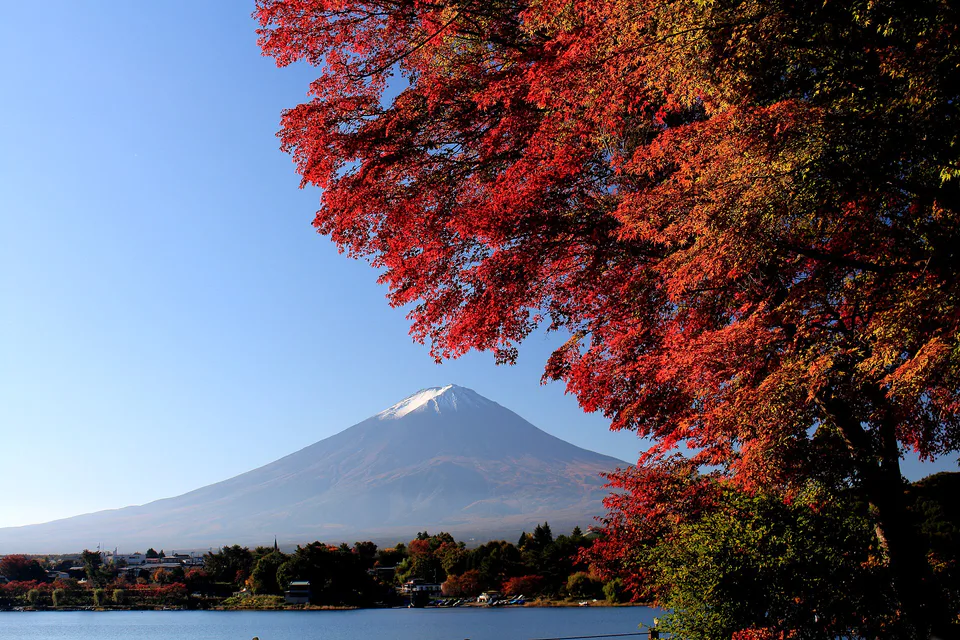
For a first autumn trip to the Fuji Five Lakes, I would choose Lake Kawaguchi when you want the easiest car-free base, the most concentrated sightseeing network and the 2026 Maple Corridor illumination. I would choose Lake Yamanaka when the trip is built around open shoreline views, cycling, photography or a south-side route toward Gotemba or Mishima. The important correction is that Yamanakako is not “car only”: its official tourism site currently lists a direct Shinjuku highway-bus journey of about 2 hours 14 minutes. The real trade-off is what happens after you arrive. Kawaguchiko behaves like a transport hub; Yamanakako asks you to manage more dispersed stops, hotels and outdoor time.
For an overnight stay, choose the lake whose non-transferable hours you actually want. In 2026, the Kawaguchiko Autumn Leaves Festival runs November 7–29 with Maple Corridor lighting from sunset to 21:00. Yamanakako's Sunset Shore Autumn Leaves Festival is planned for October 30–November 15, with lighting from 16:30 to 20:30 at Asahigaoka. If one of those evenings is a reason for the trip, sleep near that event rather than treating both lakes as interchangeable daytime stops.
↔ Scroll table left or right
Your trip pattern | Start with | Why | What can reverse it |
First visit, no car, one night | Lake Kawaguchi | More transport, food, accommodation and sightseeing decisions are concentrated around one hub | Your hotel and activities at Yamanakako sit directly on a workable bus route and the open-lake experience is the main purpose |
Photography, cycling or a driving trip | Lake Yamanaka | The lake rewards moving between dispersed shoreline viewpoints rather than collecting clustered attractions | Wind, rain or poor visibility removes much of the outdoor premium |
2026 Maple Corridor illumination is non-negotiable | Lake Kawaguchi | Lighting runs to 21:00 during the November 7–29 festival | Your dates fall outside the event or your hotel return after the festival is awkward |
2026 Sunset Shore foliage event is the priority | Lake Yamanaka | Asahigaoka lighting is planned daily 16:30–20:30 from October 30 to November 15 | You need a late-night dining/transport network rather than a quieter lakeside evening |
Tokyo in and Tokyo out, car-free | Lake Kawaguchi | It is the more resilient hub for a short first visit | A direct Tokyo–Yamanakako bus and a well-positioned hotel remove the local-transfer problem |
Continue toward Gotemba / Mishima / Shizuoka side | Recalculate Yamanakako | South-side bus geometry can make Yamanakako a better final lake before leaving the Fuji area | Your booked through service or hotel stop does not line up with the actual departure |
Do not choose the prettier lake; choose the hours you cannot move elsewhere
Daytime scenery is surprisingly transferable. If Mount Fuji is visible, both lakes can produce excellent mountain-and-water views. If autumn colour is good, both have foliage. What is harder to transfer is a particular evening, dawn or departure connection.
For a one-night stay, count four windows:
Arrival afternoon: can you reach the hotel early enough to use the lake rather than only check in?
Evening: is an illumination event, ryokan dinner or quiet lakeside walk part of the reason for staying?
Dawn: will you genuinely get up for an early Fuji-view or photography session?
Departure morning: does the next bus, train or southbound connection leave from a useful stop without forcing you back across the region?
Whichever lake owns more of those windows should normally get the hotel night. This is a stronger rule than “Kawaguchiko has more attractions” or “Yamanakako has a larger-looking Fuji,” because it prices the hours an overnight stay can actually unlock.
Lake Kawaguchi wins when you need a hub, not just a viewpoint
Kawaguchiko Station is valuable because multiple decisions begin there: Tokyo transport, local sightseeing buses, luggage handling, hotel transfers and onward movement around the Fuji Five Lakes. That density matters most on a short first trip, when every missed connection has a larger opportunity cost.
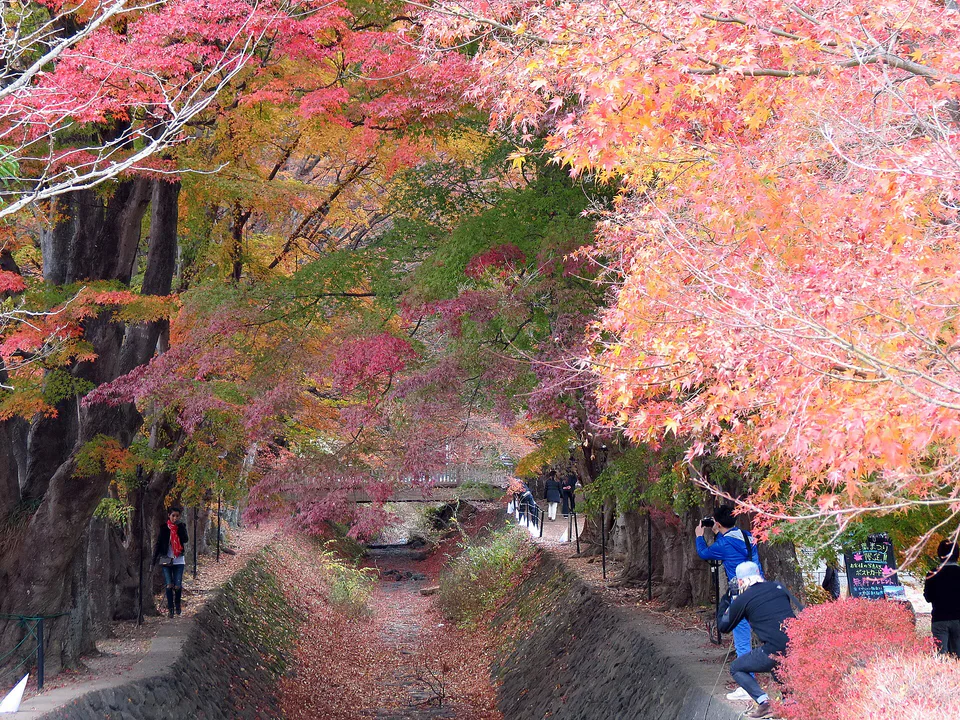
The 2026 Kawaguchiko Autumn Leaves Festival adds a time-sensitive reason to stay. The official tourism site confirms November 7–29 and illumination from sunset to 21:00. If the Maple Corridor is one of your trip anchors, the night should be designed around the Maple Corridor, dinner and hotel return—not around squeezing Yamanakako into the same evening.
Kawaguchiko also has a stronger bad-weather fallback for most first-time visitors. Museums, onsen, restaurants and other indoor or semi-indoor choices are easier to combine without rebuilding the whole day. That does not make rain irrelevant; it means poor Fuji visibility is less likely to erase the purpose of the stay.
The main weakness is concentration. The same network that makes Kawaguchiko easy also channels many visitors toward the same north-shore buses and autumn sites. A hotel near Kawaguchiko Station is not the same product as a north-shore hotel beside the Maple Corridor. If the illumination matters, use the Kawaguchiko autumn accommodation-area guide before assuming “near the station” and “easy after 21:00” mean the same thing.
Lake Yamanaka is not car-only; the problem is local dispersion
It is too simple to say “Kawaguchiko without a car, Yamanakako with a car.” The official Lake Yamanaka tourism site currently lists a direct Shinjuku highway bus at about 2 hours 14 minutes, and also shows rail-plus-bus routes. Yamanakako is therefore a realistic car-free destination.
The harder question is whether the bus stop, hotel and activity are in the same useful part of the lake. Nagaike, Hirano and Asahigaoka solve different photography, cycling and event needs. The lake is less forgiving when you arrive at one stop, sleep in another zone and expect frequent late local transport to connect everything.
This is why a car produces more value at Yamanakako than it does at Kawaguchiko: it converts dispersed viewpoints into one flexible loop. But a well-designed car-free Yamanakako stay can still work when you deliberately reduce the number of zones. For example, an Asahigaoka-focused night during the 2026 Sunset Shore event is much easier to plan than a one-day attempt to collect Asahigaoka, Nagaike, Hirano and Oshino by timetable.
The official 2026 event page confirms illumination from 16:30 to 20:30 and places the venue at Asahigaoka Lakeside Green Park, about five minutes on foot from Asahigaoka bus stop and about one minute from Keio Ripple Mae. That is enough to make one local area the evening anchor; it is not a guarantee that your hotel elsewhere around the lake is easy to reach after 20:30.
Cycling is a reason to choose Yamanakako only if the weather lets you use it
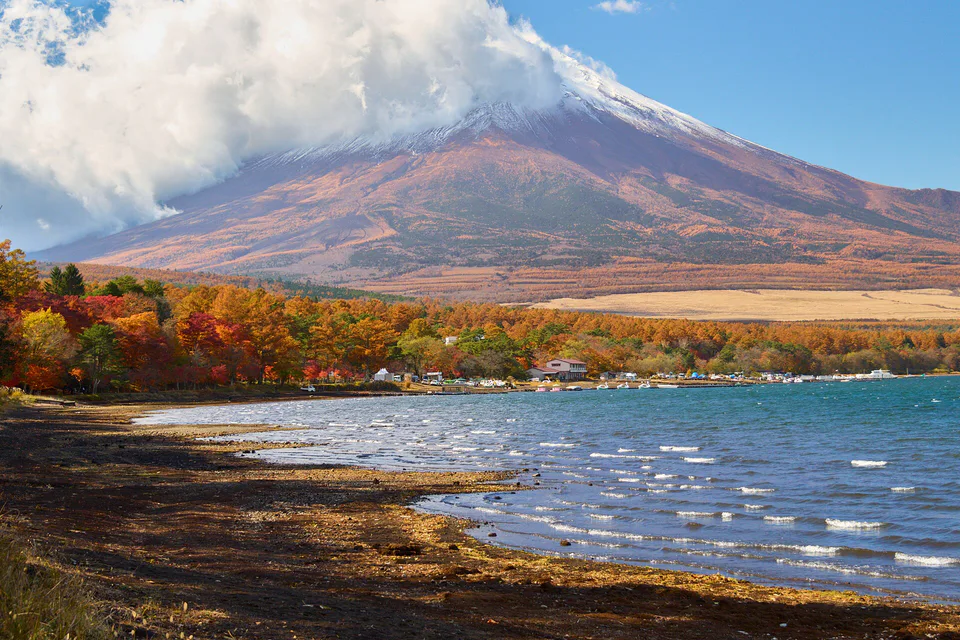
Lake Yamanaka's official tourism guide suggests about 1 hour 30 minutes for a circuit of the lakeside cycling route. Treat that as a movement estimate, not an autumn itinerary. Photo stops, foliage, cafés and short walks can easily turn the ride into a half-day experience.
That makes cycling a genuine reason to prefer Yamanakako—provided you are willing to let it occupy a meaningful part of the day. It is not a small add-on between two distant sightseeing clusters.
The recommendation also has a hard weather boundary. Strong wind or persistent rain can remove the value of the cycling plan even when buses and roads still operate. If cycling and open-shore photography are the two main reasons Yamanakako wins, a poor forecast should be allowed to reverse the lake choice rather than forcing the original booking logic.
The two local bus passes reveal why a forced two-lake day can be false optimisation
Fujikyu currently prices the Kawaguchiko/Saiko sightseeing-bus pass at JPY 1,500 for one day and JPY 2,000 for two days. The separate Fujikko-go system covering Fujiyoshida, Oshino and Yamanakako is JPY 1,800 for one day and JPY 2,200 for two days; Fujikko-go currently leaves Kawaguchiko Station 11 times per day.
Those are useful products when your route naturally uses the covered buses. They are not evidence that a car-free traveller should force both lakes into one day. If your plan only becomes “efficient” after buying separate local-pass ecosystems, waiting for multiple buses and cutting each lake down to one short stop, question the itinerary before you optimise the fare.
A pass should reduce the cost of a good route. It should not be used to justify a route that was geographically weak before the pass existed.
Can you do both lakes in one day?
By car: yes, if you limit the day to one anchor at each lake. A realistic version might use Yamanakako for a morning shoreline or cycling/photo session and Kawaguchiko for one afternoon attraction plus the Maple Corridor. It is not a complete tour of both lakes.
Without a car: usually choose one lake, or divide the lakes across two days. Fujikko-go does connect Kawaguchiko, Fujiyoshida, Oshino and Yamanakako, but 11 departures per day is not the same thing as turn-up-and-go urban transit. Waiting matters more when the Yamanakako stops themselves are dispersed.
Do not make the second illumination the goal. Kawaguchiko's lighting runs to 21:00 and Yamanakako's to 20:30. Crossing the region after one evening event in order to “collect” the other adds the exact combination that autumn nights handle badly: colder weather, reduced transport flexibility, parking uncertainty and tired navigation. Sleep near the event you care about.
For two nights, split only when each lake unlocks a different high-value window
A one-night-at-each-lake split sounds attractive because the lakes are different. It is only worth the extra hotel move when both nights perform distinct jobs.
A strong 1+1 split: Yamanakako gives you Sunset Shore illumination plus dawn shoreline photography or cycling; Kawaguchiko gives you the Maple Corridor evening plus the next day's denser transport network.
A weak 1+1 split: you check out of Kawaguchiko, carry luggage to Yamanakako, check in again, then use Yamanakako only for an ordinary daytime lake view that could have been a day trip.
For two nights, the hotel move should buy a second non-transferable window. If it only buys a different bed beside a different lake, keep one base and move without the suitcase.
Your onward direction can reverse the order of the lakes
For Tokyo-in/Tokyo-out visitors, Kawaguchiko normally remains the more resilient car-free base because of its stronger transport-hub role. That is a planning judgment, not a claim that Yamanakako lacks Tokyo buses.
The answer changes when the trip continues south. Fujikyu's current Mishima–Kawaguchiko highway-bus route serves both Kawaguchiko Station and Fuji-san Yamanakako / Hotel Mt. Fuji Entrance. The published Mishima fare for the Yamanakako stop is currently JPY 2,700, or JPY 2,500 on the listed web discount.
That route geometry means Yamanakako can become a more rational final lake before a Mishima/Gotemba/Shizuoka-side continuation. Do not automatically return to Kawaguchiko merely because it was the stronger arrival hub from Tokyo. The useful hub is allowed to change when the trip changes direction.
If the next leg is Hakone rather than Mishima, use the Kawaguchiko–Hakone luggage guide and the Tokyo–Kawaguchiko–Hakone route before choosing where the suitcase should sleep.
Do not chase Mount Fuji from one lake to the other when the mountain is hidden
Autumn foliage timing and Mount Fuji visibility are separate variables. A good foliage day can have a completely hidden mountain; a crystal-clear Fuji morning can arrive before or after peak colour.
The worst response to cloud is often to spend a large part of the day crossing between the lakes in the hope that the mountain will suddenly appear from the other shoreline. They are close enough that broad cloud conditions can affect both, while the transfer itself is guaranteed to consume time.
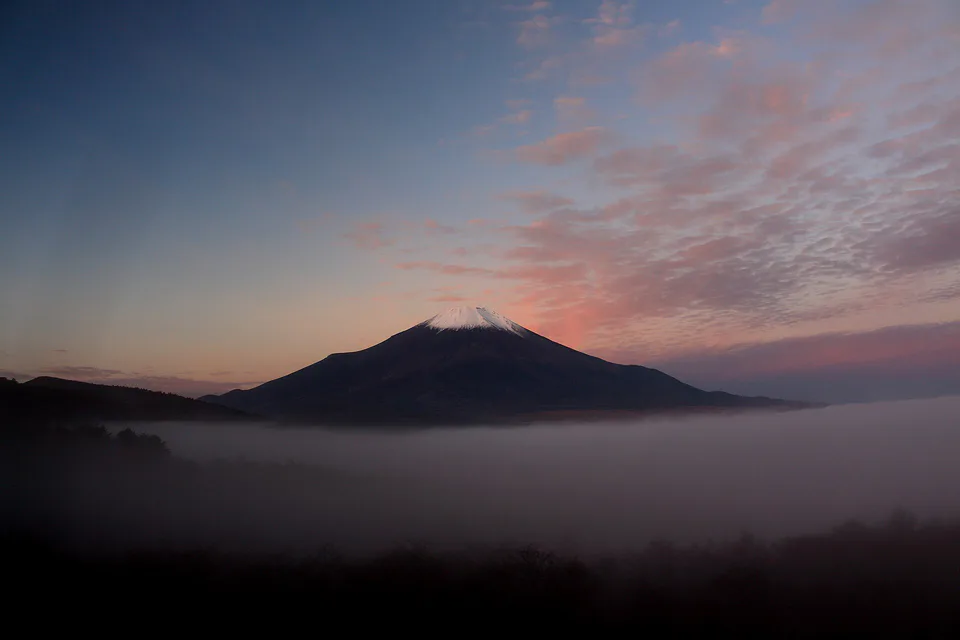
Use the lake's non-Fuji value instead. At Kawaguchiko that may mean the autumn event, museums, onsen or food. At Yamanakako it may mean the hotel, foliage walk or another local activity—but if cycling and photography were the only reasons you chose it, the weather can legitimately make Kawaguchiko the stronger backup.
Choose the hotel area before choosing the hotel brand
At Kawaguchiko, decide whether the night is a station/logistics night or a north-shore experience night. The station side makes arrivals, departures and luggage simpler; the north shore can make the Maple Corridor evening and early lake views easier. Paying for a famous Fuji-view property in the wrong zone does not fix the late-evening route you actually need.
At Yamanakako, choose the zone around the activity: Asahigaoka for the 2026 foliage event, Nagaike/Hirano for shoreline photography and outdoor time, or a hill/resort property when the hotel itself is the destination. A Yamanakako hotel should not be judged by “lakefront” alone; the bus stop, dinner arrangement and return after dark can matter more.
Only after the area is fixed should you compare the exact room view, meal plan, shuttle, parking and cancellation terms.
Compare stays around Lake Kawaguchi and Lake Yamanaka
Final verdict
Choose Lake Kawaguchi for the safer first-trip default: car-free logistics, concentrated sightseeing, more fallback options and the 2026 Maple Corridor evening. Choose Lake Yamanaka when open-shore photography, cycling, a quieter dispersed stay or a south-side onward route is important enough to justify more deliberate local transport.
For one night, count the evening, dawn and next departure rather than counting attractions. For two nights, split only if each lake unlocks a different high-value time window. For one day, pick one lake unless you have a car and are willing to reduce each to one anchor. And if Mount Fuji disappears behind cloud, do not spend the day chasing the same weather from one lake to the other.
Official information and related guides
Fujikawaguchiko Tourism — 2026 Autumn Leaves Festival · Lake Yamanaka Tourism — 2026 Sunset Shore Autumn Leaves Festival · Lake Yamanaka Tourism — current access options · Lake Yamanaka Tourism — lakeside cycling route · Fujikyu Bus — Fujikko-go · Fujikyu Bus — Kawaguchiko sightseeing buses · Fujikyu Bus — Mishima/Kawaguchiko route. Checked August 25, 2026. Event dates, bus schedules, pass prices and road conditions can change; verify the exact travel date.
Lake Kawaguchi Maple Corridor · How Many Nights at Lake Kawaguchi? · Hakone vs Kawaguchiko · Where to Stay at Lake Kawaguchi for Autumn Leaves · Mt Fuji Day Trip or Overnight?