
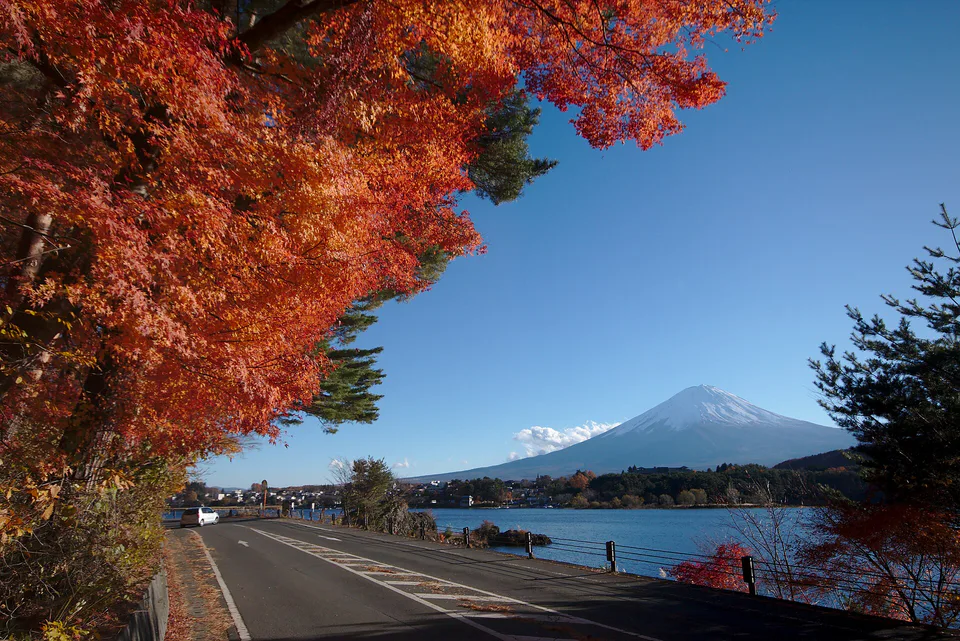
The 2026 Fujikawaguchiko Autumn Leaves Festival is confirmed for November 7–29, with Maple Corridor illumination from sunset to 9:00 p.m. The mistake is treating those dates as a peak-colour guarantee. The official tourism page says the lakeside has roughly 400–500 maples and describes early to mid-November as the usual best period, but foliage, Mount Fuji visibility, illumination and your return transport are four different variables.
A Tokyo day trip is strongest when daylight foliage and a clear Fuji morning are the priorities. An illumination day trip can work only when the late return is already protected. One night is the better product when you want the corridor after dark, a ryokan dinner or onsen, and a second morning to recover from poor Fuji visibility.
ValueNavi decision table: day trip, illumination return or overnight?
↔ Scroll table left or right
Plan | Best when | Main upside | Hidden risk |
Daylight Tokyo day trip | Foliage + Fuji are the goals | Lowest hotel friction; easiest return buffer | Cloudy Fuji has no second-morning recovery |
Stay for illumination, return to Tokyo | You have a reserved late return and can tolerate delay | Daylight leaves + illuminated corridor in one day | North-shore crowds, road traffic and station transfer all stack at the end |
One night at Kawaguchiko | Illumination, onsen or Fuji photography matter | Two weather windows and no same-night Tokyo deadline | Ryokan dinner/check-in can conflict with the best dusk period |
This is an asymmetric-risk decision. A day trip that misses Fuji can still be a good foliage day. An illumination day trip that misses the final viable return is a much larger failure. The more your plan depends on darkness, fixed meals and a late departure, the more valuable an overnight becomes.
The festival calendar is operational certainty, not foliage certainty
For 2026, the official event dates are fixed: November 7 through November 29, with illumination from sunset until 21:00. That tells you when the festival infrastructure and lighting are scheduled. It does not tell you that every tree will be red on November 7 or that strong wind will not strip leaves before November 29.
Use the official calendar to decide whether the event exists on your date, then use recent foliage photographs and weather to decide what the trees are actually doing. The corridor, lakeside, hotel gardens and Oishi Park can also move at different speeds. A mixed green-yellow-red scene is not automatically a failed trip.
The official tourism description points to early to mid-November as the usual strongest period. Treat that as a planning prior, not a promise. A cold spell can accelerate colour; warm weather can delay it; wind and rain can shorten the attractive period after peak.
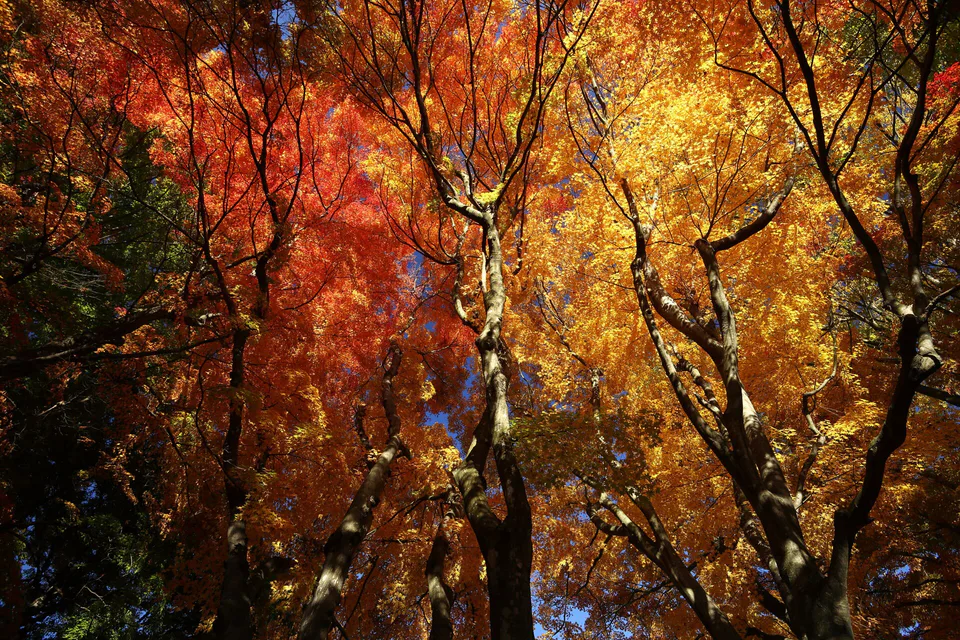
The four-variable problem: leaves, Fuji, illumination and transport
Leaves: daylight is the most honest way to judge colour and tree condition. Fuji: visibility can be better in the morning and deteriorate later. Illumination: it creates a different experience but only after sunset. Transport: the north shore is not Kawaguchiko Station, and the end of illumination is not your departure time.
Trying to maximize all four in a single Tokyo day trip produces a fragile itinerary. The cleaner order is usually Fuji first, corridor second, then decide whether illumination is worth the transport cost. If illumination is the non-negotiable part, consider changing the hotel decision instead of squeezing the return.
ValueNavi timing rule: protect the last two steps, not just the last train or bus
The real return chain is Maple Corridor → local transfer → Kawaguchiko Station → intercity service → Tokyo base. If you reserve only the final Tokyo-bound service and assume the local transfer will behave normally after sunset on a festival weekend, you have protected the wrong link.
Build a buffer before the reserved return. If local buses are full or delayed, the correct response is usually to remove the final lake stop, leave the corridor earlier or use a licensed taxi—not to keep sightseeing and gamble the entire chain.
For the intercity comparison, use Tokyo to Kawaguchiko: train, highway bus or tour. Fuji Excursion is direct and all-reserved; highway buses add departure-point choice but remain exposed to road traffic. Local trains with transfers are slower but can become the fallback when direct options sell out.
A strong daylight day trip starts with Fuji, not the Maple Corridor
If the morning is clear, use that visibility while it exists. Then move to the north shore and spend roughly 45–90 minutes at the corridor, adding time for weekend crowd movement, photos and stalls. After that, choose one same-direction lake stop rather than collecting every attraction around the lake.
Oishi Park can fit naturally when the route and bus load cooperate. The ropeway, Oishi Park, the corridor and Lake Yamanaka should not be treated as one compact walking cluster. The cost of “one more stop” is often paid at the end of the day when the local bus or return margin disappears.
Illumination is not a reason to stay until 21:00
The official lighting period ends at 21:00, but that is the attraction’s schedule, not a recommendation for Tokyo day-trippers to leave at 21:00. If crowds, buses and road traffic are all moving toward Kawaguchiko Station at the same time, staying for the very end can create the worst transport profile of the day.
An early illumination strategy is often stronger: see the corridor in daylight, stay through the transition into darkness, then leave while another viable return option still exists after yours. That backup is the hidden value of leaving early.
One night buys two things: time separation and a second Fuji weather window
An overnight is not automatically “more relaxing.” It is valuable when it separates competing objectives. The first afternoon can hold foliage and illumination. The next morning can hold Fuji, the lake or Oishi Park. That structure turns one weather-sensitive day into two observation windows.
The catch is ryokan timing. Fixed dinner, final check-in and hotel shuttle schedules can collide directly with sunset and illumination. If the hotel’s best meal plan requires you to leave the corridor at the exact time you wanted to photograph it, you have not removed the conflict—you have moved it.
Before booking, compare how many nights to stay at Lake Kawaguchi, Kawaguchiko vs Fujiyoshida bases and Mt Fuji day trip vs overnight.
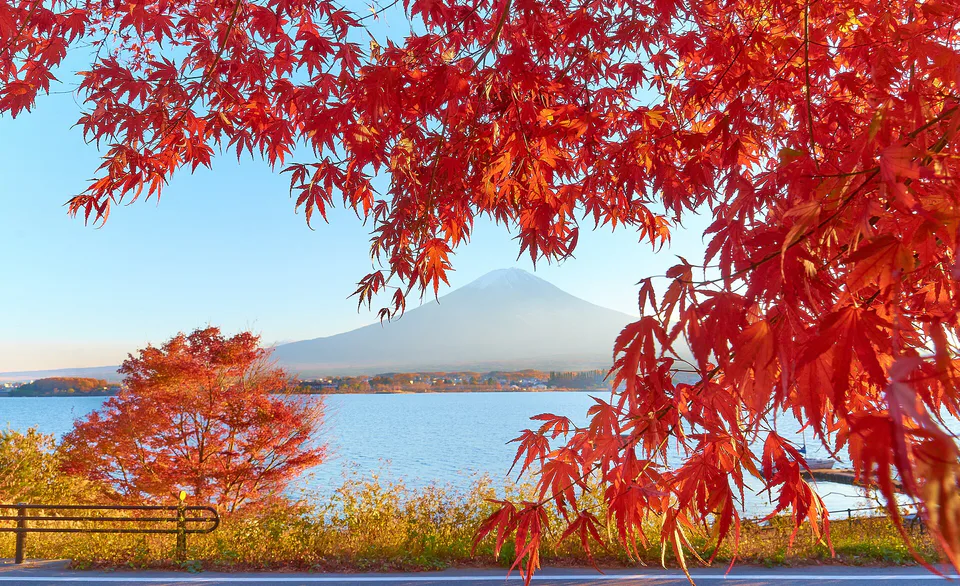
Where to stay: choose the friction you want to remove
↔ Scroll table left or right
Base | Best for | What you still need to solve |
Kawaguchiko Station / south shore | Rail/bus access, luggage, first visit | Transfer to and from Maple Corridor |
North shore | Illumination, slower evening, nearby foliage | Dinner cut-off, shuttle and limited late-night transport |
Oishi side | Dawn Fuji, driving, photography | Weak evening flexibility without a car |
A “Fuji-view” room does not guarantee the orientation or visibility you imagine. Verify the exact room type, meal plan, shuttle, cancellation time zone and post-check-out luggage rather than buying the destination label.
Compare Lake Kawaguchi rooms once you know which shore solves your route
72 hours before: use a failure tree, not one “peak foliage” search
If leaves look early: keep the trip if Fuji, lake and onsen still justify it; do not chase another prefecture just for red leaves. If leaves look past peak: recent wind matters more than the festival end date. If Fuji looks cloudy: day-trippers should decide whether foliage alone justifies the excursion; overnight guests still have a second morning. If wind or heavy rain is forecast: protect transport first and cut exposed lake activities before cutting the return buffer.
This is why the overnight option has more resilience: it does not guarantee better weather, but it gives weather two chances to cooperate.
Who should skip the illumination plan?
Skip a same-day illumination return if you have large luggage, young children or older travelers who would struggle with crowded transfers, a non-flexible dinner or evening commitment in Tokyo, or no viable backup after the booked return. Also skip it if illumination is only a nice-to-have and daylight foliage is the real objective. The extra risk is not free simply because the lights are included in the festival experience.
Final decision: decide what you are protecting
Protect daylight foliage and easy logistics: do the Tokyo day trip. Protect both daylight and illumination: stay into early evening only with a buffered return. Protect illumination, onsen and a second Fuji chance: stay one night.
The 2026 festival dates—November 7–29, sunset to 21:00 illumination—are the easy part. The real planning work is deciding which uncertainty you can tolerate: leaf timing, Fuji cloud, north-shore traffic or a fixed hotel meal.
Next decision: is the second Fuji morning worth one Lake Kawaguchi night?
Sources
Fujikawaguchiko Tourism Federation — 2026 Autumn Leaves Festival dates and illumination
Festival dates confirm scheduled operation, not exact foliage condition. Recheck current foliage, weather, transport and traffic information close to your visit.