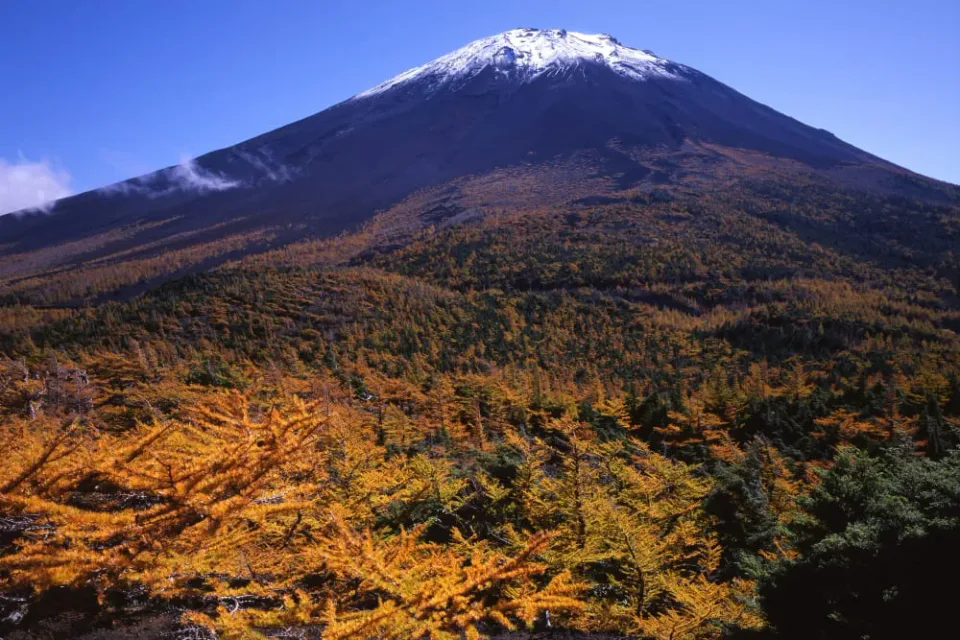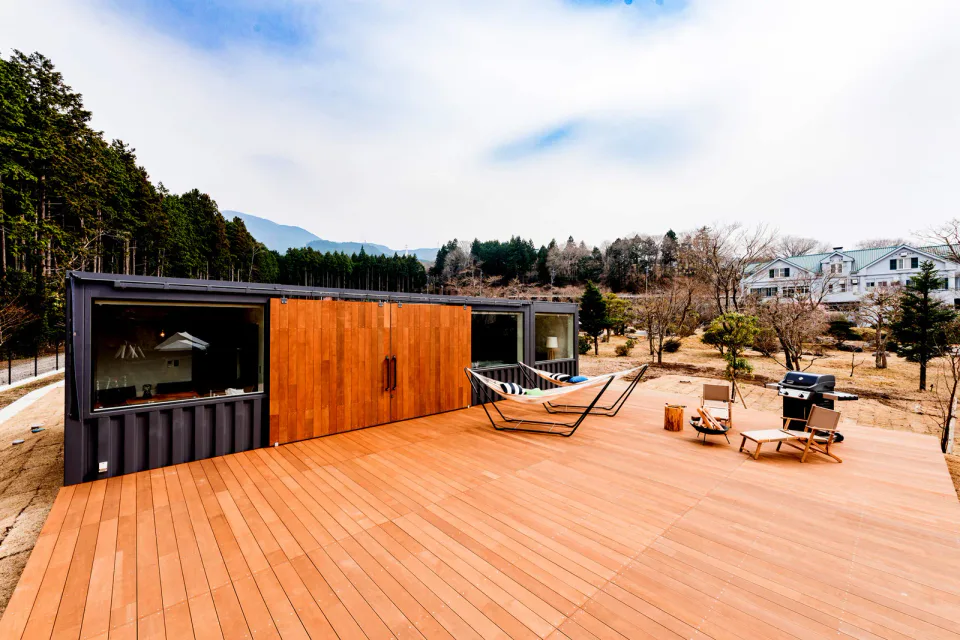
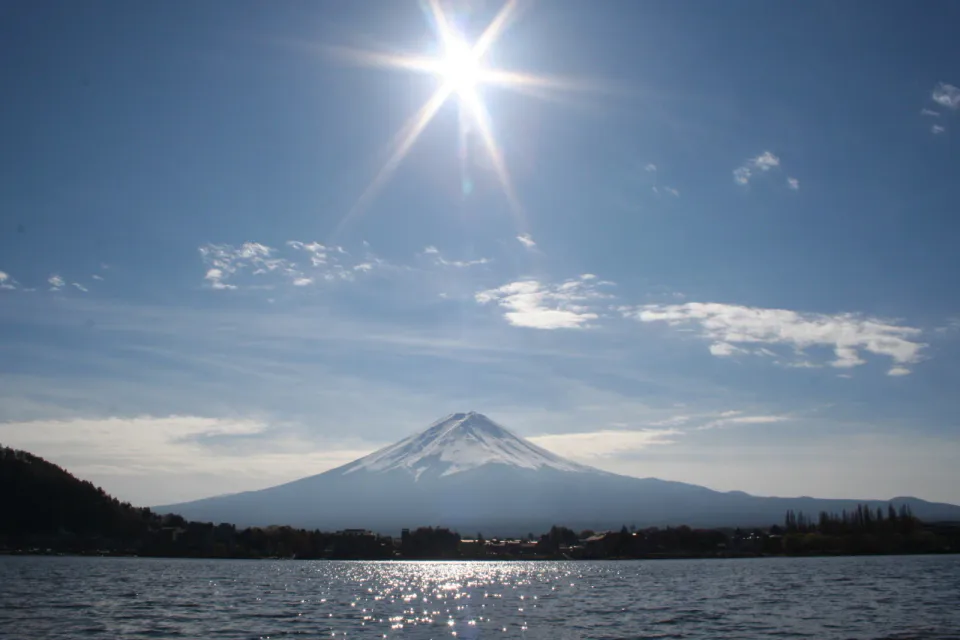
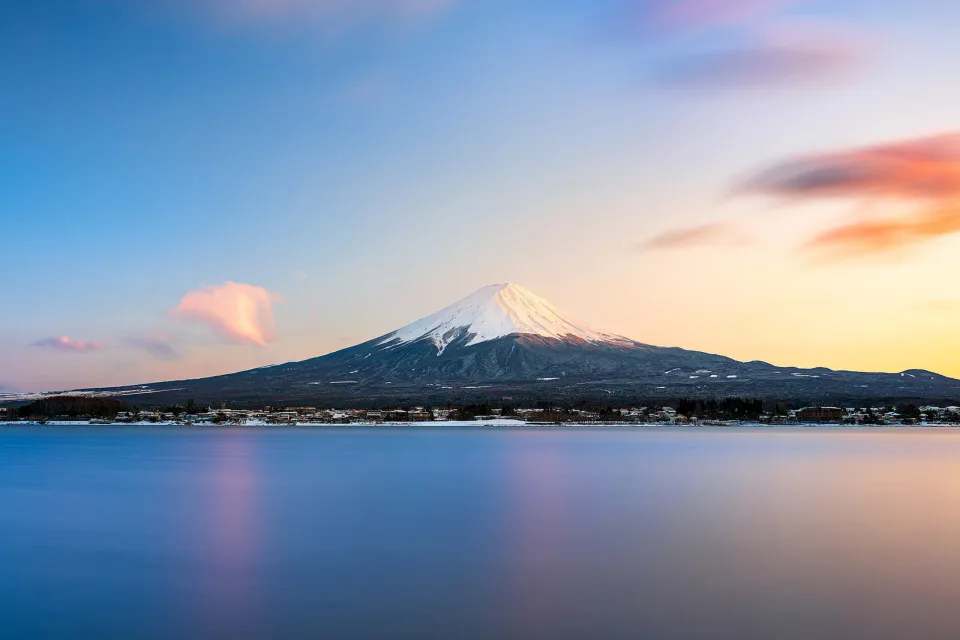
For most first-time visitors, a Mt Fuji day trip is the better default unless one overnight buys at least two things that a Tokyo out-and-back cannot: a second weather window, a hotel experience you genuinely want, a cleaner onward route, or meaningful fatigue reduction. Kawaguchiko is the stronger overnight when Mount Fuji itself is the priority. Hakone is the stronger overnight when the ryokan, onsen and the stay itself still have value if Fuji disappears behind cloud. The mistake is paying for a mountain-area room that merely moves your suitcase while adding no unique hours or route advantage.
The day-trip case is stronger than it first appears because the current Fuji Excursion links Shinjuku and Kawaguchiko directly in under two hours on its fastest scheduled services, while the Romancecar can reach Hakone-Yumoto from Shinjuku in as little as about 75 minutes. Both regions are therefore viable as day trips. An overnight has to beat that baseline, not just sound more relaxing.
Use the four-part extra-night test before booking
This is a ValueNavi decision framework, not an official tourism rule. Give the overnight one point for each product you will actually use:
Weather window: sleeping locally gives you a materially different early-morning or next-day chance to see Mount Fuji.
Hotel experience: the Fuji-view room, private bath, ryokan dinner, onsen or slow breakfast is itself one of the reasons for the trip.
Route conversion: the night turns a Tokyo out-and-back into a useful bridge toward Kyoto, Osaka or another next stop.
Fatigue reduction: the hotel really deletes same-day return travel rather than replacing it with a difficult shuttle, steep bus route or late check-in.
Zero or one point: keep the Tokyo room and day-trip. Two points: one night is defensible. Three or four points: the overnight usually has a strong job to do. The scoring is deliberately strict because the extra night also costs a checkout, a hotel move, another check-in and one less Tokyo evening or morning.
↔ Scroll table left or right
Your actual trip | Start with | Why |
One Fuji objective, next morning still in Tokyo | Day trip | You avoid a hotel move and keep the main luggage at the Tokyo base |
Fuji photography / sunrise / view-led room | Kawaguchiko overnight | The early-morning window is difficult to reproduce from central Tokyo |
Ryokan dinner / onsen / museum day even if Fuji is hidden | Hakone overnight | The hotel experience can repay the night independently of visibility |
Continue west after Kawaguchiko | Do not assume you must backtrack to Tokyo | The reserved Kawaguchiko–Mishima bus creates a westbound option to the Tokaido corridor |
Children, older travellers or large luggage | Choose by the last mile | An overnight only reduces fatigue if the hotel access itself is simple |
A Tokyo day trip wins more often than “one night is more relaxing” suggests
Fujikyu Railway’s current 2026 Fuji Excursion timetable gives direct Shinjuku–Kawaguchiko services, with the fastest published journey around the two-hour mark. Odakyu currently advertises its fastest direct Romancecar from Shinjuku to Hakone-Yumoto at about 75 minutes. That means the transport barrier is not high enough, by itself, to justify moving hotels.
A day trip is particularly efficient when your main suitcase can remain in the same Tokyo room. You leave with a day bag, spend the day in one defined zone and return without repacking. If the next morning also needs to begin in Tokyo, the hotel move you avoided has value on both sides of the mountain day.
The discipline is to keep the day small. In Kawaguchiko, choose two or three priorities rather than trying to combine the north shore, Chureito, Fuji-Q, every museum and every lake. Use the Kawaguchiko decision guide to cut the list. In Hakone, a museum-focused day, a reduced Lake Ashi loop or a Hakone-Yumoto onsen day is more resilient than treating every transport mode as mandatory.
If the city nights are already scarce, compare the sacrifice against how many days you actually need in Tokyo. An overnight around Fuji is not “one extra attraction”; it is a reallocation of one of your limited hotel nights.
Kawaguchiko overnight is mainly a bet on different hours, not more attractions
The strongest reason to sleep at Lake Kawaguchi is that the early morning is a different product from a midday visit. Yamanashi’s official travel guide notes that early morning is often the best time to try to photograph a cloudless Mount Fuji. An overnight lets you be present for that window without starting from Tokyo before dawn.
That does not mean one night guarantees a clear mountain. It only gives you another attempt. If the whole hotel premium is justified by “maybe Fuji will be visible,” the booking is fragile. The night becomes more rational when the room itself, onsen, quiet lakeside hours or breakfast view would still have value if the mountain remains hidden.
Hotel location matters as much as view category. A station-area hotel gives you a simple arrival, easy luggage handling and a cleaner morning departure. A north-shore property can buy the quieter lake experience and stronger Fuji-view geometry, but only if the shuttle, taxi or walking route works for your arrival and departure. Use the Kawaguchiko area comparison before paying for a remote view.
One night is normally enough when the purpose is “give Fuji a second window.” Two nights need a second job such as Fuji-Q, deliberate photography, a slow resort stay or enough uncertainty that you would genuinely use two local days. Otherwise the second night is often just a more expensive weather hedge.
Hakone overnight should be justified by the stay even when Fuji never appears
Hakone is a different overnight product. The region can still work in poor visibility because the ryokan, onsen and museums are not dependent on a clear mountain. That makes one night easier to defend when the forecast is mixed, but only if you intend to use those things.
A half-board ryokan is time-sensitive. If dinner or check-in has a fixed latest arrival and your Tokyo sightseeing runs late, the overnight can fail before you even reach the bath. The correct sequence is therefore hotel deadline first, sightseeing second. Do not buy an expensive ryokan night and then treat it as a late transit hotel.
District choice changes the fatigue calculation. Hakone-Yumoto makes arrival and departure simpler. Gora is stronger for museums and the mountain railway/cable-car side. Lake Ashi can protect early lakeside time but creates a longer last mile. Compare Hakone-Yumoto, Gora and Lake Ashi before comparing individual ryokan.
If nobody wants a ryokan dinner, onsen or slow morning, the fact that Hakone is famous for overnight stays is not a reason to stay overnight. The direct Romancecar makes a focused day trip entirely plausible.
Continuing to Kyoto does not automatically make Hakone the only logical overnight
Hakone often has the cleaner westbound story because you can move back through Odawara and join the Tokaido Shinkansen corridor. But Kawaguchiko is not automatically a dead end that forces a return to Tokyo.
Fujikyu Bus currently operates the Kawaguchiko–Mishima Express daily. The route is all-reserved; reservations open one month before travel. The published adult one-way fare from Kawaguchiko/Fuji-Q Highland to Mishima is JPY 2,700, with a JPY 2,500 web fare. Large luggage can use the underfloor trunk, with the operator asking travellers to limit large baggage to roughly one item per person because capacity is shared.
That creates a legitimate route: Kawaguchiko → Mishima → Tokaido Shinkansen west. It does not mean Kawaguchiko always beats Hakone. It means the old shortcut “Kawaguchiko returns to Tokyo, Hakone continues west” is too crude.
Compare the actual hotel chain instead:
Hakone: hotel → local transport / shuttle → Odawara → Shinkansen.
Kawaguchiko: hotel → Kawaguchiko Station → reserved Mishima bus → Shinkansen.
A station-adjacent Kawaguchiko hotel with a well-timed Mishima bus may be a cleaner westbound bridge than a remote Hakone ryokan with multiple local transfers. The reverse can also be true. The next-city argument must be door to door.
The hidden cost of the overnight is the Tokyo night you give up
Compare the whole night, not only the room rate. The overnight can add:
packing and checking out of the Tokyo hotel;
moving the main luggage or arranging forwarding;
the mountain hotel’s final bus, taxi or shuttle;
a view-room, half-board or private-bath premium;
another check-in and another morning checkout;
the lost Tokyo evening or morning that would otherwise remain usable.
The right question is not “Is a Fuji-area hotel worth JPY X?” It is “What does this hotel unlock that the day trip cannot?” A sunrise session, a ryokan dinner and removal of the return-to-Tokyo leg are concrete answers. “It feels more complete” is not.
This is also why an expensive Fuji-view room can still be rational while a cheaper generic room is not. If the whole reason for moving hotels is the view or the ryokan sequence, compare the exact room view, meal plan and bath arrangement. A cheaper room that removes those benefits is a different product.
Families and older travellers should judge the hotel’s final kilometre before the destination
An overnight only reduces fatigue when the accommodation actually shortens the hard part of the day. A remote Kawaguchiko hotel that requires a timed shuttle after the last sightseeing stop can add more stress than returning to Tokyo on a reserved train. A Hakone ryokan up a hill or beyond another crowded bus connection can do the same.
For families, count the hand-offs: stroller, child, suitcase, bus, shuttle, room. For older travellers, look for a predictable seat and a simple final transfer rather than maximizing the number of sights. A station-adjacent room can outperform a “better” view if the group would otherwise spend the evening negotiating luggage and slopes.
Meal rules matter too. Child meals, bedding and ryokan dinner times can make Hakone more operationally rigid than a room-only Kawaguchiko stay. Conversely, a reliable hotel shuttle can make a remote Fuji-view property easier than its map location suggests. Verify the exact property rather than applying a destination-wide rule.
Large luggage can reverse an otherwise good overnight plan
If the route continues to Kyoto or Osaka, consider forwarding the main suitcase from Tokyo to the next major-city hotel and carrying one overnight bag through Fuji or Hakone. The Japan luggage-forwarding guide explains the general system.
Do not assume same-day delivery between mountain properties, and do not treat a highway-bus luggage compartment as unlimited storage. The current Kawaguchiko–Mishima operator specifically notes shared trunk capacity. A westbound route that works beautifully with one overnight bag can become much less attractive with four large suitcases.
If you are returning to the same Tokyo hotel, leaving the main luggage at the base is one of the day trip’s strongest hidden advantages.
Weather: the extra night improves opportunity, not probability in a way you can guarantee
One overnight gives you more viewing windows; it does not make Mount Fuji appear. The distinction matters because travellers often pay a view premium as though a second morning were an insurance policy.
For Kawaguchiko, use the forecast and official live-camera information close to the date. If the forecast is unusually clear and you only want a few sights, a day trip can become better value. If conditions are changeable and Fuji visibility is the main goal, the early-morning second window has more value. But your bad-weather backup should still be something you would willingly do.
Hakone has different weather resilience. Museums, ryokan time and onsen can preserve the overnight when Fuji is hidden, but ropeways, boats and buses can still be affected by wind, rain, maintenance or operational disruption. “Hakone works in bad weather” means it has more non-view value; it does not mean transport is immune.
A late arrival can make an overnight worse than a day trip
The most common bad overnight is not a cloudy one. It is a night that begins too late to use what you paid for.
If you reach Kawaguchiko after dark, have no meaningful view session, miss the useful hotel shuttle window and leave early the next morning, you may have bought only a bed plus two luggage moves. If you reach a Hakone ryokan after its dinner or check-in deadline, the damage is even clearer: the time-sensitive product disappears.
Use a simple veto: if you cannot name at least one useful evening session and one useful next-morning session, question whether the overnight is doing enough work. A day trip on another day—or keeping the Tokyo night—may be the more resilient answer.
Do not use one extra night to force both Kawaguchiko and Hakone
Kawaguchiko and Hakone are close on a map but are not one simple local transport zone. If both are non-negotiable, use the Tokyo–Kawaguchiko–Hakone three-day itinerary and treat the Gotemba-side transfer as a real travel block.
One extra night should normally buy depth in one region, not a rushed two-region transfer. Trying to see Kawaguchiko by day, cross to Hakone, arrive before ryokan dinner and then continue west the next morning is exactly the type of itinerary that looks efficient in a line drawing and feels inefficient with luggage.
Two nights in Kawaguchiko are justified by photography, Fuji-Q, weather flexibility or a slow resort stay. Two nights in Hakone are justified by a full loop plus museums/ryokan time. If you need both regions to feel unhurried, give them the full three-day sequence.
Compare the same overnight product before paying
Hold the date, guest count, cancellation terms and real experience constant. For Kawaguchiko, compare the exact Fuji-view category, meal plan and station/shuttle access. For Hakone, compare the exact ryokan district, dinner/breakfast inclusion, bath type and arrival deadline. A low headline rate is not a bargain when it removes the reason you decided to stay overnight.
Compare Kawaguchiko stays for your exact dates
Compare Hakone ryokan and hotels for your exact dates
Final verdict: make the extra night earn its place
Choose the day trip when the mountain area has one clear job, your next morning belongs in Tokyo and the hotel move would buy little beyond a different bed. Choose Kawaguchiko overnight when the early-morning Fuji window, view-led room or photography time is genuinely valuable. Choose Hakone overnight when the ryokan, onsen and slow hotel experience would still justify the night without a clear Fuji view.
The answer reverses when the onward route changes. Hakone often fits the Tokaido corridor naturally through Odawara, but Kawaguchiko can also continue west via the reserved Mishima bus. Compare the exact chain from hotel door to next-city train, not the destination labels.
Most importantly, do not buy an overnight as weather insurance alone. The extra night is strongest when it buys at least two different forms of value. If it buys only the possibility of a view, keep the Tokyo night and stay flexible.
Sources and verification date
Fujikyu Railway — 2026 Fuji Excursion timetable and fares · Official Travel Guide Yamanashi — Mt Fuji viewing guidance · Fujikyu Bus — Kawaguchiko–Mishima Express fares, reservations and luggage rules · Odakyu — current Romancecar times to Hakone-Yumoto. Checked August 25, 2026. Transport, hotel shuttles, ryokan meal times and weather conditions can change; verify the exact travel date and property before payment.
Fukuoka Two-Night Hotels: Do Not Waste a Three-Day Trip Moving Hotels
Aso Day Trip or Overnight: Which Fits a 4-Day Kumamoto Trip?
Nikko vs Okunikko in Autumn: Day Trip, Overnight and Where to Stay