
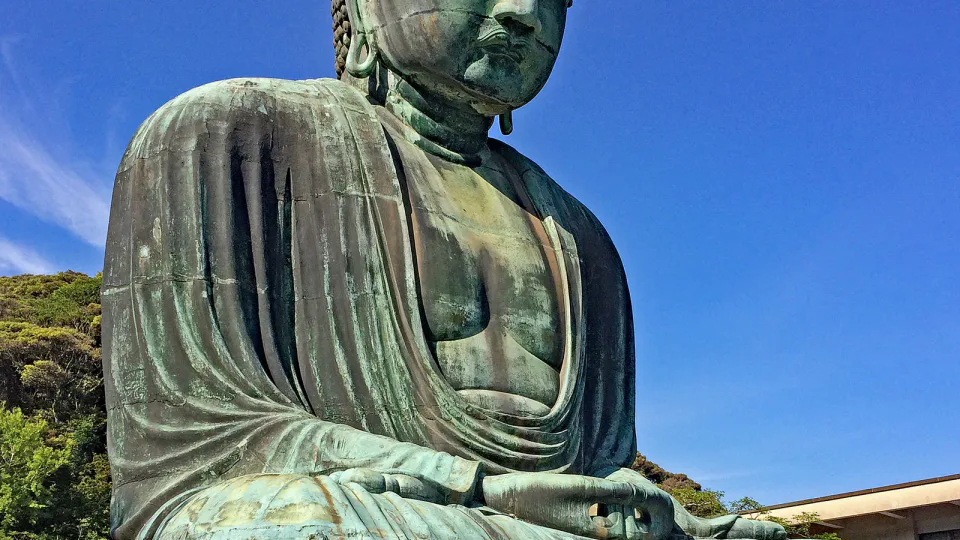
Kamakura is close enough to Tokyo to create the wrong planning instinct. Official Kamakura tourism information describes it as about one hour from Tokyo, but that does not make it a two-hour side stop. If a four-day Tokyo trip has an arrival day, two complete sightseeing days and a departure day, Kamakura can consume 50% of the genuinely flexible days. I would add it on a first trip only when temples, the coast or Enoden are important enough to replace a full Tokyo day—not because the train ride looks easy.
The useful comparison is therefore not “Tokyo versus a one-hour train.” It is one complete Kamakura/Shonan day versus one complete Tokyo city day. Once that replacement is explicit, the decision becomes much easier.
Kamakura in a four-day Tokyo trip: the replacement-cost table
↔ Scroll table left or right
| Your situation | ValueNavi call | What Kamakura replaces |
|---|---|---|
| First Tokyo visit, only two full days | Usually skip | Half of your complete city-sightseeing time. |
| Repeat Tokyo visit | Add it | A Tokyo neighborhood day you may already have done. |
| Temples + coast + Enoden are a main trip theme | Add it | The trade is intentional rather than FOMO-driven. |
| Only want Great Buddha + one central area | Focused day works | You keep the route controlled and avoid adding Enoshima. |
| Kamakura + Enoshima both matter | Full day minimum | This is a Shonan day, not a compact Kamakura stop. |
| Disney already uses one complete day | Usually keep the other day in Tokyo | Otherwise Tokyo city becomes arrival/departure fragments. |
ValueNavi Score: Kamakura as a day trip inside a first four-day Tokyo visit
This is an editorial fit score, not an official rating. A higher number means the excursion is easier to justify for this exact trip structure.
| Dimension | Score /10 | Why |
|---|---|---|
| Cost efficiency | No hotel move is needed and the trip uses ordinary regional transport. | |
| Time efficiency | Tokyo–Kamakura is roughly an hour, but local movement between Hase, central Kamakura and the coast adds up. | |
| Booking flexibility | The core day is not built around scarce timed-entry reservations. | |
| Weather resilience | Temples remain usable in mixed weather; the coast loses more value in sustained rain. | |
| Crowd resilience | Narrow streets, Enoden and popular areas can feel much slower at busy times. | |
| Route fit | Easy from Tokyo, but still expensive when the trip has only two complete days. | |
| Uniqueness | Temples + old-town streets + coast create a different pace, especially for repeat Tokyo visitors. |
Composite: 7.2/10. The score becomes stronger on a repeat Tokyo visit and weaker when Disney or another full-day excursion is already fixed. That is exactly why “Kamakura is easy from Tokyo” is not a complete recommendation.
The one-hour trap: arriving at Kamakura Station is not the sightseeing finish line
VISIT KAMAKURA places Tokyo roughly one hour away. Once you arrive, however, the sights pull in different directions. Kotoku-in and Hase are toward Hase Station; the coast adds another line; Tsurugaoka Hachimangu and Komachi-dori sit around central Kamakura. Add Enoshima and the day stretches farther west.
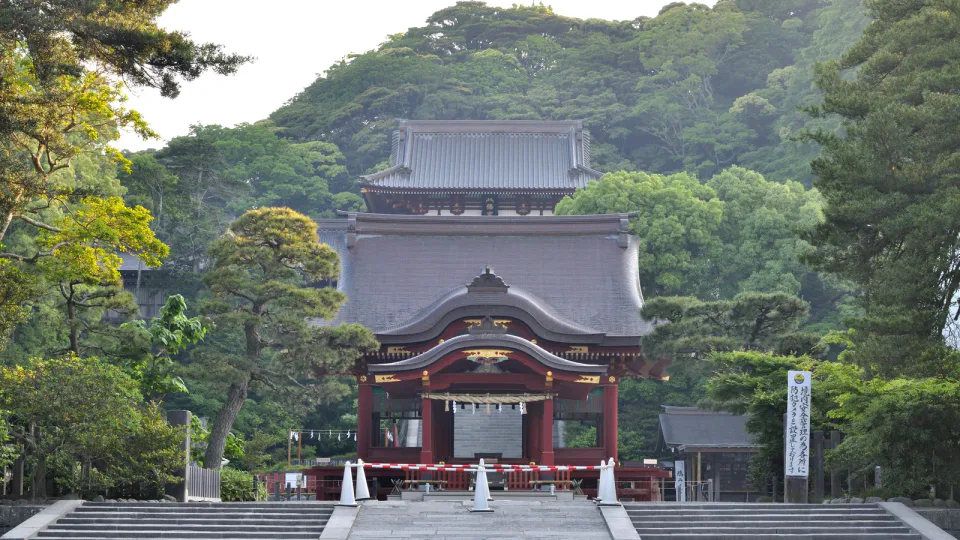
For planning, use hotel door → first sight → last sight → hotel door, not “Tokyo Station to Kamakura Station.” That is the same hidden-cost mistake travelers make with airports and large railway stations: line-haul time is only one part of the day.
For a first visit, the route I would trust is Hase → central Kamakura
A controlled first day can run Hase/Great Buddha → optional Hasedera or coast → Kamakura Station → Tsurugaoka Hachimangu → Komachi-dori. That gives the day two geographic halves instead of five scattered pins.
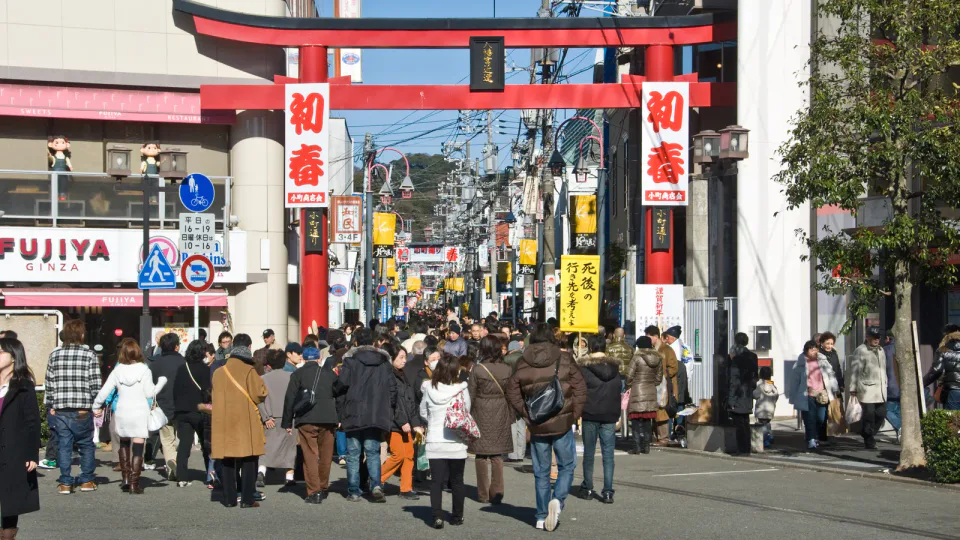
Komachi-dori works especially well near the end because you are already close to Kamakura Station for the Tokyo return. Shopping there at noon, going back toward Hase, then returning to the station again creates a zigzag that adds movement without adding experience.
When Enoshima enters, stop calling this a compact Kamakura day
Enoshima has island walking, viewpoints, food and the coast. Great Buddha + Tsurugaoka Hachimangu + Komachi-dori + Enoshima can be completed on a long day, but completion is the wrong KPI. The stronger version deletes one central Kamakura element or openly treats the itinerary as a Shonan-coast day.
Public transport is not just cheaper friction—it is the more resilient default
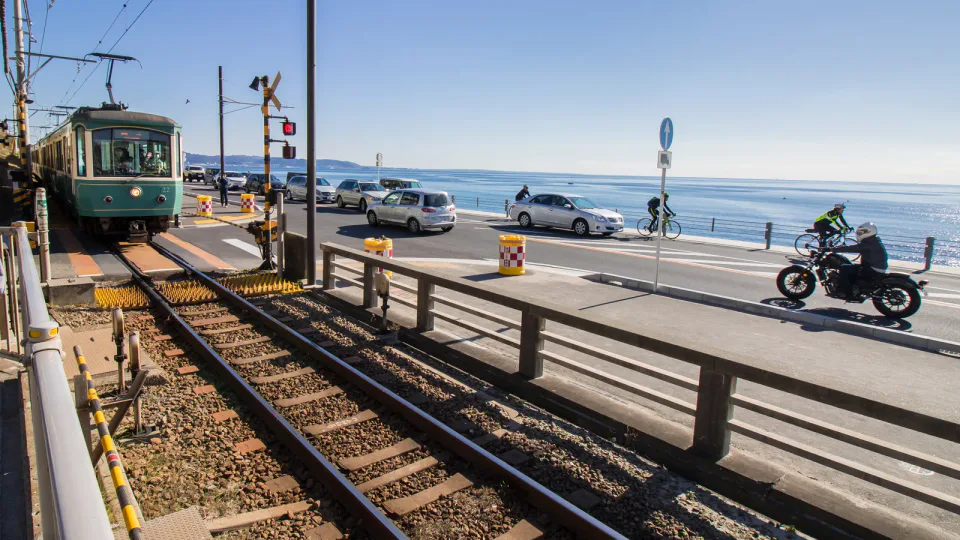
Kamakura’s official tourism guidance recommends public transport and warns that major roads can remain congested for long periods. This matters more than it first appears. A rental car can turn a flexible temple day into a parking-and-traffic problem, especially around popular areas with narrow roads. Rail, Enoden, buses and walking let you change the route when congestion or energy levels change.
For families, that does not mean “ride every possible bus.” It means remove one direction. With young children or older travelers, two zones done comfortably are usually better than Kita-Kamakura + Hase + central Kamakura + coast + Enoshima.
The rain decision is asymmetric
Light rain does not automatically kill Kamakura: temple grounds and old streets can still work. What loses value first is the coastal half. If Kamakura is optional, keep it as the swappable day in your Tokyo plan. If Kamakura is a hard priority, keep the date but delete the coast or Enoshima in poor weather instead of trying to preserve every stop.
Why Kamakura often fits a second Tokyo trip better
On a repeat visit, the opportunity cost changes. If you have already spent time in Asakusa, Shinjuku and Shibuya, giving one day to temples, sea views and Enoden creates a genuinely different rhythm. On a first visit, the same day may replace neighborhoods you still care about more. The destination has not changed; the value of the day you are giving up has.
Should you sleep in Kamakura?
Usually not if Kamakura gets only one day. Keep the Tokyo hotel, leave large luggage there and return in the evening. An overnight starts to earn its cost when dawn/evening coast time matters, or when Day 2 also includes Enoshima, Hayama or another Shonan area. At that point Kamakura has become its own trip segment.
If you reach that point, compare Kamakura Station, Fujisawa and Enoshima as bases before moving hotels.
Three four-day structures
Tokyo-first: arrival/local area + eastern Tokyo + western Tokyo + departure. No Kamakura.
One excursion: one complete day becomes Hase/Great Buddha + central Kamakura; the other complete day stays in Tokyo.
Shonan is the trip theme: give Kamakura + coast/Enoshima the full day, or lengthen the trip if you also want Disney and several Tokyo districts.
Final verdict: close enough for a day trip does not mean small enough for a short trip
If this is your first Tokyo visit and you have only two complete days, I would usually keep both in Tokyo unless Kamakura is already a clear priority. On a repeat visit, or when temples and the coast are the point, Kamakura becomes one of the easiest high-contrast day trips to justify. The key is to price it in the correct currency: not only train time, but one complete day of your four-day trip.
Nagasaki Day Trip or Overnight from Fukuoka: 4-Day Trip Guide
Tokyo Autumn Leaves Day Trip by Train: Gardens, Ginkgo and Evening Foliage
Tokyo to Kyoto or Osaka Same-Day Luggage Delivery: Is It Worth ¥13,200?
teamLab Borderless Tokyo Review: Is It Worth 2–3 Hours of Your Tokyo Trip?
Sources
VISIT KAMAKURA / Kamakura City Tourism Association: Tokyo access, city transportation and current guidance recommending public transport because major roads can be congested. Information rechecked August 27, 2026. Rail operations, events, temple hours and crowd conditions can change. ValueNavi scores are editorial analysis derived from the trip structure and are not official ratings.