
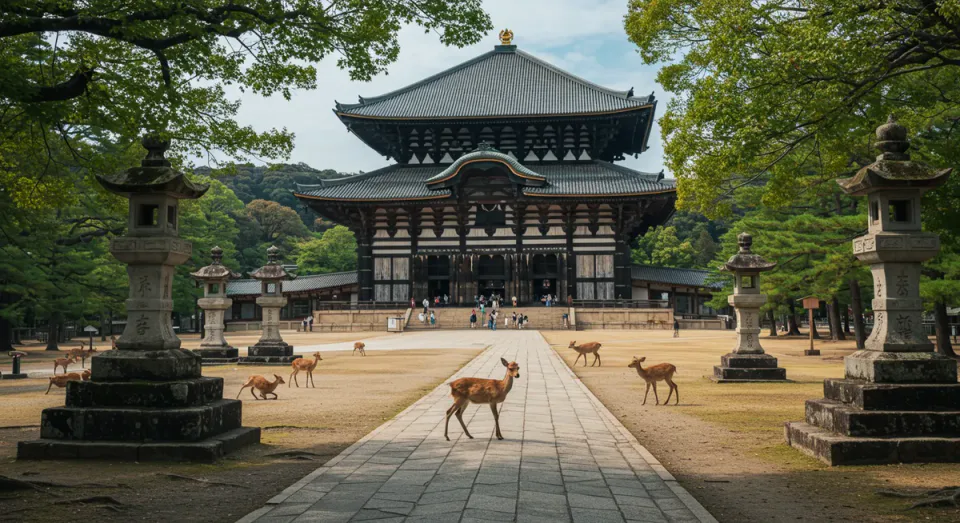
Do not change your Kyoto-or-Osaka hotel plan just to make one Nara day trip look faster. Both cities work. The more useful question is where your hotel door actually is, which railway is beside it, how many transfers you create before Nara, and whether you arrive at Kintetsu-Nara or JR Nara. For a classic Nara Park, Todaiji and Kasuga Taisha day, Kintetsu usually wins the last mile; for a traveller already beside JR Osaka Station, staying on JR is often cleaner than detouring to Namba to chase a better-looking train time.
The biggest correction to many route comparisons is this: Osaka-Namba to Kintetsu-Nara is not a 34-minute ordinary Express trip. Kintetsu's current route search shows an Express example at about 39 minutes for ¥680 (about US$4.27), while a Limited Express example can take about 34 minutes but costs ¥1,300 total (about US$8.16), including a ¥620 Limited Express surcharge. That roughly five-minute saving is mainly buying a reserved-seat product, not rescuing a bad route.
↔ Scroll table left or right
Where you are actually staying | Start with | Why | What can reverse it |
Kyoto Station | Kintetsu first for a Nara Park day | Direct service and a closer sightseeing-end station | JR already fits your pass, hotel side or onward rail plan |
Gion-Shijo / Keihan corridor | Keihan → Tambabashi → Kintetsu | Avoids backtracking across Kyoto to Kyoto Station | Your hotel is deep in Higashiyama and reaching Keihan is already awkward |
Osaka-Namba | Kintetsu Express | Direct, inexpensive and ends near the classic park axis | Your hotel is actually much closer to JR Namba or another Osaka rail node |
Umeda / JR Osaka Station | JR Yamatoji Rapid | Starts where you already are; no Osaka-side detour | You already have a Namba evening planned and want to combine the two |
Kyoto → Nara → Osaka transfer day | Kintetsu can make the geometry elegant | You keep moving west instead of returning to Kyoto | Large luggage has not been forwarded or securely stored |
The useful comparison is hotel door → first deer, not city centre → station
Headline rail times hide two pieces of friction: getting from the hotel to the correct platform and getting from the arrival station to the first sightseeing area. For a first Nara visit, the chain that matters is:
hotel door → origin platform → train → Nara arrival station → Nara Park / Kofukuji side → evening return.
The Official Nara Travel Guide describes Nara Park as a short walk east of Kintetsu-Nara, while walking from JR Nara along Sanjo-dori takes roughly 20 minutes. Other official Nara venue pages use slightly different reference points inside the very large park, so the exact minute count varies. The decision-level takeaway is more stable: Kintetsu-Nara usually saves roughly 10–15 minutes of arrival-side walking for the classic park axis.
That saving matters more for a stroller, older parents, a hot summer day or travellers who will already walk for hours inside the park. It matters less if choosing Kintetsu forces you to cross Osaka or Kyoto before the intercity journey even starts.
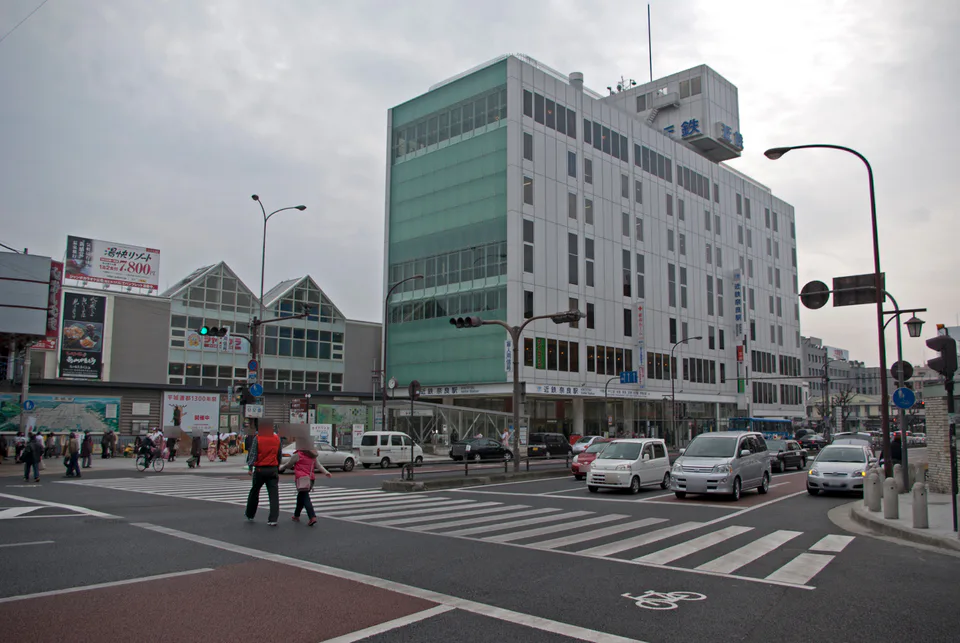
Osaka-Namba: the ordinary Express is already the high-value option
Kintetsu's current route search gives a practical baseline for Osaka-Namba → Kintetsu-Nara: an ordinary Express can run the trip in about 39 minutes, no transfer, ¥680 (about US$4.27). A current Limited Express example is about 34 minutes, ¥1,300 total (about US$8.16), because the ¥680 base fare is joined by a ¥620 Limited Express fee.
That creates a much more useful decision than “Limited Express is faster.” You are paying roughly ¥620 (about US$3.89) for a reserved seat and a small time saving on this example. For two fit adults making a normal day trip, I would normally keep the money and use the Express. For an older traveller, someone who strongly values a guaranteed seat, or a tired return after a long walking day, the Limited Express premium can be reasonable.
ValueNavi verdict: Namba is good for Nara because the ordinary route is already direct and efficient. The Limited Express should be treated as a comfort upgrade, not as evidence that Namba is dramatically better than every other Osaka base.
If Nara is only one day in a longer Kansai stay, decide Namba vs Umeda from the entire trip. Kyoto, Kobe, Himeji, Shin-Osaka access and where your evenings finish can outweigh the Nara advantage.
From Umeda, do not commute to the theoretically better Nara train
If your hotel is beside JR Osaka Station, direct JR service to JR Nara is structurally simple even though JR Nara is farther from the classic park axis. The common optimisation error is to travel Umeda → Namba first because Kintetsu-Nara is closer to the park. That adds an Osaka-side transfer, extra station navigation and often more walking before the Nara journey has even begun.
For a rail-heavy Kansai trip, keep the stronger overall Umeda base and accept the longer Nara last mile. One day-trip imperfection is a poor reason to make several other days worse.
Kyoto Station: fastest is not automatically best value
From Kyoto Station, Kintetsu gets the first check for a classic Nara Park day because it delivers you to Kintetsu-Nara. Limited Express services can shorten the ride and provide reserved seating, while ordinary services avoid the Limited Express surcharge. JR remains entirely rational when your hotel sits on the JR side, you already have a JR-oriented travel setup, or ticket simplicity matters more than shaving a few minutes.
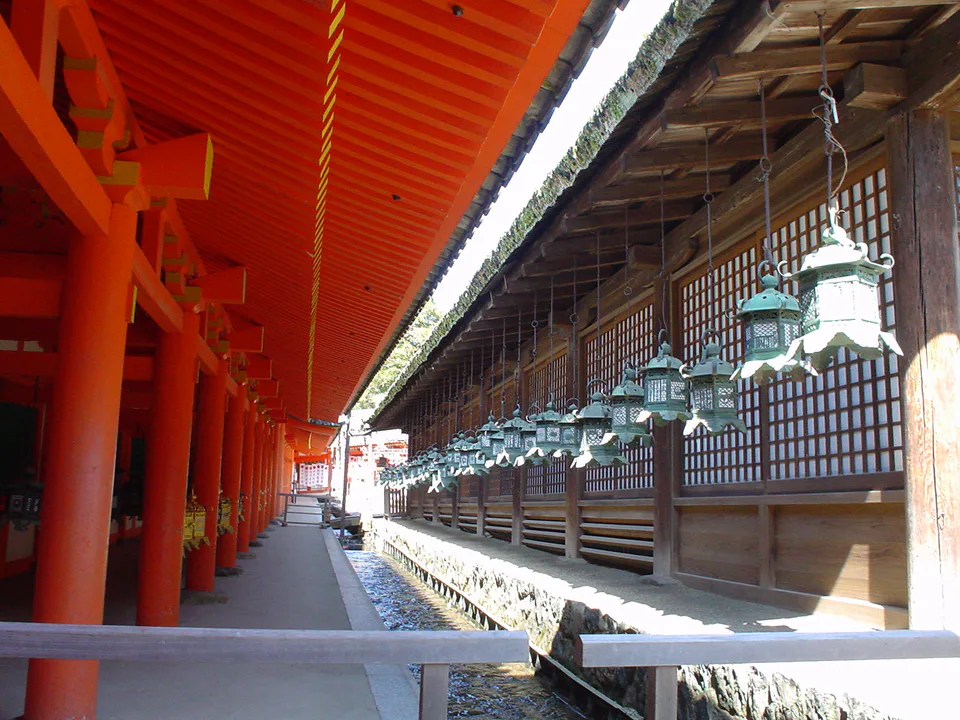
The decision is therefore not “Kintetsu always beats JR.” It is how much are you paying for a reserved seat and shorter train time, and does the closer Nara arrival station matter to your group? For older parents or a tight morning, the premium can have a job. For a budget-sensitive traveller with a flexible start, it may not.
From Gion-Shijo, Kyoto Station can be unnecessary backtracking
Many route articles silently assume every Kyoto visitor begins at Kyoto Station. If your hotel is genuinely close to Gion-Shijo or another useful Keihan stop, Keihan → Tambabashi → Kintetsu can avoid crossing Kyoto before the intercity journey starts. Tambabashi is an official interchange with the Kintetsu Kyoto Line.
The boundary condition is the hotel door. “Gion” covers a broad area. A property deep toward Kiyomizu can still require a meaningful bus, taxi or walk before you reach Keihan, which reduces the advantage. Decide Kyoto Station vs Gion from the whole Kyoto itinerary and use Nara only as a tiebreaker.
ValueNavi Door-to-Deer friction test
Instead of ranking routes only by train minutes, add friction points. This is an editorial planning tool, not an official railway score.
↔ Scroll table left or right
Add | When | Why it matters |
+2 | You create an extra railway transfer before reaching Nara | Transfers cost more energy with children, older travellers or bags |
+1 | Your hotel is more than a short walk from the origin station | The city-level route time is already understating the trip |
+1 | You arrive at JR Nara for a park-centred day | You accept the longer last mile instead of Kintetsu-Nara |
+2 | You are carrying a large suitcase on a sightseeing day | The problem is now luggage logistics, not just railway choice |
Lower is better. A Namba hotel beside Osaka-Namba can therefore beat a theoretically faster route that needs an extra city transfer. A Umeda hotel beside JR Osaka can also beat the “better” Kintetsu arrival because it starts with fewer moving parts. The score is useful precisely because it allows both conclusions to be true.
Kyoto → Nara → Osaka works only when the luggage problem is solved first
Nara can be an efficient transfer-day stop because Kintetsu links Kyoto, Nara and Osaka-Namba. On a map, Kyoto → Nara sightseeing → Osaka is elegant. With a large suitcase through temple approaches and deer-filled park paths, it is not.
Use the transfer-day version only if the main luggage is forwarded, stored under rules you have rechecked, or otherwise removed from the sightseeing day. If you cannot solve the bags, make Nara a normal round trip from one hotel. A clever route that makes the human experience worse is not an optimisation.
Evening plans are the final tiebreaker
A Namba-based traveller who wants Dotonbori after Nara gets additional value from the direct Kintetsu chain. A Kyoto-based traveller protecting an early Kyoto morning may rationally return to Kyoto even if another route saves a few minutes. The day trip is not finished when you reach Nara; the return endpoint belongs in the calculation.
Final verdict
Choose the hotel base first, then choose the Nara railway. Kyoto Station: compare Kintetsu first for a park-centred day, but do not pay a speed premium automatically. Gion-Shijo/Keihan corridor: test Tambabashi instead of reflexively backtracking to Kyoto Station. Osaka-Namba: the ordinary Kintetsu Express is already strong at roughly 39 minutes and ¥680. Umeda/JR Osaka: stay on JR rather than travelling to Namba just to reach the closer Nara station.
If everything else is genuinely tied, Kintetsu gets a first-visit edge because its station is closer to the classic Nara Park axis. That edge is not large enough to justify moving your Kansai hotel base for one day.
If you want dawn in Nara Park, a second sightseeing cluster or a much slower pace, stop solving the trip as a Kyoto-vs-Osaka problem and use Nara Day Trip or Overnight.
References
Official Nara Travel Guide — Nara Park access · Official Nara Travel Guide — travel to Nara · Kintetsu Railway — current route and fare search · Keihan Railway — traveller information. Rail examples and fares rechecked August 27, 2026. US-dollar figures are approximate conversions using the August 26, 2026 JPY/USD rate; exchange rates move.