If you have only one day for a trip outside Osaka, I would not start by asking which city is closest. I would ask how much of the day you are willing to hand over to transfers. Nara is the easiest to do independently. Kobe is best when you want food, streets and harbor views without a rigid schedule. Himeji is the farthest of the four, yet a Himeji Castle day can be simpler than Kyoto. Kyoto is quick to reach from Osaka, but once you arrive, Kiyomizu-dera, Arashiyama, Fushimi Inari and Kinkaku-ji pull you in different directions.
A guided tour becomes worth paying for for a different reason than “Japan is confusing.” Its strongest use case is when you deliberately want to combine places that would otherwise create a messy transfer chain, such as Kyoto + Nara or Himeji + Kobe. For a single city, independent travel usually gives you more time where it matters. For two cities in one day, a tour is really a transport-and-time-management product.
30-second decision: which Osaka day trip is easiest to do on your own?
↔ Scroll table left or right
Trip style | Best fit | DIY or tour? | Why |
First easy day trip from Osaka | Nara | DIY | Direct rail plus a compact walking core |
Food, city streets and an easy evening | Kobe | DIY | The value is flexibility, not attraction count |
One strong landmark goal | Himeji | DIY | Longer ride, but simple train + straight walk |
Temples and traditional districts are the priority | Kyoto | DIY for 1–2 areas | Fast to reach, but city movement fragments the day |
You insist on two cities in one day | Kyoto + Nara / Himeji + Kobe | Tour can make sense | You are paying to remove transfer friction |
If your Osaka trip is only four days and USJ already takes a full day, do not add a day trip automatically. Read whether Kyoto still fits into a four-day Osaka trip with USJ first. The rest of this guide assumes you have already decided to spend one full day outside Osaka and are choosing where that day should go.
Kyoto: the train ride is easy — the real cost begins after you arrive
Official Kyoto travel guidance puts JR Osaka Station to Kyoto Station at roughly 30 minutes by Special Rapid service. Hankyu from Osaka-Umeda to Kyoto-Kawaramachi is around 45 minutes, while Keihan from Yodoyabashi to Gion-Shijo is around 48 minutes. On paper, Kyoto looks almost frictionless. But Kyoto Station is not the same thing as arriving at your sightseeing area. The city’s official transport guidance lists roughly 10 minutes to Fushimi Inari, around 25 minutes to Arashiyama, about 35 minutes toward Kiyomizu-dera/Higashiyama and around 40 minutes toward Kinkaku-ji, and it warns that congestion can make normal map estimates much longer.
That is why the right DIY Kyoto day trip is not “fit in the most famous places.” Pick a direction first. Fushimi Inari plus Kiyomizu-dera/Gion can work as a southeast/east day. Arashiyama deserves a real half-day rather than being treated as a photo stop before you cross the city again. If temples, gardens and traditional neighborhoods are the actual reason you came to Kansai, compare Kyoto vs Osaka as your accommodation base before committing to repeated day trips. Sometimes the expensive part is not the train fare — it is giving away your best morning hours to commuting.
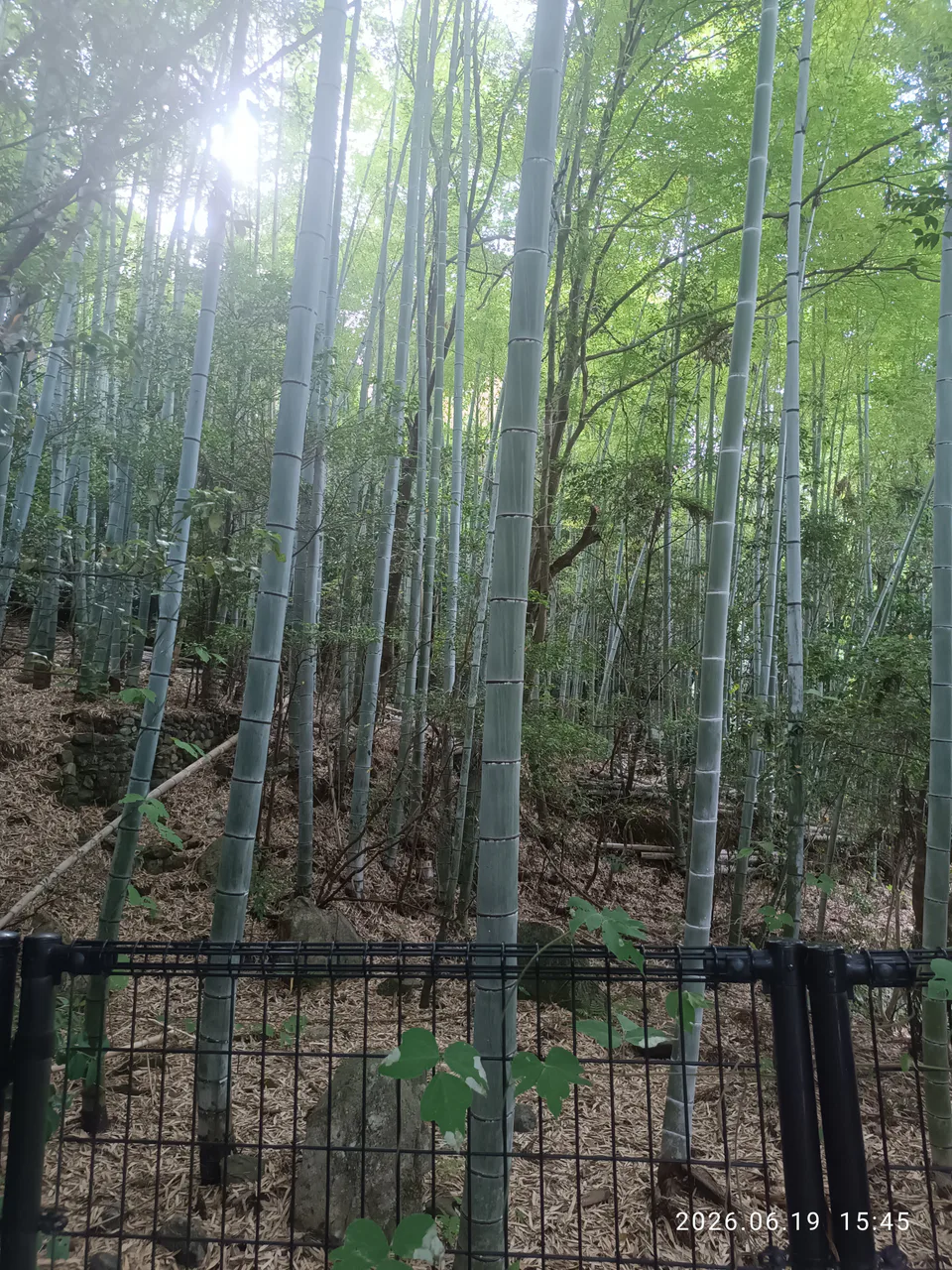
Kyoto is where a tour starts to make more sense if you insist on combining Kyoto and Nara in one day. Current products still package classic Kyoto stops with Nara Park in a full-day format from Osaka or Kyoto. The advantage is obvious: you do not have to solve Osaka → Kyoto → Nara → Osaka yourself. The trade-off is equally obvious: every stop gets a fixed departure time, so a queue, traffic delay or a place you unexpectedly love cannot simply expand to fill the afternoon.
Nara: the one place where you rarely need to pay a tour just for convenience
Nara’s official tourism information keeps the transport chain simple: Kintetsu Osaka-Namba to Kintetsu Nara is about 40 minutes direct, while JR Osaka Station to JR Nara is roughly 50 minutes on the Yamatoji Rapid. More importantly, Nara Park is only about an eight-minute walk from Kintetsu Nara Station. For travelers staying in Namba, the chain from hotel to deer park is unusually clean. Kyoto is the opposite: you can reach the city quickly and still have another transport decision ahead of you.
For a first Nara day trip built around Nara Park, Todai-ji, Kasuga Taisha and Naramachi, I would go independently. You can change lunch, reverse the walking order or spend longer at Todai-ji without watching a meeting-time clock. If you are deciding between bases, see Nara from Kyoto or Osaka: which day trip is easier? because the answer changes depending on whether you are starting from Namba, Umeda or Kyoto Station.
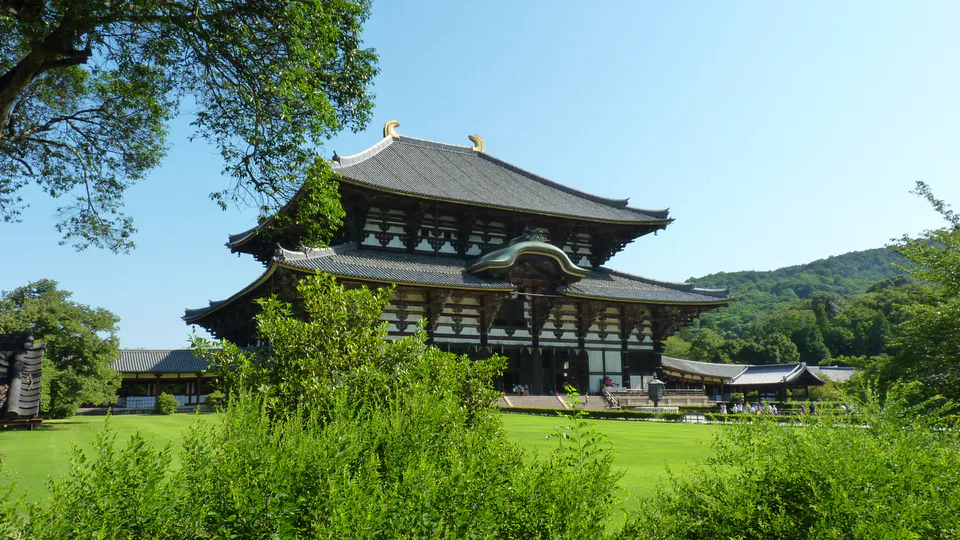
A tour flips the decision only in a few cases: your group includes someone who benefits materially from door-to-door transfers; Nara is only one half of a Kyoto + Nara day; or you are visiting areas outside the Nara Park walking core such as Nishinokyo or Horyu-ji. If what you really want is quiet deer at dawn, evening lights or slower temple time, the next question is not tour versus train. It is whether Nara deserves an overnight stay.
Kobe: the closest option, but do not confuse “21 minutes” with “everything is next to Sannomiya”
Kobe’s official tourism information highlights how close the city is to Osaka, with the fastest rail journey at roughly 21 minutes. That makes Kobe the easiest option to add late in the planning process. But the city is spread by experience rather than by distance: Kitano sits uphill, Sannomiya and Nankinmachi are natural food-and-shopping zones, and Meriken Park/Harborland pull you toward the waterfront. Add Mt Rokko or Arima Onsen and you are no longer doing a compact central-Kobe walk.
If your goal is Kobe beef, Nankinmachi, a harbor walk and an evening return to Osaka, DIY is better. Kobe works because you do not need to maximize attraction count. A long lunch or an extra hour by the water does not ruin the day. If you are wondering whether Kobe should become an overnight base rather than a day trip, the Osaka, Kobe and Koyasan four-day itinerary shows when moving hotels is actually useful.
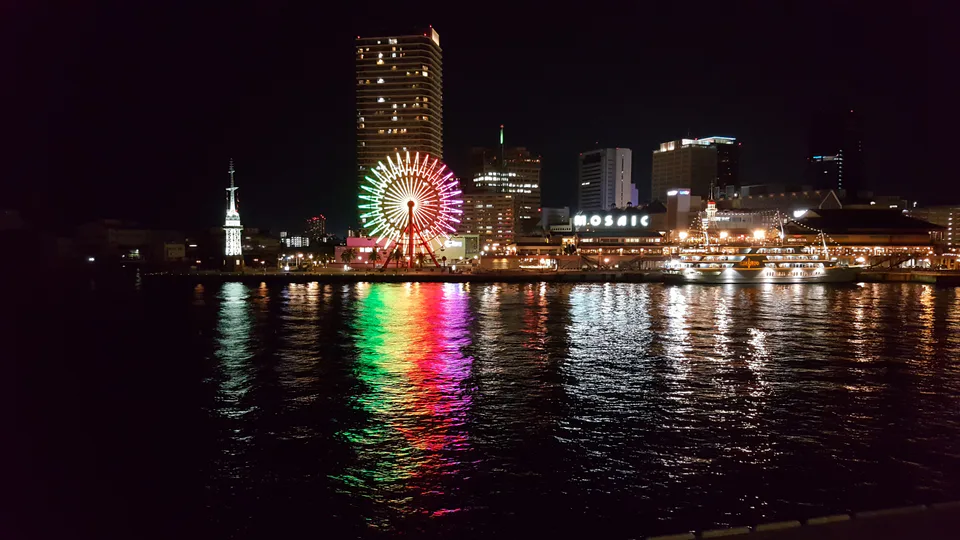
A Kobe tour is more convincing when Kobe is the second half of a harder day: Himeji Castle followed by Kobe harbor or a night view, or a route combining Arima Onsen, Mt Rokko and central Kobe. In those cases you are not paying for someone to explain Sannomiya. You are paying to remove two or three transfer chains. For Sannomiya + Nankinmachi + Harborland alone, a group schedule often trades away the very thing Kobe does best: unstructured time.
Himeji: the farthest option can still be easier than Kyoto
Himeji’s official tourism information puts Osaka to JR Himeji Station at around 57 minutes by Special Rapid service. From JR Himeji Station, Himeji Castle is roughly a 20-minute walk on a route that is almost impossible to misunderstand. Since March 2026, the general adult admission for Himeji Castle has been ¥2,500, visitors aged 18 and under are free, and the castle has been operating a digital ticket system with timed entry slots.
If your real purpose is Himeji Castle plus Koko-en, I would not book a tour simply because Himeji looks far away on the map. The train ride is longer, but once you arrive there are fewer decisions. You can move at your own pace, spend real time inside the castle and decide afterward whether Koko-en still fits. Distance is not the same as complexity. Kyoto is close but fragmented; Himeji is farther but linear.
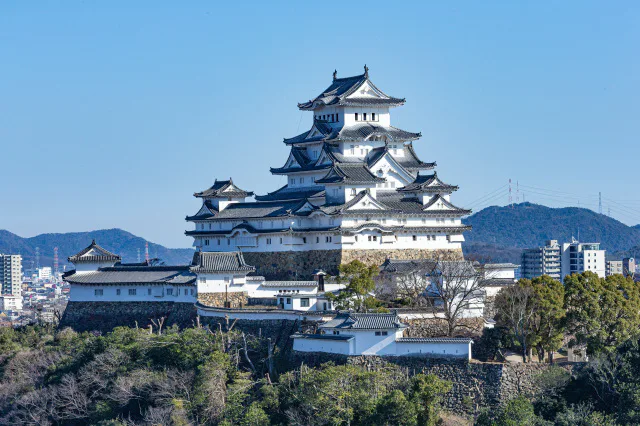
A Himeji tour becomes more rational when you also want the second leg after the castle — for example Kobe, Mt Rokko or Arima. That is when a coach turns several transport systems into one product. If Himeji Castle itself is your priority, do not add extra cities just to make the day look fuller.
DIY vs tour: compare four hidden costs, not just the tour price
1 | Transfer research cost rises fastest when you cross cities
Nara is low. Himeji is also low. Central Kobe is manageable. Kyoto rises sharply once you try to cross three sightseeing zones in one day. The tour starts winning not because the destination is far away, but because your itinerary asks two cities and several transport systems to behave like one simple route.
2 | Freedom has a price too: every group tour decides when you leave
If you care deeply about one stop, this is the biggest cost of a tour. Deer time in Nara, a temple in Kyoto or the interior of Himeji Castle can all run longer than expected because of queues or genuine interest. A bus may save you from reading a timetable, but it cannot pause the meeting time because you finally reached the part you came to see.
3 | Bad weather increases the value of transfers — not the comfort of the attraction
Heat and heavy rain make fewer station changes and shorter outdoor transfers genuinely valuable. But air-conditioning in the vehicle does not remove the stairs inside Himeji Castle, the walking in Nara Park or queues at Kyoto temples. A tour can reduce transport fatigue; it cannot turn an outdoor-heavy itinerary into an indoor one.
4 | Group coordination changes the economics at four to six people
For one or two travelers, rail is usually easy to control. With four to six people, older parents, young children or lots of hand-carry items, a private transfer or small-group product spreads its cost across more people and removes repeated regrouping in major stations. This is one of the few cases where “more people” — not “more attractions” — makes the paid option more rational.
The easiest product to buy badly is the multi-city tour that “includes everything”
The market does offer full-day products that combine Kyoto + Nara, and other routes that pair Himeji with Kobe or Mt Rokko. These tours are not automatically bad. You are buying something specific: no transfer research, a fixed meeting system and packaged movement between cities. What you give up is depth. Three cities in one day can look efficient on a product page and still feel like you saw every place without staying anywhere.
My line is simple. On a first Kyoto trip, I would not compress Kyoto into a token stop just to increase the city count. In Nara, one hour with deer does not really show how the park-and-temple walking day works. And if castle architecture is why you chose Himeji, a 60–90 minute stop chased by a bus departure can defeat the point. Multi-city tours fit travelers who explicitly want a highlights sampler and accept that they may not return to fill in the details.
Namba vs Umeda changes which day trip feels “convenient”
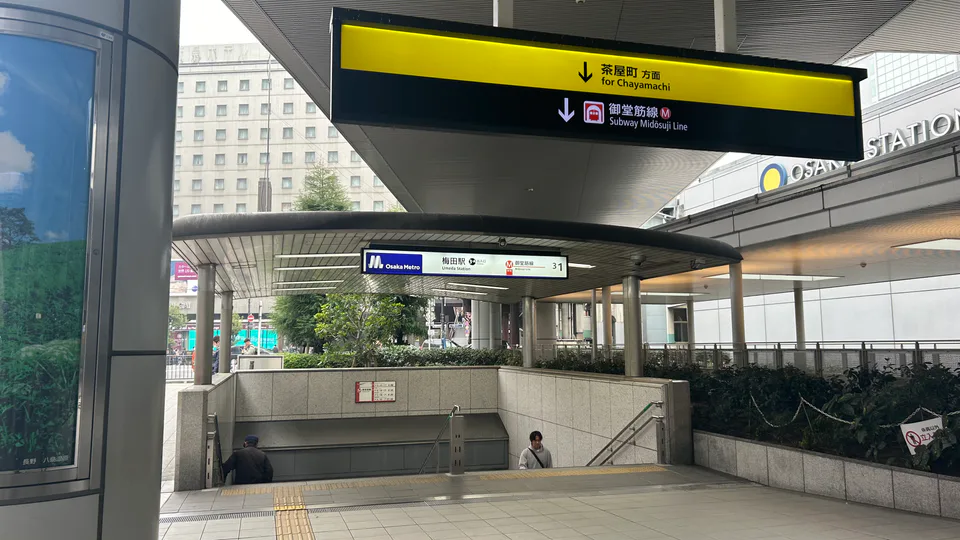
Stay in Namba and Nara has a clear Kintetsu advantage. Stay in Umeda and Kyoto, Kobe and Himeji connect more naturally through JR, Hankyu and Hanshin. This is why “Osaka to Nara is so easy” and “Osaka to Kyoto is so easy” can both be true: people are starting from different hotel bases.
If you have not booked your Osaka hotel yet, compare Namba vs Umeda first. If you have not even chosen the broader area, use the first-timer Osaka accommodation guide. For travelers doing repeated Kansai day trips, the last 5–15 minutes between hotel and station can matter more than saving a few hundred yen on a ticket.
Next decision: choose Namba or Umeda before choosing your day trip
Four traveler profiles: stop asking which city is “most popular”
First Kansai trip, temples and historical neighborhoods are the main event: choose Kyoto, but keep the day to one or two zones. If Kyoto is only something you feel you should squeeze in because it is “near Osaka,” it is often the most tiring choice.
Want the safest independent day trip with minimal transfer anxiety: choose Nara. Direct Kintetsu access from Namba plus the Nara Park walking core gives it the lowest failure cost.
Want food, urban atmosphere, photos and an easy evening back in Osaka: choose Kobe. It is not the destination with the longest checklist, and that is exactly why it preserves a sense of travel rather than task completion.
Have one clear interest in castle architecture and do not mind a longer train ride: choose Himeji. DIY is enough for Himeji Castle + Koko-en. Start seriously comparing tours only when Arima, Mt Rokko or Kobe night views are also real priorities.
Already decided on a tour? Check these five things before paying
First, check the exact meeting point — “departs Osaka” is not precise enough. Second, confirm whether the guide language is English, Chinese, Korean or multilingual. Third, read the time allocated to each stop, not just the number of stops. Fourth, check which admissions and meals are included; Himeji Castle pricing changed in 2026, so old reviews can be misleading. Fifth, check cancellation terms and the latest confirmation time, especially for small-group and private products.
For a current example, Klook is listing a Kyoto + Nara full-day product that combines Kyoto sightseeing with Nara Park and offers departures from Osaka/Kyoto. Use it as a model for what you are buying: transport convenience and a fixed timetable, not unlimited time in either city. Availability, price, language and cancellation terms can change by date, so compare the actual option you can book rather than relying on an old screenshot or review.
Compare the current Kyoto + Nara day-tour option and cancellation terms|Klook
Final verdict: Nara is easiest to DIY; Kyoto is easiest to overpack
If you only compare intercity train times, Kobe is closest and Kyoto is also fast. But the real cost of a day trip is what happens after the train. Nara works because you arrive and can keep walking into the core. Himeji works because the goal is linear. Kobe works because it rewards free time. Kyoto costs more energy because the attractions are scattered and one bad cross-city decision can turn sightseeing into transit.
For one first-time day trip from Osaka: choose Nara for the easiest independent day, Kobe for food and city atmosphere, Himeji for a castle-focused trip, and Kyoto when Kyoto itself is a genuine priority. A tour is not “for people who cannot use trains.” It becomes worth paying for when you knowingly want two cities in one day, your group benefits from fewer transfers, or you want someone else to lock the timetable so you do not have to.
Sources and what to re-check before departure
Kyoto City Official Travel Guide | Getting to Kyoto
Kyoto City Official Travel Guide | Getting Around Kyoto
Nara City Tourism Association | Access
Himeji official tourism | Access
Himeji Castle official | 2026 admission and digital ticket information
Tour routes, fares, meeting points, guide languages and cancellation rules can change. Re-check the official source and the exact product option for your departure date before payment.
Osaka Shinsekai Food Tour 2026: Which Guided Dinner Is Actually Worth It?
40 Best Things to Do in Tokyo in 2026 — What’s Actually Worth Your Time by Area
Things to Do in Kyoto: 1-, 2- and 3-Day Itineraries for First-Time Visitors
Osaka Autumn Leaves Guide: Minoh Falls, Osaka Castle and City Day Trips
35 Best Things to Do in Osaka 2026: What’s Worth Your Time by Area, Budget and Trip Style