
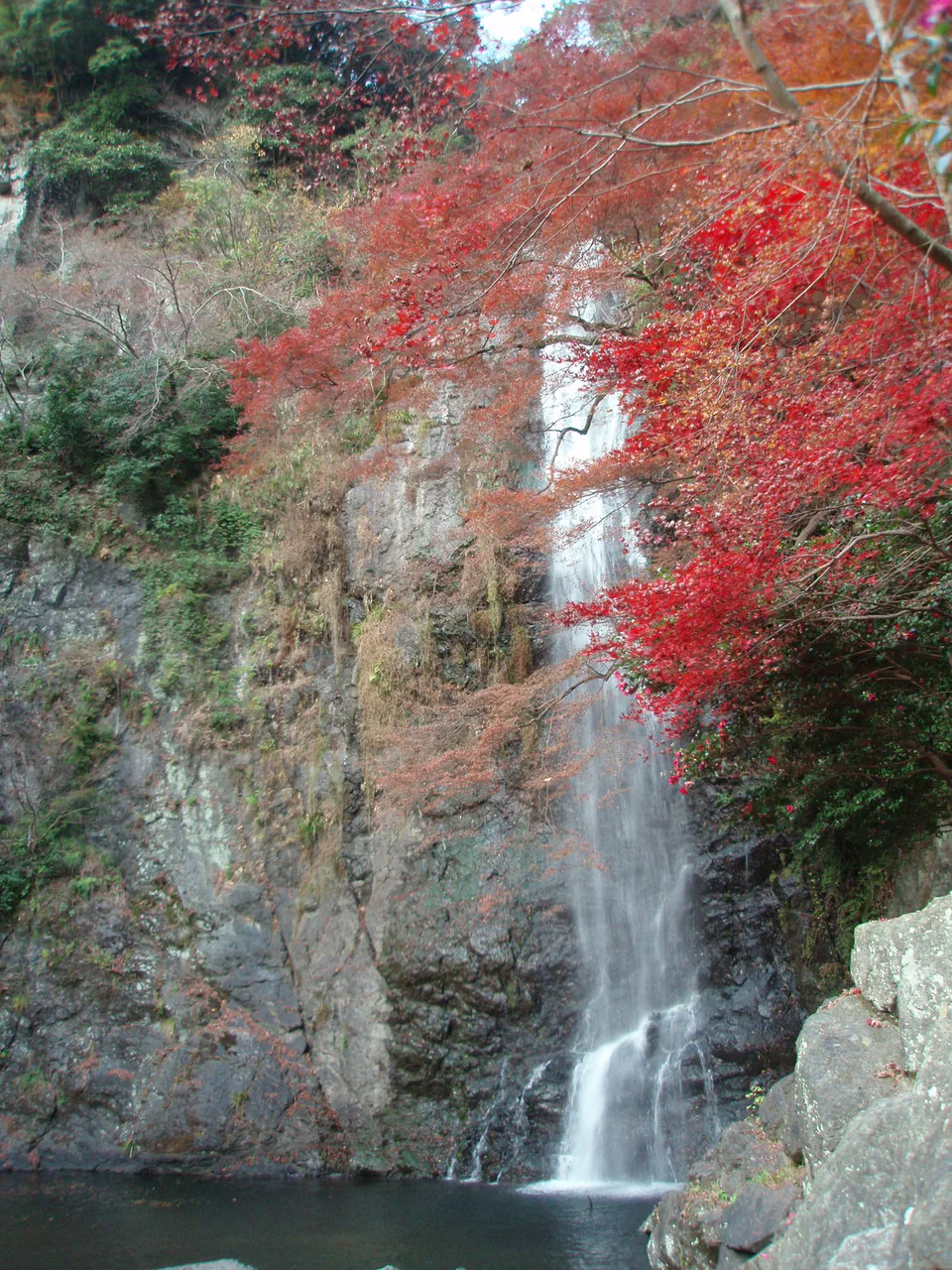
Osaka autumn leaves should not be treated as one route that collects Minoh Falls, Osaka Castle, Expo ’70 Park, Daisen Park and Midosuji in a single day. They are five different products: a northern nature walk, central castle scenery, a large family park, a southern garden and an urban ginkgo avenue. For a first visit, choose one of three structures: Minoh as a complete nature half/full day; Osaka Castle–Nakanoshima–Midosuji as a city day; or Expo Park and EXPOCITY for families, older travellers and uncertain weather.
Last checked August 4, 2026. Osaka's northern hills, large parks, central gardens, southern districts and ginkgo do not peak together. The early-November to early-December windows below are historical planning ranges; check live colour and event hours before travel. Official April 2026 guidance confirms that Hankyu Minoh Station to the 33-metre waterfall takes about 40 minutes each way, the park is free during the day and the path is not lit for a late-night hike.
Osaka autumn leaves: use the date to eliminate unsuitable corridors
In early November, start with higher or cooler northern Osaka rather than assuming the city is fully coloured. Mid-November can favour Expo Park, the Japanese Garden and early Minoh sections. Late November normally gives first-time travellers the broadest choice across Minoh, Osaka Castle, urban gardens and southern Osaka. In early December, prioritise Midosuji ginkgo, later city gardens, architecture and indoor exhibits; higher areas may already be in leaf fall.
Do not apply one date to every tree. Midosuji is primarily yellow ginkgo, not red maple. Osaka Castle contains cherry foliage, ginkgo, gardens and moat views that change at different speeds. Minoh's entrance, river path and waterfall have different elevation and exposure. Three to seven days before travel, compare dated photographs and operating notices for the exact site rather than a single “Osaka peak” label.

Nature day: Minoh needs more than two hours
Take Hankyu from Umeda to Minoh, then begin the real walk. Although the official one-way path is about 40 minutes, autumn crowds, Ryuanji, shops, photographs, toilets, food and the return mean that 3.5–5 hours is more realistic. Arrive around 09:00, reach the main waterfall before lunch and return to the station in the afternoon. Pair the day only with dinner in Umeda or a short Midosuji evening, not a complete Expo Park visit.
The main path is generally accessible for ordinary walkers but still has gradients, wet leaves and congestion. Families and older travellers can use the insectarium, Ryuanji or a tea house as an exit rather than forcing the waterfall. Check current access after rain, wear shoes with grip and turn back early. In strong wind, heavy rain, rockfall or trail restrictions, switch to Expo's Japanese Garden and museums or Osaka Castle and the Museum of History. Minoh Onsen Spa Garden has been closed for facility maintenance since April 2025, so older itineraries should not promise an onsen finish.
City day: Osaka Castle, Nakanoshima and Midosuji
Start at Morinomiya or Osaka-jo-koen and decide whether the tower, Nishinomaru Garden, moat or Museum of History is the morning anchor. Move to Nakanoshima or Temmabashi for lunch and an indoor or riverside afternoon, then walk a selected part of Midosuji from Yodoyabashi or Hommachi toward Shinsaibashi. Weak foliage does not ruin this route because architecture, museums, ginkgo and dinner remain useful.
The castle park is large and tower queues can consume the afternoon. Choose one paid interior and decide by 14:00 whether Nakanoshima remains. Midosuji works best as a one- or two-kilometre late-autumn urban section with a cafe or dinner; there is no need to walk the complete avenue for yellow leaves.

Family and rain plan: give Expo ’70 Park a real half or full day
Expo ’70 Park combines the Natural and Cultural Gardens, Japanese Garden, Tower of the Sun, Expo ’70 Pavilion, National Museum of Ethnology and EXPOCITY. It can expand or contract with weather and suits families, older travellers and anyone who needs a strong indoor backup. The scale, monorail access, walking and reservations require at least half a day. With only three hours, use the Japanese Garden plus one museum rather than circling the whole park.
Minoh and Expo are both north of central Osaka but are not a simple connection. A very early start and a shortened Minoh walk can leave time for one Expo section, but most travellers should separate the days or choose one. In rain, place the museum or mall first and use the Japanese Garden when conditions improve; in heavy rain or wind, remove the long outdoor circuit.

Southern Osaka and late autumn: Daisen is a separate corridor
Daisen Park Japanese Garden works with Sakai, the Mozu tomb area, Sakai City Museum or Tennoji, especially from a Namba or Tennoji hotel. It points in the opposite direction from Minoh and Expo and should not be added merely because every stop is within Osaka Prefecture. When northern colour is past peak, a southern line through Daisen, Tennoji, Nagai Botanical Garden or Midosuji can retain a late-autumn day.
Midosuji is a ginkgo cityscape and works as a short Yodoyabashi–Hommachi–Shinsaibashi section with architecture, shopping and dinner. If the leaves are early or fallen, buildings, pedestrians and illumination still provide context. It is a city-day conclusion, not a reason to rush back from Minoh.

Transport, passes and luggage
Minoh uses Hankyu, central routes rely heavily on Osaka Metro, and Expo uses the Osaka Monorail. These are not the main coverage of a nationwide JR Pass, so an Osaka foliage trip usually works better with an IC card and route-specific fares. Leave full-size luggage at the hotel or station and use the city route on a hotel-change day; do not combine checkout, storage and a northern-mountain early start.
Hotel bases and every existing booking option
Umeda is strongest for Minoh, Expo, Kyoto and JR connections; Namba for Midosuji, Sakai and Kansai Airport; Tennoji for southern Osaka and Nara; Shin-Osaka for a multi-city Shinkansen trip; Kyobashi for Osaka Castle and Keihan access. These are position examples, not availability or fixed-rate claims.
Hotel Granvia Osaka
Search Hotel Granvia Osaka on Booking.com
Compare Hotel Granvia Osaka on Expedia
Swissôtel Nankai Osaka
Search Swissôtel Nankai Osaka on Booking.com
Compare Swissôtel Nankai Osaka on Expedia
Osaka Marriott Miyako Hotel
Search Osaka Marriott Miyako Hotel on Booking.com
Compare Osaka Marriott Miyako Hotel on Expedia
karaksa hotel grande Shin-Osaka Tower
Search karaksa hotel grande Shin-Osaka Tower on Booking.com
Compare karaksa Shin-Osaka rooms on Expedia
Hotel Keihan Kyobashi Grande
Search Hotel Keihan Kyobashi Grande on Booking.com
Compare Hotel Keihan Kyobashi Grande on Expedia
Plan B and related planning
When the Minoh path is wet, closed or physically unsuitable, switch to Expo's Japanese Garden plus a museum or Osaka Castle plus the Museum of History. If colour is early, check higher northern areas; if late, retain Midosuji ginkgo, urban gardens, architecture and indoor exhibits. Do not cross the prefecture repeatedly because one park is green.
Where to Stay
Centara Grand Hotel Osaka: Is the 40m² Family Room Worth It for Four?
Hotel Hankyu RESPIRE OSAKA: Is a 3-Minute Osaka Station Walk Worth the High-Rise Trade-Off?
Mitsui Garden Hotel Osaka Premier Review: Is Nakanoshima Worth the Trade-off?
Related: Nara Autumn Leaves Day Trip: Nara Park, Tanzan Shrine or Hasedera?.
Related: Koyasan Autumn Leaves Guide: Temple Lodging, Morning Prayers and Access from Osaka.