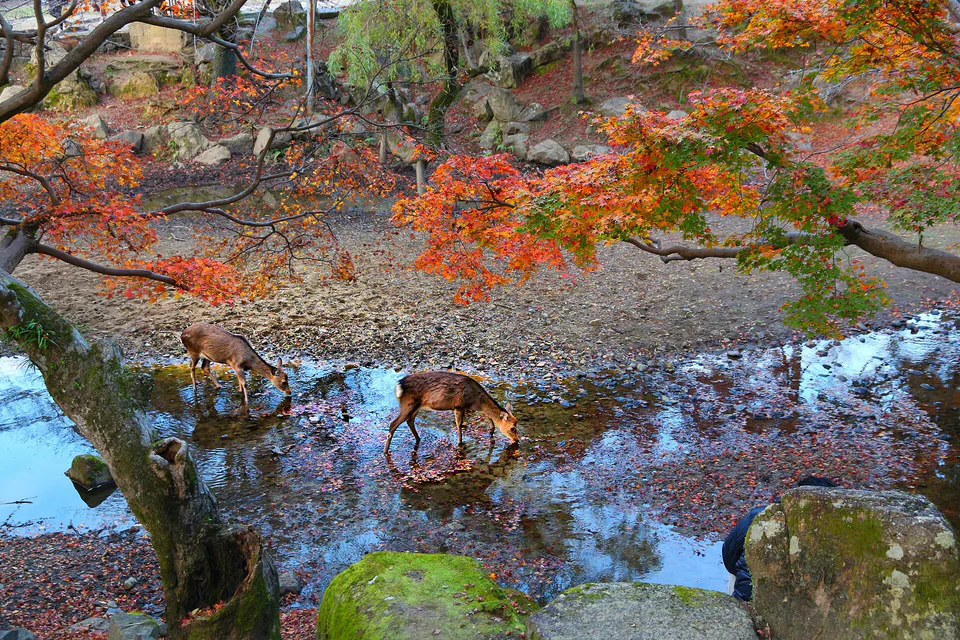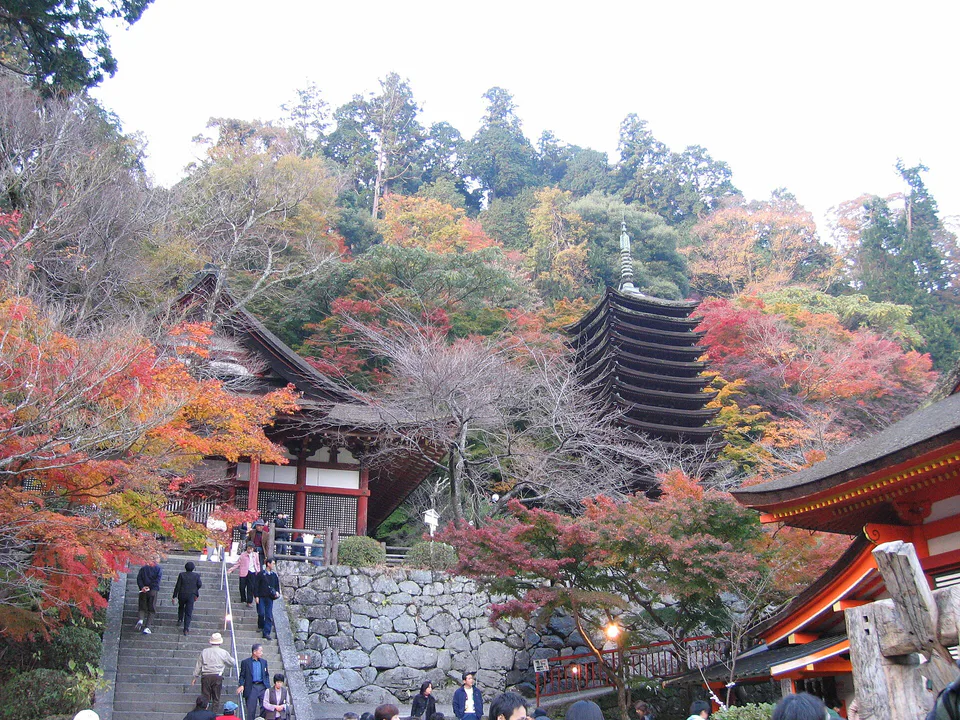
For a first Nara autumn-leaves day trip, choose one corridor rather than trying to collect three famous foliage sites. Nara Park is the safest default for first-time visitors, car-free travellers, families and mixed weather. Choose Tanzan Shrine when concentrated maple scenery is worth building the whole day around a low-frequency mountain connection. Choose Hasedera when the 399-step covered stairway and temple setting are the attraction, not a footnote.
As of August 25, 2026, Nara City has not yet published a live 2026 foliage-status table comparable with its completed 2025 updates. That matters: do not book a mountain route around a copied “peak week” from last year. Use the route decision now, then use official live colour and transport updates closer to the travel date. The best Nara autumn day is the corridor that still works if the leaves are a few days early or late.
↔ Scroll table left or right
Your real priority | Choose | What you gain | Main failure mode |
First Nara visit, one day, no car | Nara Park | Several foliage scenes, major sights and easy exit options in one walkable zone | Trying to add a mountain temple turns flexibility into transfers |
Maple-heavy shrine scenery is the whole purpose | Tanzan Shrine | A concentrated mountain foliage experience around the shrine complex | Low-frequency return transport and an early final-admission window |
Temple architecture, approach town and a long covered climb | Hasedera | The stairway and main hall make the route distinctive even if colour is not perfect | 399 steps, wet surfaces and the station-to-temple walk can dominate the day |
Rain forecast or uncertain group stamina | Nara Park | The day can be shortened without missing a rural bus or reversing a mountain route | Popular central paths can be crowded |
You want Tanzan + Hasedera in one day | Usually choose one | You protect actual temple time instead of optimising connections | One delayed bus or slow climb destroys the second stop |
Do not choose a 2026 date from a historical “peak week”
Nara autumn colour is not one synchronized event. Nara Park contains cherry, maple, ginkgo and other trees across a very large area; the city tourism office describes the autumn season broadly rather than as one guaranteed day. Mountain temples also sit at different elevations and exposures. A date that is excellent at one site can be early or late at another.
The practical booking rule is to separate what can be fixed now from what should stay flexible:
Fix now: which corridor suits your transport, mobility and wider Kansai itinerary.
Recheck closer to travel: current colour, weather, temporary transport and any special-event crowding.
Keep swappable where possible: Nara Park and another Kansai foliage day if both hotel bases allow it.
If colours are running early or late across Japan, use the early-or-late adjustment plan rather than forcing a reservation-date assumption. If the whole autumn route is still open, the Japan autumn leaves calendar is the higher-level decision page.
Nara Park is the default because it has the cheapest failure
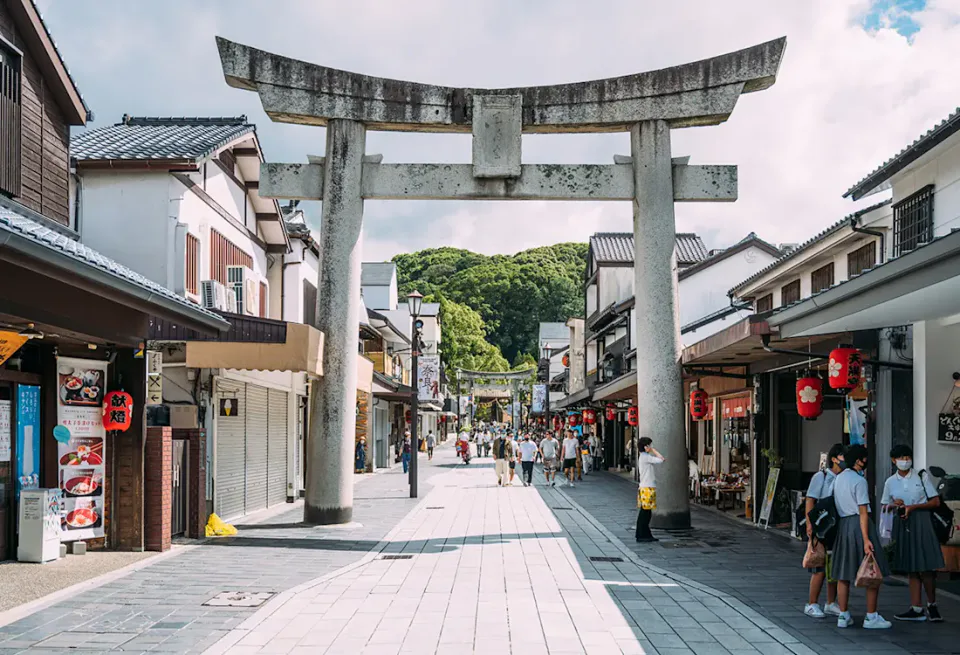
Nara Park is not the default because it is automatically the “best” foliage in the prefecture. It is the default because a weak assumption costs less. Nara City currently lists Kintetsu Nara Station at roughly eight minutes on foot from the park, while JR Nara is about twenty minutes on foot or a short city-bus ride. The park itself is open 24 hours and free, although individual temples, gardens and museums have their own hours and admission rules.
That creates several exits when the day changes. If rain strengthens, you can shorten the outdoor loop and move to a museum, temple interior, café or Naramachi. If a child or older traveller gets tired, you can drop the farthest garden. If the most photogenic colour is around Ukimido or Daibutsuike rather than the route you expected, you can redirect without rebuilding an intercity transport plan.
For a first visit, use a one-way walking shape rather than repeatedly crossing the same park. A practical sequence is Kintetsu Nara → one garden or Kohfukuji → Todaiji / Daibutsuike → Kasugano or Ukimido → Naramachi. Do not add every named foliage spot. The useful advantage is that you can stop after four hours or continue for seven without missing the only bus home.
Nara Park’s deer change the autumn route more than a normal city park would
Nara City’s official guidance treats the deer as wild animals. Feed only authorised deer crackers, keep maps, paper bags and plastic away from them, and do not tease animals by pretending to offer food. The tourism office also specifically recommends giving crackers one at a time and showing empty hands when they are finished.
Autumn adds two practical considerations. Crowded feeding areas create less room to step away, and male deer can be more aggressive during the rut. For families, the safer pattern is an adult controlling the crackers rather than giving a whole stack to a child. For photographers, do not walk backward into a road, pond edge or another visitor while watching the deer instead of the path.
This matters to the route decision because Nara Park is not simply “the easy flat option.” It is the option with the most recovery choices, but wildlife and crowd behaviour are part of the day. If your group wants foliage without animal interaction, a garden-led park route or Hasedera may fit better.
Tanzan Shrine is a transport commitment before it is a foliage commitment
Tanzan Shrine currently lists admission from 08:30, final reception at 16:00 and final visiting at 16:30. Adult admission is JPY 700 under the fee schedule introduced on April 1, 2026. The shrine’s own access page describes Sakurai Station as the rail gateway, with the bus taking about 25 minutes and generally running on a low-frequency pattern; it also tells visitors to check the latest operator timetable.
That last sentence is the important one for autumn 2026. As of August 25, Nara Kotsu’s current temporary-bus page does not yet publish an autumn 2026 Tanzan foliage service. Do not copy a previous year’s extra-bus schedule into this year’s trip. The shrine’s page also still displays an older timetable reference alongside the instruction to confirm the latest service.
So the order of planning should be: confirm the exact Sakurai → Tanzan Shrine outbound service for your date; confirm at least one return you would be comfortable missing without ruining the night; only then decide how early you need to reach Sakurai from Osaka, Kyoto or Nara. If you cannot name the return service before leaving the hotel, Tanzan is not yet a finished day plan.
The 16:00 final reception changes how late you can “add” Tanzan
Mountain foliage looks tempting as an afternoon add-on because the shrine is only one stop on a map. The operating window makes that a weak strategy. A 16:00 final reception means the last hour is not a spare slot after Nara Park. You still need the Sakurai transfer, the rural bus or taxi, the walk from the stop and enough time inside the shrine to justify the journey.
For a foliage-first visit, arrive early enough that the thirteen-storey pagoda, worship hall and core maple areas are completed before you start worrying about the return. Treat outer paths and extra photography as optional. If the return bus becomes the first thing you think about upon arrival, the schedule is too tight.
With a rental car, the answer improves because you remove the bus dependency, but you add autumn parking and road-congestion risk. Driving should buy flexibility, not permission to combine Tanzan with every other Nara landmark.
Hasedera is a stairway decision before it is a temple decision
Hasedera currently lists October and November visiting hours as 09:00–17:00, with admission at JPY 500 for adults and secondary-school students and JPY 250 for primary-school children. The official access page places the temple about fifteen minutes on foot from Kintetsu Hasedera Station.
After that approach comes the defining feature: the covered stairway has 399 steps, divided into three increasingly steep sections. That means the published 17:00 closing time is not the time to start from the station. Build in the approach walk, the climb, rests, main-hall time, photography and the descent.
For travellers with knee, balance, cardiovascular or fatigue concerns, the question is not whether Hasedera is “accessible enough” in the abstract. The question is whether 399 steps are compatible with the person who will move slowest. If not, Nara Park is normally the more resilient autumn day because it can be shortened without requiring a complete route change.
Hasedera has a 2026-specific reason to allow more time
Hasedera is marking its 1,300th anniversary in 2026. The temple currently lists a cluster of autumn programmes from October 10 to December 6, including special access to the National Treasure Main Hall, an autumn chrysanthemum corridor and special treasure exhibitions. Those events can make the visit more worthwhile, but they also mean the standard “walk up, photograph leaves, leave” time budget may be too short.
If one of those special programmes is part of the reason you choose Hasedera, give it its own day block and check the specific event fee and hours. If you only want foliage, do not let the anniversary programme push you into an overfilled itinerary. Extra content is valuable only when you intend to use it.
Why I would not combine Tanzan Shrine and Hasedera on a first autumn visit
Both routes use the Sakurai area, which makes the combination look efficient. The problem is not map distance. It is the multiplication of fixed edges: train timing, a low-frequency Tanzan connection, Tanzan’s 16:00 final reception, Hasedera’s station approach and 399-step climb.
The combination can work for a repeat visitor with a car, an early start and strong mobility. It is a poor default for a first visit because the upside is “two famous autumn temples” while the downside is spending the best light and most energy on transport recovery.
Use a simple test: if removing one site makes the remaining day obviously better, remove it. Tanzan rewards a dedicated mountain route. Hasedera rewards a slow climb and temple-town rhythm. Neither needs the other to justify the day.
Kyoto or Osaka base: choose by the morning you are protecting
A Nara Park day works from either Kyoto or Osaka, so one ordinary Nara day should not decide your entire Kansai hotel base. If you are already choosing between the cities, use Kyoto vs Osaka based on repeated mornings and evenings rather than this single excursion.
For Tanzan or Hasedera, the calculation becomes more specific because both depend on reaching the Sakurai side efficiently and keeping enough daylight. If your hotel location adds a slow local connection before the intercity trip even begins, leave earlier or simplify the route. Do not move hotels for one mountain day unless the move also solves another itinerary problem.
Rain does not automatically cancel the mountain routes — it changes their value
The old version of this guide treated heavy rain almost as an automatic route cancellation. That is too broad. Unless an operator or site closes access, the temples may still be open. The correct decision is about value and risk.
Nara Park: strongest in uncertain weather because you can shorten outdoor sections and add indoor time.
Tanzan: rain reduces photography and makes rural transport delays or waiting less pleasant; recheck road and bus status.
Hasedera: rain can make a long stairway slower and less comfortable; footwear and mobility become more important.
If wind, transport disruption or safety warnings appear, follow the official operator or site guidance. A weather backup should be a nearby route that still fits your hotel base, not an entirely different prefecture inserted at the last minute.
When an overnight in Nara is actually worth it
You do not need to sleep in Nara just to make Nara Park possible. A day trip from Kyoto or Osaka is straightforward. The overnight earns its cost when it buys a time block you specifically want: an early park walk before the busiest period, a Naramachi evening, or a second day that can be devoted to Tanzan or Hasedera without trying to combine them with the city.
If the overnight only saves one normal train ride, keep the existing Kansai hotel and travel light. If it creates two different useful sessions—for example, quiet Nara Park in the morning plus a separate mountain-temple day—the hotel move becomes easier to justify. The Nara day trip vs overnight guide handles that decision directly.
Final verdict: choose the route whose worst-case day you can still enjoy
Choose Nara Park for a first visit, mixed weather, family travel, older travellers or any day where flexibility matters more than one concentrated foliage scene. Choose Tanzan Shrine when the shrine and maples are the main objective and you have confirmed the return transport before leaving. Choose Hasedera when the covered stairway and temple architecture are worth the physical climb, with extra time in autumn 2026 if the anniversary programmes interest you.
The red-team test is simple. If the leaves are one week earlier or later than expected, would the route still be worth the day? Nara Park survives because the city and temples remain useful. Hasedera survives when the stairway, main hall and anniversary content interest you. Tanzan survives when the shrine itself—not only one perfect colour forecast—is the reason you are travelling. If the answer is no, keep that day flexible until the official 2026 foliage status is available.
Sources and verification date
Nara City Tourism Association — Nara autumn foliage · Nara City Tourism Association — deer etiquette · Tanzan Shrine — admission and hours · Tanzan Shrine — access · Nara Kotsu — temporary bus notices · Hasedera — admission and hours · Hasedera — 399-step covered stairway. Checked August 25, 2026. Exact foliage conditions and autumn seasonal transport were not yet published as final 2026 live data; recheck close to the travel date.
10-Day Japan Autumn Leaves Itinerary: Regional Routes, Transport and Where to Stay
Japan Autumn Leaves Late November: Kyoto, Tokyo, Nara, Miyajima and Kyushu
4-Day Shikoku Autumn Leaves Itinerary: Takamatsu, Shodoshima, Iya or Matsuyama?
Osaka Autumn Leaves Guide: Minoh Falls, Osaka Castle and City Day Trips