
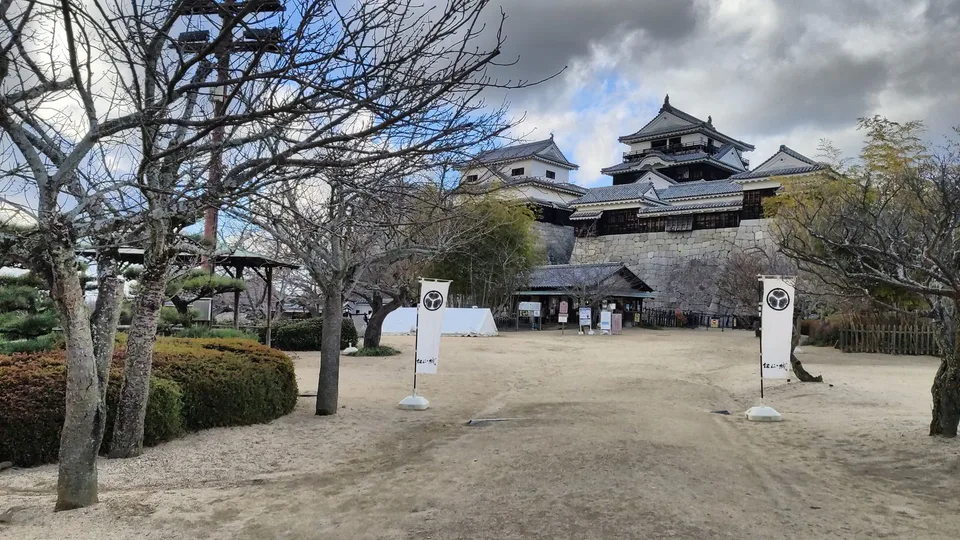
Four days in Shikoku is not enough for Takamatsu, Shodoshima, Iya Valley and Matsuyama as four equal priorities. For most first-time visitors without a car, Takamatsu plus one Shodoshima day is the most resilient route. If a mountain ryokan and gorge scenery are the purpose of the trip, use Takamatsu plus two nights in Iya instead. Add Matsuyama only when the trip is already moving west and the transfer advances the itinerary rather than forcing you to cross Shikoku twice.
There is also an important 2026 ticket change that old autumn itineraries can now get wrong. ALL SHIKOKU Rail Passes sold on or after October 1, 2026 no longer include the Takamatsu–Tonosho Shodoshima Ferry or Shodoshima Olive Bus, and the four-day and five-day pass types are discontinued. For most October and November trips, therefore, do not choose the route on the assumption that one four-day pass automatically covers the island day.
↔ Scroll table left or right
Your trip | Best starting structure | Why | What to delete |
No car, Takamatsu in/out | Takamatsu 3 nights + Shodoshima day | One hotel base, several weather fallbacks and no mountain-hotel deadline | Iya and Matsuyama |
Car, gorge/ryokan trip is the priority | Takamatsu 1 night + Iya 2 nights | The car earns its cost on the mountain last mile rather than city roads | Shodoshima; usually Matsuyama too |
Takamatsu/Tokushima in, Matsuyama out | Iya 2 nights + Matsuyama 1 | The cross-island move advances the trip instead of forcing a return east | Shodoshima |
Late Day 1 arrival or early Day 4 departure | One base + one hard day trip | You effectively have only two useful full days | Any second remote region |
Buying an ALL SHIKOKU Rail Pass on/after Oct. 1, 2026 | Price the route first | Only 3-day and 7-day versions remain, and Shodoshima ferry/bus are no longer included | Any extra ride added only to “use the pass” |
First do the four-day subtraction: arrival and departure are not full sightseeing days
The first planning step is to count usable hours, not calendar labels. A 15:00 arrival at Takamatsu Airport is not a Shodoshima sightseeing day. Baggage, the airport transfer, hotel check-in and the ferry timetable consume the margin. Likewise, a 17:00 flight on Day 4 does not leave a safe Iya mountain day before the airport.
For a normal four-day/three-night trip, the strongest structure is usually:
Day 1: arrival base + flexible city sight.
Day 2: the hardest transport chain.
Day 3: a second full day in the same geographic corridor or a weather fallback.
Day 4: short sight + protected departure.
If both Day 2 and Day 3 require long positioning transfers before sightseeing begins, the route is already too ambitious. The hidden cost of a four-place checklist is not just train time; it is that the two complete days lose their highest-value morning hours to transport.
Route A — Takamatsu + Shodoshima is still the safest no-car answer
Keep all three nights in Takamatsu unless an island sunset, sunrise or specific hotel is itself part of the trip. Day 1 can absorb Ritsurin Garden, Yashima or the waterfront. Day 2 becomes the Shodoshima transport chain. Day 3 remains available for Kotohira, Takamatsu or a weather-delayed island visit. Day 4 stays close to the departure route.
The strength of this plan is not that Shodoshima is effortless. It is that a failure has somewhere to go. Wind, a missed bus or a ropeway interruption can still leave you with a useful Takamatsu day rather than a prepaid mountain hotel on the wrong side of Shikoku.
The biggest 2026 pass trap: autumn advice changes on October 1
JR Shikoku announced a major revision effective for ALL SHIKOKU Rail Passes sold on or after October 1, 2026. The new product has only 3-day and 7-day versions, priced at JPY 12,000 and JPY 20,000 respectively. The four-day and five-day pass types are discontinued.
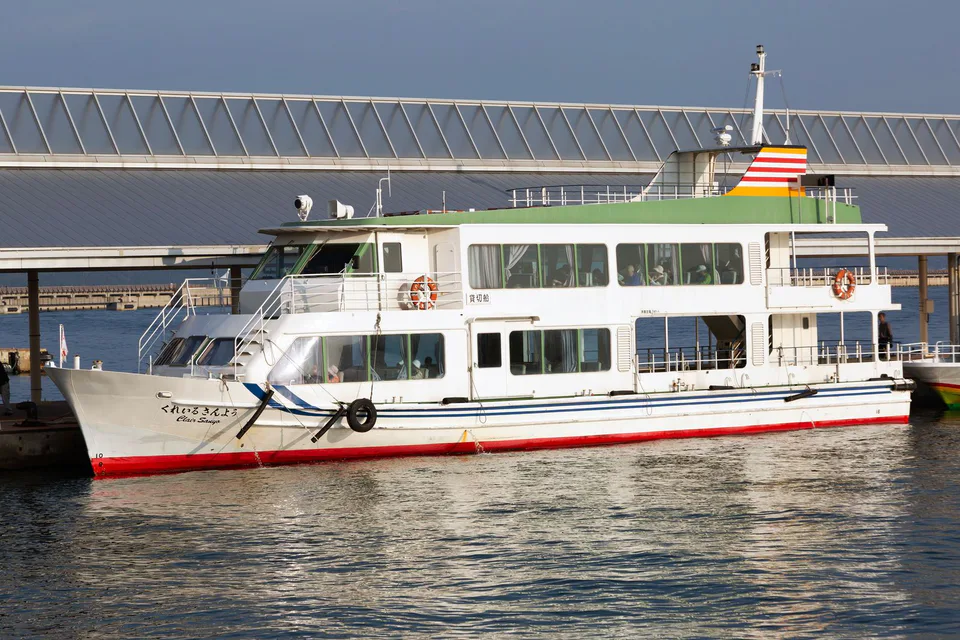
More importantly for this itinerary, new passes sold from October 1 no longer cover the standard Shodoshima Ferry between Takamatsu and Tonosho or the Shodoshima Olive Bus. The pass still covers ordinary-class non-reserved seats on JR Shikoku and Tosa Kuroshio Railway limited express, rapid and local trains, plus the participating rail/tram operators named in the current terms, but the island day has become a separate transport purchase.
There is a transition rule: JR Shikoku says passes purchased on or before September 30, 2026 may continue to use the Takamatsu–Tonosho ferry and Shodoshima Olive Bus. If you bought an older pass before that deadline for a later trip, verify the activation/exchange deadline for your specific sales channel rather than assuming the new or old rules from the travel date alone.
This matters because the article is specifically about autumn. Kankakei’s main autumn operating period runs through late October and November, exactly when many travellers will be buying under the revised pass structure.
Coverage is not value: a Takamatsu–Shodoshima itinerary does not automatically justify a rail pass
Even before the October change, “the pass covers my ferry” was never the same as “the pass saves money.” After October 1, that distinction is even more important.
Use a simple sample for a Takamatsu-based no-car trip:
Standard Takamatsu–Tonosho ferry round trip: JPY 1,330.
Shodoshima Olive Bus one-day ticket: JPY 1,600.
Kotoden Takamatsu-Chikko ↔ Kotoden-Kotohira round trip: JPY 1,460.
Those three purchases total JPY 4,390. That is ValueNavi’s derived comparison from current operator fares, before any separate Kankakei shuttle or other local transport. It is still nowhere near the revised 3-day ALL SHIKOKU Rail Pass price of JPY 12,000.
The implication is not “never buy the pass.” It is: the pass needs long JR sectors to do real financial work. A traveller adding substantial limited-express movement across Shikoku may justify it. A traveller sleeping in Takamatsu for three nights, taking one Shodoshima day and one Kotohira day usually should not buy a regional pass merely because it sounds geographically appropriate.
Price the fixed itinerary first. If the pass only wins after you add a distant city that you otherwise would not visit, the pass is designing the holiday instead of pricing it.
Standard ferry vs high-speed boat: pay for time only when the time has a job
The standard Takamatsu–Tonosho ferry currently takes about 60 minutes and costs JPY 700 one way or JPY 1,330 return for an adult passenger. The high-speed boat takes about 35 minutes and costs JPY 1,400 one way or JPY 2,660 return.
Using the high-speed boat both ways can therefore save roughly 50 minutes of sailing time for an extra JPY 1,330 on a round trip. That premium is sensible when the saved time protects a Kankakei connection, lunch reservation or a safer return buffer. It is weak value when the day has only two relaxed stops and you will simply wait longer somewhere else.
There is a 2026 frequency constraint too: since May 16, the high-speed service has been reduced to eight departures each way per day until further notice. Do not build a tight island day from an old timetable that assumed 15 daily departures.
Kankakei: the ropeway is frequent; the approach is the real bottleneck
Kankakei Ropeway currently publishes 08:00–17:00 operating hours from October 21 through November 30. The ride takes about five minutes, normally departs every 12 minutes and can increase to six-minute intervals in busy periods.
The fragile part is not the gondola. It is the chain around it:
Takamatsu ferry → Tonosho arrival → island transport → Kankakei → return transport → ferry back to Takamatsu.
Build the day backwards from the last two return ferries you would accept. If transport slips, remove Angel Road, a museum or another lowland stop before removing the ferry margin. Strong wind can also suspend the ropeway, so the island day needs a lower-elevation fallback rather than a plan that depends on waiting for a restart.
Use the Kankakei autumn guide for the detailed island sequence.
Route B — Takamatsu + Iya: two mountain nights are easier to justify than one rushed night
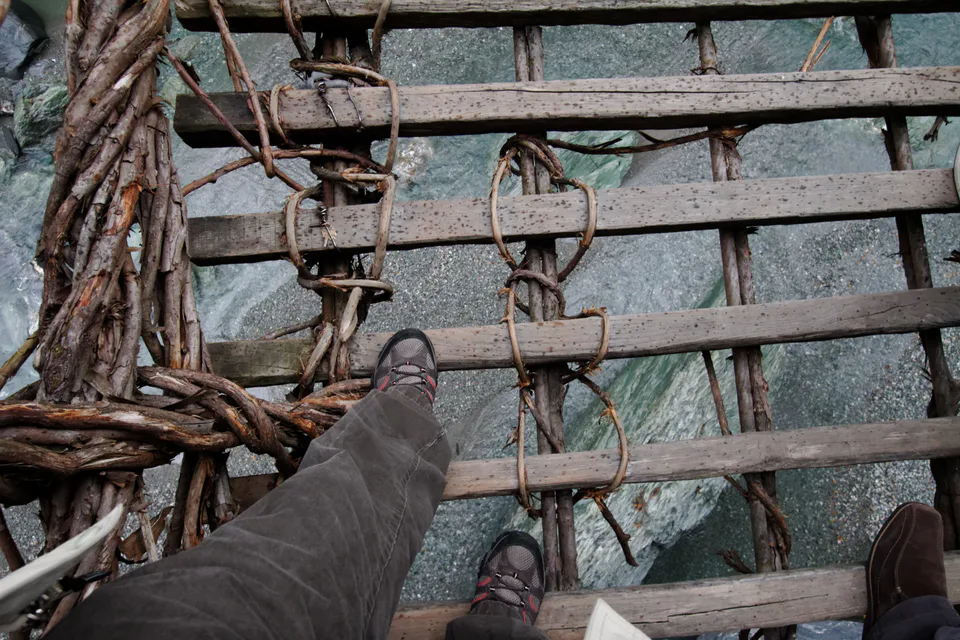
Iya is a different travel product. The value is slow geography: gorge scenery, a ryokan, onsen and access to places where buses, hotel shuttles or narrow roads control the day. A one-night “quick Iya” stay can lose its afternoon to the transfer and its morning to checkout.
If Iya is the reason for the trip, use:
Day 1: Takamatsu arrival.
Day 2: transfer to Oboke/Iya; one main valley anchor; check in before dinner.
Day 3: one Iya sector—central Iya or Oku-Iya, not both.
Day 4: leave the valley toward the departure gateway.
Two nights do not mean “collect twice as many viewpoints.” They protect one usable afternoon and one usable morning from being swallowed by hotel logistics.
Rent a car only for the sector where it changes access
A partial rental is usually more rational than keeping a car for all four days. Takamatsu, Kotohira and the main gateways work well by public transport. A car starts earning its cost when it unlocks Iya viewpoints, remote ryokan or sequences that sparse buses would make impractical.
The weak version is collecting a car at the airport, paying to park through a city day and then entering narrow mountain roads at dusk because the itinerary has slipped. A stronger sequence is city/rail first, then collect the car before the mountain sector and return it when public transport becomes useful again.
In autumn, darkness, wet leaves and unfamiliar mountain roads are itinerary constraints. If the ryokan has a latest dinner arrival, that deadline outranks the final viewpoint.
Route C — Iya + Matsuyama only works when it is genuinely open jaw
Iya + Matsuyama works when the westward transfer advances the trip: for example, Takamatsu or Tokushima in and Matsuyama out, or Matsuyama followed by Hiroshima or another western leg. It is poor value when you must return to the same eastern gateway afterward.
Use Days 1–2 for Iya, Day 3 mainly for the cross-island move, and Day 4 for Matsuyama/Dogo plus departure. Do not label Day 3 a full Matsuyama sightseeing day on top of the transfer. The whole reason this version works is that you do not pay the cross-island cost twice.
ALL SHIKOKU Rail Pass after October 1: useful for long rail spines, not island coverage
Under the revised product effective October 1, 2026, the pass is sold in 3-day and 7-day versions at JPY 12,000 and JPY 20,000. It is available only to eligible foreign visitors entering Japan with Temporary Visitor status. The pass itself covers ordinary-class non-reserved seats on covered JR Shikoku and Tosa Kuroshio Railway limited express, rapid and local trains; reserved seating is a separate decision.
Two practical changes matter for a four-day autumn itinerary:
No four-day pass: the product no longer matches a four-day calendar automatically.
No Shodoshima ferry/Olive Bus inclusion for newly sold passes: an island day must be priced separately.
JR Shikoku also stopped including Iyotetsu from March 7, 2026, so Matsuyama local transport should not be counted as pass value either.
QR-code boarding expands to Trip.com from October 1 alongside Klook, but easier purchase does not change the economics. Decide the route first, then compare its actual covered JR fares with JPY 12,000 or JPY 20,000.
Autumn timing: change elevation before changing regions
Higher parts of Iya and Kankakei generally change colour before lower urban gardens, but a historical pattern cannot guarantee the exact 2026 peak. The more resilient response is to keep the transport spine fixed and change elevation or a local stop when current foliage reports arrive.
If higher ground is past peak, use lower valleys or city gardens. If lowlands are still green, prioritise the higher autumn anchor—subject to wind, road and transport conditions. Losing half a day to cross Shikoku because another region looks slightly better on social media usually costs more than accepting a different stage of colour in the route you already chose.
Hotel moves should follow the transport product
Takamatsu + Shodoshima: keep all three nights in Takamatsu unless an island evening/morning is itself the goal.
Takamatsu + Iya: one Takamatsu night + two Iya nights is more coherent than changing every night.
Iya + Matsuyama open jaw: two Iya nights + one Matsuyama/Dogo night.
Large luggage makes this rule stronger. Forward the main case between city hotels when the receiving hotel accepts it, or take a smaller overnight bag into Iya. Do not assume same-day forwarding into a remote valley. Medication, chargers, warm layers and a change of clothes should stay with you.
Three failure modes that should delete a stop immediately
Shodoshima transport slips: remove a lowland sight before the return-ferry buffer.
Kankakei ropeway stops for wind: use lower island sights or return to Takamatsu rather than spending the day waiting for an uncertain restart.
Iya weather or roads deteriorate: delete Oku-Iya or long road loops and protect Oboke, one main valley stop and the ryokan check-in.
Final verdict
No car and first visit: choose Takamatsu + Shodoshima. It gives a four-day trip the best recovery options. For passes purchased on or after October 1, 2026, however, buy the Shodoshima ferry and island bus separately and do not assume an ALL SHIKOKU Rail Pass is good value unless long JR sectors elsewhere justify it.
Mountain ryokan and gorge scenery are the reason for the trip: choose Takamatsu + two Iya nights. Rent a car only for the sector where it materially changes access, or lock the sparse public-transport chain before paying for the ryokan.
Iya + Matsuyama: use it only as a one-way route. If you must return to the same eastern gateway, the transfer consumes too much of a four-day calendar.
The red-team rule is simple: if the plan requires Shodoshima’s ferry chain, Iya’s mountain last mile and a cross-island transfer in the same four days, remove one region. And if a rail pass only becomes “worth it” after adding a region you did not originally want, remove the pass instead.
Osaka Autumn Leaves Guide: Minoh Falls, Osaka Castle and City Day Trips
Tohoku Autumn Leaves Itinerary: 5 or 7 Days, JR EAST PASS and Hotels
Korankei Autumn Leaves Day Trip: Buses from Nagoya, Illumination and Traffic
Yamadera Autumn Leaves Day Trip: Sendai Trains, 1,015 Steps and Hotels
Arashiyama Autumn Leaves Day Trip: Morning, Train and Temples
References
JR Shikoku — October 1, 2026 ALL SHIKOKU Rail Pass revisions · Shodoshima Ferry — standard Takamatsu–Tonosho ferry · Shodoshima Ferry — high-speed boat · Shodoshima Olive Bus — one-day ticket · Kotoden — fares from Takamatsu-Chikko · Kankakei Ropeway — operating hours and frequency. Checked August 25, 2026. Ferry schedules, pass rules, island buses, ropeway operation, mountain roads and foliage conditions can change; verify the exact purchase and travel dates.