
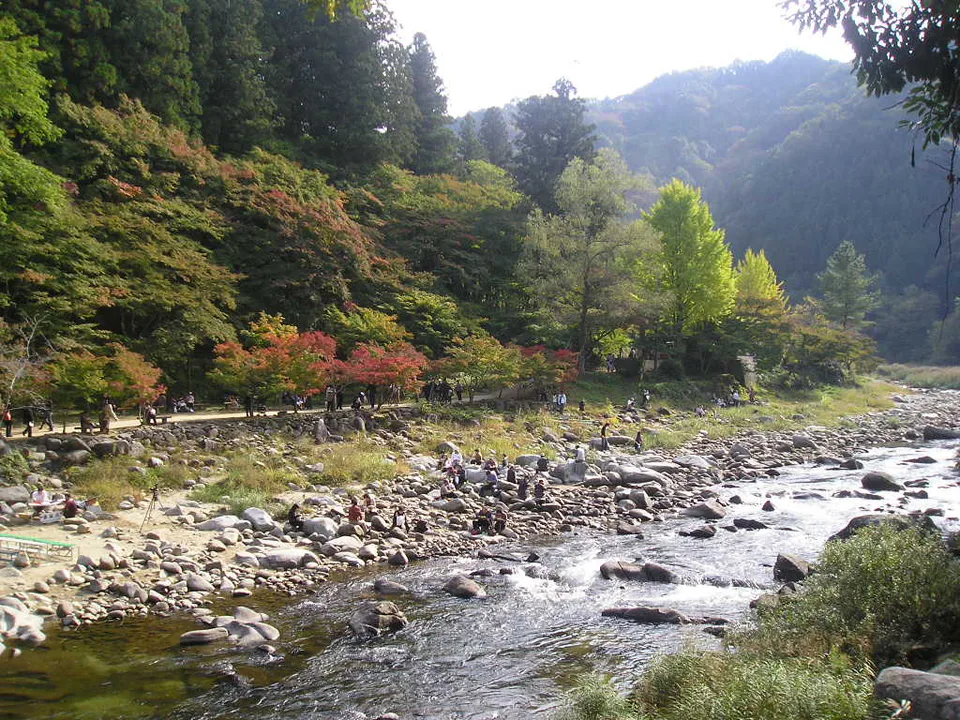
Korankei is worth a Nagoya day trip when autumn colour is the point of the day and you can give the return journey a generous buffer. It is a poor choice for a “quick half-day” or the final afternoon before a flight, Shinkansen or fixed dinner. The gorge is free and the regular buses are straightforward on paper; the real cost is that every public-transport route shares the same congestion-prone final approach to Asuke.
For a first visit, my default is daylight Korankei + Asuke old town, then leave before the illumination return peak. Choose the night version only if the illumination itself is one of your priorities and you have confirmed that day’s bus and final rail connections. If you mainly want autumn foliage with low transport friction, a Nagoya city park or another rail-served destination is the better use of a short day.
2026 status, checked August 27: Toyota City says the Korankei Maple Festival will run from November 1 for about one month, with illumination during the peak foliage period. The city directs visitors to the Asuke Tourism Association for the exact illumination period. As of this check, the full 2026 illumination timetable and all seasonal transport details were not yet published, so old 2025 “until 21:00” information should not be treated as a 2026 return guarantee.
ValueNavi decision table: which Korankei plan fits your trip?
↔ Scroll table left or right
Your situation | Verdict | Why | Main trade-off |
First Nagoya trip, one free autumn day | Go in daylight | You get the gorge, Asuke and food without making the final bus the most important part of the day. | You give up the illuminated trees. |
Photography or illumination is the main goal | Stay for dusk | Daylight and lighting make the long transfer more worthwhile. | Return queues and road delays become part of the plan. |
Young children, older travellers or limited standing tolerance | Early in, early out | You keep more bus backups and avoid the coldest, most crowded return period. | Less evening atmosphere. |
Flight, Shinkansen or non-refundable dinner that evening | Skip Korankei | The final road section has too much seasonal variability for a hard deadline. | Choose a rail-served foliage stop instead. |
Three or four people with a rental car | Drive only with an early arrival | Carrying layers and luggage is easier and the cost can be shared. | A car does not bypass Route 153 traffic or parking queues. |
ValueNavi Score: high scenic payoff, low crowd resilience
This is an editorial score, not an official rating. Higher is better for the named dimension.
Dimension | Score / 10 | What moves the score |
|---|---|---|
Scenic payoff | River, bridges, maple slopes and Asuke make the day more than one viewpoint. | |
Route simplicity | The bus routes are understandable, but every option requires a rail-to-bus transfer from Nagoya. | |
Time efficiency | A large share of the day is access and return rather than sightseeing. | |
Weather resilience | Rain weakens the riverside walk and illumination experience, though Asuke gives a partial backup. | |
Crowd resilience | Buses, the road and the most photogenic bridge all concentrate demand at the same time. | |
First-trip fit | Strong if autumn leaves are a priority; weaker if Nagoya itself still has major sights you want to see. |
The hidden cost is not the bus fare — it is the door-to-door time

Official access information gives three regular gateways: about 70 minutes by bus from Higashi-Okazaki, about 45 minutes from Toyotashi and about 60 minutes from Josui. Those numbers describe only the bus sector. From a Nagoya hotel you still need the first train, the transfer, queueing, the walk from the Korankei stop and the same sequence in reverse.
For planning, I would treat Korankei as a full-day destination even if your gorge walk is only two or three hours. That is the decision gap normal route planners hide: shaving 20 minutes from a published bus sector matters less than having another realistic departure if your first bus is full or delayed.
↔ Scroll table left or right
Gateway | Official bus sector | Best when | Do not choose it just because… |
Higashi-Okazaki | About 70 min | You want a clear first-visit route from the Meitetsu side of Nagoya. | …a map shows the simplest line. Peak queues can erase that simplicity. |
Toyotashi | About 45 min | You are staying in Toyota, pairing the trip with Toyota sights or considering an overnight after illumination. | …the bus ride is shorter. The total Nagoya-to-Korankei journey is what matters. |
Josui | About 60 min | It fits your actual rail route and the Oiden Bus departure works better that day. | …it is an “alternative.” An unfamiliar transfer is not useful unless the timetable improves your buffer. |
My preferred first-time itinerary: gorge first, Asuke second
Arrive early enough to walk Taigetsukyo, the Tomoe River side and the Kojakuji approach before lunch. Then move into Asuke’s preserved townscape instead of circling the same river section for another two hours. This order gives you two different reasons for making the long trip: foliage first, historic townscape and food second.
It also gives you a clean cut point. If the bus queue grows, weather deteriorates or someone in the group is tired, delete the final cafe or second riverside loop. Do not protect every sightseeing item and sacrifice the return buffer.
Sanshu Asuke Yashiki is useful as a partial weather backup, but “indoor attraction nearby” does not make Korankei a rain-proof day. Wet riverside paths, umbrellas in crowds and darker evening footing still change the experience. If the forecast is poor and autumn colour is not exceptional, the Port of Nagoya Public Aquarium is a much more resilient Nagoya day.

Illumination is a different product, not a free extension of the daytime trip
The common mistake is to plan a normal daytime visit and then simply “stay until the lights.” That changes the hardest part of the day: your return moves into the period when many other visitors leave together, temperatures fall and a delayed bus can threaten the last rail connection.
I would stay for illumination only when all three conditions are true: the 2026 lighting period is confirmed, you have saved at least two usable return departures, and nothing expensive is booked after the trip. If one of those fails, daylight Korankei is the stronger decision.
There is also a lower-friction 2026 alternative for travellers who actively want both Korankei illumination and Obara’s autumn-blooming shikizakura. Toyota Tourism has published day tours from Shin-Toyota on November 24–27, with listed prices of ¥14,000–¥14,500 (about US$88–91 at late-August 2026 exchange rates). That is far more expensive than regular public transport, but the premium buys a fixed loop and removes the need to design the Obara-to-Korankei transfer yourself. It is worthwhile only if both sights are genuinely on your list; do not pay the tour premium merely to avoid reading a bus timetable.
Driving: ¥1,000 parking can still be the expensive option
Toyota’s official Korankei page lists parking at ¥500 normally and ¥1,000 per vehicle in November; the festival information lists ¥1,000 for a standard car. At roughly US$6, the parking fee itself is not the deciding cost. Fuel, rental time, expressway charges, parking access and time spent in a queue are.
Driving becomes more attractive with several people, an early start and additional rural stops. It becomes less attractive if the only plan is Korankei at peak time and you assume a car will be faster than the bus. Buses and cars share the same constrained approach. A navigation estimate made before the morning rush is not a promise for your afternoon return.
Failure mode: if traffic is already severe before the final approach, do not spend the best daylight crawling toward one famous bridge. Use Asuke or another Toyota stop as the fallback. Sunk time is not a reason to waste the rest of the day.
Where should you stay if you want the night view?
Nagoya Station is still the default for a first Japan trip because it protects Shinkansen and airport connections on the surrounding days. Toyotashi becomes more attractive when illumination is the priority because it shortens the final bus sector and removes one layer of late-evening travel. Staying in Asuke itself is a niche choice for a slower trip; limited inventory, dinner timing and luggage logistics matter more than the romance of waking near the gorge.
Search Nagoya hotels on Booking.com
Compare Toyota hotels on Expedia
What would make me change the recommendation?
I would upgrade the illumination plan if 2026 publishes frequent late buses with comfortable rail connections on your exact date. I would downgrade the whole day trip if heavy rain, high water, unusually poor colour or major traffic controls are announced. I would also skip Korankei on a three-day first visit to Nagoya if the trip would displace several city sights you care about more.
That is why “Korankei is one of Aichi’s famous autumn spots” is not enough to decide. The better question is whether the scenic payoff is worth a full day whose weakest link is the road, not the attraction. For foliage-first travellers, usually yes. For timetable-sensitive travellers, often no.