
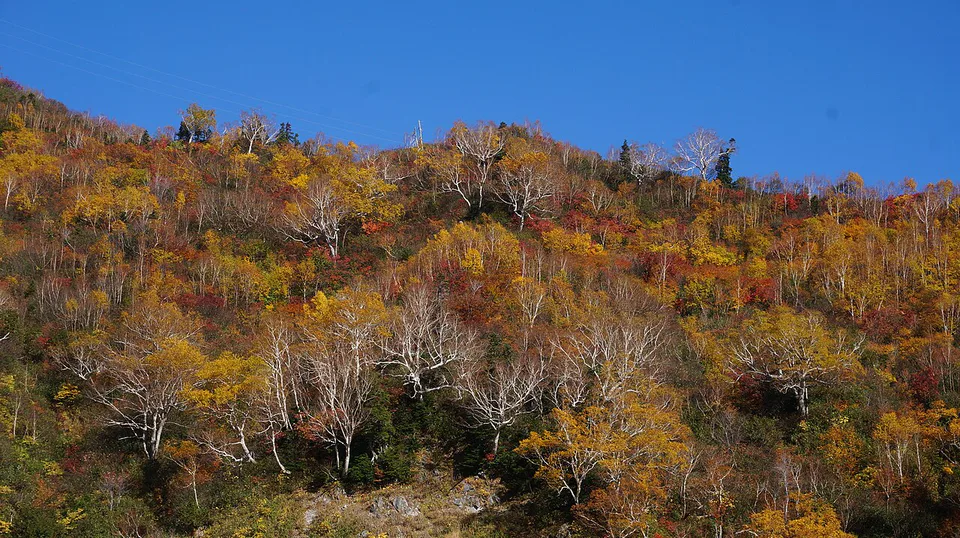
If you are planning Central Japan for autumn leaves, do not start by drawing a loop through Tateyama, Kamikochi, Takayama, Shirakawa-go and Kanazawa. Start with the week you can travel. The high Alps, mountain valleys and lower cities do not peak together, and the transport rules also change as the season advances. For most first-time travellers, the best route is the one that follows one elevation band well and keeps one weather escape — not the route that collects the most famous names.
ValueNavi verdict: choose Tateyama if the Alpine Route itself is a trip-defining priority; choose Kamikochi–Okuhida if you want mountain scenery with a slower onsen rhythm; choose Takayama–Shirakawa-go–Kanazawa if you want the most resilient first-time route; choose Kanazawa–Nagoya later in November when the high-mountain season is closing or already closed. The trade-off is simple: the more spectacular the elevation, the more your itinerary depends on weather, capacity and luggage discipline.
Use this decision table before you book any hotel
↔ Scroll table left or right
| Travel window | Route to prioritise | Best base logic | What not to force | Main failure mode |
|---|---|---|---|---|
| Mid-Sep to early Oct | Toyama → Tateyama / Murodo | Two nights in Toyama with a weather-swap day | Do not add Kamikochi just to complete a Central Japan loop | Cloud, wind or capacity removes the mountain payoff |
| Early to mid-Oct | Matsumoto → Kamikochi → Okuhida / Takayama | Matsumoto for the eastern approach; Hirayu or Okuhida only if the onsen night has value by itself | Do not put a fixed flight or expensive dinner after a mountain crossing | Rain, late bus connections and overlong walking plans |
| Late Oct to early Nov | Takayama → Shirakawa-go → Kanazawa | Linear open-jaw route; two nights where you actually want mornings or side trips | Do not carry the main suitcase through Shirakawa-go if forwarding is practical | Reserved buses, road delays and luggage storage all becoming dependencies |
| Mid to late Nov | Kanazawa → Nagoya / Korankei | Lower-elevation city bases with day trips | Do not build the trip around normal Kamikochi visitor services | Using historical peak dates as if they were a live 2026 forecast |
These are planning bands, not a promise of peak colour. As of late August 2026, the main nationwide 2026 foliage forecasts have not yet supplied a detailed Central Japan peak calendar. Use historical timing to choose the right elevation band, then use live cameras, weather and transport status for the final decision.
ValueNavi Route Resilience Score: the easiest route is not the one with the biggest mountain
This score is for itinerary reliability, not scenic beauty. Each dimension is scored from 1 to 10, where a higher number means the trip is easier to keep intact when weather, luggage or reservations go wrong. Route payoff measures how strongly the corridor rewards the extra movement; weather resilience measures whether the day still works without perfect visibility; luggage simplicity measures how easily a normal suitcase can follow; reservation flexibility measures how many fixed-capacity links you can avoid; first-timer fit measures how forgiving the route is without deep local transport knowledge.
| Corridor | Route payoff | Weather resilience | Luggage simplicity | Reservation flexibility | First-timer fit | Resilience score |
|---|---|---|---|---|---|---|
| Tateyama full crossing | 10 | 4 | 3 | 4 | 6 | |
| Kamikochi + Okuhida | 9 | 6 | 6 | 5 | 7 | |
| Takayama + Shirakawa-go + Kanazawa | 8 | 8 | 7 | 6 | 8 | |
| Kanazawa + Nagoya lower-elevation route | 6 | 9 | 9 | 8 | 9 |
The table does not say that Kanazawa and Nagoya are more dramatic than Murodo. It says that a late-season city route survives poor weather and luggage mistakes more easily. If Tateyama is the reason you are going to Central Japan, a 5.4 resilience score is acceptable — but you should pay for that ambition with buffer time rather than pretending the risk is not there.
If Tateyama is the priority, protect the mountain day instead of protecting a five-day checklist
Use Toyama for two nights when Murodo or Midagahara is the main objective. The first night absorbs arrival risk and gives you somewhere to leave the main suitcase. The next day becomes the primary mountain attempt. Keep one following day exchangeable with Kanazawa, Toyama city or another lower-risk plan so fog or a service disruption does not destroy the whole trip.
A Toyama-side out-and-back to Murodo is less elegant on a map than crossing all the way to Ogizawa, but it is often the better decision when you have a large suitcase, a fixed hotel in Toyama or a tight onward schedule. The full crossing makes sense when the crossing itself is one of your major experiences and the large bag has already been forwarded. Carry one overnight bag and protect the final connections on the Nagano side.
The 2026 Tateyama Kurobe Alpine Route operates from April 15 to November 30. That does not mean every pass that mentions the Alpine Route is usable until November 30. This distinction is one of the easiest late-season planning errors to miss.
The ¥24,500 Alpine pass has a deadline the Alpine Route itself does not
The Alpine–Takayama–Matsumoto Area Tourist Pass costs ¥24,500 for five consecutive days — roughly US$154 / NT$4,906 at the August 25, 2026 exchange rate. It covers the mapped JR sectors and the Alpine Route and allows up to four reserved-seat uses on the relevant conventional JR lines. Its 2026 usage period ends on November 10, twenty days before the Alpine Route’s scheduled November 30 closing date.
That boundary changes the buying decision. If you travel from November 11 onward, “the Alpine Route is still open” does not make this pass valid. Even before November 10, the pass is strongest when your route genuinely links Nagoya, Takayama, Toyama, Tateyama and Matsumoto inside the same five-day window. If you only need Toyama, the Alpine Route and Kanazawa, compare point-to-point fares instead of adding Takayama simply to justify the pass.
There is another date-sensitive trap: from September 18 to 23, 2026, Limited Express Hida and Shinano services covered by this pass operate with all seats reserved. The pass still works, but “I have a pass” is not the same as “I already have the seat I need.” During busy autumn periods, reservation pressure becomes part of the itinerary.
Kamikochi works best when you choose a walking ceiling before you arrive
For an early- to mid-October trip, Matsumoto is the practical eastern base. A family or casual walker does not need to turn Kamikochi into an endurance test. Taisho Pond, Kappa Bridge and one controlled extension can already make a satisfying day. The failure mode is adding every pond because the trail looks flat, then discovering the return bus has become the most stressful part of the day.
One night inside Kamikochi buys two things a day trip cannot: quieter early and late hours, and a second weather window. The price is fixed hotel inventory, meal timing and another luggage decision. If you mainly want a short riverside walk, Matsumoto is the simpler base. If dawn, dusk or longer walking is the point, the overnight becomes more defensible.
Kamikochi is car-free for ordinary private vehicles throughout the open season. Driving to the region does not remove the final shuttle or taxi transfer. Official visitor facilities such as the bus terminal and tourist centre operate through November 15, with normal public transport and facilities entering winter closure after the season. That makes a mid-November Kamikochi plan qualitatively different from an October one.
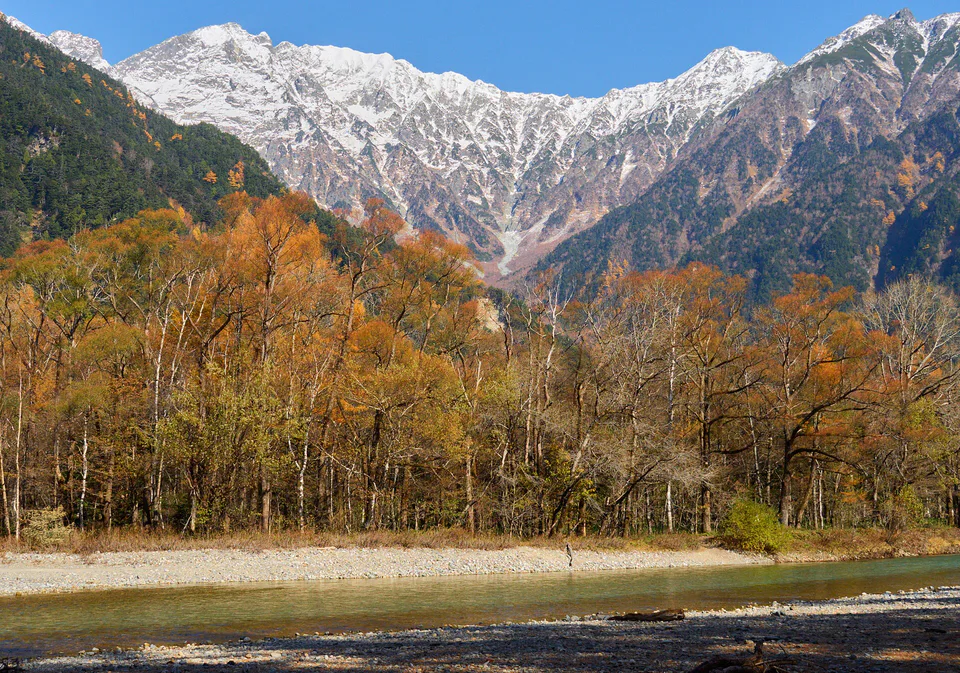
Okuhida is worth the detour only if the onsen night still works when the ropeway does not
Continue through Hirayu to Okuhida when the hot-spring stay is part of the trip, not merely a bed beside Shin-Hotaka Ropeway. The ropeway is normally open year-round but can suspend service for weather or scheduled maintenance. The current adult round trip on both ropeways is ¥3,800 — about US$24 / NT$761. Baggage over 6 kg requires a separate round-trip baggage ticket of ¥1,000 — about US$6.30 / NT$200.
That baggage rule is a useful decision signal. If you are hauling the main case onto the ropeway, the itinerary may already be asking the wrong transport system to act like a hotel transfer. Store or forward the main bag and use a small overnight bag. If high wind cancels the summit view, the onsen, meal and valley stay should still make the night worthwhile. If they do not, stay in Takayama and treat Shin-Hotaka as a weather-dependent day trip.
For a first Central Japan autumn trip, Takayama → Shirakawa-go → Kanazawa is the safer default
Late October into early November, a linear Nagoya–Takayama–Shirakawa-go–Kanazawa route is usually easier to defend than a mountain-heavy loop. It gives you meaningful town and food days even when the weather is poor, and the route does not depend on one alpine crossing succeeding.
Two Takayama nights make sense when you want a slow old-town morning, Hida Folk Village, Okuhida or another side trip. Shirakawa-go works best as a deliberate half-day transfer stop only after the bus, luggage and onward journey are secured. The hidden cost of using it as a transfer node is not just the bus fare: you are making one day depend on bus capacity, road conditions, storage space and your ability to move the suitcase.
The cleanest solution is often to forward the large case from Nagoya or Takayama to Kanazawa and carry a small bag through Shirakawa-go. If the mountain side trip fails, keep the day in Takayama or Kanazawa rather than replacing one cancelled remote valley with another.
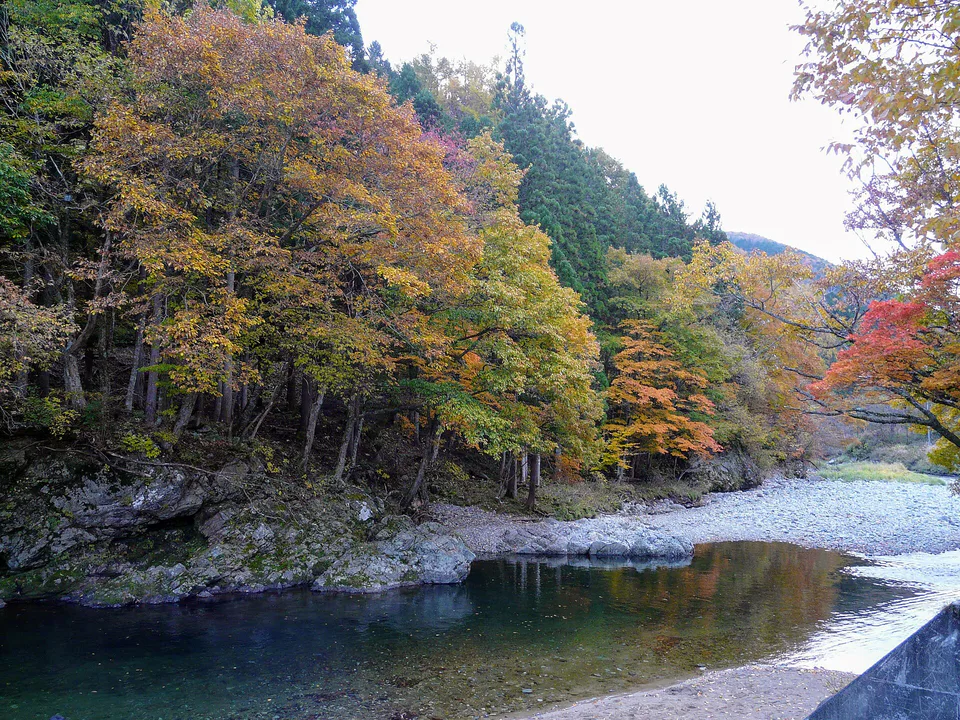
When the ¥19,800 Takayama–Hokuriku pass works — and when it creates a fake bargain
The Takayama–Hokuriku Area Tourist Pass costs ¥19,800 for five consecutive days — roughly US$124 / NT$3,965. It covers the designated JR network plus relevant Shirakawa-go and Gokayama bus sectors on the official map, and includes up to six reserved-seat uses on eligible JR limited express and Hokuriku Shinkansen services.
It is a strong fit for a concentrated Osaka or Nagoya → Takayama → Shirakawa-go → Kanazawa → Toyama route. It is not a general “Central Japan pass.” Kamikochi, Shin-Hotaka and many local mountain buses sit outside the logic of the product. If you add Matsumoto and Kamikochi, calculate the uncovered transport before calling the pass cheap.
The bigger hidden cost is the five-day clock. A pass can save money and still make the holiday worse if it encourages you to compress six or seven nights of travel into five consecutive transfer-heavy days. Break-even is not the same as good route design.
Which base should you actually sleep in?
↔ Scroll table left or right
| Base | Choose it when | What you gain | What you give up |
|---|---|---|---|
| Toyama | Tateyama is the priority | Best west-side mountain access and easy Kanazawa connection | Weak base for Kamikochi and rural Gifu |
| Matsumoto | Kamikochi and the eastern Alps are central | Good transport fallback and a real city day if weather fails | Less efficient for Shirakawa-go / Kanazawa routing |
| Takayama | You want Okuhida, Shirakawa-go and a town worth keeping in bad weather | Strong middle base with multiple route options | Day trips point in different directions, so one night is often too rushed |
| Kanazawa | You are travelling later in the season or want a weather-resistant city base | Kenrokuen, food, museums and easy Hokuriku rail | Not a practical daily base for the high Alps |
| Nagoya | You need the airport / rail gateway or Korankei | Easy arrival and departure logistics | Poor choice as a universal base for repeated alpine day trips |
Driving helps with rural Gifu, but it does not solve the two hardest mountain routes
A rental car is useful for Okuhida, Shin-Hotaka and rural viewpoints, especially for a group. It still cannot enter Kamikochi, and it cannot cross the Tateyama Kurobe Alpine Route. You also add ETC tolls, parking, autumn congestion, early darkness and the possibility of snow or ice at elevation.
For a linear Toyama → Tateyama → Matsumoto route, public transport is structurally better. For Nagoya → Takayama → Kanazawa, public transport plus luggage forwarding is usually cleaner. Consider a short local rental only when you can name the rural day that the car improves. “Central Japan is rural” is not enough reason to carry a rental car across the whole trip.
Build the Plan B before you know the foliage forecast
↔ Scroll table left or right
| If this fails | Do this instead | Do not do this |
|---|---|---|
| Tateyama is fogged or suspended | Keep the Toyama hotel and use Kanazawa, Toyama or another lower-risk day | Do not immediately replace it with another distant mountain |
| Kamikochi is wet or walking conditions are poor | Shorten to Taisho Pond / Kappa Bridge or stay in Matsumoto | Do not chase the full walking plan because transport was already paid |
| Shin-Hotaka is wind-suspended | Use the Okuhida onsen stay if it has standalone value | Do not treat the entire night as wasted if the ropeway was only one component |
| High-elevation colour is already past peak | Move the foliage priority down toward Takayama, Matsumoto or Kanazawa | Do not follow a September blog post blindly |
| Lower cities are still green | Keep the cultural itinerary and use live information for one higher-elevation day | Do not rebuild every hotel booking around a speculative peak date |
The recommendation changes when your trip has a non-negotiable constraint
With two large suitcases: favour linear city bases and forwarding; avoid carrying the main bags through the Alpine Route or Shirakawa-go transfer day.
With only four or five days: choose one corridor. Tateyama plus Kamikochi plus Takayama is usually a transport achievement, not a better foliage trip.
With children or older travellers: Takayama–Kanazawa is the safer default because bad weather does not erase the day. Kamikochi can still work, but cap the walk rather than measuring success by distance.
If photography is the main goal: the answer can reverse. One expensive, fragile mountain day may be worth more than three resilient city days, so pay for buffer nights and accept lower itinerary efficiency.
If your dates are after November 10: do not assume the Alpine–Takayama–Matsumoto Tourist Pass remains usable just because Tateyama Kurobe itself is scheduled to stay open until November 30.
Official checks to make before payment
Before locking the trip, verify the Tateyama Kurobe Alpine Route operating information and live conditions, the Kamikochi official access and seasonal information, the Shin-Hotaka Ropeway fare and operating status, and the official coverage and usage dates for the Alpine–Takayama–Matsumoto Area Tourist Pass and Takayama–Hokuriku Area Tourist Pass.
Currency conversions are approximate snapshots based on exchange rates around August 25, 2026. JPY prices are the authoritative figures and card / cash exchange rates will differ.
If you need a hotel first, choose the corridor before the property
Compare Toyama stays for a Tateyama-focused route
Compare Takayama stays for a Hida-focused route
Related planning
If Tateyama is the anchor, read the Tateyama Kurobe crossing and luggage guide and the foliage timing by elevation. For the eastern Alps, compare a Kamikochi day trip versus overnight stay and the separate Kamikochi autumn timing guide. For the later Hida–Hokuriku corridor, use the Takayama–Shirakawa-go–Kanazawa four-day route rather than trying to append those cities to a mountain crossing.