
Tateyama Kurobe autumn leaves cannot be planned with one peak date. The Alpine Route drops almost 1,000 metres from Murodo to Kurobe Dam, so the useful colour band moves downhill over several weeks. A high-elevation section can already be bare, frosty or snowy while the middle route is at its best and the dam is still green. Start with the date and target elevation, then decide whether a same-side return or a full crossing makes sense. If the route-direction question is already the main problem, jump to the Tateyama Kurobe traverse-or-round-trip guide instead of treating a crossing as mandatory.
2026 operational check: the Alpine Route is open April 15–November 30. The timetable changes from November 4. Same-day baggage forwarding is scheduled through November 8, and Kurobe Dam sightseeing discharge runs through October 15, subject to weather and water conditions. These are operating dates, not a 2026 foliage forecast.
30-second answer: which elevation should you target?
Official guidance describes the overall fall-colour season as roughly mid-September to early November because the route spans nearly 2,000 metres of elevation change. For practical planning, think in zones rather than dates: Murodo is the earliest and most weather-sensitive; Daikanbo and Kurobedaira form the strongest middle-elevation band; Kurobe Dam becomes more useful later. The Japan autumn-leaves calendar gives the national sequence, while the early-October Japan guide is the better comparison if your dates are already fixed around the first half of October.
Murodo: earliest colour, highest weather risk
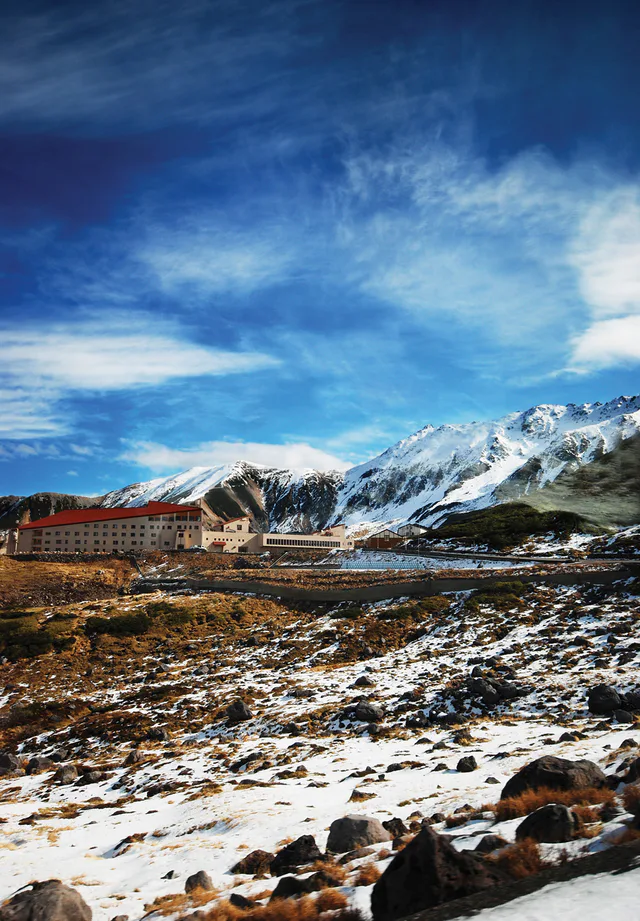
Murodo sits around 2,450 metres and is the first major sightseeing zone to move into autumn. By the time lower areas are colouring well, Murodo can already feel wintry. Wind, fog, frost and early snow matter more here than in a lowland foliage park, so a paid ticket is not a reason to force an exposed walk. If you are travelling earlier in the year, the Tateyama Kurobe summer route guide explains the same transport chain without the autumn timing question. For a broader mountain-season comparison, the Central Japan autumn guide shows how Tateyama, Kamikochi, Takayama and Kanazawa peak at different times.
Daikanbo and Kurobedaira: the vertical-colour sweet spot
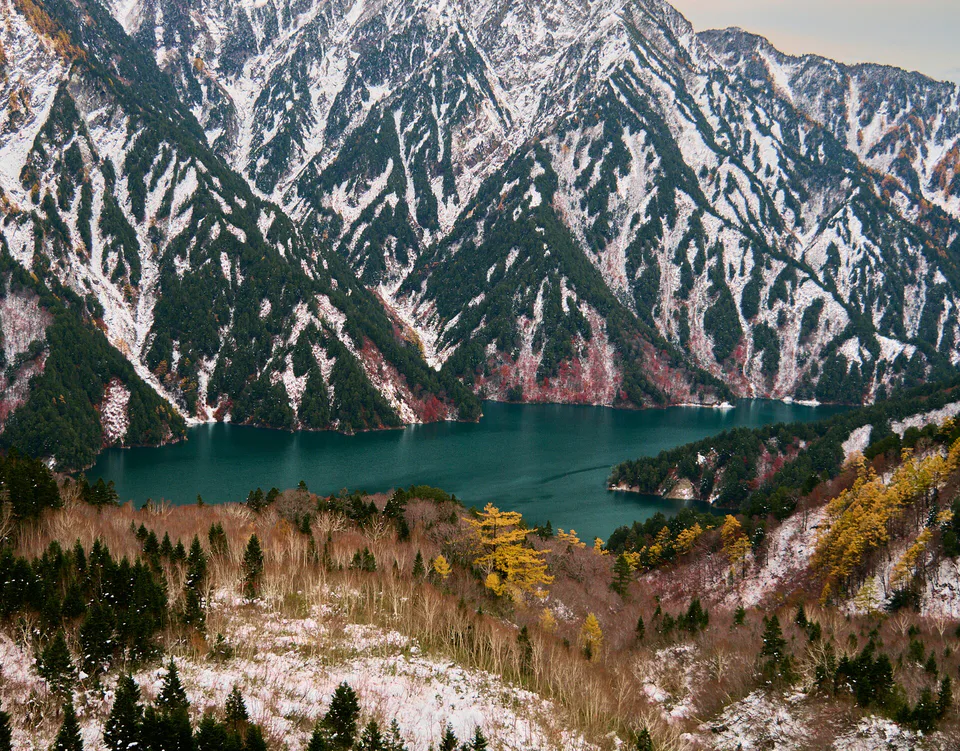
Daikanbo and Kurobedaira are the sections where the ropeway makes the elevation difference visible. In a good window, snow or late-season colour can sit above, orange and yellow forest fills the middle slopes, and lower areas remain greener. This is why an early-October date can still work even if Murodo itself is already late. If you are choosing between two mountain days in central Japan, compare this high-to-low transport experience with the Kamikochi autumn-leaves guide; Kamikochi gives you more walking freedom, while Tateyama is controlled by a chain of fixed transports.
Pair this with: Tateyama Kurobe Traverse or Round Trip? Use that page for direction, full-crossing trade-offs, luggage and overnight bases; keep this page focused on which elevation is worth your time.
Kurobe Dam: later colour and lower exposure
Kurobe Dam sits much lower than Murodo, so it becomes more important as the season moves on. It also asks for less alpine walking, but it is not effortless: stairs, tunnels and long corridors remain part of the day. The sightseeing water release is scheduled through October 15 in 2026, subject to conditions, which makes early-to-mid October particularly useful when both foliage and the dam experience matter. If your trip continues toward Matsumoto or Kamikochi, the five-day Toyama–Tateyama–Kamikochi itinerary is the better place to judge the onward route.
Use the calendar as a probability window, not a promise
A practical historical planning sequence is: high Murodo around the second half of September, middle elevations from late September into early October, and Kurobe Dam becoming more relevant through October. Do not present those as a 2026 forecast. Official seasonal updates and live cameras should overrule a saved date range once your trip is close. If your travel window drifts later, compare the mid-November Japan foliage guide and the late-November guide instead; by then, Tateyama's high route is no longer a normal foliage-first choice.
Toyama side or Nagano side?
Choose the side that matches the hotel and next city. A Toyama-based traveller who only wants Murodo or the middle route gains little from crossing to Nagano and then returning west. A traveller moving from Toyama toward Matsumoto, Nagano or Tokyo can justify a one-way crossing because it replaces a separate transfer day. From Matsumoto or Omachi, an Ogizawa-side return is natural when Kurobe Dam and Kurobedaira are the priority. The Kamikochi day-trip guide is useful if Matsumoto is becoming the next base rather than merely the exit point.
2026 transport and luggage rules that change the day
The full Alpine Route operating season is April 15–November 30, 2026.
The published timetable changes for November 4–30; do not reuse an October connection plan in late November.
Same-day baggage forwarding runs April 15–November 8, 2026. The Toyama/Tateyama-side to Shinano-Omachi/Omachi Onsen section is ¥4,000 per item; reservations are not required but reception cutoffs matter.
Only the Tateyama Cable Car departure from Tateyama Station and the Kanden Tunnel Electric Bus departure from Ogizawa use designated boarding times; peak periods can still create waits elsewhere.
The official FAQ recommends allowing roughly six to eight hours for Tateyama Station–Ogizawa including transfers and sightseeing.
If a seven-day Japan foliage itinerary already includes several transfer-heavy mountain days, use the 7-day Japan autumn itinerary to compare regional alternatives before locking the Alpine Route. The best first Japan autumn region comparison is even more useful if you have not yet committed to Central Japan.
Where to stay
Toyama Station is the easiest general base for a Toyama-side departure because luggage, food and onward rail are simple. Staying at Murodo reduces day-trip pressure but makes weather more important and inventory scarcer. Omachi or Omachi Onsen works for an early Ogizawa entry; Matsumoto is better when Kamikochi is also part of the trip. Keep a cancellable rate until transport and weather become clearer. If the high route is one element in a longer sequence, the Central Japan autumn route makes the hotel-order trade-off clearer than choosing by one attraction.
Search Toyama Station hotels on Booking.com
Compare Toyama Station hotels on Expedia
Plan B for wind, fog, rain or early snow
Strong wind or whiteout at Murodo should shorten the day, not encourage a riskier walk. Early snow means city shoes are the wrong footwear. A transport delay can turn a planned crossing into a same-side return if you decide early enough. If the colour is too early or too late, change elevation before changing regions. A traveller who wants a less transport-dependent foliage day can compare the experience with Kankakei Gorge or, for a walking-first mountain valley, Kamikochi
Image sources and rights
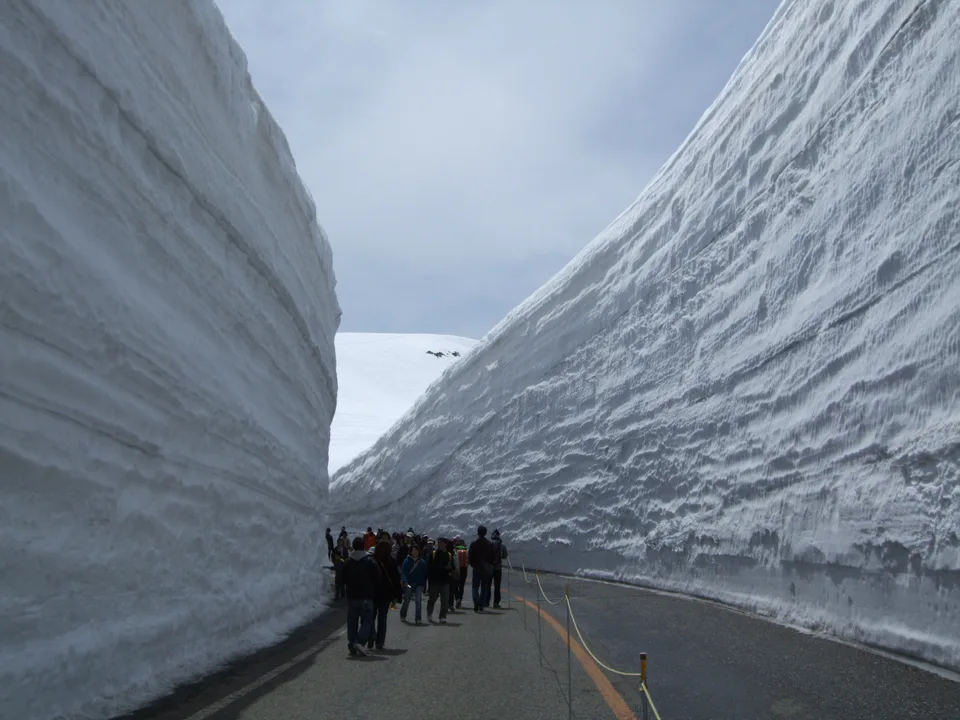
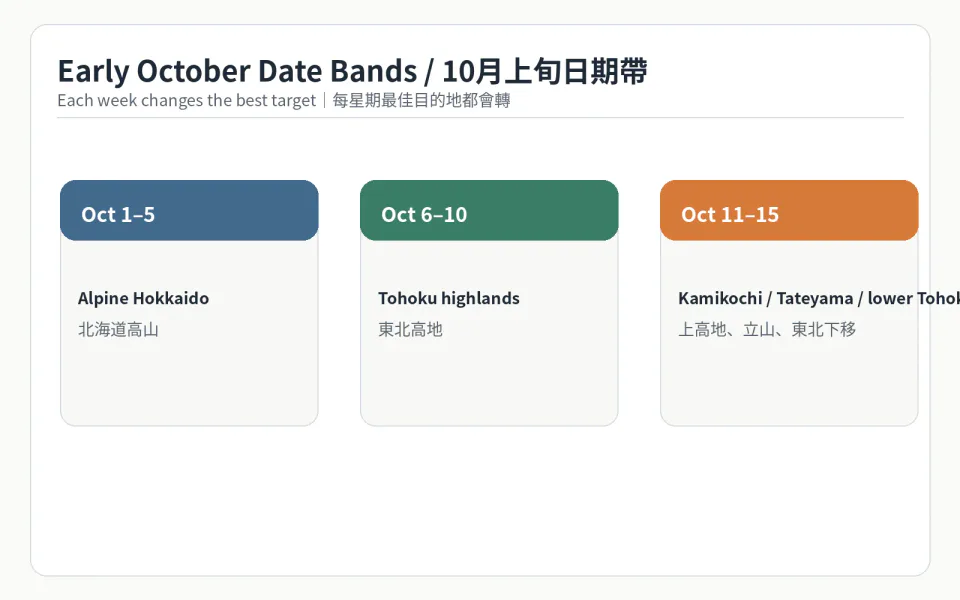
The Tateyama Kurobe autumn and Kurobe Lake photographs are retained ValueNavi media assets originally sourced from Wikimedia Commons / Ka23 13, CC BY-SA 4.0. The route image is a real Tateyama Kurobe asset. The date-and-elevation planning graphic is an original ValueNavi layout, not a live 2026 foliage report.
Mt. Takao Autumn Leaves Day Trip: Cable Car, Trails and Timing
Tokyo Autumn Leaves Day Trip by Train: Gardens, Ginkgo and Evening Foliage
Japan Autumn Leaves in Early November 2026: What You Can Book Before the Forecast Exists
Koyasan Autumn Leaves Guide: Temple Lodging, Morning Prayers and Access from Osaka
Best Airport for Japan Autumn Leaves: Choose by Foliage Window and Open-Jaw Route
References
Tateyama Kurobe Alpine Route — 2026 operating period and web-ticket schedule · 2026 timetable · baggage forwarding · official FAQ and autumn season guidance