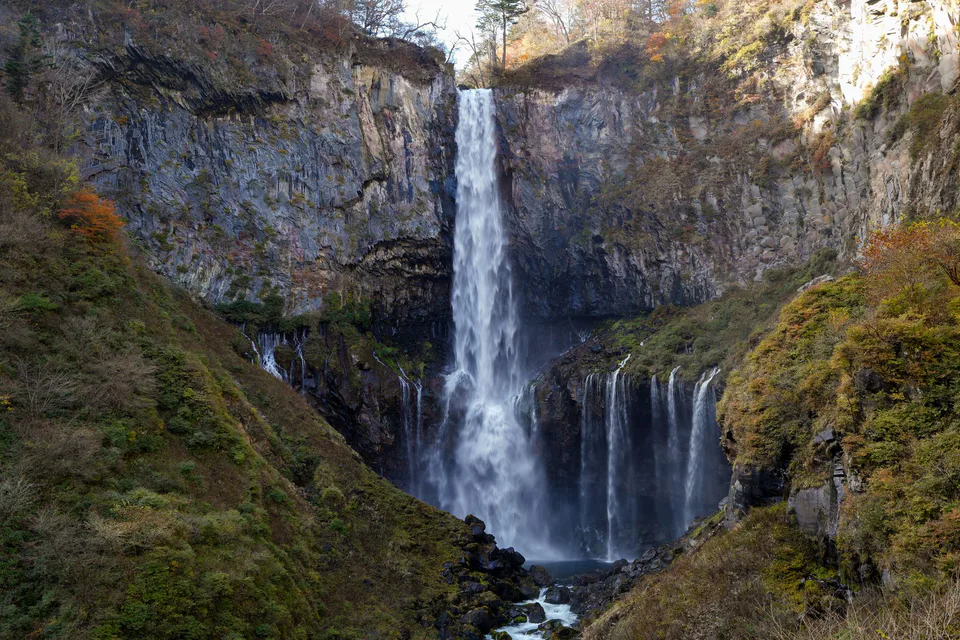
Nikko autumn leaves are not one peak week. They are a descending season spread across several altitude bands, and the biggest planning mistake is trying to combine too many of those bands on one peak-weekend day. For a Tokyo day trip, choose one primary corridor: high Okunikko for Yumoto/Yunoko/Senjogahara/Ryuzu, middle Okunikko for Lake Chuzenji/Kegon/Irohazaka, or central Nikko for Shinkyo and the World Heritage shrine district. If you want both mountain foliage and the shrines, give Nikko two days and sleep in the area.
The reason is operational, not theoretical. Nikko’s official tourism guide says the normal Nikko Station–Lake Chuzenji journey is roughly 45–50 minutes, but during the mid-October to mid-November peak season it can exceed four hours because of Irohazaka traffic. A car does not bypass that road capacity. Once congestion becomes the dominant constraint, “just add Toshogu on the way back” stops being a realistic plan.
Checked August 25, 2026. Nikko’s official guide currently gives broad historical foliage windows rather than a dated 2026 peak forecast: Okunikko from late September to late October and central Nikko from late October to mid-November. Treat the date bands below as planning ranges, not a promise of peak colour on a specific day.
↔ Scroll table left or right
Your date / trip pattern | Primary corridor | Why | Main failure mode |
Late Sep–early Oct | Yumoto / Yunoko / Senjogahara | Highest foliage and marsh colour arrive first | Cold, frost and long bus ride from Nikko |
Early–mid Oct | Yunoko / Ryuzu / Senjogahara | Strong upper-Okunikko window | Trying to add the shrine district after a long mountain day |
Mid–late Oct | Lake Chuzenji / Kegon / Irohazaka | Middle altitude becomes the core foliage zone | Irohazaka congestion can destroy a multi-zone itinerary |
Late Oct–mid Nov | Shinkyo / Toshogu / Rinnoji / central Nikko | Lower elevation colour catches up while high zones may be past peak | Going uphill from habit even when the colour has already descended |
Only one peak-season day | One corridor only | Protects the day from traffic and return-bus risk | Trying to “see all of Nikko” because the map looks compact |
Want mountain + shrines | Overnight | Splits two different transport products across two days | Commuting uphill and downhill twice |
Start with altitude, not with a list of famous sights
Nikko’s official foliage guidance already shows why one calendar date cannot describe the whole destination. Its current FAQ gives broad historical windows of late September to late October for Okunikko and late October to mid-November for central Nikko. Within Okunikko, individual places still move at different speeds.
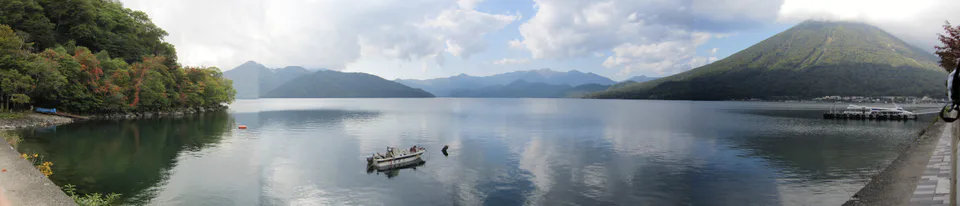
Lake Chuzenji sits at 1,269 metres. Yumoto Onsen is farther uphill and takes about 1 hour 25 minutes by bus from Nikko Station under normal conditions. Central Nikko is much lower. That vertical spread is the reason a trip in early October and a trip in early November should not use the same itinerary.
ValueNavi rule: decide which altitude band is most likely to be useful on your date, then build the day around that band. Only add a second band after transport, daylight and weather still leave real slack.
This also gives you a better Plan B. If the upper zone is already past peak, descend. If central Nikko is still green, move uphill. The route becomes adjustable instead of being tied to one famous photo spot.
Peak traffic is the reason a one-day mountain + shrine itinerary fails
The normal station-to-lake journey looks easy on a timetable. Nikko’s official access guide gives about 45–50 minutes from Nikko/Tobu-Nikko to Lake Chuzenji. During the peak foliage season, however, it warns that this journey can increase to more than four hours.
That changes the economics of every “efficient” itinerary. If you spend the morning climbing Irohazaka in traffic, the lost time does not only remove one lakeside stop. It can also push shrine admissions, lunch, the return bus and the Tokyo train into conflict.
A rental car does not create a private bypass. Irohazaka itself is the bottleneck, and the official guide warns of severe congestion there in peak season. Driving can still help with luggage and stop flexibility, but it does not make a three-zone day reliable.
So on a busy mid-October weekend I would choose one of these:
Mountain day: earliest practical arrival → Chuzenji/Kegon or upper Okunikko → return with a generous queue buffer.
Heritage day: Shinkyo → Toshogu/Rinnoji/Futarasan → food and lower-area foliage, without committing to the mountain road.
The apparent sacrifice is seeing fewer “headline” sights. The gain is actually experiencing the corridor you chose instead of spending the day inside a bus or car.
Upper Okunikko: choose it when the early season is the trip
Yumoto Onsen and Lake Yunoko are the strongest early-season base when the trip is genuinely about high-altitude foliage, onsen and a slower nature day. Yumoto is about 1 hour 25 minutes by bus from Nikko Station in normal conditions, which is why it is a weak place to treat as a casual add-on from Tokyo.
Senjogahara and Ryuzu Falls sit on the same upper corridor, but they are not one stop. A proper marsh or nature-trail day needs time on foot and the correct bus stops. If you only want one viewpoint, shorten the walk. If the trail is wet, frosty or unsafe, do not force it because the hotel is already booked.
Nikko’s own autumn cycling guide explicitly recommends staying at Yumoto Onsen or Lake Chuzenji to avoid the Irohazaka traffic jams common during prime foliage season. That is an unusually strong case where an overnight does more than add atmosphere: it buys access to the upper corridor before the main uphill traffic arrives.
Best for: early-October foliage, walkers, onsen travellers and people willing to devote the trip to Okunikko. Avoid as a one-day add-on when you also insist on a full shrine visit and a fixed Tokyo evening.
Lake Chuzenji and Kegon: the cleanest middle-altitude one-day corridor
Lake Chuzenji is the easiest mountain zone to make into a coherent standalone day. The lake is at 1,269 metres and its perimeter is about 25 kilometres, so “walk around the lake” is not a casual full-loop plan for most first visits. Instead, pair Kegon Falls with one deliberate lakeside segment, embassy-villa area, temple stop or cruise when conditions allow.
The official Nikko itinerary itself treats Lake Chuzenji as a full-day product rather than a short detour. That is useful editorial evidence: if the tourism authority can fill a day around the lake, you do not need to add Toshogu merely to make the trip feel complete.
Fog and wind create another important boundary. A paid waterfall viewpoint or lake cruise has less value when visibility collapses. If the mountain forecast is poor, central Nikko’s architecture and shorter walking loops can be the more resilient use of the day.
Central Nikko is not the consolation prize when the mountain colour is wrong
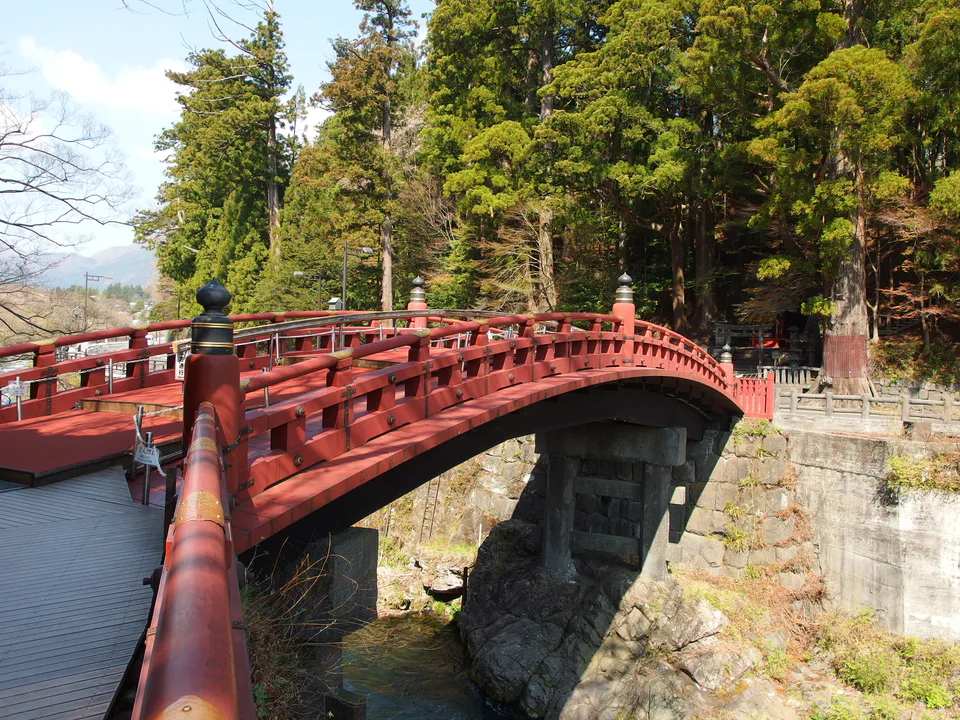
Central Nikko’s historical foliage window is later, and its main advantage is that the trip still has value even when the leaves are imperfect. Shinkyo, Toshogu, Rinnoji and Futarasan are not dependent on a clear lake panorama to justify the journey.
That makes the lower corridor the better default in poor mountain weather or in late October/November when Okunikko may already be declining. It also avoids the Irohazaka bottleneck completely.
The trade-off is crowd density around the World Heritage area and the physical surfaces: steps, stone and gravel still matter for children, older travellers and anyone with limited mobility. “Lower altitude” does not mean effortless.
If your trip is fundamentally a shrine visit with some foliage rather than a foliage chase with some shrines, stay lower and stop treating Lake Chuzenji as mandatory.

Akechidaira Ropeway is not a 2026 backup
Remove Akechidaira Ropeway from every autumn 2026 plan. Nikko City’s official tourism site states that it is closed for renewal from January 16, 2026 through August 31, 2027, with the possibility of an extension.
This matters because old sample itineraries, guidebooks and cached pages may still show the ropeway as a normal stop between central Nikko and Lake Chuzenji. It is not a “check on the day” item in 2026. Do not build a schedule around reaching the Akechidaira observation deck by ropeway.
Use the time for Kegon, a lakeside walk, a confirmed viewpoint or simply more margin against Irohazaka traffic.
Which Nikko pass actually matches an autumn itinerary?
Tobu currently sells the NIKKO PASS ALL AREA for JPY 8,000 adult / JPY 4,000 child, valid for up to four consecutive days. It covers the wider Nikko/Okunikko transport area and includes specified buses and the Lake Chuzenji sightseeing cruise during its operating season. Limited Express tickets and shrine/temple admissions are separate.
The NIKKO PASS World Heritage Area is JPY 3,000 adult / JPY 1,500 child for up to two consecutive days. It is built around the World Heritage / Kinugawa side and does not solve a deep Okunikko itinerary in the same way.
The useful comparison is therefore not “four days versus two days.” Ask which bus territory you will actually use. A central-Nikko heritage day does not need the widest pass simply because it has a longer validity period. A Chuzenji/Yumoto itinerary gets more value from a product that actually covers the expensive mountain movement.
Also separate the pass from the train speed. Tobu explicitly requires a separate limited-express ticket for the Limited Express. Buying a pass does not turn the regular railway leg into a reserved Limited Express ride.
One day, one night or two days?
One Tokyo day trip
Choose one corridor. Central Nikko is the most resilient choice in late October/November or uncertain weather. Lake Chuzenji is the cleaner mountain choice in the mid-October window if you can leave early and accept the traffic risk. Upper Okunikko is the most fragile Tokyo day trip because the normal bus ride is already long before congestion.
One night
Sleep where the next morning gains something scarce. Lake Chuzenji or Yumoto can justify the move when you want early mountain access before the traffic. A station/central stay is better when the next morning is rail-led, luggage-heavy or shrine-focused.
Do not choose an overnight only because “Nikko is far.” Choose it because the hotel deletes a high-cost morning transfer or protects an early/late experience.
Two days
This is the first structure that comfortably supports two altitude bands. A strong pattern is central Nikko on one day and Lake Chuzenji/Okunikko on the other, with the overnight positioned to reduce the second day’s hardest movement. If the foliage date strongly favours the high zone, reverse the order and protect the mountain morning first.
If you are deciding between bases rather than just foliage zones, use the Nikko vs Kinugawa Onsen stay decision before adding a second hotel.
Large luggage is a reason to reduce altitude changes, not just to find a locker
A traveller with one daypack can tolerate an extra bus and a hotel switch. Two people with 28- or 29-inch suitcases should ask whether the luggage needs to travel into Okunikko at all.
If you return to the same Tokyo hotel, leave the main luggage there and carry an overnight bag. If Nikko is part of a longer intercity route, consider forwarding the main cases to the next major hotel and keeping medication, passport, rain gear and one night of essentials with you.
The point is not convenience theatre. Reducing luggage hand-offs makes it easier to react when a bus queue is long, weather forces a route change or the mountain hotel is not ready for check-in.
See the Japan luggage-forwarding guide for the separate delivery decision.
Bad-weather and wrong-colour rules
Upper zone already past peak: descend toward Chuzenji/Irohazaka or central Nikko instead of chasing dead foliage higher.
Central trees still green: move uphill using current official photos/conditions rather than assuming the whole destination is early.
Heavy rain, wind or fog: reduce exposed lake/cruise/hiking time and give more weight to the World Heritage area, museums, food or an onsen whose day-use operation is confirmed.
Irohazaka congestion already severe: cut the second altitude band. Do not protect every planned stop at the expense of the return.
Nikko’s day-use onsen facilities can change access according to hotel occupancy, so even the rain backup should be checked on the day rather than assumed.
Final verdict
Plan Nikko autumn leaves as an altitude-and-traffic problem, not a checklist of famous sights. Early season belongs higher; late season moves lower. On a Tokyo day trip, pick one corridor and protect the return. If you want both Okunikko and the World Heritage district, stay overnight and use the hotel to remove one Irohazaka journey.
The red-team condition is simple: if traffic is light and you are visiting on a quiet weekday, combining Lake Chuzenji with a short central stop may work. But your itinerary should not depend on that optimistic case during peak foliage. Official guidance already says a normal 45-minute lake trip can exceed four hours. Build the plan that survives the busy day, then treat any saved time as a bonus.
Autumn Leaves Day Trips from Fukuoka: Dazaifu, Akizuki, Raizan or Yabakei?
Tokyo to Nikko Autumn Leaves: Trains, Passes, Day Trips and Overnight
Nikko vs Okunikko in Autumn: Day Trip, Overnight and Where to Stay
Tokyo Autumn Leaves Day Trip by Train: Gardens, Ginkgo and Evening Foliage
Japan Autumn Leaves Late October: Tohoku, Nikko and Central Japan
References
Nikko Official Guide — historical foliage windows · Nikko Official Guide — peak-season Irohazaka traffic and travel times · Nikko Official Guide — Lake Chuzenji altitude and access · Nikko Official Guide — Yumoto access · Nikko City Tourism Association — Akechidaira Ropeway closure · Tobu Railway — current NIKKO PASS prices and coverage. Checked August 25, 2026. Foliage timing and traffic vary by weather and date; recheck current conditions before travel.