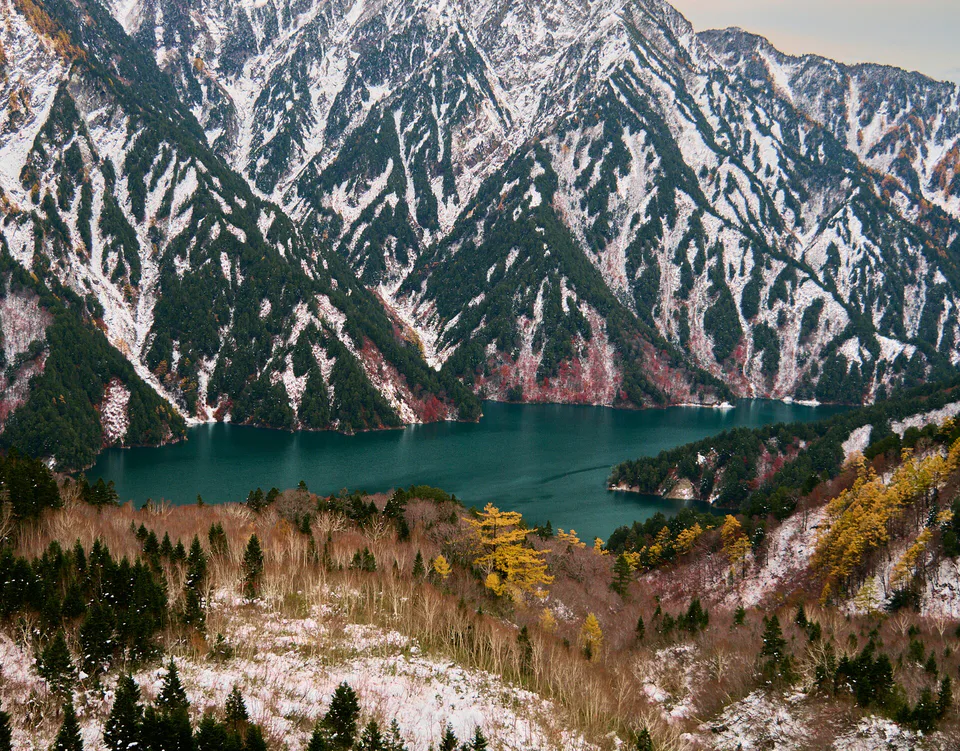
A full Tateyama Kurobe traverse is worth doing only when the crossing itself replaces a hotel-transfer day or when the autumn colour you want is spread across several elevations. If Murodo is the main event, I would normally return to Toyama. If Kurobe Dam and Kurobedaira are the priorities, I would normally approach from Ogizawa. Riding every vehicle is not automatically the best use of a scarce autumn day.
The key planning mistake is to compare the three options by ticket price alone. A full traverse buys geographic progress, but it also consumes more of the day in compulsory transfers and gives you less freedom to linger when the light, foliage or weather is best. A round trip looks repetitive on a map, yet can produce a better day because the transport chain is shorter and the main suitcase stays at the hotel.
Facts rechecked on August 26, 2026: the Alpine Route operates April 15–November 30, with a separate timetable from November 4; official same-day baggage forwarding runs through November 8. The operator also warns that peak periods can prevent travellers from boarding their preferred service, and the final Ogizawa–Nagano bus connection deserves its own margin. Recheck your exact date before travel.
ValueNavi decision table: choose the route that maximises useful mountain time
↔ Scroll table left or right
Your real objective | Best starting option | Why | What would reverse it |
Murodo is the non-negotiable highlight | Toyama → Murodo → Toyama | More of the usable day can stay at the high plateau instead of being spent continuing across the route | Your next hotel is already in Omachi, Matsumoto or Nagano and you would otherwise backtrack |
Kurobe Dam / Kurobedaira matter more than Murodo | Ogizawa-side return | You reach the middle-elevation highlights before committing to the full western chain | The foliage you want has moved higher and Murodo is now the main target |
Toyama tonight, Matsumoto or Nagano tomorrow | Full traverse | The sightseeing day simultaneously performs the inter-regional hotel move | Large luggage cannot be removed, weather is poor, or the final connection becomes tight |
Older travellers, young children or a group that dislikes repeated transfers | Shorter round trip | Fewer hard connections and easier bailout options | The group is already moving hotels and accepts the transfer-heavy day |
Foliage is visible at several different elevations on the same date | Full traverse becomes more valuable | Continuing across the route now creates additional scenery rather than merely additional transport | Colour is concentrated around one elevation, making most of the crossing low-yield |
The ValueNavi Sightseeing Yield test
I use a simple question for this route: how much of the day is spent at the scenery you came for, versus moving between fixed transport stages? This is not an official Alpine Route metric; it is a planning model for deciding whether a full crossing actually improves the day.
↔ Scroll table left or right
Option | Sightseeing yield | Transfer burden | Luggage friction | Route-progress value |
Toyama–Murodo return | High when Murodo is the target | Medium | Low: main luggage can stay in Toyama | Low: you finish where you started |
Ogizawa-side return | High when dam / middle elevations are the target | Low to medium depending on how far you continue | Low if the bag remains in Omachi/Nagano-side accommodation | Low |
Full traverse | Medium unless several elevations are worth stopping at | High: every delayed segment pushes the next one | Medium to high unless forwarding is solved in advance | High when it replaces a separate Toyama→Nagano/Matsumoto transfer day |
The full traverse wins only when its route-progress value compensates for its lower sightseeing yield and higher transfer burden. That is why two travellers on the same date can rationally choose different routes even if they want to see the same mountain scenery.
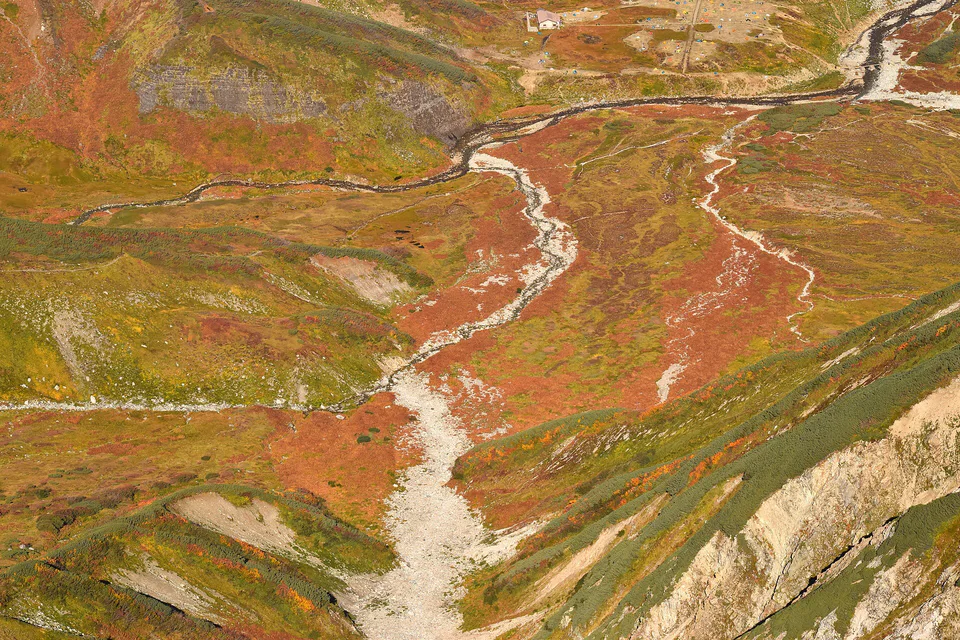
Toyama–Murodo return: the strongest choice when one elevation is doing most of the work
I would choose the Toyama-side return when the trip is fundamentally about Murodo: high-alpine walking, views, early autumn colour or simply spending enough time above the tree line that the day does not feel like a transport demonstration.
The hidden benefit is permission to stop. On a full traverse, every extra 30 minutes at Murodo is borrowed from later stops and the final connection. On a return trip, the day still has a last safe descent, but you are not protecting an entire sequence through Kurobedaira, Kurobe Dam, Ogizawa and then onward road transport.
The official 2026 same-day fare framework lists Dentetsu Toyama–Murodo return at ¥10,220. The exact departure sequence should come from the current timetable rather than a copied sample schedule. A good planning day is not the one with the earliest possible first train; it is the one with a comfortable latest departure from Murodo that still leaves a recovery margin if one segment queues.
When this recommendation becomes bad: if you are sleeping in Toyama only because you assumed a return is “safer,” but the next two nights are in Matsumoto or Nagano, you may be creating a second inter-regional transfer the following day. In that itinerary shape, a full traverse can become more efficient even though it is more demanding.
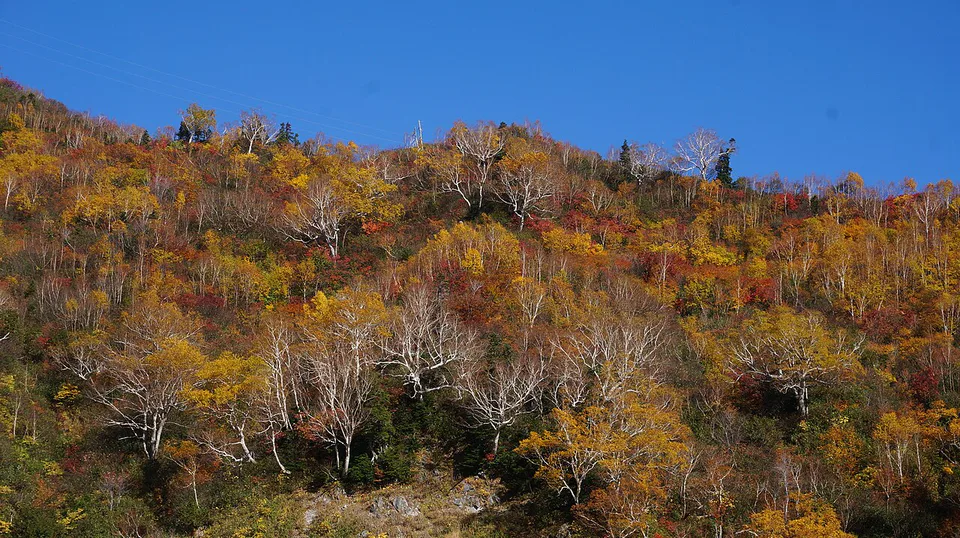
Ogizawa-side return: stop treating Murodo as mandatory
If your real interest is Kurobe Dam, Kurobedaira or the Nagano-side autumn colour, the biggest efficiency gain can come from not forcing Murodo into the itinerary. The current Ogizawa–Murodo return fare is ¥12,300, but that does not mean every traveller should go all the way.
This is where search results often create the wrong mental model: because the Alpine Route is marketed as one continuous route, visitors feel that reaching the entrance obliges them to complete the full chain. It does not. A targeted Ogizawa-side day can be the more coherent autumn trip if the best colour and the sights you care about are already on that side.
For travellers based in Matsumoto or Nagano, the Ogizawa-side option also avoids using the mountain as a hotel move. That makes it easier to carry only a normal day bag and return to the same room. The trade-off is obvious: if Murodo turns out to have exceptional conditions that day, you either add more transport or accept that you are skipping it.
Full traverse: it should replace a travel day, not create an extra one
The full traverse is strongest when the accommodation sequence already wants to move from west to east or east to west. A Toyama → Alpine Route → Omachi/Matsumoto/Nagano day can then do two jobs at once: sightseeing and geographic progression.
That is the scenario where I would accept the higher transfer burden. If you return to Toyama after the route and then travel to Matsumoto the next morning anyway, you are paying twice in time: once to reverse the Alpine Route and again to cross regions by ordinary transport.
The official one-way fare from Dentetsu Toyama to Ogizawa is currently ¥12,360 before onward transport beyond Ogizawa. That fare difference versus a Murodo return is not the important part. The important part is whether the crossing removes a future hotel-transfer block.
ValueNavi rule: if a full traverse does not remove a separate long-distance move and does not add genuinely worthwhile scenery at additional elevations, it is usually a weak use of the extra complexity.
The baggage test can kill an otherwise good traverse
For 2026, the official same-day baggage service runs from April 15 through November 8. The main cross-route service connects Dentetsu Toyama / eligible Tateyama-area hotels with Shinano-Omachi / Omachi Onsen for ¥4,000 per item, cash. It does not mean your suitcase automatically appears at any hotel in Matsumoto, Nagano, Kanazawa or Takayama that evening.
This creates three different luggage strategies:
↔ Scroll table left or right
Your hotel sequence | Best luggage plan | Failure mode to avoid |
Toyama → Alpine Route → Omachi/Omachi Onsen | Official same-day forwarding can fit the route | Arriving after the receiving window or assuming every hotel participates |
Toyama → Alpine Route → Matsumoto/Nagano | Consider sending the large suitcase ahead earlier and carrying one overnight bag | Assuming the official cross-route service is a same-day hotel-to-hotel delivery to your final city |
Toyama round trip | Leave the large suitcase at the hotel if storage is accepted | Carrying a large case into a transfer-heavy mountain chain for no benefit |
Keep medication, documents, valuables, batteries, rain protection and warm layers with you. A luggage-forwarding plan should make the mountain day simpler; if it creates anxiety about where the suitcase is going, the round trip may be the more rational itinerary.
The final-connection margin matters more than an ideal morning schedule
I would not publish one “perfect” departure time for the whole autumn season. The operator uses a different timetable from November 4, publishes special-service changes on busy dates, and explicitly warns that peak congestion can affect whether you board your preferred service.
The safer method is to plan backwards:
Identify the final bus or train you are not willing to miss.
Choose a personal safety margin before that connection.
Protect the highest-value stop first.
Cut lower-value stops as soon as the margin starts disappearing.
For example, a traveller whose main goal is Murodo should cut a secondary stop before cutting the Murodo block. A traveller whose priority is Kurobe Dam should do the reverse. The itinerary should degrade gracefully instead of failing all at once.
What to cut first when the day is slipping
↔ Scroll table left or right
Main goal | Protect | Cut first | Do not sacrifice |
Murodo scenery | Murodo walking block | Optional lower-elevation stop or long lunch | Safe descent margin |
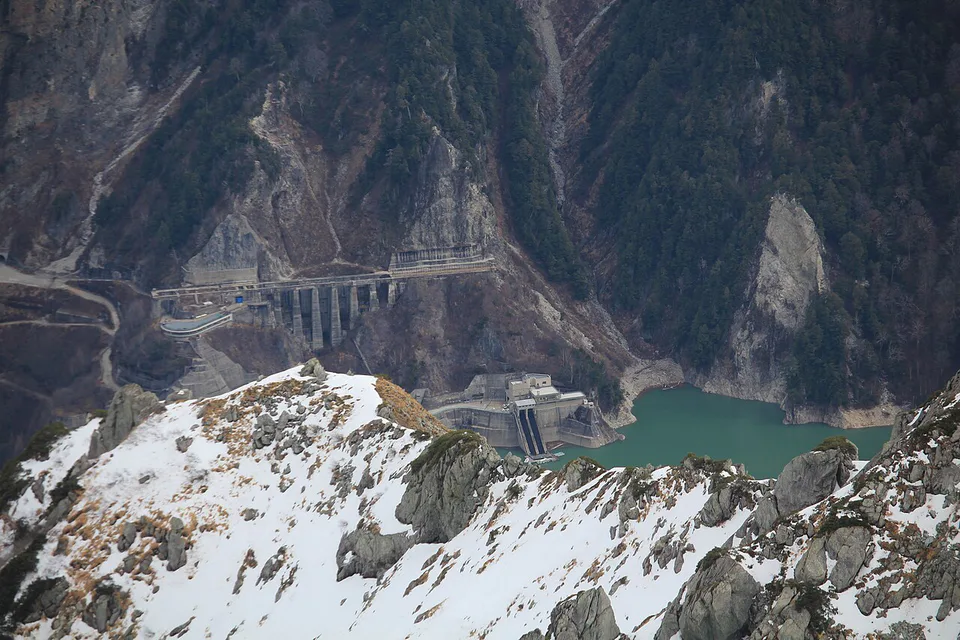
Kurobe Dam | Dam and the approach you came for | Pushing farther west simply to “complete more of the route” | Return transport from Ogizawa |
Full traverse / hotel move | Connection chain to the opposite side | Secondary stop with low foliage value that day | Final onward transport |
This is one of the strongest reasons to decide your priority before buying the ticket. “See everything” gives you no rule for what to remove when the weather or queues change.
Autumn colour can reverse the entire answer
The Alpine Route spans a very large elevation range, so “Tateyama is at peak autumn colour” is not a useful enough statement. If the high plateau is at its best, a Toyama–Murodo return often has the highest sightseeing yield. If the strongest colour has moved to Kurobedaira and the dam area, the Nagano side gains value. If several elevations are simultaneously interesting, a traverse becomes more defensible because every additional transport segment is buying a different landscape.
Use the Tateyama Kurobe foliage-by-elevation guide first. This article should answer the next question: once you know the worthwhile elevation, how much of the route should you actually ride?
Where to stay: protect the first hard connection, not the prettiest evening
Toyama Station is the operational west-side base for a Toyama return or a west-to-east traverse. Omachi / Omachi Onsen is the logical east-side staging area when Ogizawa is the morning entrance. Matsumoto is stronger when Kamikochi follows. Nagano is stronger when your trip continues north or east.
The hotel premium is worth paying only when the location removes a real piece of repeated friction. A hotel that is slightly more expensive near the departure point can be rational before an early mountain day. Paying the same premium for three nights when you only use that early connection once may not be.
For route-level planning, see the five-day Hokuriku–Chubu itinerary. If the Alpine Route is only one candidate among several mountain days, compare it with Kamikochi in autumn before committing to the transport chain.
Weather Plan B: simplify before sunk cost takes over
Fog, strong wind, early snow, traffic delay or a slipping connection should make the plan simpler. The mistake is continuing across the route because you have already paid, already started, or already forwarded luggage.
A planned traverse can become a same-side return if that option is still operationally safe. A planned extension to Murodo can become a dam-focused day if the high plateau is poor. The money already spent is not a reason to make the remaining hours worse.
The route is resilient only if you know the downgrade path before the first delay occurs. This is more useful than memorising one ideal timetable.
Final verdict
Choose the full traverse when it does two jobs at once: it gives you worthwhile scenery across several elevations and moves you to the next hotel region. Choose the Toyama–Murodo return when the high plateau is the destination. Choose the Ogizawa-side return when the dam and middle elevations are the destination.
The recommendation flips for travellers whose next hotel is already on the opposite side of the Alps: in that case, the “more complicated” traverse can actually produce the simpler overall trip because it eliminates a separate transfer day.
That is the ValueNavi test for this route: do not ask how much of Tateyama Kurobe you can technically cover. Ask how much of the day is spent on the scenery you actually value, and whether the remaining transport also advances the rest of your Japan itinerary.