
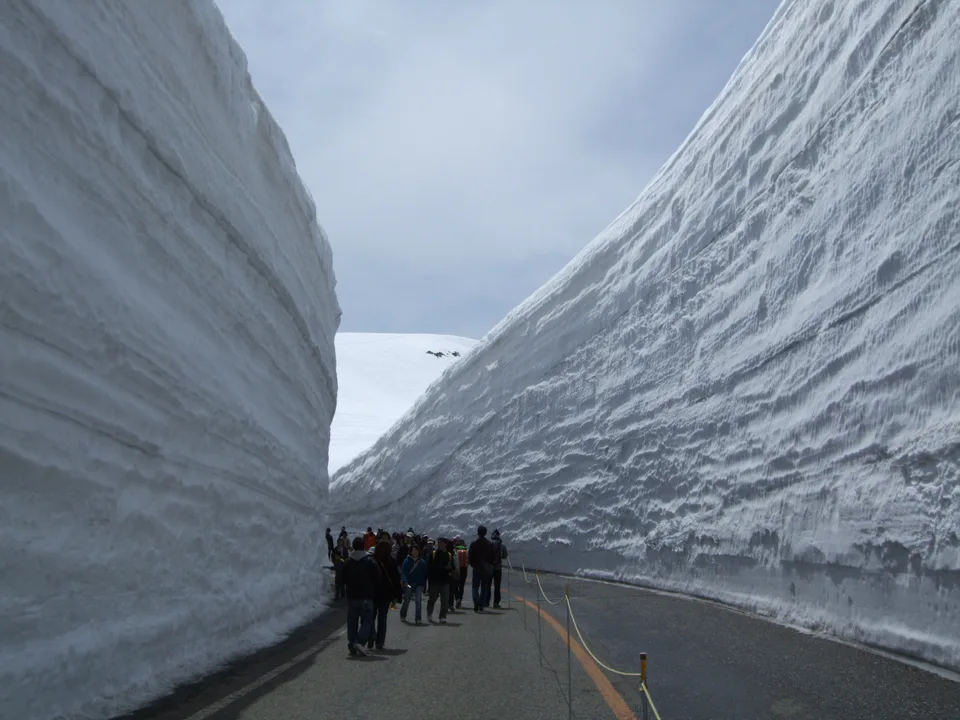
Five days is enough for Toyama → Tateyama Kurobe Alpine Route → Matsumoto → Kamikochi, but only if you treat the Alpine crossing and Kamikochi as two separate full-day commitments. I would not add Shirakawa-go or Takayama to this same five-day trip. In 2026, the official Dentetsu Toyama → Ogizawa Alpine Route alone is budgeted at roughly 7–8 hours, and the Matsumoto–Kamikochi journey requires reserved bus seats in both directions. Those are the two critical-path days; everything else should create recovery time around them.
My default route is therefore simple: Day 1 Toyama, Day 2 cross Tateyama Kurobe and continue toward Matsumoto, Day 3 Matsumoto, Day 4 Kamikochi, Day 5 depart. If your Alpine ticket starts later, you want long walks at Murodo or you are travelling in a busy autumn period, use Shinano Omachi as a buffer on Night 2 instead of forcing a late Matsumoto arrival.
If Shirakawa-go and Takayama matter as much as Tateyama, use the Takayama–Shirakawa-go–Kanazawa route as a separate itinerary or expand this trip to seven days. Five days cannot absorb both route shapes without turning the holiday into a sequence of luggage moves.
The five-day route I would actually book
↔ Scroll table left or right
Day | Base | Main job | Why this order works |
1 | Toyama | Arrive, collect Alpine ticket/luggage plan, early night | Protects the only morning that must start early |
2 | Matsumoto or Shinano Omachi buffer | Cross Tateyama Kurobe west → east | One-way crossing avoids backtracking |
3 | Matsumoto | Matsumoto Castle + low-load city day | Recovery after the most transfer-heavy day |
4 | Matsumoto | Kamikochi day trip | Keeps a second mountain day separate from Alpine Route |
5 | Depart | Flexible morning + onward train | No critical flight immediately after a mountain day |
ValueNavi Critical-Path Table: only two days can break the whole itinerary
The route feels complicated because it crosses several transport systems. In practice, only Day 2 and Day 4 need hard protection. I would plan the other three days around them.
↔ Scroll table left or right
Day | Hard constraint | If it fails | How much slack to build |
Day 1 Toyama | Arrive early enough to sleep and prepare | Late arrival weakens Alpine start | Do not schedule a long side trip |
Day 2 Alpine Route | Timed chain of rail, cable car, bus, electric bus and ropeway | Missed connection or weather disruption can push arrival late | Use an early start; decide your Night-2 buffer rule in advance |
Day 3 Matsumoto | Almost none | Easy to shorten | This is the recovery/buffer day |
Day 4 Kamikochi | Reserved bus + weather + last-return timing | You lose the main hiking day | Reserve both directions and keep a Matsumoto fallback |
Day 5 departure | Onward train/flight | Travel disruption matters | Keep the morning non-critical |
This is why I would not spend Day 3 on another remote excursion. Its hidden job is to absorb fatigue, late arrival and weather-related reshuffling.
Day 1: Toyama is a staging day, not a sightseeing contest
Arrive in Toyama early enough to settle the next morning's logistics. In 2026, the Tateyama Kurobe Alpine Route operates from 15 April to 30 November. Web tickets are sold on a rolling schedule, and the official site recommends advance web reservations even though same-day tickets can exist.
If your flight or train reaches Toyama late, do not add a long coastal trip just because Day 1 looks empty. The most valuable thing you can buy with that evening is a clean Day-2 start: confirm your ticket, separate the day pack, decide where the large luggage will go and sleep.
Day 2: Tateyama Kurobe is the trip's transport marathon
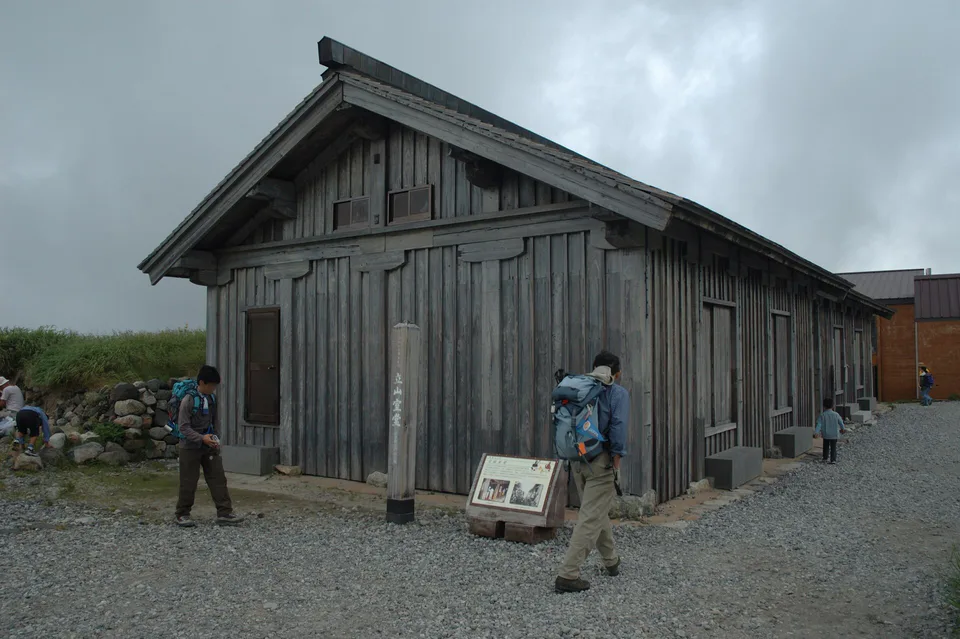
The Alpine Route is not one train ride. The chain of timed transport is the day's real constraint.
The current 2026 same-day fare from Dentetsu Toyama to Ogizawa is ¥12,360 (about US$77.54 at the 27 August exchange rate), and the official required-time guide gives roughly 7–8 hours. That is before you add the final movement from Ogizawa toward Shinano Omachi or Matsumoto. Treat Day 2 as a full travel-and-sightseeing day, not a half-day attraction.
The route itself runs through Tateyama Station, Bijodaira, Murodo, Daikanbo, Kurobedaira, Kurobeko/Kurobe Dam and Ogizawa. Your discretionary time is mostly at the scenic stops. If you want a proper Murodo walk, the safest thing to cut is a late Matsumoto plan—not the connection margin.
For the mountain-specific stops, use the Tateyama Kurobe summer guide or the Tateyama Kurobe autumn crossing guide.
The Night-2 decision: continue to Matsumoto or stop in Shinano Omachi?
I prefer continuing to Matsumoto when you have an early Alpine start, are carrying only a day pack and do not plan a long Murodo hike. It reduces hotel changes and leaves Day 3 completely free. I prefer a Shinano Omachi buffer when the Alpine start is later, photography matters more than speed, the route is crowded or the group includes someone who will find an eight-hour multi-transfer day tiring.
↔ Scroll table left or right
Night 2 strategy | Hotel-move efficiency | Day-2 recovery | Late-arrival protection | Best for |
Continue to Matsumoto | 10/10 | 6/10 | 6/10 | Early start, light pack, minimum hotel changes |
Sleep Shinano Omachi | 6/10 | 10/10 | 9/10 | Peak dates, longer Murodo stop, slower travellers |
There is no universal winner because the trade-off is explicit: one extra hotel change buys a larger time buffer. The wrong move is deciding this at 16:30 after already spending the day on the mountain.
Luggage is the hidden Day-2 problem—and the official service does not go to Matsumoto
The Alpine Route's official same-day baggage forwarding service is extremely useful but has a boundary many itineraries miss. In 2026, it operates from 15 April to 8 November and can send a bag from Dentetsu Toyama / eligible Tateyama-side hotels to Shinano Omachi Station or Omachi Onsen for ¥4,000 per item (about US$25.09). It does not list Matsumoto as a same-day destination.
If you are continuing to Matsumoto on Night 2, you therefore have two clean strategies: use the official service to Shinano Omachi, collect the bag there and continue; or send the large suitcase to your Matsumoto hotel in advance using ordinary luggage forwarding and confirm the delivery date with both hotels. Carry one night's essentials in a day pack in case the suitcase arrives later than you do.
Do not drag a large roller through the whole Alpine chain simply because “luggage forwarding” sounded vague in another guide. Use the Japan luggage-forwarding guide to separate same-day mountain forwarding from ordinary takkyubin.
Ogizawa to Matsumoto: the crossing is not finished at the Alpine exit
Ogizawa is the eastern end of the Alpine Route, not Matsumoto. The 2026 Ogizawa → Shinano Omachi bus is non-reserved and costs ¥2,000 one way (about US$12.55). From Shinano Omachi you still continue by rail toward Matsumoto. Busy-day extra buses may operate, but Alpico explicitly says a seat cannot be guaranteed, so the post-Alpine connection needs margin rather than a minute-perfect plan.
If you use the official baggage service, Shinano Omachi becomes both the luggage handoff and the transport handoff. That is another reason the buffer-night option is structurally clean even though it adds one hotel.
Day 3: Matsumoto should be the low-load day
Visit Matsumoto Castle and the central streets without adding another long-distance side trip. After Day 2, the city day has more value than its sightseeing list suggests: it absorbs a late arrival, lets you repack after the mountain crossing and gives you a weather-independent day before Kamikochi.
If you slept in Shinano Omachi on Night 2, move to Matsumoto in the morning and accept a shorter city day. That is the price of the buffer. Do not try to “win back” the lost hours by adding another remote destination.
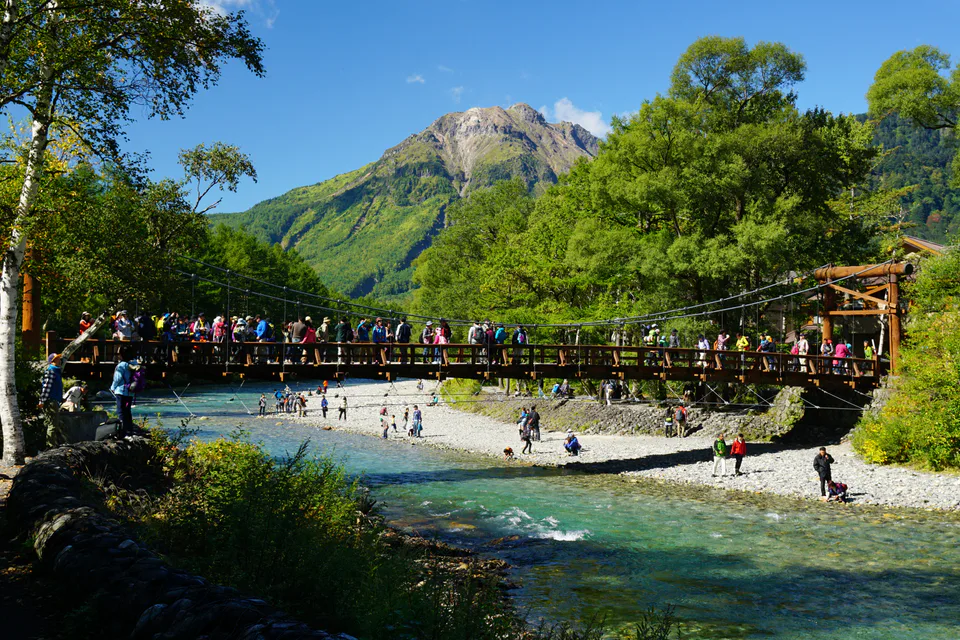
Day 4: Kamikochi is a second full mountain day, not a stop on the way somewhere
A Kamikochi day works because Matsumoto remains the base; there is no need to add another hotel unless early-morning mountain time is itself the goal.
For 2026, the Matsumoto–Kamikochi service operates from 17 April to 15 November. Alpico states that all buses between Matsumoto and Kamikochi require reservations for both outbound and return travel. The standard non-direct pattern is about 30 minutes by Alpico Railway from Matsumoto to Shin-Shimashima, then about 60 minutes by bus to Kamikochi.
The current one-way components are ¥710 for Matsumoto → Shin-Shimashima train plus ¥3,100 for Shin-Shimashima → Kamikochi bus, or ¥3,810 total (about US$23.90) before any other spending. There is no round-trip discount, so the comparable two-way transport budget is ¥7,620 (about US$47.80). Two direct National Park Liner buses leave Matsumoto in the morning, but there is no direct bus for the return.
ValueNavi True Time Cost: Kamikochi consumes more than the hiking hours
↔ Scroll table left or right
Component | Planning time | What can go wrong |
Matsumoto → Shin-Shimashima | ~30 min train | Cash-only ticket purchase is currently noted by Alpico for this train ticket |
Transfer + Shin-Shimashima → Kamikochi | ~60 min bus plus connection time | Reserved bus slot controls the morning |
Kamikochi core walk / stops | Several hours | Rain, cold, walking pace and crowding change the usable day |
Kamikochi → Matsumoto | ~90 min moving time plus transfer | Return bus also requires reservation |
That makes Kamikochi a roughly seven-to-nine-hour commitment once transport, waiting and a meaningful walk are combined. For a first visit, I would use Taisho Pond → Tashiro Pond → Kappa Bridge as the core and extend toward Myojin only when weather, pace and return reservation allow. The Kamikochi day-trip guide handles the walking choices in more detail.
Weather backup matrix: decide what you will sacrifice before the forecast turns
↔ Scroll table left or right
Problem | What I would do | What I would not do |
Poor visibility but Alpine transport operating | Cross if route progression matters; shorten scenic stops | Wait half a day with no recovery plan and then force every connection |
Major Alpine disruption on Day 2 | Choose: stay Toyama and retry, or abandon crossing and reroute by rail toward Matsumoto | Assume Kamikochi and Matsumoto can absorb the lost day unchanged |
Heavy rain forecast for Kamikochi Day 4 | Use Matsumoto as the fallback and cancel/change the bus within current rules | Move Kamikochi to Day 5 immediately before a critical flight |
Cold / slower walking than expected | Stop at Kappa Bridge core route and protect return bus | Extend to Myojin just because it was on the original checklist |
The most important boundary condition is that a five-day itinerary has only one genuine recovery day. If the Alpine Route must be retried, something else has to shrink. It is better to choose that sacrifice in advance than to pretend all original plans remain possible.
Why Shirakawa-go and Takayama do not belong in this version
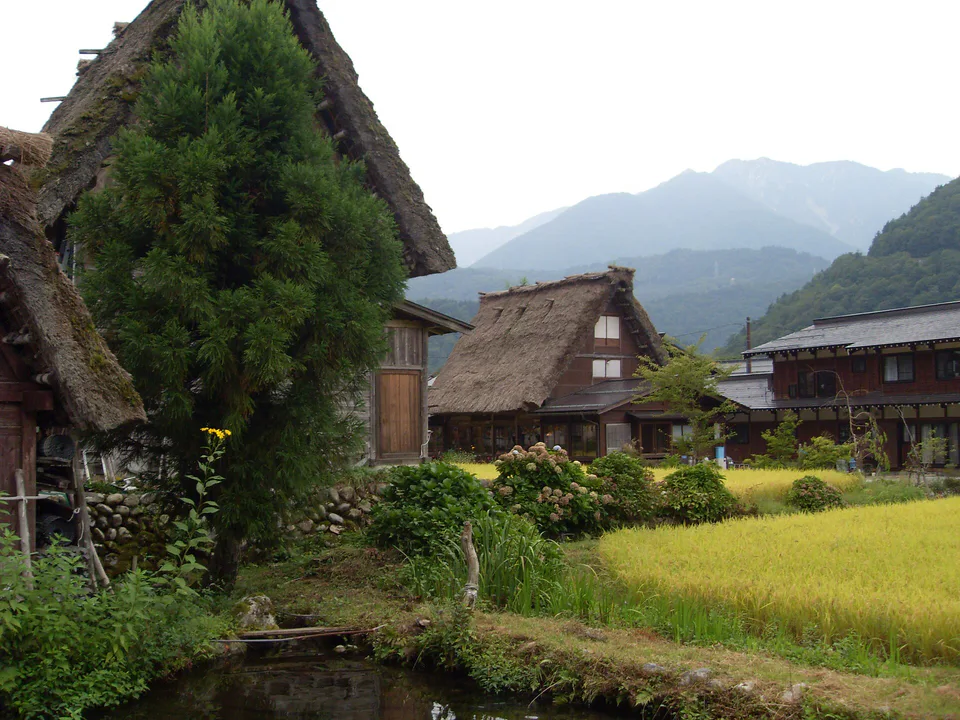
Shirakawa-go is worth a separate route decision; adding it here turns a mountain itinerary into a transfer itinerary.
The Takayama–Shirakawa-go–Kanazawa/Toyama bus network is good, but it is a different route spine. Nohi Bus currently lists Takayama–Shirakawa-go at about 50 minutes and notes that some services require reservations; the through corridor to Kanazawa/Toyama is a popular but separate sightseeing route. Bolting it onto these five days means either removing Kamikochi, removing Matsumoto recovery time or creating a chain of one-night hotel stays.
If Shirakawa-go is a must, I would choose the heritage route instead of the Alpine route—not try to collect both. That is the strongest deletion in this rebuild because it makes the title's promise much more usable.
Pass or individual tickets? Do the route first, the pass second
No ordinary rail pass should be allowed to distort this route. The Alpine Route itself uses multiple non-JR transport modes, and Kamikochi uses Alpico train/bus. There is an Alpine-Takayama-Matsumoto Area Tourist Pass product, but whether it saves money depends on your entry/exit rail journeys and the exact mountain sections you use.
First price the itinerary you actually want: Alpine crossing, Ogizawa connection, Kamikochi transport and the long-distance JR legs before/after the five days. Then compare the pass. A pass that “wins” only after you add unnecessary return journeys is not a saving.
Budget the mountain transport separately from hotels
↔ Scroll table left or right
2026 transport item | JPY | Approx. USD |
Dentetsu Toyama → Ogizawa Alpine Route | ¥12,360 | ~US$77.54 |
Official same-day large-bag forwarding Toyama side → Shinano Omachi/Omachi Onsen | ¥4,000 per item | ~US$25.09 |
Ogizawa → Shinano Omachi bus | ¥2,000 | ~US$12.55 |
Matsumoto → Kamikochi via Shin-Shimashima, one way | ¥3,810 | ~US$23.90 |
Same Kamikochi pattern, two directions | ¥7,620 | ~US$47.80 |
USD conversions use the 27 August 2026 planning rate and are approximate; keep the Japanese-yen prices as the source-of-truth and re-check fares before travel.
Common failure modes
Carrying a full-size suitcase across Tateyama. The route is already a chain of transfers. Use same-day forwarding to Shinano Omachi or send the bag ahead.
Assuming “Alpine Route ends at Ogizawa” means the hotel day is finished. You still need the eastern-side bus and onward travel.
Booking only the outbound Kamikochi bus. Alpico requires reservations in both directions in 2026.
Turning Matsumoto into another day trip hub on Day 3. The route needs one low-load day more than it needs another pin on the map.
Putting a critical flight on the evening after Kamikochi. Mountain transport has weather, traffic and connection risk. Leave the final day flexible.
Adding Shirakawa-go because it looks geographically nearby. Geographic proximity does not mean route compatibility; it belongs to a different bus spine.
Final verdict
For five days, I would keep the route ruthlessly linear: Toyama → Tateyama Kurobe → Matsumoto → Kamikochi → onward. Continue to Matsumoto on Night 2 if you have an early Alpine start and want only two hotel bases; use Shinano Omachi as a buffer if you value Murodo time or need more protection against a long transfer day. Keep Day 3 intentionally light, reserve both Kamikochi bus directions, and do not add Shirakawa-go unless you are willing to drop one of the alpine highlights or extend the trip. The itinerary works because it leaves one piece of slack—not because it fits the maximum number of famous places into five days.
References
Tateyama Kurobe Alpine Route official 2026 operating period, timetable, same-day fares and baggage-forwarding information; Alpico official 2026 Matsumoto–Kamikochi and Ogizawa–Shinano Omachi service information; Kamikochi official access guidance; Nohi Bus Takayama–Shirakawa-go–Kanazawa/Toyama route information. Facts re-checked 27 August 2026.
Mountain operations, fares, reservations and weather conditions can change. Check official operating status immediately before travel. Currency conversions are approximate.