
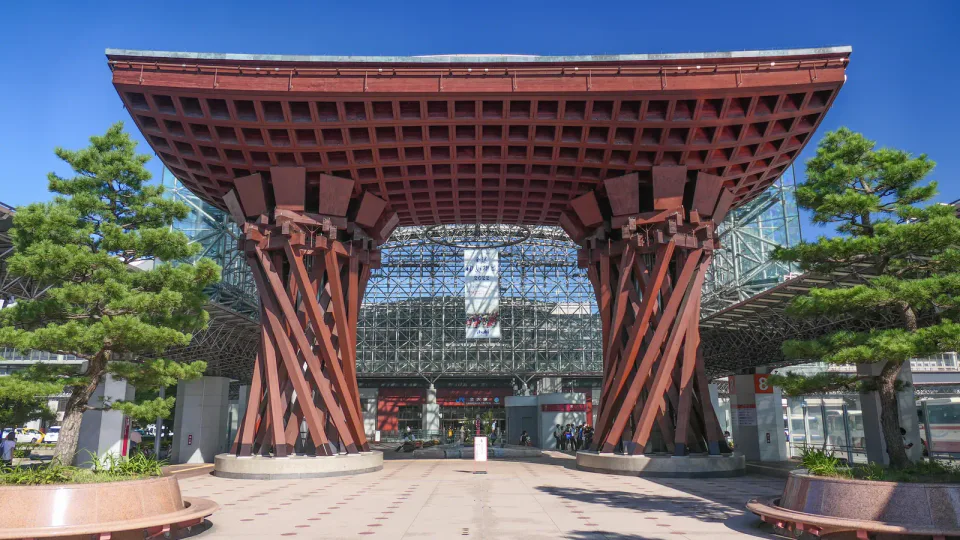
Five days in Hokuriku is usually a two-theme trip. Seven days is where Kanazawa, Toyama and Fukui can start behaving like one coherent route rather than three station names you are trying to collect. The Hokuriku Shinkansen has made the main corridor easy: current JR West timetables still show frequent direct services linking Toyama, Kanazawa, Fukui and Tsuruga. But the fast rail leg is not the part that makes a short itinerary difficult. Tateyama Kurobe can consume most of a day by itself, and the Fukui Prefectural Dinosaur Museum still has a substantial local-transport tail after you reach Fukui Station.
That changes the real question. Do not ask, “Can I fit all three prefectures into five days?” You technically can. Ask, “How many protected destination days survive after hotel moves, local transfers, weather risk and timed-entry commitments?” If Tateyama is a must and the Dinosaur Museum is also a must, five days is usually the wrong container. If you want Kanazawa plus one of those two anchor experiences, five days works well. If you want all three regions with one major anchor on each side, seven days is the cleaner default.
Fact-checked August 26, 2026. JPY remains the primary currency. Approximate USD examples use ¥1,000 ≈ US$6.29; exchange rates and live ticket prices can move.
Hokuriku 5 days vs 7 days: the 30-second decision
↔ Scroll table left or right
Your real trip | Better length | Why |
Kanazawa + Tateyama / mountain scenery | 5 days can work | Use Kanazawa and Toyama as two bases; protect one full alpine day. |
Kanazawa + Dinosaur Museum / Fukui family trip | 5 days can work | Use Kanazawa and Fukui as two bases; do not put the museum behind a same-day hotel move. |
Kanazawa + Toyama + Fukui, city highlights only | 5 days is possible but compressed | It only works cleanly if neither Tateyama nor a long Fukui excursion is essential and the route is linear. |
Kanazawa + Tateyama + Fukui | 7 days | The alpine day needs protection and Fukui needs a real local-sightseeing day. |
Tateyama + Dinosaur Museum + Kanazawa full day | 7 days minimum | Seven days can hold all three anchors, but there is still little room for Eiheiji + Tojinbo + an onsen night on top. |
Weather-sensitive mountain trip with children | Prefer 7 days | The extra time buys rescheduling capacity, not just extra attractions. |
If you are entering from Takayama or Shirakawa-go rather than Tokyo or Kansai, the route logic changes. Use the Takayama–Shirakawa-go–Kanazawa four-day route before deciding whether Toyama or Fukui should be added.
ValueNavi Route Compression Test: count anchor days before cities
Most itinerary lists count destinations. ValueNavi uses a different unit: anchor days. An anchor day is something that becomes materially worse when squeezed behind checkout, luggage handling or a long local transfer. Tateyama Kurobe is an obvious anchor. The Dinosaur Museum becomes one when it is the family’s non-negotiable stop. A complete Kanazawa sightseeing day can also be an anchor if this is your first visit.
Run four checks before choosing five or seven days:
↔ Scroll table left or right
Check | Low compression | High compression |
Full-day anchors | One major anchor outside Kanazawa | Tateyama + Dinosaur Museum + another rural Fukui day |
Hotel moves | One base change in five days | Toyama → Kanazawa → Fukui in a five-day trip |
Local-transport tails | Mostly station-area sightseeing | Katsuyama, Tojinbo, Eiheiji and other sights that continue well beyond the Shinkansen station |
Failure risk | Urban sightseeing that can swap order easily | Mountain weather plus timed museum entry plus an onward intercity move |
ValueNavi rule: in a five-day trip, once you have two heavy anchors and two hotel moves, you are no longer merely “busy.” You have built a route where one delay can cannibalise another destination. That is the point at which seven days starts buying resilience rather than indulgence.
The hidden cost is not Shinkansen time: it is the Base-Change Tax
The Shinkansen corridor is fast enough that travellers often underestimate the rest of a hotel move. The train ride itself is only the middle. Packing, checkout, getting from the hotel to the station, platform margin, carrying or storing luggage, finding the next hotel and later collecting luggage all sit around it.
For planning, ValueNavi uses a 45–90 minute Base-Change Tax around each hotel move in addition to the scheduled intercity train. This is an editorial planning allowance, not a measured universal travel time. A station-connected hotel with backpacks can sit at the low end; a family with suitcases, breakfast, luggage storage and a hotel away from the station can exceed it.
Two unnecessary base changes therefore deserve roughly 90–180 minutes of planning reserve before you even count the Shinkansen. That is why a five-day Toyama → Kanazawa → Fukui itinerary can look easy on a rail map but feel fragmented on the ground. Faster rail should reduce friction between strong bases, not encourage you to create more bases.
Kanazawa usually earns two nights because it creates a no-checkout day
Kanazawa is the stabiliser in most first Hokuriku trips. Its main city sights are comparatively concentrated, so an arrival afternoon can still be useful and a following no-checkout day can become the trip’s least fragile sightseeing block. Kenrokuen, Kanazawa Castle, Omicho Market and the teahouse districts are not hard because they are remote; they are hard to enjoy when you keep interrupting them with luggage.
One Kanazawa night often creates a misleading calendar: arrive on Day 1, sightsee on Day 2, then check out again on Day 3. You used parts of three dates but only created one proper city day. Two nights gives the route one morning where nobody has to repack before sightseeing. In a five-day trip, that uninterrupted morning is often more valuable than adding another prefecture name.
Kanazawa + Toyama: choose this five-day route when Tateyama is the second theme
If the image that pulled you to Hokuriku is high-alpine scenery, Murodo, Kurobe Dam or a through-route toward Nagano, Toyama should stop being a “half-day city” and become the gateway base. The current 2026 Tateyama Kurobe Alpine Route operates from April 15 to November 30. The operator says the journey from Tateyama Station to Ogizawa normally takes 6–8 hours including transfers and sightseeing.
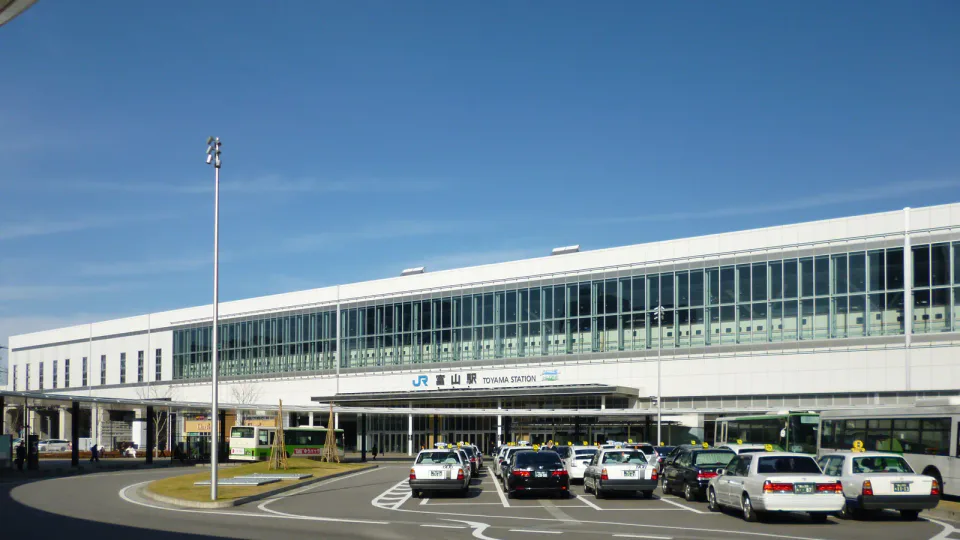
The operator’s current same-day ticket examples make the time commitment even clearer. Dentetsu Toyama → Ogizawa one way is listed at ¥12,360 (about US$77.75) with a required time of 7–8 hours. Dentetsu Toyama ⇔ Murodo round trip is ¥10,220 (about US$64.29) and is also shown as a 7–8 hour trip. These are not half-day numbers.
If you cross the route and continue toward Shinano Omachi or Nagano, luggage becomes part of the route design. The 2026 same-day baggage-forwarding service runs through November 8 and currently charges ¥4,000 (about US$25.16) per item between Dentetsu Toyama and Shinano Omachi / Omachi Onsen. That fee is optional, but it is a useful hidden-cost reminder: a through-route can save backtracking while creating a separate luggage decision.
ValueNavi Tateyama Test: round trip or through-route?
↔ Scroll table left or right
Plan | Best when | Hidden trade-off |
Toyama → Murodo → Toyama | You want a stable Toyama base and are continuing west again | You spend a full day on the mountain but keep the same hotel. |
Toyama → Ogizawa, continue east | Your trip naturally continues toward Nagano / Matsumoto | Excellent route efficiency, but luggage forwarding or carrying strategy matters. |
Toyama city only | Tateyama is closed, not a priority or weather makes it a poor use of the day | Toyama can then occupy much less itinerary space, making a three-region five-day sampler more realistic. |
This is also the boundary condition that changes the whole article: outside the Alpine Route operating season, the strongest argument for protecting a full Toyama mountain day disappears. Do not copy a May itinerary into January and assume the same five-vs-seven-day answer.
For a route that keeps moving east into the mountains, use the Toyama–Tateyama–Kamikochi–Matsumoto five-day itinerary. If foliage timing is the reason for the route, compare the Tateyama Kurobe autumn timing guide.
Kanazawa + Fukui: choose this five-day route when dinosaurs, temple or coast matter more than mountains
Fukui creates a different problem. The Shinkansen gets you to Fukui city efficiently, but several reasons to visit are not at Fukui Station. The Fukui Prefectural Dinosaur Museum is in Katsuyama. Eiheiji, Tojinbo and Awara Onsen point in different directions again. So “Fukui” is not one compact sightseeing block; it is a choice between local branches.
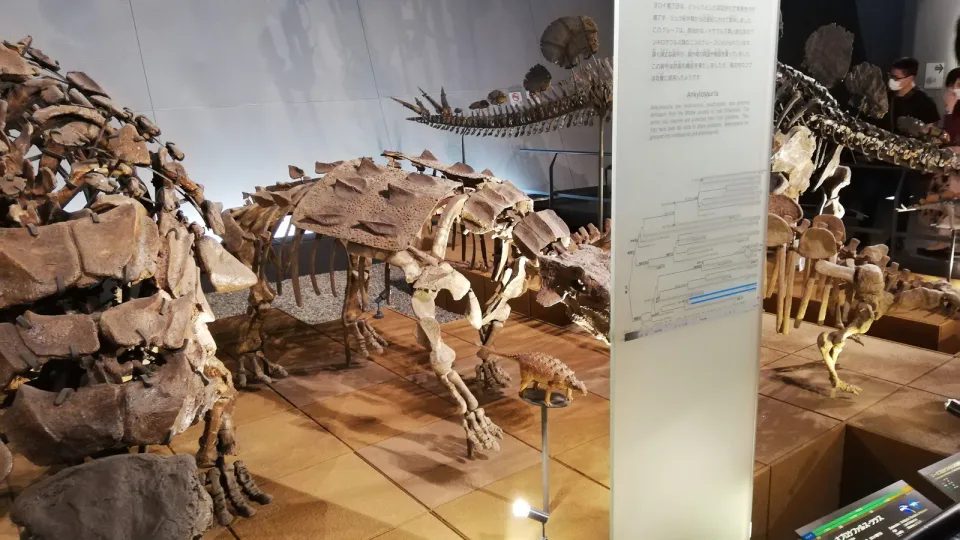
Current Echizen Railway information puts Fukui Station → Katsuyama at about 55 minutes and ¥820 (about US$5.16) per adult one way, before the final bus or taxi to the museum. The museum itself advises arriving at Fukui Station, changing to Echizen Railway for roughly an hour to Katsuyama, then using a community bus or taxi.
The museum’s current system also adds booking risk. Tickets can be purchased from 60 days before the visit, and the museum says timed advance purchase is the general rule; same-day tickets are only sold when capacity remains. Standard permanent-exhibition admission is currently ¥1,000 (about US$6.29) per adult, ¥800 for high-school / university students and ¥500 for primary / secondary students, with special exhibitions potentially costing extra.
ValueNavi Fukui Hidden-Cost Card: the museum day starts after the Shinkansen ends
Echizen Railway currently sells a Dinosaur Museum transport set covering its one-day pass plus Katsuyama city buses for ¥1,700 (about US$10.69) per adult and ¥900 (about US$5.66) per child. Museum admission is not included in that set.
↔ Scroll table left or right
Example | Current JPY | Approx. USD |
1 adult: transport set + permanent exhibition | ¥1,700 + ¥1,000 = ¥2,700 | about US$16.98 |
2 adults | ¥5,400 | about US$33.97 |
2 adults + 1 primary/secondary-school child | ¥5,400 + (¥900 + ¥500) = ¥6,800 | about US$42.78 |
These are not total-day budgets: they exclude Shinkansen travel to Fukui, food, special exhibitions, the Field Station and other paid experiences. Their purpose is to expose a decision gap. A family can reach Fukui city quickly by Shinkansen and still have another local journey, a timed-entry commitment and a separate local-transport budget before the headline attraction begins.
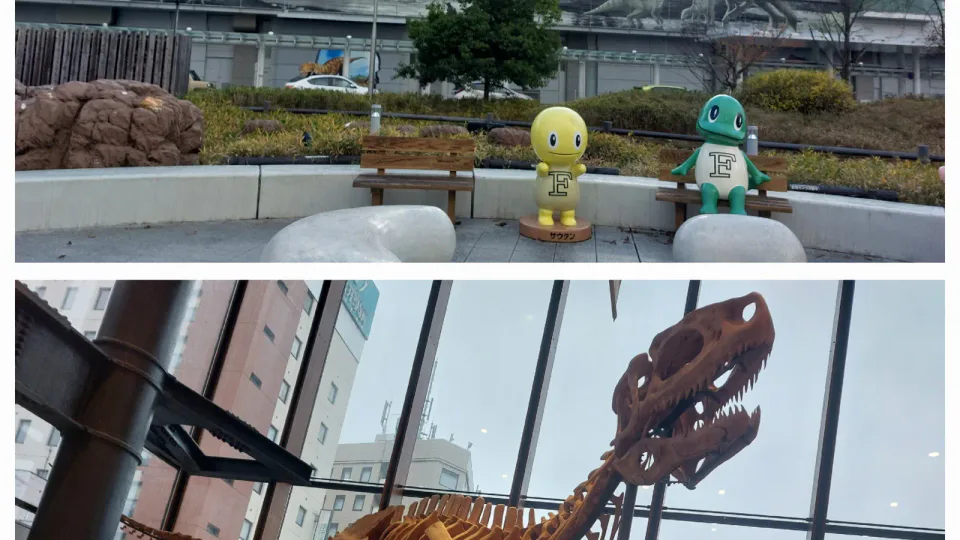
If the museum is the child’s most important stop, do not make it the second half of a Kanazawa-checkout morning. Sleep in Fukui or another logical local base first, then give the attraction a protected start. Before booking, compare Fukui Station vs Awara Onsen.
Do not combine every Fukui branch just because seven days sounds generous
Seven days fixes the three-region problem; it does not make Fukui’s geography disappear. Dinosaur Museum, Eiheiji, Tojinbo and Awara Onsen are four different reasons to allocate time. If you want all four plus Tateyama plus a real Kanazawa day, seven days is still compressed.
A useful filter is to pick one Fukui anchor and one optional secondary branch. Dinosaur Museum + a Fukui city evening works. Eiheiji + an Awara night can work if the onsen itself is part of the experience. Tojinbo + Awara is a coherent coast/onsen pair. Dinosaur Museum + Eiheiji + Tojinbo + Awara in one short block is an attraction inventory, not a route.
Five-day plan A: Kanazawa + Toyama without station collecting
↔ Scroll table left or right
Day | Plan | Why it works |
1 | Arrive Kanazawa; use the afternoon/evening locally | No pressure to force a complete sightseeing day after travel. |
2 | Full Kanazawa day | No checkout; lowest-friction day of the trip. |
3 | Move to Toyama; city / light sightseeing | Keep the hotel move away from the alpine anchor. |
4 | Tateyama Kurobe | Protected mountain day. |
5 | Depart Toyama, or continue east if the Alpine Route changed your exit | The route stays directional rather than doubling back unnecessarily. |
If Day 4 is a through-crossing to Ogizawa, you may not return to Toyama at all. In that case, the route has stopped being “Kanazawa + Toyama” in a hotel sense and become a west-to-east transit route. Plan baggage and the Day 5 city accordingly.
Five-day plan B: Kanazawa + Fukui with a protected family anchor
↔ Scroll table left or right
Day | Plan | Why it works |
1 | Arrive Kanazawa | Use whatever remains of the day without a hard booking. |
2 | Full Kanazawa day | Protect the city anchor. |
3 | Move to Fukui; city or one manageable secondary sight | The base change does not compete with the museum. |
4 | Dinosaur Museum, or your chosen Fukui anchor | Start from the correct side of the local transport chain. |
5 | Depart toward Kansai / next destination | Fukui works naturally as the western edge of a linear route. |
If dinosaurs are not the priority, replace Day 4 with Eiheiji or a coast/onsen combination. Do not keep all three by shrinking each one.
Can five days cover Toyama + Kanazawa + Fukui at all?
Yes, but the recommendation flips only under a narrower set of conditions: no Tateyama full-day anchor, no Dinosaur Museum as a non-negotiable family day, light luggage, a linear entry/exit, and a genuine preference for city sampling over depth. A route such as Toyama arrival → Kanazawa → Fukui departure can then work because the Shinkansen corridor is not the bottleneck.
What does not work well is using that same five-day skeleton and then adding Tateyama, Katsuyama, Eiheiji and an onsen. The timetable may still contain trains that technically connect every dot, but the trip loses recovery margin and no-checkout days.
Seven-day plan: what the extra two days actually buy
The strongest seven-day route is linear: Toyama → Kanazawa → Fukui if entering from Tokyo/eastern Japan and leaving toward Kyoto/Osaka, or the reverse if entering from Kansai and finishing toward Tokyo. The point is not that westbound travel is inherently better. The point is that every move should also advance your exit.
↔ Scroll table left or right
Day | Example westbound plan | Decision role |
1 | Arrive Toyama | Set up the weather-sensitive anchor. |
2 | Tateyama Kurobe | Full mountain day. |
3 | Move to Kanazawa; afternoon/evening sightseeing | Travel day still has useful city time. |
4 | Full Kanazawa day | No-checkout city anchor. |
5 | Move to Fukui; Eiheiji, city time or a light branch | Do not attach the longest local trip to the hotel move. |
6 | Dinosaur Museum or coast/onsen anchor | Protected Fukui day. |
7 | Depart toward Kansai / next stop | The last base already points toward the exit. |
This seven-day version is viable, but notice what it does not contain: a spare day for every Fukui branch, a second mountain excursion and multiple one-night onsen detours. Seven days buys completeness for the three-region spine; it does not eliminate prioritisation.
ValueNavi Flexibility Dividend: two extra days are most valuable when plans can fail
Seven days is often described as “more relaxing.” That is too vague. The more useful advantage is reschedulability.
Tateyama is weather-sensitive and involves multiple transport links; the operator explicitly warns that services can be suspended by weather or other operating conditions. The Dinosaur Museum uses dated/timed admission and recommends advance purchase. These are different risks, but both become harder to manage when the same day also contains a checkout and an onward hotel move.
The extra two days let you separate three things that five-day itineraries often stack together: move day, anchor day, recovery/fallback capacity. Even if you never use a formal “buffer day,” having a lighter city day nearby means you can swap the order when the mountain forecast is poor without destroying the whole route.
Without a car, Fukui requires theme-first planning
Kanazawa city and the Shinkansen spine are the easy parts. Fukui is where a no-car itinerary should stop using a generic attractions list. Current Echizen Railway information shows very different branches from Fukui Station: Katsuyama for the Dinosaur Museum is about 55 minutes, Eiheiji-guchi about 25 minutes, Mikuni Minato for Tojinbo about 55 minutes, and Awara-Yunomachi about 45 minutes.
That is why “Fukui for two nights” is not enough information. Decide the theme first:
↔ Scroll table left or right
Fukui theme | Most useful base logic | Avoid |
Dinosaurs | Keep easy access to Fukui / Katsuyama transport and protect the timed museum day. | Putting the museum after a long intercity move. |
Eiheiji | Keep the temple as the main branch rather than treating it as a quick extra before Tojinbo. | Combining opposite-direction rural stops just because they share the prefecture name. |
Tojinbo + Awara | Use coast + onsen as one coherent western/northern theme. | Adding Awara as a fourth hotel solely to sleep. |
Adding an onsen night? Replace a base; do not create a fourth one
Awara Onsen can improve a seven-day Hokuriku trip when dinner, bathing and the following morning are part of the purchase. It can also damage a five-day trip when it becomes a fourth check-in for the sake of saying you stayed in an onsen town.
The ValueNavi replacement rule is simple: an onsen night should replace a city night, not sit on top of the existing hotel sequence. If you are doing Tojinbo and then want a ryokan dinner and bath, Awara can replace the Fukui-city night. If you are using Fukui Station early for Katsuyama the next morning, station access may be more valuable than the onsen. Use the Fukui Station vs Awara Onsen guide for that trade-off.
When five days is actually better than seven
More days are not automatically better if they tempt you to expand the geography. A focused five-day Kanazawa + Toyama trip can be stronger than a seven-day route that adds Fukui, Shirakawa-go, Takayama, Kamikochi and an onsen simply because there is “space.” The extra time only improves the trip when it creates deeper destination time or failure margin.
Five days is the stronger choice when you already know your second theme, the entry and exit are clean, and you would rather spend the saved two days elsewhere in Japan. Seven days wins when the third region has a named purpose—not merely because it is nearby on the map.
Red-team: seven days is still too short for this wish list
If your list is Tateyama through-route + full Kanazawa + Dinosaur Museum + Eiheiji + Tojinbo + Awara Onsen + another mountain or Shirakawa-go day, do not use “seven days” as permission to keep everything. At least one of three things has to change: add days, remove an anchor, or enlarge one travel day until it stops being enjoyable.
The deletion test is useful here: if removing one destination makes the remaining itinerary suddenly obvious and calm, that destination was probably not a core reason for the trip. Protect the anchors that would make you regret the journey if missed; cut the ones that merely make the map look complete.
Final verdict: choose days by anchor density, not prefecture count
For five days, ValueNavi would normally choose Kanazawa + Toyama if Tateyama is the goal, or Kanazawa + Fukui if dinosaurs, Eiheiji, Tojinbo or an onsen stay are the goal. All three regions can fit only when the trip is intentionally a city sampler and neither side contains a heavy anchor.
For seven days, Toyama → Kanazawa → Fukui or the reverse becomes the default spine. The two extra days do not merely buy “more sightseeing.” They let you isolate the mountain day, isolate the Fukui anchor, keep one genuine Kanazawa no-checkout day and avoid attaching every important experience to a hotel move.
The counterintuitive point is that the Hokuriku Shinkansen’s speed is a reason to protect destination time, not a reason to collect more hotel bases. The corridor is already the easy part. Build the itinerary around the long local tails and the experiences that fail badly when compressed.
If your next unresolved decision is the Fukui base, compare Fukui Station vs Awara Onsen. If Toyama is pulling the trip east, continue with the Toyama–Tateyama–Kamikochi–Matsumoto route.
Sources and what to recheck
Current transport facts were checked against JR West / JR Odekake Hokuriku Shinkansen information and August 2026 station timetables. Tateyama Kurobe operating dates, required-time examples, fares and baggage-forwarding terms were checked against the official Tateyama Kurobe Alpine Route website. Dinosaur Museum admission, timed-ticket policy and access were checked against the Fukui Prefectural Dinosaur Museum; local rail times and transport-set fares were checked against Echizen Railway. Recheck exact train times, mountain operations, weather notices, museum availability and local bus connections for your travel date.
Naruko Gorge 2 Day Itinerary: 2026 Trains, Trails, Onsen and Hotels
Osaka 5-Day Itinerary: Give USJ a Full Day — Namba, Umeda, Kaiyukan and Tennoji Without Backtracking
5- or 7-Day Kyushu Autumn Leaves Itinerary: Fukuoka, Yufuin, Beppu and Mountain Routes
Osaka and Kyoto 4-Day Itinerary With USJ: Does Kyoto Still Fit?
Ishigaki, Taketomi and Iriomote: A Flexible 4-Day Island Itinerary