

If Universal Studios Japan is already fixed inside a four-day Osaka trip, Kyoto is not a small add-on. It is a bid for the other complete sightseeing day. If Day 1 is arrival and Day 4 is departure, USJ can consume one of only two full days; a Kyoto day trip consumes the second. Osaka itself is then reduced to arrival/departure fragments and evenings.
That structure can still be correct. The mistake is pretending there is no trade-off because Osaka and Kyoto are geographically close. The intercity train is not the main cost. The main cost is switching the entire day's operating system: different station, different local transport, more walking, different crowd pattern, and less evening energy after you return.
Osaka + Kyoto + USJ in four days: the conflict matrix
↔ Scroll table left or right
| Priority already fixed | What you add | What gets squeezed | ValueNavi call |
|---|---|---|---|
| USJ | No Kyoto | Nothing major; Osaka keeps one complete city day | Best first-Osaka balance |
| USJ | One full Kyoto day | Osaka Castle/Umeda/Tennoji or a major shopping block | Works if Kyoto is a hard priority |
| USJ + Kyoto | Arashiyama + Higashiyama + Fushimi Inari in one day | Time at every Kyoto area and the Osaka evening | Overloaded |
| USJ + Kyoto | Kyoto hotel move for one night | Checkout, luggage, check-in and Osaka evening continuity | Usually not worth it for one Kyoto day |
| USJ | Two Kyoto days / one Kyoto night | Osaka becomes secondary | Lengthen trip or consciously make this Kansai, not Osaka |
ValueNavi Score: which four-day structure fits best?
These are editorial fit scores for a first four-day Kansai trip with USJ already non-negotiable. They are not ratings of Osaka, Kyoto or USJ themselves.
↔ Scroll table left or right
| Structure | Money Cost | Time Cost | Booking Risk | Weather Risk | Crowd Risk | Route Fit | Uniqueness | Composite |
|---|---|---|---|---|---|---|---|---|
| Osaka + USJ, no Kyoto | 9.0 | 8.5 | 8.0 | 7.5 | 6.0 | 9.2 | 7.5 | 8.0 |
| Osaka base + USJ + one Kyoto day | 7.5 | 5.5 | 7.5 | 6.5 | 4.5 | 6.0 | 9.3 | 6.7 |
| Split Osaka/Kyoto stay inside four days | 6.5 | 5.5 | 6.5 | 6.5 | 5.0 | 6.5 | 9.3 | 6.5 |
The second option scores lower operationally but much higher on uniqueness. That is the point: if Kyoto is one of the reasons you flew to Kansai, a lower-friction score should not make you skip it. It should make you delete something else on purpose.
USJ must be removed from the city calendar as a full day
USJ's official schedule says operating hours vary by date and can change without notice; it also notes that admission may begin before the scheduled opening time. Current 2026 park information includes seasonal events, attraction closures and timed-entry requirements for SUPER NINTENDO WORLD. For itinerary design, this means the park is not a neat 10:00–17:00 block you can pair with a second major district.
Even when the park closes around 21:00, the useful assumption is still: USJ owns the day. Entry, queues, meals, shows, timed-entry windows, ride delays and the trip back to the hotel absorb both time and energy. Dotonbori after USJ can be a bonus; it should not be a mandatory second sightseeing shift.
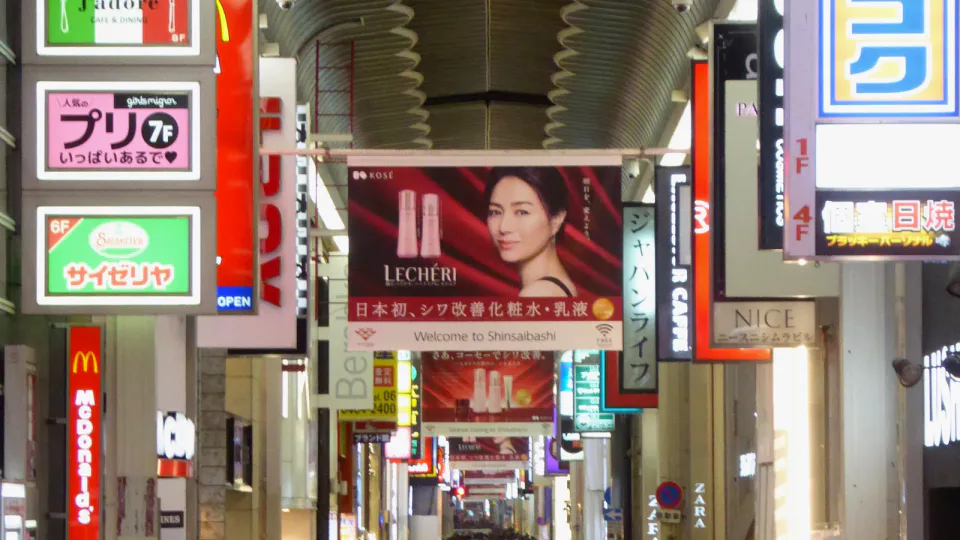
The Kyoto day has two travel layers, not one
The first layer is Osaka → Kyoto. The second is Kyoto Station or another rail arrival point → the actual sightseeing zone. Kyoto's official travel guidance explicitly recommends using trains as far as practical and then transferring to buses where needed, partly to avoid road congestion. It also warns that generic route planners can understate travel time severely when roads are congested.
So “Osaka to Kyoto is under an hour” is not the correct planning unit. The correct unit is Osaka hotel door → first meaningful Kyoto sight → last meaningful Kyoto sight → Osaka hotel door.
If you add Kyoto, pick one coherent Kyoto line
For one day, I would choose one of these structures rather than a famous-sights sweep:
↔ Scroll table left or right
| Kyoto line | Best for | What to leave out |
|---|---|---|
| Fushimi Inari + Higashiyama/Gion | First-timers who want shrine + old streets | Arashiyama and Kinkaku-ji |
| Higashiyama + Gion only | Slower walking, families, older travelers | Cross-city temples |
| Arashiyama-focused | Bamboo, river, western Kyoto | Do not bolt on eastern Kyoto because “Kyoto is small” |
Kyoto's current official congestion forecast covers Gion/Kiyomizu, Arashiyama, Fushimi Inari and other high-demand areas by time of day. On a one-day branch from Osaka, that tool is more useful than simply adding another attraction to the map. Shift time within one zone before adding a third zone.
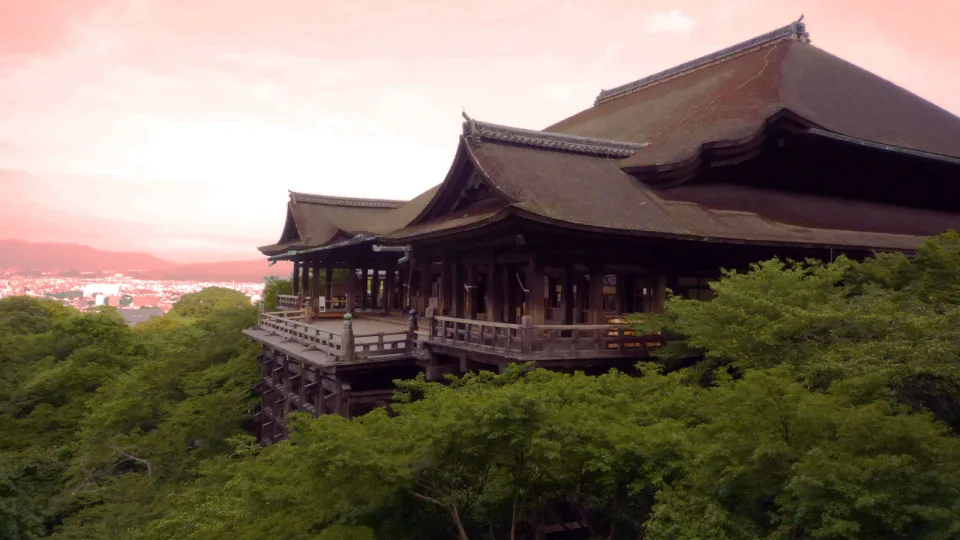
What exactly are you deleting from Osaka?
Do not answer “nothing.” If Kyoto takes the other complete day, one or more of these has to shrink: Umeda, Osaka Castle, Tennoji/Shinsekai, a shopping half-day in Namba/Shinsaibashi, the aquarium/bay area, or simply a slow food-and-nightlife day.
This is where the itinerary conflict becomes concrete. Kyoto is worth adding when you can point to an Osaka block and say, “I would rather have Kiyomizu/Gion than this.” If you cannot name the block you are willing to lose, Kyoto is not actually prioritized yet.
One Kyoto day: keep the Osaka hotel
For four days and three nights, a hotel move usually makes a tight trip worse. Checkout, luggage storage, transfer and check-in are all costs that do not appear on the Osaka–Kyoto rail timetable. Keep one Osaka base, make Kyoto a complete day, and return to the same room.
A Kyoto split starts to earn its friction when Kyoto gets two or more meaningful periods—such as an evening in Gion plus an early temple morning—or when the onward route naturally departs from Kyoto. If that is the real trip, compare Kyoto vs Osaka as the main base instead of forcing Osaka to remain the center by default.
Namba or Umeda when USJ and Kyoto are both fixed?
Choose the base for the two evenings you will actually use, not for a geometric midpoint. Namba/Shinsaibashi is stronger for Dotonbori, late food and shopping. Umeda is stronger for JR-heavy movement, Osaka Station transport and department stores. If Kyoto is the long day and USJ is the other, both can work; the better base is the one that makes your remaining Osaka time easier.
Use the Namba vs Umeda comparison before booking rather than optimizing only the morning train to Kyoto.
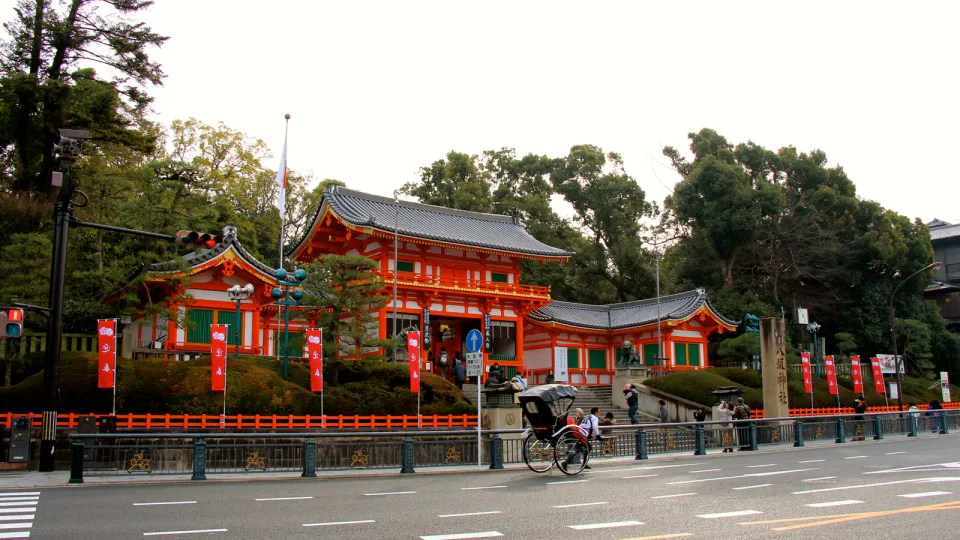
Family fatigue changes the answer more than train speed
USJ can already be a long, high-step-count day. Following it with an early Kyoto start and Higashiyama slopes is a different burden from looking at two short train lines on a map. With young children or older parents, I would make the Kyoto day geographically smaller rather than buying another pass or adding a taxi-heavy rescue plan.
If Kyoto is an older parent's main wish, keep Kyoto and delete an Osaka area. If the family mainly cares about USJ and Osaka food, skip Kyoto. Do not make the itinerary “fair” by adding one destination for every person until nobody has enough energy for any of them.
Arrival and departure windows are the biggest answer-flip
↔ Scroll table left or right
| Real four-day shape | Does Kyoto fit? |
|---|---|
| Day 1 arrives after 15:00; Day 4 leaves before noon | Usually no if you want a real Osaka trip as well as USJ. |
| Day 1 arrives before noon; Day 4 leaves in the evening | Much easier; those two partial days can reconstruct one Osaka city day. |
| Open-jaw / continue onward from Kyoto | Split becomes more rational because Kyoto is no longer a round trip. |
| Early KIX flight on Day 4 | Keep final night positioned for Osaka/KIX, not Kyoto for its own sake. |
“Four days” is therefore not a sufficient input. Count the usable hours on Day 1 and Day 4 before deciding whether Kyoto consumes the only remaining Osaka day.
Three structures that actually work
Osaka + USJ main line: arrival/Namba, one full USJ day, one full Osaka city day, departure-day finish. Skip Kyoto. Best if food, shopping and the park are the real priorities.
First Kansai sampler: arrival/Osaka, full USJ day, one focused Kyoto day, departure. Accept that Osaka city time becomes partial-day time. Do not then add Nara.
Both cities matter equally: extend to five or six days, or use an open-jaw/onward structure that lets Kyoto become a real stay rather than a rushed round trip.
Final verdict: Kyoto fits only after something else loses
If USJ is fixed and you still want a complete first Osaka experience, I would usually keep the other full day in Osaka. If Kyoto's temples and old neighborhoods are a top priority, add one focused Kyoto day and deliberately delete an Osaka area. If you want both cities to feel complete, four days is the wrong container.
The useful question is not “Can I get from Osaka to Kyoto quickly?” It is which complete Osaka experience am I willing to replace with Kyoto? Once you can answer that, the itinerary stops being a transport puzzle.
Your next decision
If Kyoto stays in the plan, choose Namba or Umeda based on where your two usable Osaka evenings end—not on the map midpoint between USJ and Kyoto.
Osaka With Kids for 7 Days: Protect Kaiyukan and USJ by Leaving Two Days Deliberately Soft
Osaka With Parents for 7 Days: Cut Transfers, Not Kyoto, Nara or USJ
Osaka Itinerary: 3, 4 or 5 Days — When to Add USJ, Kyoto or Kobe
USJ Halloween with Kids 2026: Day Plan, Safe Routes and Age Limits
Sources
Universal Studios Japan official: current 2026 operation-hours guidance, attraction schedules and timed-entry information. Kyoto City Official Travel Guide: current getting-around guidance, congestion forecast and train/bus recommendations, including the warning that ordinary route planners can substantially underestimate travel time during congestion. Information rechecked August 27, 2026. Park hours, attraction closures and Kyoto transport conditions change by date. ValueNavi scores and itinerary-conflict analysis are editorial analysis, not official ratings.