
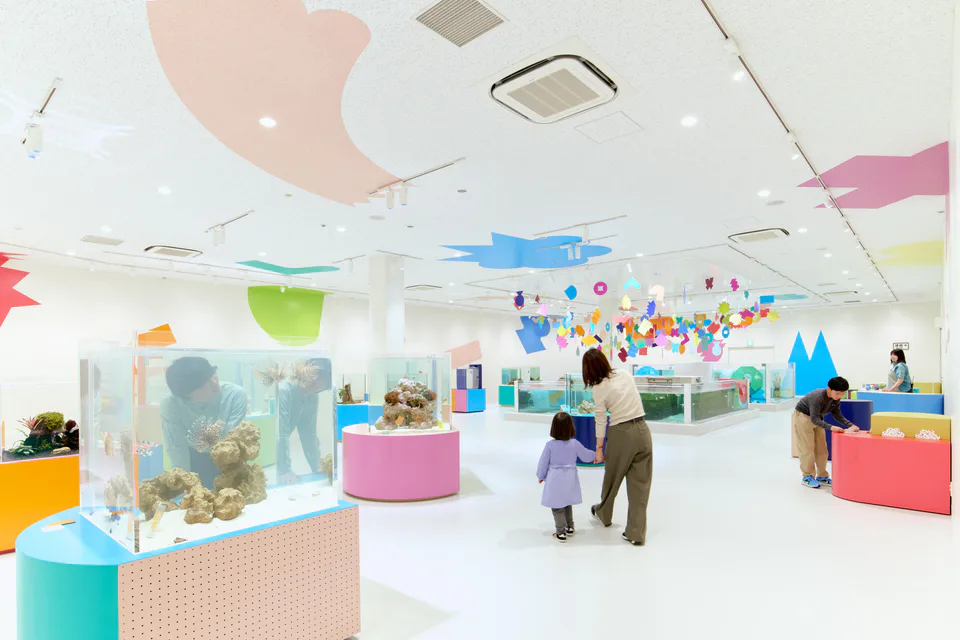
A good Osaka 7-day family itinerary should not look like an adult sightseeing plan with “kid-friendly” labels added afterward. For a standard 7-day, 6-night trip, I would protect only three major pieces: Osaka Aquarium Kaiyukan, Universal Studios Japan, and one flexible final full day that changes with your child’s age and energy. Everything else exists to make those expensive, high-effort days work: naps, meals, laundry, stroller logistics, a slower hotel afternoon and enough margin to recover when a child simply stops cooperating.
This is not another list of the best things to do in Osaka with kids. ValueNavi already has an age-based Osaka attractions guide for families covering ages 0–3, 4–6 and 7–12. This itinerary solves the next problem: how to place those attractions across a real week without reaching USJ with an exhausted child and two exhausted adults.
The rule that matters most is simple: give each day one main character. Do not stack Kaiyukan and USJ because both happen to sit around Osaka Bay. Do not use the day before USJ for Kyoto. Do not put a non-refundable early-morning activity the day after USJ. Families with toddlers may turn one “full day” into a half day. Families with older primary-school children can use Day 6 for Nara or Kyoto — but only by replacing the Osaka fallback, not by adding another city on top.
The 30-second plan: five full sightseeing days should be two hard days, two medium days and one soft day
Treat arrival and departure as logistics days, not full sightseeing days. Of the five complete days in between, Kaiyukan is medium-to-high effort and USJ is the hardest day of the week. Kids Plaza, LEGOLAND Discovery Center or a simple Osaka city day should stay medium or low. The day after USJ is deliberately soft. Only the final complete day gets upgraded to NIFREL, Nara or Kyoto if everyone still has the energy.
That may look less “efficient” than a seven-day checklist, but it protects the days that cost the most money and are hardest to recover once they go wrong. A family itinerary should not be judged by how many pins disappeared from Google Maps. It should be judged by whether the expensive tickets were actually enjoyed.
For accommodation, the default is also boring on purpose: use one Osaka base for all six nights. Recalculate only if you are doing two USJ days or dealing with an unusually early flight. Start with where to stay in Osaka with kids for beds, bathrooms, laundry and the stroller route back to the room, then compare Namba vs Umeda. With children, the hidden cost of the wrong area is usually not a few hundred yen in fares. It is one extra transfer at the end of every difficult day.
Start by cutting the itinerary by age: a toddler, a five-year-old and a ten-year-old should not inherit the same week
Ages 0–3: one main attraction in a day is enough
For babies and toddlers, do not chase attraction count. Kaiyukan, Kids Plaza and NIFREL can all work, but put only one paid anchor in a day and decide the rest after you see how the nap went. USJ can also work, but the value may be characters, family areas, shared atmosphere and short age-appropriate attractions rather than collecting the park’s headline rides.
The easiest mistake at this age is paying for adult ambition. A two-hour aquarium visit followed by a long lunch and a hotel nap can be a complete travel day. If everyone still has energy at 4 p.m., add a free walk. Do not make the free walk compulsory in advance.
Ages 4–6: the danger is assuming “they’ll love it” means they can do it all day
Children in this band may be ready for LEGO, interactive museums and more USJ attractions, but their endurance can still collapse faster than an adult itinerary expects. This is the age where families try Kids Plaza, Kaiyukan and a ferris wheel on one day because all three sound child-friendly, then start USJ the next morning already tired. Choose one indoor anchor and accept that finishing before dinner can still be a successful day.
Ages 7–12: one day trip becomes realistic, not two extra attractions
Older primary-school children are more likely to handle a full USJ day, Nara or a focused Kyoto day. That does not mean every temple suddenly becomes interesting. If Day 6 becomes a day trip, it should replace the Osaka fallback completely. Do not do Nara in the morning, come back to Osaka in the afternoon and then add another major indoor attraction at night.
Day 1: KIX to Osaka — check in, buy what you forgot and stop there
Get the luggage and stroller to the one hotel base before you test anyone’s transfer tolerance
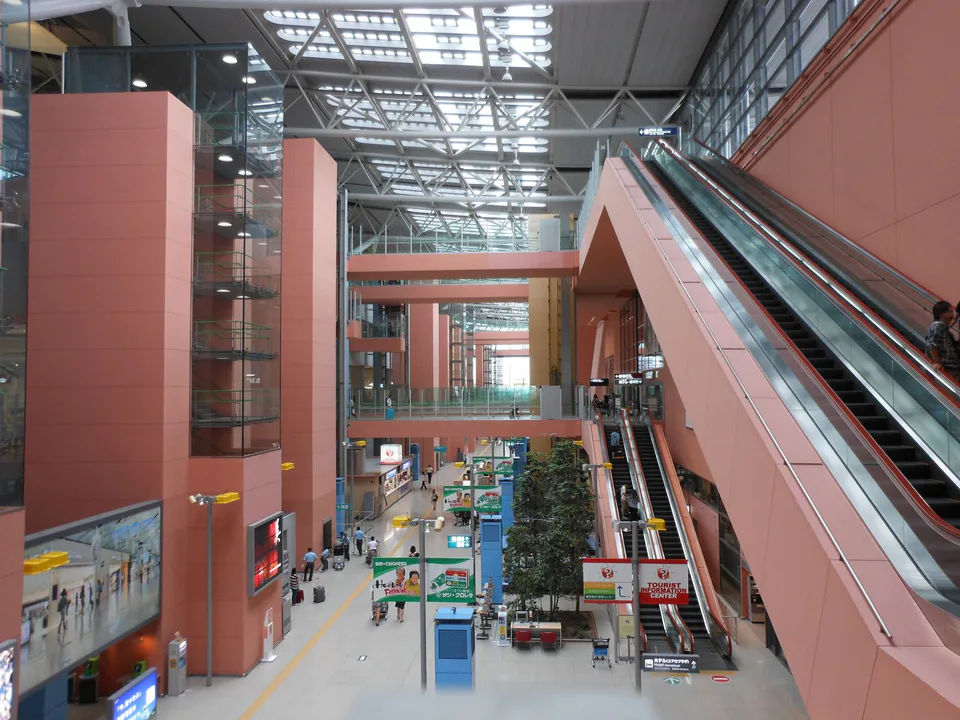
The family version of Kansai Airport transport is not “which train is fastest?” It is which route still works with luggage, a stroller, a child who slept badly on the flight and an adult carrying the things that did not fit into the stroller basket. Namba, Umeda and Tennoji produce different answers. Use the Kansai Airport to Osaka decision guide and include the final hotel transfer, lifts and walking distance rather than comparing only train times.
After check-in, keep sightseeing inside your hotel area. In Namba, eat around Dotonbori or Shinsaibashi. In Umeda, use Osaka Station for dinner and supplies. Do not buy a timed attraction on arrival night. A delayed flight, immigration queue or baggage delay should not turn the first evening into a race against a reservation.
Day 2: Kaiyukan and Tempozan — no re-entry means the nap plan has to exist before you go in
The 2026 rule change matters more to families than a small ticket-price difference
Kaiyukan sells timed-entry tickets in 15-minute blocks and ended re-entry on June 15, 2026. That changes how parents should plan the day. You can no longer assume you will leave for lunch, let a toddler sleep outside and return for another aquarium session. Eat, change diapers, prepare milk and assess your child’s energy before the entry slot rather than trying to repair the schedule after you are already inside.
The aquarium is also a place where stroller strategy matters. Some exhibits are dark and a child sitting low in a stroller may not see every tank well. For toddlers, decide in advance whether you are comfortable carrying them for part of the route, using a carrier, or taking turns between adults. The detailed ticket and timing trade-offs are in the Kaiyukan 2026 guide.
Do not combine Kaiyukan and USJ just because both are around Osaka Bay
On a map, combining them looks efficient. In real family travel, both are multi-hour anchors. USJ adds ride queues, timed entries, food decisions and late-day stamina. After Kaiyukan, use Tempozan Marketplace for food and a simple walk, then go back to the hotel. The benefit is not that you “did less.” The benefit is that Day 3 can stay light enough to protect Day 4.


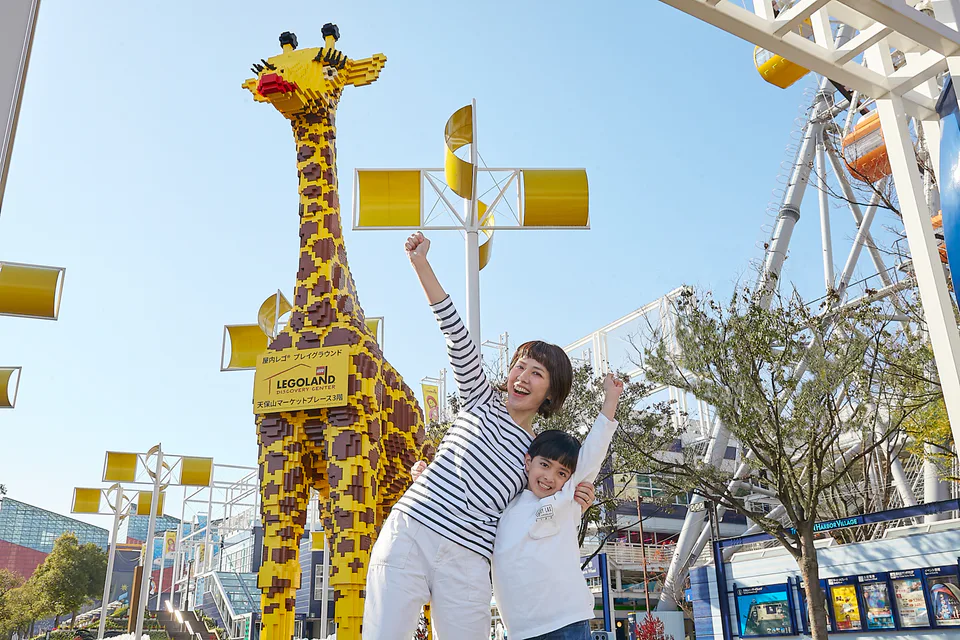
Day 3: keep it low to medium — choose Kids Plaza, LEGOLAND Discovery Center or an Osaka city day
Ages 0–3: Kids Plaza can be a half day, then the hotel nap becomes the actual second half
Kids Plaza Osaka currently opens from 9:30 a.m. to 5:00 p.m., with last admission at 4:15 p.m. Children aged 0–2 enter free. The museum also lends strollers free of charge for children up to age two, but the official inventory is limited. The most useful feature for families is not the headline number of exhibits; it is that this day can stay short. Visit in the morning or later afternoon, then use the other half of the day for a nap, laundry or one parent’s shopping window.
Kids Plaza itself notes that weekday group visits can make the earlier part of the day busier, and it sells a discounted weekday afternoon ticket during specified periods from 2 p.m. If your child no longer needs an early nap, arriving later can be more comfortable than automatically racing to every family attraction at opening time.
Ages 4–6: Kids Plaza and LEGOLAND Discovery Center are alternatives, not a two-stop indoor marathon
Both can be fun at this age, which is exactly why parents overbook them. Pick one. If LEGO is the priority, give the visit enough time to build, repeat activities and slow down rather than treating it as a two-hour box to tick before another museum. The point of Day 3 is to leave energy in the tank for tomorrow.
Ages 7–12: Osaka Castle and Umeda may be more appropriate than forcing a younger-child museum
Older children may be less interested in role-play and preschool-style interaction. A simple route through Osaka Castle Park, lunch and Umeda lets the child walk, shop and see the city while adults get a part of the trip that does not feel designed entirely around children. A family trip does not need seven “kids’ attractions.” It needs seven days in which nobody is repeatedly ignored.
Day 4: USJ is the hardest day of the week, which is why Day 3 was deliberately easy
An Express Pass is not automatically a family purchase
The first question is not “Are you travelling with children?” It is whether your family has two or three attractions that cannot fail, whether the children meet the height requirements, how much thrill they actually enjoy, and whether only part of the family wants the headline rides. A family of four does not automatically need four identical Express Pass plans because two adults and two children may value completely different attractions.
Use the USJ Express Pass decision guide to identify the experiences you are actually trying to protect. Paying for certainty can make sense. Paying because a travel forum said every family “needs” Express does not.
You cannot solve USJ fatigue by leaving for a hotel nap and coming back
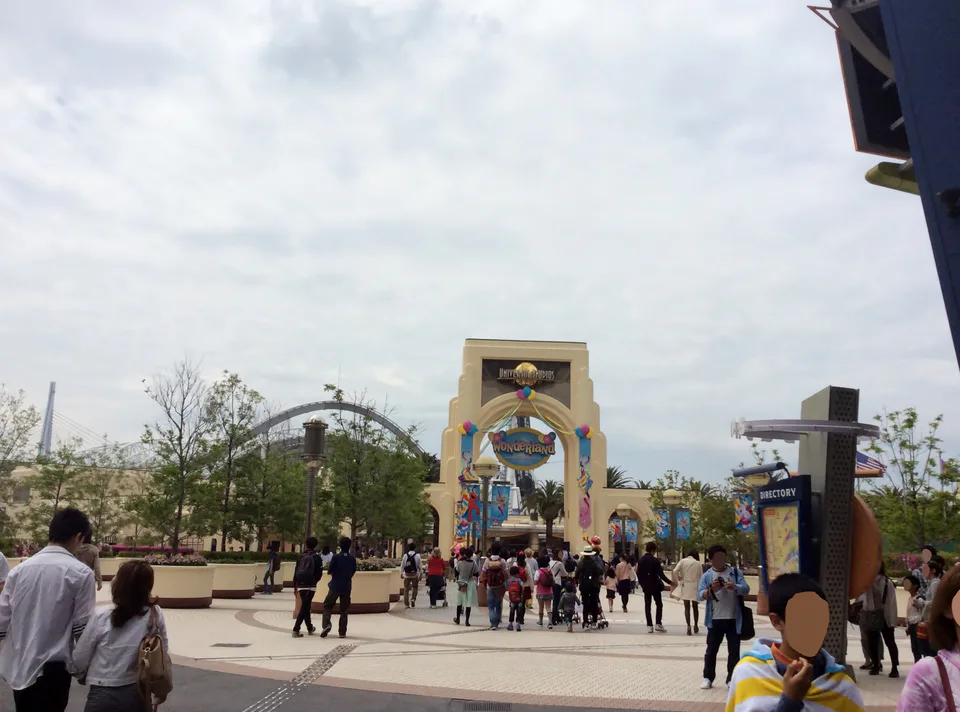
Standard Studio Passes do not allow re-entry after you leave the park. That remains true even if your hotel is in Universal City. USJ provides Family Services with nursing and changing facilities, and currently rents single-child reclining strollers for children aged 1 month to 48 months for ¥1,100. Rentals are limited, cannot be reserved and the fee or handling conditions can change.
So the realistic strategy is to slow down inside the park. One adult can sit with a tired child while another rides. Do not delay lunch until everyone is hungry and angry. If a child finally falls asleep in the stroller at 3 p.m., accept that one planned attraction may disappear. A Studio Pass buys access to the park; it does not create an obligation to extract twelve straight hours from the day.
For one USJ day, changing hotels just for Universal City usually adds more friction than it removes
A six-night family trip already contains enough packing. Moving for one theme-park night means packing clothes, medication, stroller accessories, chargers and whatever toy has become essential that week. If you are doing two USJ days, then a second base becomes more defensible. If it is one day, keep the same Osaka hotel unless the specific sleep and transport benefits clearly outweigh another check-out and check-in.
The night before USJ: pack for noon, not for an imaginary perfect twelve-hour day
Put tomorrow morning’s essentials in one easy-to-reach layer: water, a simple snack, diapers, wipes, a light jacket, sunscreen, power bank, spare clothing the child will actually wear and the ticket QR codes or app access. Do not bury every small item in one oversized family bag. Security checks and repeated bag digging become real sources of friction when everyone is already excited and impatient.
If your child still naps, decide the rule the night before: stroller sleep, carrier sleep or an early finish. Do not wait until 1 p.m. inside the park for two adults to discover they expected opposite things. Because standard tickets do not allow re-entry, the nap plan has to work inside the park or end the park day.
A nap is not a fixed 1–3 p.m. block — it depends on whether that day can actually pause
Many family itineraries treat naps like a calendar appointment that can be copied into every day. Kaiyukan, USJ and Kids Plaza do not behave the same way. Kaiyukan no longer permits re-entry. Standard USJ tickets do not permit re-entry. On those days, the nap becomes stroller sleep, a slower indoor stretch, a parent split, or an early finish.
Days 3 and 5 are different. They are soft enough to return to the hotel if that is what your child needs. This is also why I would not save a small amount on a hotel that adds a long final walk from the station. If you expect to return for naps twice in the week, the last ten minutes between station exit and hotel room are used more often than the map makes obvious.
Breakfast and laundry belong on recovery days, not USJ morning
Six nights with children will generate laundry. The worst time to discover you need to wait for a dryer is after USJ. Put the main laundry session on Day 3 or Day 5, ideally while one parent is already staying with a sleeping child. The point is to keep the theme-park night for showers, hydration and sleep.
Breakfast works the same way. A hotel breakfast is not automatically good value if it starts at 7 a.m., your child eats slowly and you want to reach USJ early. Pay for breakfast according to the mornings you will realistically use it. A slow breakfast on Day 5 may be useful; a breakfast package you keep skipping on early-start days is just a higher room rate.
Read next: solve the failure point before you add another attraction
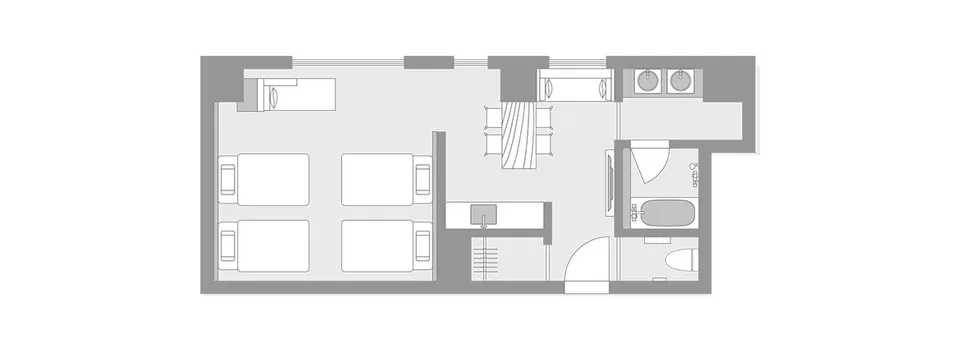
If the real concern is room size, formal beds, laundry or getting a sleeping child back from the station, start with where to stay in Osaka with kids. If the problem is deciding which attractions fit a toddler, preschooler or older child, use the Osaka attractions-with-kids age guide instead.
If USJ is the one day nobody wants to get wrong, settle the Express Pass decision before filling the rest of the week. Family itineraries often do the opposite: they finish a seven-day sightseeing list first, then try to squeeze the most expensive and least flexible day into whatever space remains.
If a child gets sick or sleep falls apart, save today before you try to save the whole week
A fever, stomach problem or two terrible nights of sleep does not automatically mean cancelling the next four days. First remove everything from today that is not truly fixed. One adult can stay with the child while another gets food, medication or supplies. Reassess the next morning before turning Day 6 into Nara or Kyoto.
The useful feature of this plan is that Days 3, 5 and 6 do not all depend on non-refundable tickets. If one soft day disappears, Kaiyukan or USJ can still survive. If symptoms are serious or persistent, of course the itinerary should give way to medical care rather than the value of a prepaid ticket.
Day 5: the post-USJ recovery day — do not wake a tired child because “we are already in Osaka”
Ages 0–3: leave the morning blank and decide the afternoon later
The toddler version of Day 5 can contain no ticket at all. Sleep, do laundry, buy supplies and eat near the hotel. If the child has energy in the afternoon, add a park, shopping centre or simple neighbourhood walk. One parent can shop while the other stays for the nap. That split is often more useful than dragging a sleeping toddler through a department store because the family itinerary says everyone must move together.
Ages 4–6: one two-to-three-hour activity is enough
If the child wakes up strong, move the unused LEGO or Kids Plaza option here. If you already used it on Day 3, do not replace it with another indoor museum simply because there is room on the schedule. Children do not have a collection goal for Osaka’s indoor attractions. Adults do.
Ages 7–12: this is a better shopping day for the adults
Older children often bounce back faster after USJ. Use Umeda or Shinsaibashi for shopping, but give the child a visible endpoint and something they care about — lunch, a game store, a character shop or a rest break. Fairness does not mean every day is a children’s museum. It means adult plans are not allowed to stretch without limit.
Day 6: the only big flexible day — choose NIFREL, Nara or Kyoto, never all three
Do not decide this day too early. Check the family the night before. If a child is still sleeping badly, is hard to wake, or is eating breakfast much more slowly than normal after USJ, cancel the day trip and use the Osaka fallback. That is not “giving up.” It is using the flexibility you deliberately bought into the itinerary.
Ages 0–3: stay in Osaka first, or use NIFREL if one extra outing still feels worthwhile
Seven days with a toddler does not create an obligation to leave Osaka. NIFREL currently lists regular hours of 10 a.m. to 6 p.m., with last admission at 5 p.m., while noting that hours can change seasonally. It sits in the EXPOCITY complex in Suita rather than central Osaka, so the decision is not “Is this another aquarium?” The decision is whether a more open, interactive animal-and-art environment is worth a north-Osaka detour for your family.
The full trade-off is in the NIFREL decision guide. Do not use it as an automatic substitute just because the family enjoyed Kaiyukan.
Ages 4–6: NIFREL is often easier than adding temples, but another indoor venue may still be unnecessary
By this point the week may already contain Kaiyukan, USJ and Kids Plaza. A child who still wants more animals may enjoy NIFREL. A child who looks tired may enjoy a park and a shopping centre much more. A seven-day Osaka trip is not incomplete because you did not leave the city.
Ages 7–12: only now would I seriously consider Nara or Kyoto
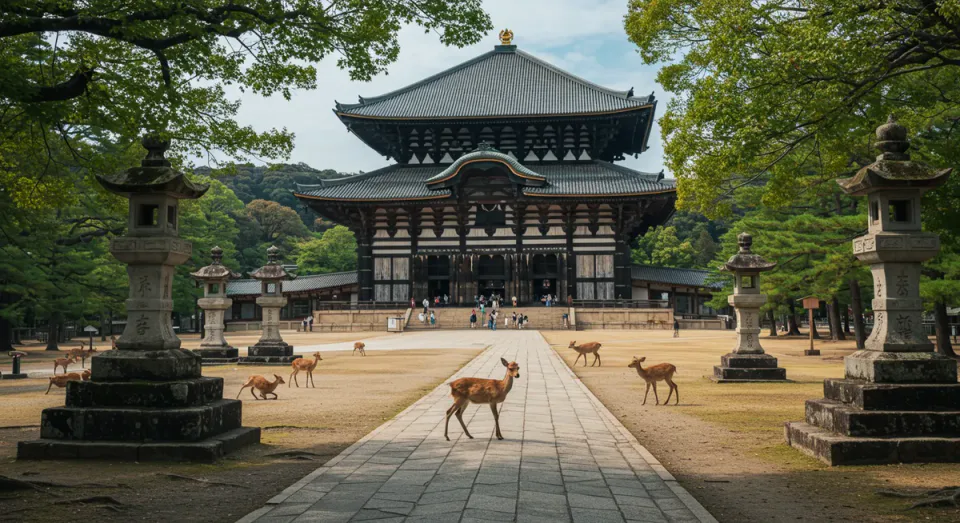
Older children who like animals, history or simply want to see another city can turn Day 6 into Nara. Nara Park and Todaiji can already make a complete day. If the child is especially interested in living creatures, then consider Nara Ikimono Museum — but do not treat Mi Nara as if it sits next to the deer park.
Kyoto is more dependent on the child. If the parents mainly want Kiyomizudera and Fushimi Inari, use the same trade-off logic from the Osaka-and-Kyoto itinerary decision. Even with seven days, do not do Kyoto in the morning, Nara in the afternoon and Osaka at night. If you leave Osaka, let that city own the day.

Day 7: departure day is successful when nobody needs a taxi to rescue an overfilled morning
Do not book another timed museum on departure day. Work backward from airport check-in and leave margin for lifts, toilets, water, luggage and the possibility that a child suddenly refuses to move quickly. Namba, Umeda and Tennoji have different routes to KIX, so the right answer depends on the hotel you chose rather than a generic “airport express” recommendation.
If the flight is late, do brunch and final shopping in the hotel area. The most useful final memory is not attraction number seventeen. It is everyone arriving at the airport with enough energy to manage their own bags and boarding process.
Where to stay: choose the hotel by the hardest journey back to the room
If USJ is the hardest day, check the evening route from Universal City and whether it adds another transfer. If Day 6 may become Kyoto or NIFREL, Umeda works better for some northbound routes. If KIX, Nara and Namba dinners matter more, Namba can be more intuitive. Do not begin with “best family hotels.” Begin with the final twenty minutes of your hardest day.
If you still cannot narrow it down, use the Osaka accommodation decision hub to reduce the city to two areas, then return to the family-hotel guide for formal beds, bathrooms, laundry and stroller storage. A room that says “sleeps four” can still produce a bad family night if only two places are proper beds or one bathroom becomes a queue when everybody gets back tired.
For six nights, also read the Osaka long-stay hotel guide before paying more for a bigger room. In a week, laundry access and the ability to reset the room may matter more than a small difference in floor area.
Should you change hotels during the week? This version assumes no
Every family hotel move creates another packing session for clothes, medication, stroller accessories, chargers and whatever toy has become essential. Moving to Universal City for one USJ night and then moving back on Day 5 usually adds friction without enough return. Two USJ days are the point where a second base becomes more defensible.
The same rule applies to Nara and Kyoto. Do not move to Nara for one day trip or to Kyoto just to say the family slept there. Adults often underestimate the cost of a hotel move because they count the train ride but not the hour before check-out, luggage storage, waiting for a room and rebuilding bedtime in a new place.
Family attraction passes are easy to misuse because “breaking even” can make parents drag children to stop number five
Osaka sightseeing passes can be excellent for adults who genuinely want a dense day of included attractions. This itinerary does the opposite: it deliberately reduces most days to one paid anchor. If a pass only works after you add a cruise, observation deck and another attraction after Kaiyukan, the pass is changing the family itinerary rather than making the existing itinerary cheaper.
Add one extra column to every family break-even calculation: failure cost. If a child falls asleep at 3 p.m. and the third planned attraction disappears, does the pass still make sense? If the answer only works when every stop succeeds, the product is too brittle for this family.
Rain plan: swap Days 3, 5 and 6 — do not automatically move a locked USJ day
A seven-day family itinerary needs replaceable blocks, not a giant list of rainy-day attractions. If Day 6 is very wet, cancel Nara or Kyoto and use NIFREL, Kids Plaza or shopping. If Day 3 is sunny, move the outdoor Osaka Castle option forward and save an indoor venue for the post-USJ recovery day.
If USJ is already tied to ticket conditions and timed plans, do not move it casually because of rain. Check the park’s current operation information and your ticket conditions first. The safer design is to keep two or three lower-cost days interchangeable rather than turning every day into a non-refundable appointment.
Two children with a big age gap? Stop pretending every activity needs the whole family together
A three-year-old and a ten-year-old can have completely different value from USJ, Kids Plaza and Nara. Instead of choosing an activity that both children only tolerate, split for 60–90 minutes inside the same area and agree on a regroup point. One adult handles a ride or older-child activity while the other manages a toddler break, then everyone rejoins for the next shared block.
This is especially useful at USJ and large shopping complexes. Not every ticket needs to be purchased in an identical configuration for the whole family. Shared memories do not require twelve identical hours. They need one or two genuinely shared highlights that nobody had to endure.
Who should not use this exact seven-day plan?
A one- or two-year-old whose sleep is already unstable after flying
Slow it down further. Make both Days 3 and 5 half days and remove the Day 6 day trip. Flying to Japan does not turn a one-year-old into a primary-school traveller.
Children aged 12–15 who mostly want shopping, anime and thrill rides
This version may feel too young. Keep USJ, but replace Kids Plaza or NIFREL with Shinsaibashi, Umeda, game stores, anime shopping or an older-child experience. At that age the main family friction is often no longer naps; it is that four people want different things.
A family whose real priority is Kyoto
If Kyoto deserves two complete days, an Osaka-only hotel base is no longer the obvious winner. Recalculate a split stay instead of commuting with children on several days. Avoiding one hotel move is not a victory if it creates four cross-city family commutes.
Forty-eight hours before departure, check only these eight things
One: Kaiyukan timed entry and the no-re-entry rule. Two: USJ operating hours, tickets and Express timed entries. Three: the child’s actual height against the USJ attractions that matter most. Four: Kids Plaza closure dates. Five: the current operating information for whichever Day 6 option survives. Six: whether the hotel will hold a stroller and large bags. Seven: whether laundry is going to collide with USJ night. Eight: the KIX route and airport buffer for Day 7.
If one of the first five fails, replace that day first. Do not rebuild all seven days. The strength of this plan is not perfection; it is that two or three soft days can absorb failure without destroying the expensive days.
Final verdict: the best Osaka family week is not the one where the child is happy every hour — it is the one where the two expensive days do not fail
Kaiyukan and USJ need the most protection. Kaiyukan no longer allows re-entry. Standard USJ tickets also do not let you exit for a hotel nap and return. That means adult-style “we’ll just go back to the hotel if everyone gets tired” planning does not work on the two days when families most want it to work.
The answer is to make the preceding day lighter, solve food and stroller needs before entry, accept slower pacing inside, and deliberately leave the next day soft. Day 6 then stays open until you know the family you actually have at the end of the week: ages 0–3 can stay in Osaka or use NIFREL, ages 4–6 can choose based on animal and indoor-interest fatigue, and ages 7–12 are the point where Nara or Kyoto becomes a realistic full-day upgrade.
If you need another city, use the Osaka day-trip comparison to decide which one deserves the entire day. Do not turn a flexible day into a three-city collection exercise.
Sources checked
The time-sensitive details in this article were rechecked in August 2026. Kaiyukan’s official notice confirms the end of re-entry from June 15, 2026 and its 15-minute timed-entry system. Kaiyukan official re-entry notice
Universal Studios Japan’s official family-service and ticket pages confirm that standard Studio Passes do not allow re-entry, Family Services are available, and current stroller rental is for ages 1 month to 48 months at ¥1,100 with limited availability and no reservation. USJ services for guests with children
Kids Plaza Osaka’s official visitor page confirms current opening hours of 9:30 a.m.–5:00 p.m., last admission at 4:15 p.m., current admission categories and free on-site stroller loans for children up to age two while supplies last. Kids Plaza Osaka visitor information
NIFREL’s official English page currently lists regular hours of 10:00 a.m.–6:00 p.m., last admission at 5:00 p.m., while noting that hours can change seasonally. NIFREL official English site Recheck prices, hours, closures and ticket conditions for your actual travel date.
USJ Hotels for One Day vs Two Days: When Is Universal City Worth Moving To?
Best Dates for USJ Halloween 2026: Crowds, Prices and Hotels
Osaka Night Views: When Free Beats the Observation Deck — and When HARUKAS 300 Is Worth Paying For
Okinawa With Kids: The Road Trip Works Only If the Car Seat, Boot and Nap Window Fit Together
Shikoku Itinerary: 4 Days Without a Car for Yosakoi and Awa Odori