Osaka attractions with kids are easiest to get wrong when you treat a two-year-old, a six-year-old and a ten-year-old as the same traveller. For ages 0–3, naps, carriers and stroller handling can matter more than how many exhibits a venue has. Ages 4–6 usually need somewhere they can touch, build and move. By ages 7–12, science, making and longer explanations finally start to earn their time. Add rain, sibling age gaps and whether you can leave and come back, and the “best family attraction in Osaka” can change completely from one family to the next.
If your hotel base is still undecided, start with where to stay in Osaka with kids. Namba, Umeda or Universal City changes whether a tired child can get back for a nap without turning the return trip into another attraction-sized project.
30-second decision: cut the list by age, rain and stroller needs first
↔ Scroll table left or right
Child / condition | Best first choices | Why it works | Main trade-off |
Ages 0–3 + naps / stroller | NIFREL; Kaiyukan if the routine fits | Strong visual interest without needing to read; NIFREL is easier to operate with a stroller | NIFREL costs a trip out of central Osaka; Kaiyukan now has a real stroller and no-re-entry trade-off |
Ages 4–6 + need to burn energy | Kids Plaza Osaka; LEGOLAND Discovery Center Osaka | Hands-on play, role play and indoor activity usually beat a static exhibition at this age | Both can absorb far more time and energy than parents expect; LEGOLAND also needs a timed entry |
Ages 7–12 + likes making things / asking why | Osaka Science Museum; Cup Noodles Museum Osaka Ikeda | Science, planetarium programs and making activities become much more rewarding | Ikeda is not central Osaka, and Chicken Ramen Factory has age, pairing and reservation rules |
A full rainy day | Kids Plaza; LEGOLAND; Osaka Science Museum | Their core experience is indoors and less weather-dependent | Indoor does not mean walk-in: timed entry and capacity can still matter |
You cannot separate from the stroller | NIFREL; Osaka Science Museum | Strollers are explicitly accommodated and elevators / baby facilities reduce friction | Peak periods still require considerate stroller handling around exhibits |
USJ already takes one full day in a 3–4 day trip | Choose only one more family “main attraction” | Protects rest, shopping and unscheduled time | Adding two or three more “must-do” venues often treats a child’s stamina as a free resource |
One important distinction: the age bands below are ValueNavi editorial judgments based on comprehension, stamina and the amount of work pushed onto the parent. They are not venue-imposed age limits. Whenever a venue has a real age, height, booking or adult-accompaniment rule, that is stated separately. Do not confuse “best fit for this age” with “officially allowed at this age.”
Ages 0–3: choose places they can understand before places with the most content
Kaiyukan: toddlers understand the spectacle, but the stroller is not the advantage people assume
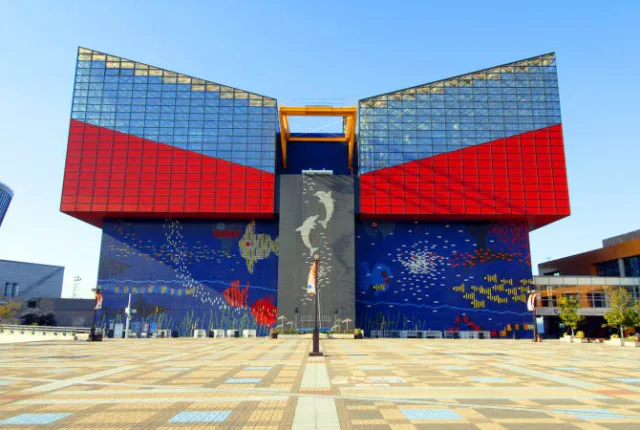
Kaiyukan works unusually well across a wide age range because the large tanks, schools of fish, light, movement and whale sharks are already the content. A toddler does not have to read a label to understand that something enormous is swimming past. Children aged two and under are currently free, and e-tickets are sold for a chosen entry time. If marine life already holds your child’s attention, Kaiyukan is the broadest all-age choice in this comparison.

But do not reduce that to “stroller-friendly.” Kaiyukan itself recommends leaving strollers at the designated area near the entrance when practical. Some animals are hard to see from a low stroller viewpoint, parts of the aquarium are dark, and busy passages can become awkward. If you keep the stroller, most of the normal route uses ramps and staff can guide families to elevators; nursing and diaper-changing facilities are available. For a baby who needs to sleep in the stroller for the entire visit, that trade-off is worth deciding before arrival.
The bigger 2026 change is re-entry. Kaiyukan ended re-entry from June 15, 2026. If a toddler melts down and you leave for a meal or a hotel nap, the same ticket no longer gets you back inside. That makes Kaiyukan much better for a family happy to finish its main route in one continuous two-to-three-hour block than for a family relying on repeated exits to regulate the day.
If Kaiyukan is your family’s main attraction | compare timed entry for your date
NIFREL: easier with a stroller and nap breaks, but you pay with travel time out of central Osaka
NIFREL’s advantage for babies and toddlers is not simply that it is “smaller than Kaiyukan.” It is that the day is easier to operate. Strollers can move through the venue, elevators connect the floors, baby-care facilities are provided, folded strollers can be left in the designated area, and coin lockers are available. Regular admission is currently ¥2,400 for ages 16+, ¥1,200 for ages 7–15, ¥700 for ages 3–6, and free for children under three.
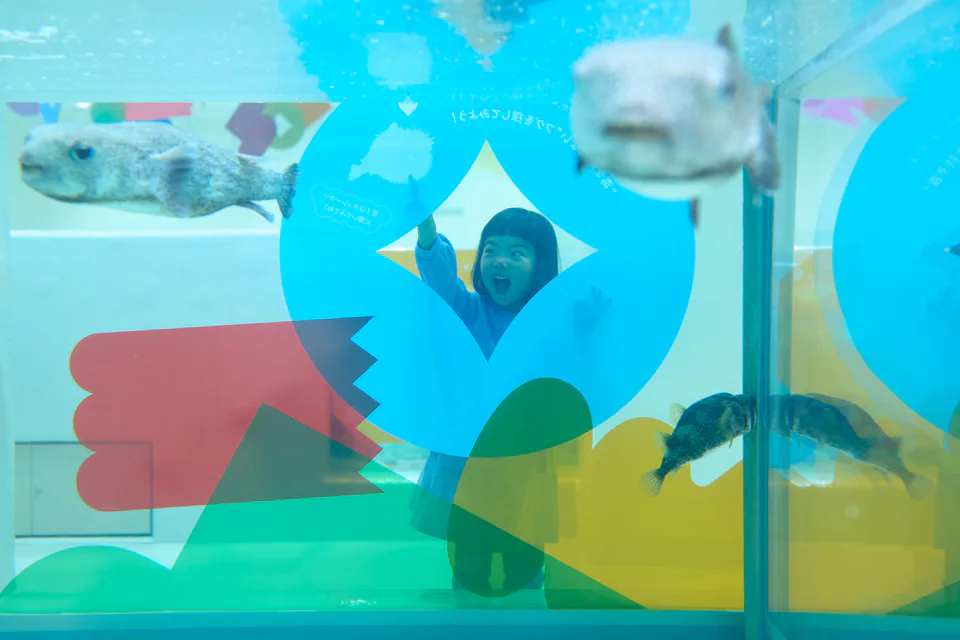
NIFREL also currently allows same-day re-entry: tell staff before leaving, with re-entry requests accepted until one hour before closing. That is a real family advantage if you want to eat in EXPOCITY, change a diaper, reset a tired child and then decide whether to return. The cost is geography. NIFREL sits by Expo ’70 Commemorative Park / EXPOCITY rather than being a quick indoor stop in Namba or Umeda. If rain suddenly starts while you are already downtown, travelling out there just to fill two hours can be a bad exchange.
Ages 4–6: Kids Plaza vs LEGOLAND is open-ended exploration vs a LEGO world
Kids Plaza Osaka: one of the safest rainy-day choices, but not a 90-minute filler
Kids Plaza Osaka is a children’s museum rather than an adult museum with a children’s corner. The fourth floor includes an area recommended for infants and toddlers, while other floors extend into science, culture, making and large-scale play. For many four-to-six-year-olds, the ability to walk up, touch something, climb, try it, fail and go back again is much more engaging than being asked to stand still and “look at the exhibit.” Its core experience is indoors, which is why it becomes especially valuable on a wet Osaka day.
The family infrastructure is unusually concrete: nursing rooms, hot water for formula, diaper-changing stations and accessible toilets are available. Free indoor strollers can be borrowed from the first floor; the current stock is 20 and the model is mainly intended for children aged two and under. There are also stroller-parking areas on the fourth and fifth floors. Current hours are 9:30–17:00 with last admission at 16:15, and same-day re-entry is allowed via the third-floor exit. Regular admission is ¥1,500 for adults, ¥800 for ages 6–15, ¥500 for ages 3–5 and free for ages 0–2.
The downside is not the ticket price. It is the fact that children control the clock once they find the part they love. Parents may imagine a neat 90-minute visit and then discover that “one more floor” is impossible without dragging a child away from the exact thing the trip was meant to let them enjoy. Avoid placing Kids Plaza between a fixed lunch booking and a cross-city evening plan.
LEGOLAND Discovery Center Osaka: excellent for a LEGO child, unnecessary for everyone else
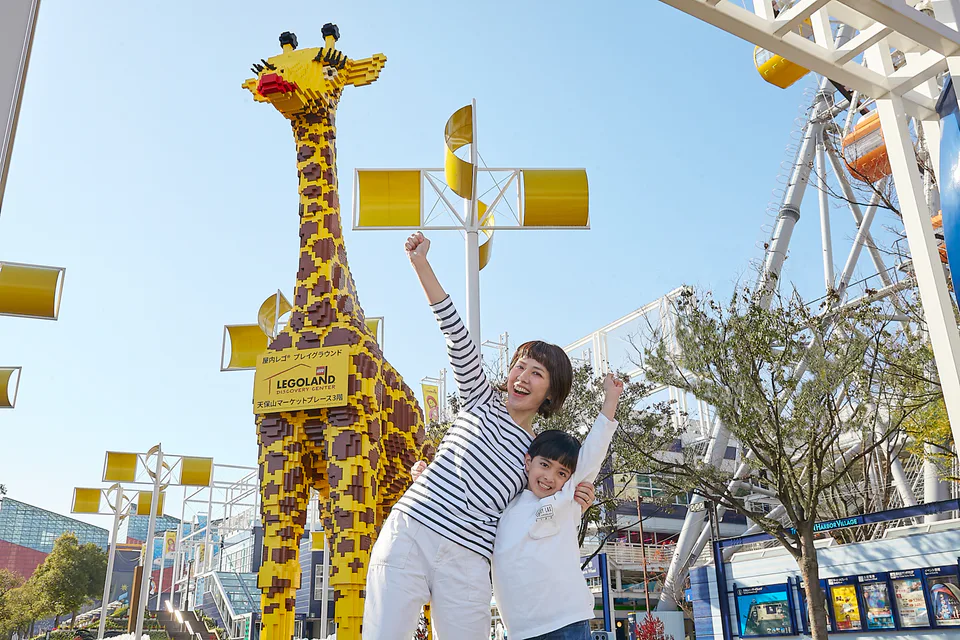
LEGOLAND Discovery Center Osaka is an indoor LEGO attraction with building areas, games, rides and a 4D cinema. It is not the large outdoor LEGOLAND Japan resort in Nagoya. Entry is tied to a selected date and time slot. Adults aged 16+ must be accompanied by a child aged 15 or under, and children under three enter free. The venue also warns that walk-up tickets can sell out, so this is a strong rainy-day option but not a guaranteed “we will decide at the door after it starts raining” backup.
Kaiyukan and LEGOLAND Discovery Center are both in the Tempozan area, but proximity does not mean you should automatically do both. A four-to-six-year-old who spends several high-energy hours at LEGOLAND can reach the aquarium with very little attention left. If LEGO is the child’s thing, let LEGOLAND be the main event. If LEGO is mainly on the parents’ “Osaka with kids must-do” list, Kaiyukan or Kids Plaza may deliver more value with less itinerary pressure.
Ages 7–12: start valuing the satisfaction of finishing a task
Cup Noodles Museum Osaka Ikeda: free admission does not mean zero planning
The museum itself is currently free. My CUPNOODLES Factory costs ¥500 per cup and does not take advance reservations; you obtain a same-day numbered ticket on a first-come basis, and distribution can end early when it is busy. For a school-age child who can design the cup, choose flavours and understand the sequence of making something personal, that process often becomes more memorable than the historical displays around it.
Chicken Ramen Factory is the part that can split a family. It currently requires advance booking, lasts about 70 minutes and is for ages six and above. Children aged 6–8 must pair with an adult or someone aged 12+. More importantly, non-participants under six cannot enter the workshop at all — even in a stroller or baby carrier. One adult travelling with an eight-year-old and a three-year-old therefore cannot solve the problem by simply having the younger child sit beside them.
The second cost is location. The museum is in Ikeda, not central Osaka. If the family only wants My CUPNOODLES, the museum plus the making activity can form a compact north-Osaka half-day. But in a three-to-four-day trip where USJ already takes one full day, ask whether the extra journey is earning enough value for your specific child.
Osaka Science Museum: exceptional value for school-age kids, but choose the planetarium program carefully
Osaka Science Museum currently opens 9:30–17:00, with exhibition entry and re-entry until 16:30. The exhibition hall costs ¥400 for adults, ¥300 for high-school / university students and is free for junior-high students and younger. Planetarium programs are usually about 45 minutes and cost ¥600 for adults, ¥450 for high-school / university students and ¥300 for ages three through junior high; children aged two and under can sit on a guardian’s lap. Strollers are allowed, elevators connect the floors, a limited number of loan strollers are available, and there is a nursing room.
For a seven-to-twelve-year-old who actually stops to operate exhibits, watch a phenomenon and ask why it happened, that low admission price can beat a much more expensive attraction. The planetarium still needs a little thought: late entry after a projection begins is not allowed. But parents of younger children should not assume every program is equally difficult — the museum currently also runs a roughly 35-minute “Family Time” program aimed at preschoolers and lower-elementary children. The right rainy-day decision is therefore not “planetarium yes or no,” but whether the scheduled program matches the child you actually brought.
When rain suddenly hits: indoor does not mean you can simply walk in
For a rainy-day swap, the first filter should be low transport loss plus predictable entry conditions. From Umeda / Osaka Station, Kids Plaza and Osaka Science Museum are usually easier to fold back into the original day than detouring to NIFREL. If you are already in the Tempozan bay area, Kaiyukan and LEGOLAND make far more sense. LEGOLAND uses timed reservations and capacity; Kaiyukan also sells timed e-tickets. A real Osaka rainy-day plan should exist the night before as two or three candidates, not begin with a search after the rain has already started.
Hotel location magnifies this. Compare Namba vs Umeda if you are still deciding the base; if naps, stroller handling and laundry are the bigger concern, use the Osaka family hotel decision guide. A base that lets you get a tired child back to the room without another long transfer can be worth more than squeezing one more discounted ticket into the afternoon.
With a big sibling age gap, stop demanding equal value from the same venue
A two-year-old plus an eight-year-old is the classic conflict. The older child may love the sense of a mission at Osaka Science Museum or Chicken Ramen Factory; the toddler needs somewhere they can look, walk, sleep and reset. A better structure is to make Kaiyukan or NIFREL the shared family anchor, then — when the adults can split — let one adult take the older child to the age-gated or task-based experience. That is more realistic than asking a two-year-old to sit through a 70-minute workshop designed for somebody else.
The hotel needs to support that split too. If four people are sharing one room, the Centara Grand vs Hotel Keihan Namba Grande family comparison looks at beds, bathrooms and laundry; an apartment-style alternative such as MIMARU Osaka Namba Station changes the evening friction in a different way. Attraction planning does not end when the ticket gate closes — tired children still have to shower, eat, unpack and sleep.
If USJ already takes a day, how many more family headliners do you need? Usually one
USJ is already a high-stamina, queue-heavy day with an unpredictable finish time. On a three-to-four-day Osaka trip, do not automatically add Kaiyukan, Kids Plaza, LEGOLAND and NIFREL simply because every family list calls them “must-dos.” Choose one main attraction that fits the child’s age and interests, then keep one rain backup. The empty space left in the itinerary is not wasted; it is what lets meals, shopping and sleep happen before everyone reaches the point of collapse.
If the real question is whether Kyoto still fits once USJ takes one day, read the four-day Osaka + USJ itinerary decision. If Osaka is your base for repeated Kansai outings, the Osaka hotel guide for Kyoto and Kobe day trips shows why repeated station friction matters. Family trips lose more time from changing zones every day than from skipping one famous attraction.
If you are doing two consecutive USJ days, the hotel calculation changes again. Start with one USJ day vs two: when Universal City is worth moving to and then compare the practical value of The Park Front Hotel’s near-gate location. Removing a late return journey can be more valuable than adding one more night attraction.
Final verdict: there is no overall winner — only the attraction that fits today’s child
For ages 0–3, let nap timing, stroller handling and re-entry rules decide more of the itinerary than the size of the attraction. NIFREL is easier to operate when flexibility matters; Kaiyukan wins when the child already responds strongly to marine life and the family can complete the visit in one block.
For ages 4–6, Kids Plaza and LEGOLAND Discovery Center rise when active, hands-on play matters more than “seeing” a famous venue. Choose LEGOLAND because the child loves LEGO, not because a family ranking told you to. For ages 7–12, Osaka Science Museum and Cup Noodles Museum become much stronger once finishing a task, making something and understanding why it works are part of the fun.
For rain, judge transport loss and entry rules before you judge whether a roof exists. For siblings far apart in age, allow the family to split for one activity instead of forcing equal value from every hour. And if the Osaka trip is already short and USJ owns a full day, deleting one attraction can be the highest-value decision you make.
Next decision | choose your Osaka hotel base by USJ days, stroller and nap needs
Osaka Attractions Map: How to Group Namba, Umeda, Tennoji and the Bay Area
Osaka Long-Stay Hotels for 5–7 Nights: Laundry, Kitchens and When Not to Change Areas
Osaka Attractions: Stop Ranking Sights and Start Grouping Neighborhoods
Otsu Matsuri 2026: Yoimiya or the Main Parade? Choose by scene, stamina and hotel friction

Sources
Osaka Aquarium Kaiyukan — stroller / baby facilities
Osaka Aquarium Kaiyukan — notice ending re-entry from June 15, 2026
NIFREL — official English visitor information
Kids Plaza Osaka — visitor information
Kids Plaza Osaka — floor guide
LEGOLAND Discovery Center Osaka — tickets and visit rules
Cup Noodles Museum Osaka Ikeda — admission and activities
Osaka Science Museum — opening hours and admission
Operating hours, prices, timed-entry rules and activity availability can change by date or season. Recheck the official venue page before buying tickets or building a fixed-time family itinerary.