
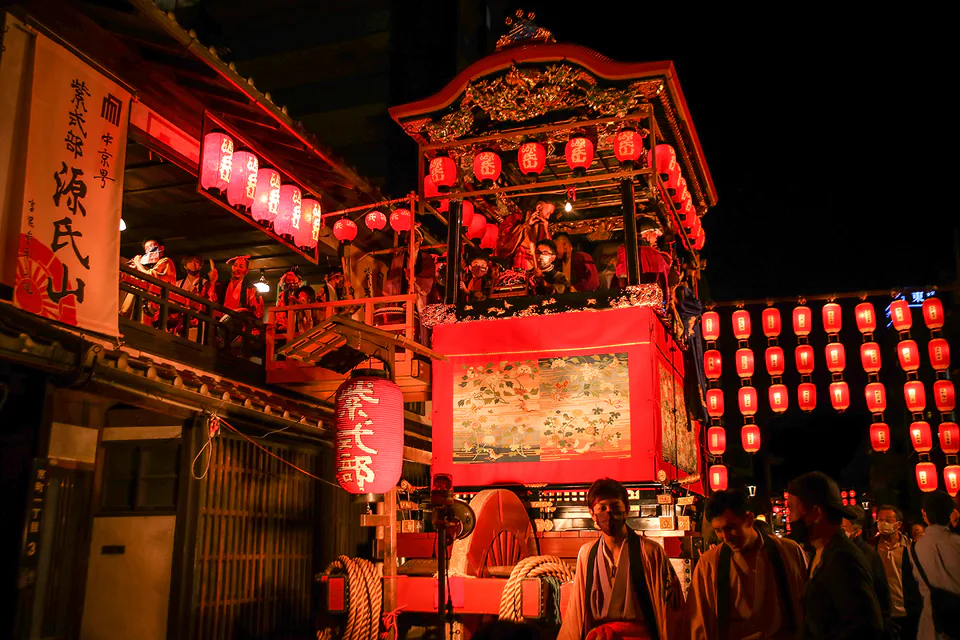
If you can attend Otsu Matsuri 2026 only once, October 11 is the stronger default. That is the main festival day, when the 13 hikiyama move through central Otsu and their karakuri puppets perform at designated shomo stops. Choose October 10 Yoimiya instead when your real priority is lantern-lit float detail, a shorter evening or lower stamina cost.
The Otsu Matsuri Hikiyama Federation has confirmed the 2026 dates — Yoimiya on Saturday, October 10 and the main festival on Sunday, October 11 — but the current-year procession order, traffic-control map and minute-by-minute operating details still need the 2026 release. Do not plan with a previous year’s route as if it were final.
ValueNavi verdict: October 11 wins on Scene Irreplaceability: moving floats plus karakuri are the experiences Yoimiya cannot reproduce. October 10 wins on Low-Friction Value: you can spend two or three focused hours seeing illuminated craftsmanship and leave without feeling that you abandoned an all-day parade.
Decision in 30 seconds
↔ Scroll table left or right
Your priority | Choose | Why | Main trade-off |
First and probably only visit | Oct 11 main festival | Moving hikiyama and karakuri show what makes Otsu Matsuri distinctive. | Higher standing, crowd and route-planning cost. |
Lantern photography and float decoration | Oct 10 Yoimiya | Illuminated stationary floats reward slower observation. | You miss the full moving-float context. |
Family with young children | Oct 10 by default | Easier to define a two-hour stop condition and leave before fatigue dominates. | Less of the festival’s mechanical and procession character. |
Older traveller or low standing tolerance | Oct 10 unless karakuri is essential | Shorter, modular evening. | Movement and shomo performances are sacrificed. |
You have both days | Short Yoimiya + focused main day | Each day covers a different scene without becoming two marathons. | Requires another night or extra travel. |
You are also considering Kishiwada October festival | Pick one festival first | Both use Oct 10 as eve and Oct 11 as main day in 2026. | Trying to combine them adds cross-Kansai movement at the worst time. |
Why the main day wins the Scene Irreplaceability test
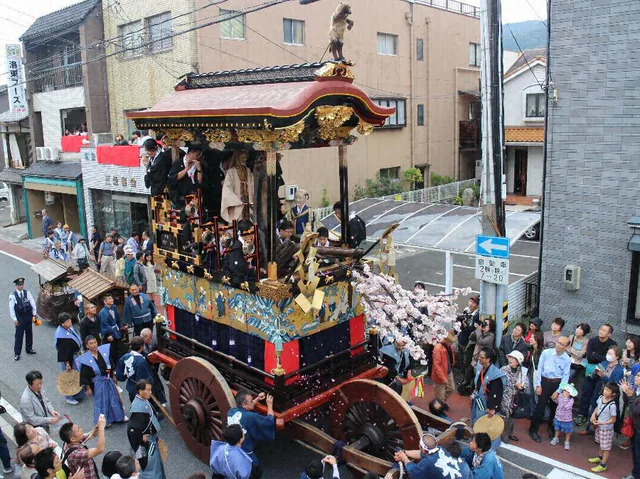
The federation states that Otsu Matsuri currently has 13 hikiyama, all built in the Edo period, and every float carries karakuri puppets. The floats are normally stored dismantled and rebuilt around a week before the festival. During the main procession, the karakuri are performed at designated shomo points.
That creates a useful ValueNavi test: which scene cannot be recovered on the other day?
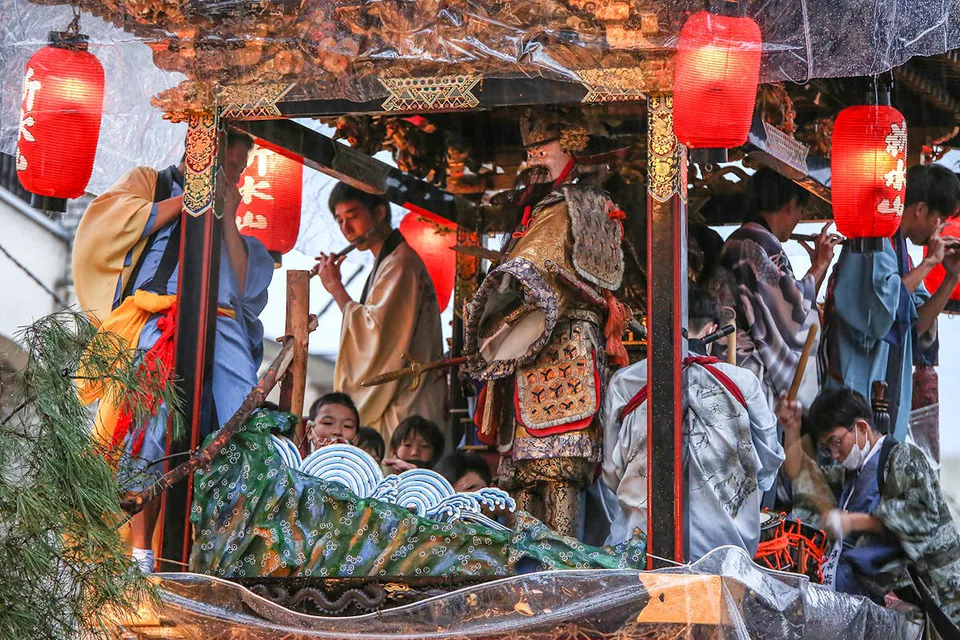
Lanterns, carvings, textiles and festival music can be appreciated on Yoimiya.
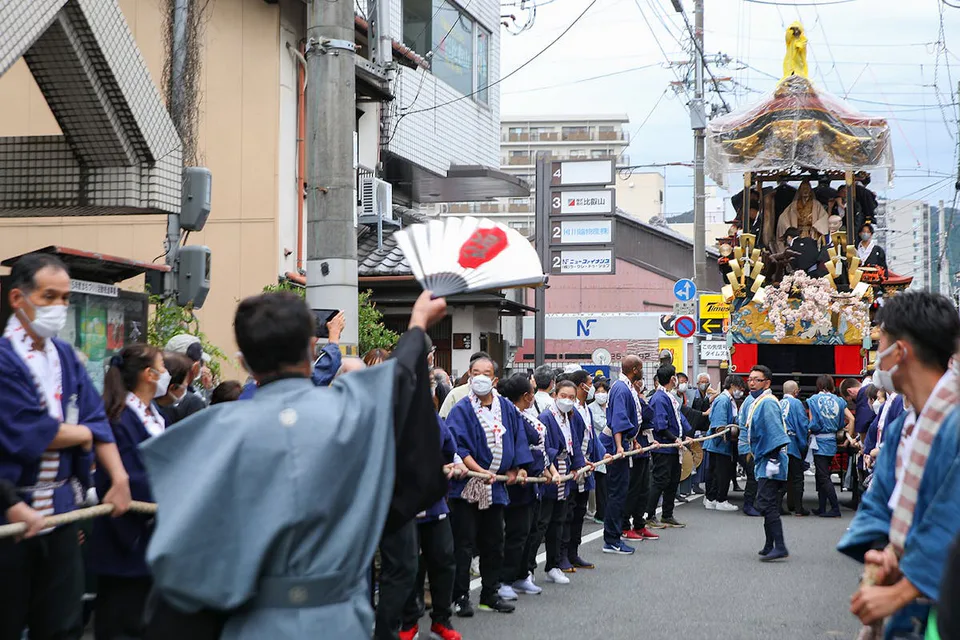
Float movement through the streets plus karakuri in procession context belongs to the main day.
If this is your only visit and you have no strong stamina or photography constraint, the more irreplaceable scene should normally win. That is why October 11 is the default recommendation.
Why Yoimiya can still be the better use of two hours
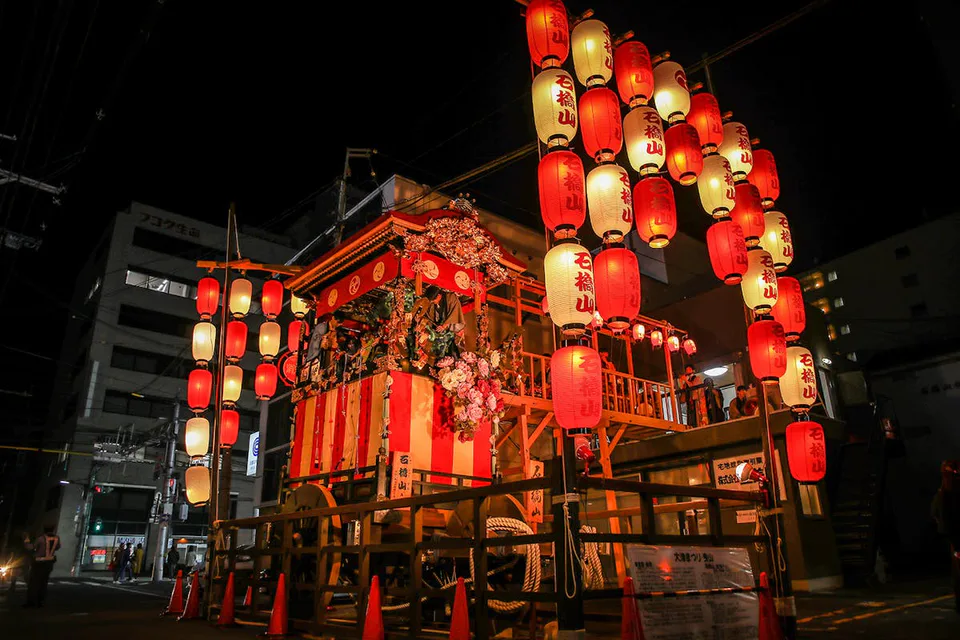
Yoimiya is not the “lesser” day. It simply buys a different kind of value. Instead of following moving floats, you can concentrate on illuminated details while the hikiyama are in their neighborhoods. That makes the evening easier to compress.
ValueNavi calls this the Lantern Detail Dividend: the value gained from seeing craft, decoration and atmosphere without paying the standing and pursuit cost of a moving procession.
That dividend is high when:
you want night photography;
you are travelling with children or older relatives;
you only have a short evening from Kyoto;
you prefer details over trying to understand the entire parade route.
It is low when the main reason you came is to see the floats actually move and the karakuri perform in context.
The two-hour, four-hour and all-day mistake
Otsu Matsuri does not require the same time budget on both days. A common planning error is to copy one time block across both.
↔ Scroll table left or right
Time available | Best fit | What not to do |
About 2 hours | Yoimiya: choose a compact cluster of float neighborhoods. | Do not turn the evening into a 13-float checklist. |
About 4 hours | Either day works if you define one clear objective. | Do not cross the entire centre repeatedly to chase every headline spot. |
Most of the day | Main day: one or two procession sections plus selected shomo stops. | Do not follow one float all day unless that is specifically your goal. |
Both days | Short lantern walk on Oct 10, deeper main-day visit Oct 11. | Do not spend maximum hours on both and destroy the second day with fatigue. |
Use Movement Value, not “number of floats seen”
On the main day, the easiest metric to chase is the number of hikiyama you have seen. It is also one of the least useful. Seeing nine floats briefly can produce less understanding than seeing three in a good procession section and one karakuri performance properly.
Our Movement Value model is simple:
Movement Value = quality of procession view + karakuri context + time spent stationary enough to understand it − repositioning cost.
Every time you leave a workable viewing area to chase another location, you spend time walking, crossing crowd flow and rebuilding your sightline. The main day rewards patience more than collection.
2026 route details are not final yet — do not plan from a 2025 map
As of August 27, 2026, the federation has confirmed the dates but has not yet published the full 2026 procession order, traffic-control map and current-year minute-level operating details on its main event pages. The previous year’s route can help you understand the city, but it is not a substitute for the 2026 release.
Build the trip in two layers:
Lock the day now based on scene and stamina: Oct 10 or Oct 11.
Lock the exact viewing section later when the 2026 route, shomo locations and traffic restrictions are released.
This prevents a common failure mode: booking the right festival but planning the wrong street.
Families and older travellers: Exit Quality matters more than front-row proximity
For a family or low-stamina group, the “best” viewpoint changes. A position that is slightly less spectacular but easier to leave can outperform a dense crowd position near a headline performance stop.
Use Exit Quality as a decision dimension:
Can you leave without crossing the main flow?
Is the route back toward your station intuitive?
Can the group stop before exhaustion rather than after it?
On Yoimiya, a stop condition such as “three or four float neighborhoods, then leave” is often better than an open-ended plan. On the main day, define one shomo stop and one procession section before arrival. When those are complete, anything else is optional.
The “just one more float” failure mode
Festival exits often become harder because the group has no stopping rule. Every time another hikiyama is expected, leaving feels premature. The result is that families who intended to stay two hours remain until everyone is tired and then exit with the densest crowd.
Set the stop rule before the festival:
Yoimiya: leave after your chosen cluster and one complete lantern-light period.
Main day: leave after the selected procession section and karakuri target.
This is not about seeing less. It is about protecting the part of the day you already decided matters most.
Kyoto hotel or Otsu hotel? Run the Hotel Move Tax first
For one festival session, most Kyoto-based travellers do not need to move hotels to Otsu. A hotel move costs more than rail time: check-out, luggage storage, transport with bags, new check-in and the loss of a clean morning all count.
ValueNavi’s Hotel Move Tax becomes worth paying when at least one of these is true:
you are attending both Yoimiya and the main day;
you have another Shiga itinerary the following morning;
Kyoto availability or pricing is unusually poor on your dates;
the late return would otherwise add another difficult transfer after the train.
If none applies, keeping the same Kyoto room is often more resilient than moving for a single event.
If your Kyoto base is still undecided, compare Kyoto Station vs Gion. A station-side hotel can have more value on a festival return night than a prettier neighborhood that adds another late transfer.
Same-Weekend Conflict Test: Otsu vs Kishiwada
This is unusually important in 2026 because the conflict is exact. Otsu Matsuri has Yoimiya on October 10 and the main festival on October 11. Kishiwada’s October danjiri festival also uses October 10 for its eve and October 11 for the main day according to Kishiwada City.
Do not treat this as a “can I technically do both?” problem. Treat it as a festival-style choice.
↔ Scroll table left or right
Choose Otsu when… | Choose Kishiwada when… |
You want Edo-period hikiyama craftsmanship and karakuri. | You want faster danjiri movement and turning action. |
Your trip is Kyoto/Shiga-oriented. | Your trip is Osaka/southern Osaka-oriented. |
You value a compact city-centre route. | You value motion intensity over decorative detail. |
You prefer a shorter lantern evening on Oct 10. | You are willing to dedicate a longer festival day. |
Trying to combine both on the same day creates cross-Kansai travel exactly when crowd and traffic conditions are least predictable. Pick the festival first, then let the hotel follow.
Rain: shrink the objective before changing the whole trip
Rain can affect float protection, walking speed and where spectators can stand. The safest planning response is not to invent a “normal” full-day itinerary under bad weather. Shrink the festival objective.
For Yoimiya, reduce the number of float neighborhoods. For the main day, prioritise the one procession or karakuri segment you care about most. Recheck official operating notices before travel; do not assume the schedule behaves exactly like a dry year.
Three scenarios
1. Kyoto-based couple, first Otsu Matsuri
Choose October 11. Keep the Kyoto hotel, select one procession section and one karakuri target, then leave before fatigue turns the return into the worst part of the day.
2. Family with a 6-year-old and an older grandparent
Choose October 10 Yoimiya. Eat early, walk a compact float cluster, see the lanterns fully lit and leave while the experience is still positive. The main day only wins if the karakuri is a must-see.
3. Festival-focused traveller with two nights available
Do both, but asymmetrically. Use October 10 for a short detail-and-lantern session. Spend your energy budget on October 11 for the moving floats and karakuri. Two full marathon days add little decision value.
ValueNavi score: which day wins by traveller type?
Dimension | Oct 10 Yoimiya | Oct 11 Main Day |
|---|---|---|
Irreplaceable festival content | 10/10 | |
Lantern/detail photography | 7/10 | |
Family / low-stamina flexibility | 6/10 | |
Understanding hikiyama movement | 10/10 | |
Short-visit efficiency | 7/10 |
These are ValueNavi editorial scores, not official festival ratings. Their purpose is to make the trade-off visible: Yoimiya is easier to compress, while the main day contains more of the content that cannot be replicated elsewhere.
When the verdict reverses
The October 11 recommendation reverses when your stamina, family needs or photography goal makes a moving parade less valuable than an illuminated evening. If your child will tolerate two hours but not six, the “more complete” festival day can produce a worse trip.
The October 10 recommendation reverses when you care deeply about karakuri and float movement. In that case, the easier evening is not enough; you would be optimizing convenience while missing the feature that makes the festival distinctive.
Final verdict
For one visit, choose October 11. The 13 moving hikiyama and karakuri performances give the main festival higher scene value. Choose October 10 instead when you intentionally want lanterns, details and a shorter low-friction evening.
If you have both days, do not treat them equally: short Yoimiya, deeper main day. And before fixing your exact viewing point, wait for the 2026 route, shomo and traffic-control release. The date decision is ready now; the street-level decision is not.
Official sources
Otsu Matsuri Hikiyama Federation — festival structure and 13 hikiyama
Kishiwada City — confirmed 2026 October danjiri dates used for the same-weekend conflict check
Facts last checked on August 27, 2026. Recheck the federation’s current-year procession and traffic notices before travel.