Choose Kyoto Station when the hardest parts of your stay are rail and luggage: a late Shinkansen arrival, an early departure, Kansai Airport, or several JR-led mornings. Choose Gion when you will actually use Kyoto before 09:00 and after 18:00: early Higashiyama walks, Yasaka after dinner, or repeated evenings around Gion-Shijo. One Shinkansen morning should not automatically decide four hotel nights, and one atmospheric Gion evening should not outweigh two luggage-heavy rail days. Count the friction you repeat.
The most useful comparison is therefore not “convenience versus atmosphere.” It is hard transport edges versus reusable off-peak hours. Kyoto Station concentrates long-distance movement and luggage services. Gion can turn the least crowded parts of Kyoto into walk-out-the-door time. The winner changes with the exact hotel: Gion-Shijo beside Keihan is a very different transport product from a ryokan deep toward Kiyomizu-dera.
↔ Scroll table left or right
Your actual stay | Start with | Why | What can reverse it |
2 nights, late arrival, early onward Shinkansen | Kyoto Station | Arrival and departure consume a large share of the stay | You arrive early, leave late and both usable mornings/evenings are in Higashiyama |
3–4 nights with 2+ early Higashiyama mornings | Gion / east Kyoto | The hotel repeatedly buys pre-crowd walking time | The exact property has steep or awkward last-mile access with your luggage |
Nara, Arashiyama or JR-heavy days repeat | Kyoto Station | JR access keeps earning value instead of helping only on checkout day | Your hotel is near Gion-Shijo and Keihan better matches the actual route |
Gion dinners and Higashiyama evenings repeat | Gion | The tired final journey disappears several times | You mostly eat near Kyoto Station or return to the room only to sleep |
Two large suitcases, stroller or older parents | Kyoto Station first | Fewer transfers and more luggage infrastructure reduce failure points | A rail-side Gion hotel has easy taxi access and the bags are forwarded |
Neither side clearly dominates | Shijo-Kawaramachi / Shijo-Karasuma | Central dining and rail/subway access can be a better compromise | You are using “central” to avoid a decision that the itinerary has already made |
Use a hard-edge versus off-peak-hours test
Kyoto hotel advice often overweights one dramatic transfer and underweights the smaller movements that happen every day. A more useful way to compare the two bases is to score the parts of the itinerary that are both time-sensitive and repeated.
As a ValueNavi planning heuristic—not an official formula—I would count:
+2 Kyoto Station for each genuinely hard rail edge: late luggage-heavy arrival, early Shinkansen, direct Kansai Airport rail day, or reserved JR departure where extra local transport creates real risk.
+1 Kyoto Station for each full day whose first useful transport is clearly JR from Kyoto Station, such as an itinerary built around JR access to Arashiyama, Fushimi Inari or another rail-led excursion.
+1 Gion for each morning you will genuinely be walking in Higashiyama before 09:00.
+1 Gion for each evening that genuinely ends in Gion, Yasaka, Pontocho or the east-Kyoto streets after dinner.
The point is not the arithmetic. The score exposes repetition. A four-night stay with one Shinkansen departure but three east-Kyoto mornings and three Gion evenings should not be decided by the departure alone. A two-night stay arriving at 21:00 and leaving on a 07:30 train should not be decided by the romance of an evening you barely have.
If the broader Kyoto area choice is still open, use Where to Stay in Kyoto. This comparison is useful only after Kyoto Station and Gion are genuinely the final two candidates.
Kyoto Station wins because it absorbs transport mistakes
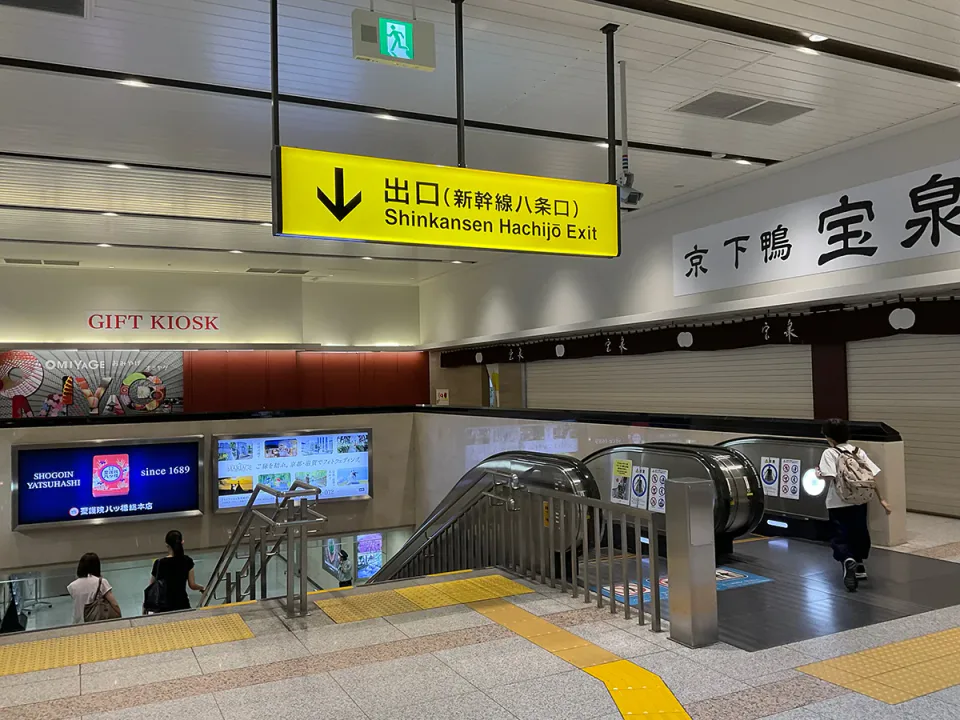
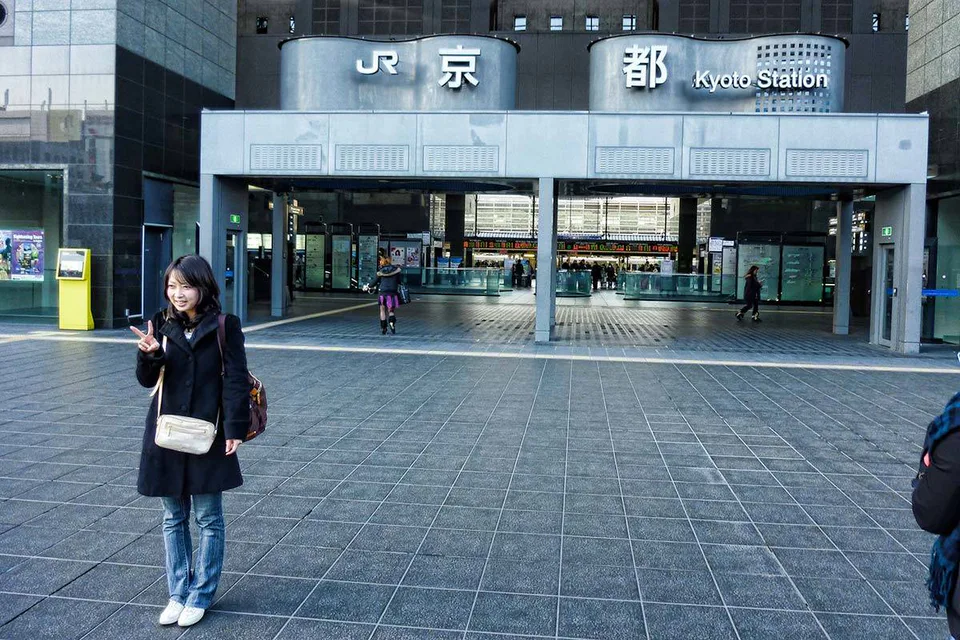
Kyoto Station is where the Shinkansen, JR local lines, subway, buses and airport rail access converge. Kyoto City’s official accommodation guidance also highlights its convenient JR access to Fushimi Inari, Tofuku-ji and Arashiyama, along with extensive lockers and luggage check-in options.
That makes the station a resilience purchase. If a train is late, rain makes the final walk unpleasant, an older parent is tired or the group is carrying two 28-inch suitcases, there is less local transport left to solve after you arrive in Kyoto. On departure morning, the same advantage works in reverse.
Direct HARUKA service between Kansai International Airport and Kyoto Station strengthens the case when KIX sits on either edge of the trip. But airport access should be weighted once, not multiplied across every hotel night. If you arrive from KIX once and then spend four days walking east Kyoto before flying from somewhere else, the airport is a useful tiebreaker rather than an automatic verdict.
What Kyoto Station does not solve: east-Kyoto evenings still require a return
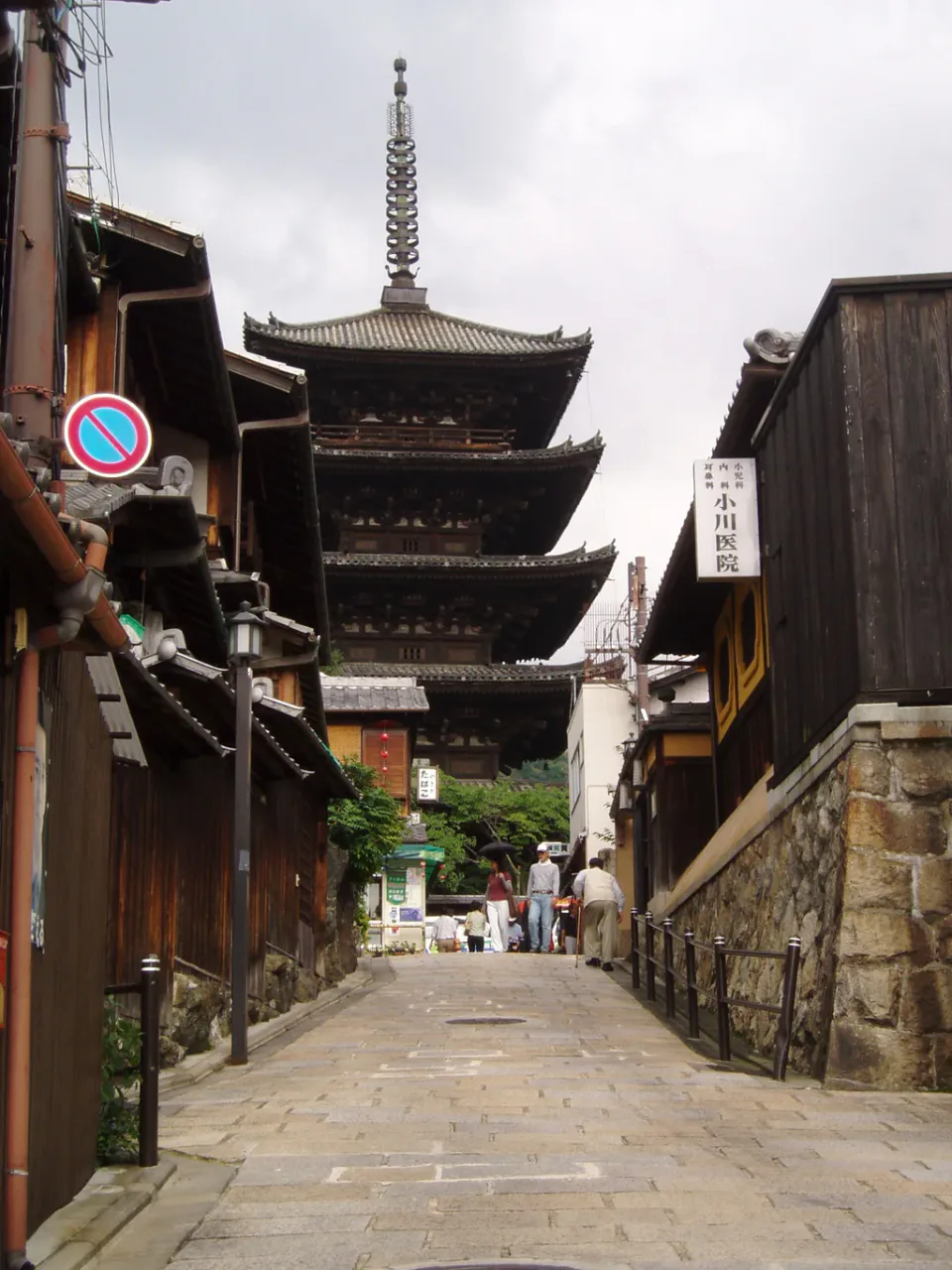
The station’s weakness appears after sightseeing rather than before it. Kiyomizu-dera, Yasaka, Gion and much of Higashiyama are not beside Kyoto Station. If the trip repeatedly ends around Gion after dinner, every night still contains a final bus, train, subway, taxi or longer walk.
Kyoto’s official tourism site explicitly promotes sightseeing before 09:00 and after 18:00 as off-peak hours. It also notes that public transport continues late: the Yoru Bus runs from Kawaramachi and Gion toward Kyoto Station until 22:50, and many trains run until around midnight. In other words, staying at Kyoto Station does not make a Gion evening impossible. It makes the evening less spontaneous because returning to the hotel remains another task.
This is the key opportunity cost. If you pay a station premium and then spend three evenings commuting back from east Kyoto, the hotel is solving arrival and departure very well while charging a small convenience tax on the middle of the trip.
Gion wins when you will use the hours ordinary day-trippers surrender
“Atmosphere” is too vague to justify a hotel premium. The measurable advantage of Gion is access to the edges of the sightseeing day. A hotel near Yasaka or Gion-Shijo can let you walk eastern streets before the main daytime flow, return to the room between sightseeing and dinner, then step out again after 18:00 without first crossing the city.
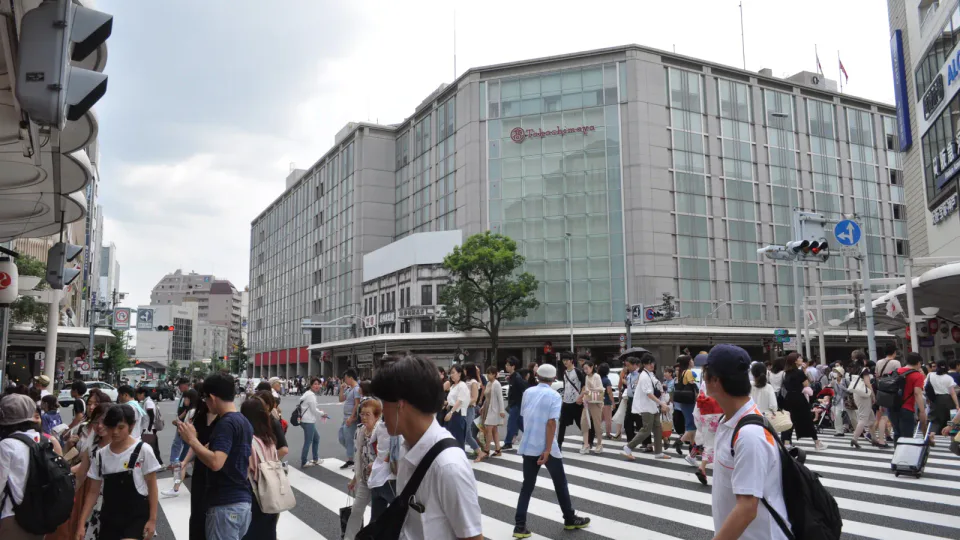
That is most valuable when it happens repeatedly. One early Kiyomizu walk does not necessarily beat a station hotel. Two or three early Higashiyama mornings plus two Gion evenings can.
This also changes how you should value a ryokan or luxury hotel. If the property itself includes a fixed dinner, bath or lounge experience, the neighbourhood does not need to carry all the value. But if you are paying a premium mainly for the address, make sure the address is actually used during the off-peak hours that justify it.
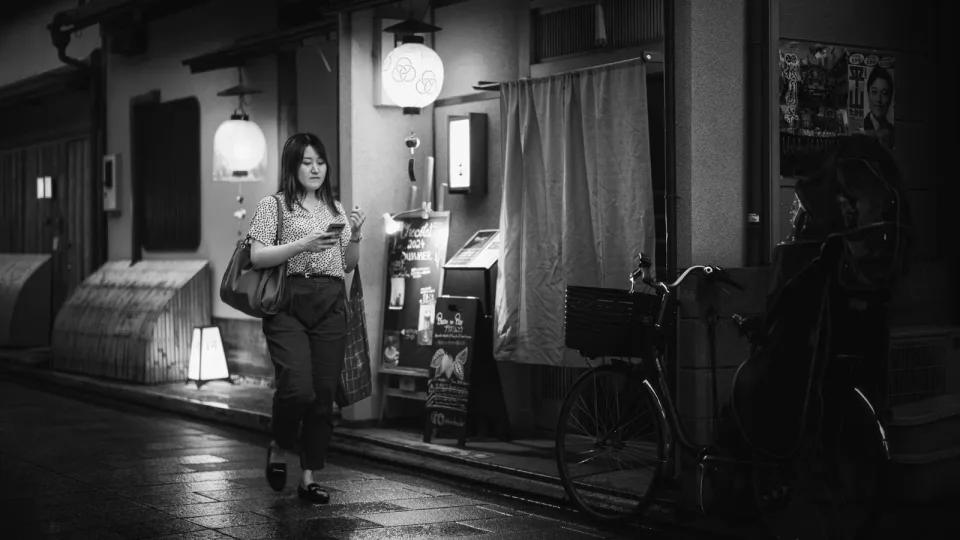
Do not treat every “Gion” hotel as the same transport product
This is the biggest weakness in city-level hotel comparisons. A property a few minutes from Gion-Shijo Station has Keihan on its doorstep. A ryokan deeper toward Kiyomizu-dera may deliver a more atmospheric walk but a much longer approach to rail, more slopes and a more awkward suitcase route.
Keihan’s current traveller information makes the distinction concrete. Fushimi Inari Taisha is about a five-minute walk from Fushimi-inari Station. Kiyomizu-dera is about a 25-minute walk from Kiyomizu-gojo Station. Gion-Shijo itself sits on the same Keihan corridor. So a rail-side Gion stay can reach Fushimi Inari without first backtracking to Kyoto Station, while a deep Kiyomizu-side property may still require a substantial walk before the useful train ride even begins.
Before booking, classify the actual property into one of three subtypes:
Gion-Shijo / Keihan-side: strongest balance of east-Kyoto atmosphere and rail usefulness.
Yasaka / central Gion: excellent evening walkability; rail access depends on the exact side of the district.
Deep Higashiyama / Kiyomizu side: strongest “wake up inside historic Kyoto” effect, but usually the highest luggage and slope cost.
A hotel can therefore win the area comparison and still lose the actual booking comparison.
Fushimi Inari does not automatically belong to Kyoto Station
Kyoto Station has excellent JR access to Fushimi Inari, which is a real advantage for a station stay. But a Gion-Shijo hotel can use Keihan to Fushimi-inari Station and begin about five minutes from the shrine according to Keihan’s current guidance.
This is a good example of why operator names should not decide the hotel. If your Gion property is close to Keihan, an early Fushimi Inari morning can fit naturally without returning west to Kyoto Station first. If the hotel is deep in Higashiyama and far from Gion-Shijo, that advantage weakens.
The same rule applies elsewhere: compare hotel door → useful station → destination, not “Kyoto Station has more trains.” More trains are valuable only when they are the trains your days actually use.
Arashiyama and Nara make Kyoto Station stronger when they repeat
JR-led days are where the station can keep paying rent after check-in. Arashiyama via the JR Sagano Line and Nara via JR are straightforward from Kyoto Station. A single excursion is not enough to decide four nights, but two or three rail-heavy mornings can be.
If Nara is only one day, do not let it dominate the hotel choice. Use Nara from Kyoto or Osaka to compare the exact railway from your chosen base. If Arashiyama is a major early-morning priority, use the Arashiyama guide and count whether that early start is more important than the east-Kyoto mornings Gion would improve.
The correct question is frequency again: does Kyoto Station simplify one excursion, or does it simplify half the stay?
Two-night Kyoto: protect the weak travel day
A short stay magnifies arrival and departure. Imagine:
Night 1: arrive from Tokyo at 20:30 with luggage.
Day 2: full Kyoto sightseeing.
Morning 3: early Shinkansen to Hiroshima.
I would choose Kyoto Station. Gion may improve one evening and one morning, but the station removes friction from two hard edges that occupy a large share of the entire stay. The best short-stay hotel is often the one that keeps the weakest hours from collapsing.
The recommendation reverses if the nominal two-night stay behaves like two full sightseeing days: early arrival, late departure and both mornings centred on Higashiyama. Count usable hours rather than hotel nights.
Four-night Kyoto: one Shinkansen morning should not outweigh six east-Kyoto sessions
Now imagine:
four nights;
two mornings in Higashiyama before 09:00;
three dinners around Gion / Pontocho;
one final Shinkansen departure.
I would choose Gion or the Kawaramachi/Gion edge, assuming the exact hotel has workable luggage access. The departure happens once. The neighbourhood advantage is reused five times.
This is the scenario where “Kyoto Station is more convenient” becomes technically true but strategically incomplete. It is more convenient for the railway. It may be less convenient for the trip.
Families and older travellers should compare the last 300–800 metres
For a fit couple with carry-ons, an extra station walk can be trivial. For a stroller, older parent, wheelchair user or two large suitcases, the last segment can become the main booking constraint.
Check the actual hotel door for:
lift access at the station exit you will use;
stairs, slopes or stone paving on the final approach;
whether a taxi can stop directly at the entrance;
whether the hotel accepts luggage before check-in and after checkout;
whether the room itself has enough floor space once the bags are open.
Kyoto’s official tourism guidance actively encourages luggage storage and delivery rather than carrying large bags through sightseeing areas and crowded transport. If luggage is the only reason Kyoto Station keeps winning, use the Japan luggage-forwarding guide and see whether removing the suitcase changes the location decision.
Do not split a normal 3–4 night Kyoto stay just to experience both
Kyoto Station and Gion are close enough that a routine hotel move usually costs more than it saves. Checkout, packing, storage, luggage transfer, another check-in and learning a second route are fixed costs. A taxi for one awkward morning is often cheaper in both time and attention.
I would add a second Kyoto hotel only when it solves a hard problem that public transport or a taxi does not solve cleanly. Examples:
the first night arrives so late that reaching the east-side hotel would be genuinely unpleasant;
the final morning has a very early reserved train and several large bags;
the second property is a ryokan stay whose dinner, bath and morning experience are themselves a major trip goal.
“Both areas are nice” is not enough. A second hotel needs a job.
Kawaramachi / Shijo is the compromise when the binary is false
If Kyoto Station and Gion each win roughly half the itinerary, stop forcing the binary. Kyoto City’s official accommodation guide highlights Shijo-Kawaramachi and Shijo-Karasuma for dining, shopping and access to Gion/Yasaka, with subway and private-rail connections that can work well across the city.
This compromise is strongest when central evenings matter but deep-Higashiyama luggage friction does not appeal. It is weakest when you already know which edge dominates. Four JR-heavy mornings do not become better by sleeping “in the middle,” and four Gion evenings do not become better by adding a small return journey every night.
Use the broader Kyoto area guide if the compromise is now the leading option.
Room quality can overturn the area once the transport gap is small
After the itinerary gives one area only a small edge, stop paying for the district name and compare the room. For a three- or four-night stay, a larger twin, separate bath and toilet, better cancellation terms, useful breakfast hours or easier luggage storage can matter more than saving one short train ride.
This is especially true in peak cherry-blossom and autumn periods. Kyoto’s official tourism guidance recommends booking early because popular areas can fill quickly. If the only remaining Gion room is tiny, non-refundable and inconvenient with luggage while Kyoto Station has a larger flexible room at the same price, the theoretical neighbourhood advantage may no longer survive the actual booking.
The hotel should solve the sleeping problem as well as the map problem.
Three booking scenarios
Tokyo → Kyoto for two nights → Hiroshima
Kyoto Station. You are paying for two luggage-heavy rail edges in a very short stay. Visit Higashiyama from the station rather than moving the hotel to improve a single evening.
Four Kyoto nights, two early temple mornings, three Gion dinners
Gion / Gion-Shijo side. The neighbourhood advantage repeats enough times to beat one arrival and one departure, provided the exact hotel is not deep enough into Higashiyama to create a new luggage problem.
Family with older parents, one Nara day, one Arashiyama day, two large suitcases
Kyoto Station first. The station simplifies multiple transport mornings and reduces transfer friction. Reopen Gion only if the luggage is forwarded and the exact property has easy taxi/rail access.
Final verdict: choose the friction you pay repeatedly
Kyoto Station is the safer default for a short or rail-heavy stay. Gion is the stronger experiential base when early Higashiyama and walkable east-Kyoto evenings repeat enough to become part of the trip rather than a one-off bonus.
The answer reverses at the hotel door. A Gion-Shijo property with Keihan access can be far easier than the word “Gion” suggests; a deep Kiyomizu-side ryokan can be far harder with luggage. Conversely, Kyoto Station’s excellent transport should not be allowed to outweigh four days of repeated east-Kyoto movement just because the final train is important.
My decision order is: count hard rail edges → count genuine pre-09:00 and post-18:00 east-Kyoto sessions → inspect the exact hotel’s last 300–800 metres → let room quality break a close tie. If no side wins clearly, choose Kawaramachi/Shijo or simply take the better room.
Official references
Kyoto Travel — choosing accommodation by area · Kyoto Travel — morning and night sightseeing · Kyoto Travel — hands-free luggage services · Keihan Railway — Fushimi Inari and Kiyomizu access · Keihan Railway — traveller and station information · JR West — Kansai Airport rail access. Rechecked August 25, 2026. Transport operations, station exits and hotel access can change; verify the exact travel date and property before booking.
Where to Stay in Osaka With Parents: Cut Transfers Before You Pay for More Luxury
Early Shinkansen from Osaka: Should You Stay in Shin-Osaka or Move Only for the Last Night?
Hyatt Regency Seragaki Island Okinawa: Should You Keep an Afternoon Free on a 2-Night Stay?