
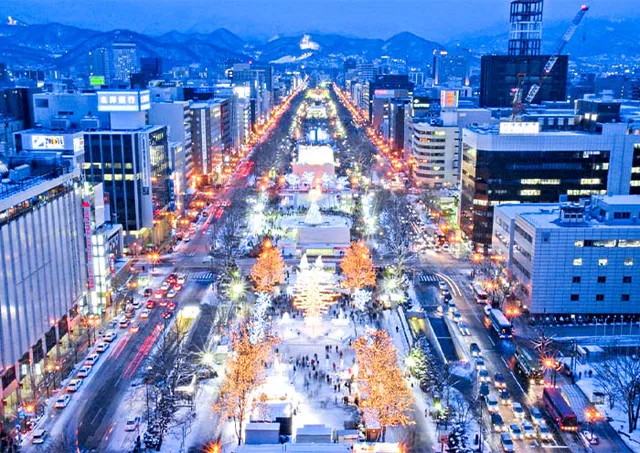
Give Niseko the larger hotel block when skiing is the trip’s non-negotiable product; give Sapporo the larger block when Hokkaido is a mixed city-and-day-trip holiday. The most useful unit is not “nights” but complete usable days. Two Niseko nights normally protect only one full ski day between arrival and departure; three nights protect two. If losing one mountain day to wind, heavy snow, fatigue or travel disruption would seriously damage the trip, four nights can be more rational even when you only hope to ski two or three days.
Sapporo nights work differently. They buy flexibility: city time, food, Otaru, a nearby ski day, a weather pivot and much easier New Chitose Airport access. Do not automatically keep a Sapporo “gateway night,” however. If your 2026–27 airport-to-Niseko transfer is confirmed and lands early enough, going directly to the resort can create an extra mountain morning without changing the total trip length.
↔ Scroll table left or right
Your actual trip | Give more nights to | Why | What can reverse it |
0–1 full ski day | Sapporo | A multi-night resort move may consume more time than the skiing earns back | Niseko hotel/onsen/snow activities are themselves a trip priority |
2 full ski days, skiing important but not mission-critical | Niseko: start with 3 nights | Arrive → ski → ski → leave is the clean minimum | You want a weather/rest buffer or travel days are unreliable |
2–3 ski days and a bad-weather day would ruin the trip | Niseko: consider 4 nights | The extra night buys recovery and scheduling resilience, not merely another bed | Your Sapporo/Otaru priorities are stronger than the value of the buffer |
City, food, Otaru, shopping and one ski day | Sapporo | One hotel supports several distinct days without another luggage move | The ski day grows into a genuine multi-day resort block |
Late arrival or early flight at New Chitose | Sapporo often gets stronger | JR currently links New Chitose and Sapporo in as little as 33 minutes with frequent daytime service | A confirmed direct resort transfer fits the flight with generous margin |
Mixed skier / non-skier group | Usually Sapporo unless Niseko has a separate non-ski plan | Non-skiers should not inherit the skier’s night count automatically | Resort dining, onsen and snow activities justify the same block for everyone |
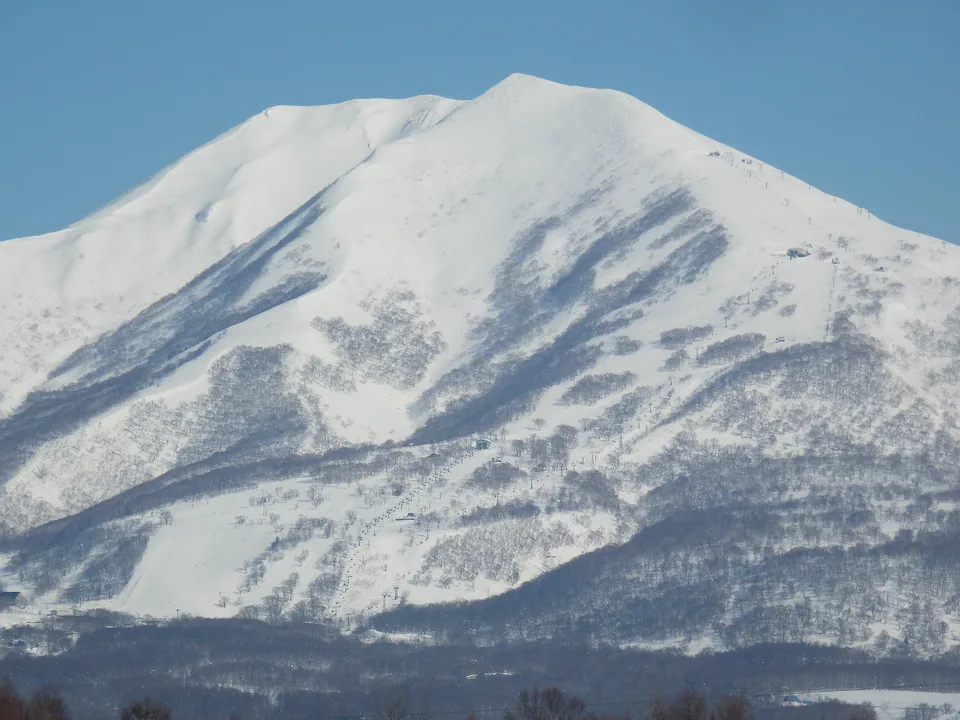
Start with full mountain days, then decide whether you need a buffer day
The basic arithmetic is simple but useful:
2 Niseko nights: usually one complete day between hotel changes.
3 Niseko nights: two complete days.
4 Niseko nights: three complete days, or two planned ski days plus one day of buffer/recovery/flexibility.
That last distinction is where the original “three nights for two ski days” rule needs a red-team check. If your whole reason for flying to Hokkaido is powder, a three-night stay leaves very little room for a disrupted transfer, a poor-weather day, tired legs or one skier needing recovery. A fourth night can be an insurance purchase in time rather than a commitment to ski three consecutive full days.
The answer is different for a casual skier. If you would be perfectly happy replacing a poor mountain day with Sapporo food, shopping or Otaru, the city itself is already your weather buffer. In that itinerary, moving the extra night into Niseko can reduce flexibility rather than increase it.
2026–27 lift dates are published; the winter transfer timetable still needs rechecking
Niseko United currently lists the four resort areas opening from November 28, 2026, subject to conditions. Annupuri and Grand Hirafu are scheduled through May 5, 2027; Niseko Village through April 4 and Hanazono through April 11. Night skiing is currently scheduled from December 12, 2026 through March 22, 2027.
That is enough to build the broad ski-season framework. It is not enough to lock an airport transfer months in advance from an old screenshot. As of August 25, 2026, Niseko United’s English access page still displays Chuo Bus ski-bus times for the 2025–26 season. Treat those times as last-season reference only until the operator publishes the final 2026–27 schedule.
This matters because a direct New Chitose → Niseko ride can change the night allocation. If you arrive early, have a confirmed direct transfer and can reach the resort before dinner, a Sapporo transit night may simply delay the ski block. If the flight lands late, the final direct service is uncertain, or the connection has no disruption margin, Sapporo can be the more resilient first night.
Use New Chitose Airport to Niseko once the exact flight and final winter timetable are available. Do not give Sapporo a night merely because older itineraries always route through the city.
Sapporo is the easier airport buffer because the rail product is frequent and flexible
JR Hokkaido currently lists New Chitose Airport → Sapporo at a fastest 33 minutes. Between 09:00 and 16:00 there are six Airport trains per hour: one Special Rapid, three Rapid and two Semi-Rapid services. Most seats do not require reservation, and ordinary IC cards can be used.
That frequency changes the value of a Sapporo first or final night. The city can absorb a modest flight delay without tying the whole arrival to one reserved resort bus. JR also currently operates a late 23:21 Airport service from New Chitose, although it departs on schedule regardless of flight delays.
This does not mean Sapporo is always the correct gateway. It means a Sapporo night is strongest when it performs a buffer job: late arrival, early onward planning, food/rest after a long-haul flight, or a final city night before flying out. If your flight and direct Niseko transfer already line up cleanly, remove the buffer and ask whether the saved night would create another complete mountain day.
Niseko multi-day lift passes create a consecutive-day constraint
Niseko United’s current 2026–27 ticket page states that multi-day All Mountain passes are valid for consecutive days. During the night-skiing period, the ticket remains valid through night skiing on the final day.
That matters if the extra Niseko night is intended as a rest/weather buffer. A three-day lift ticket and a four-night stay are not automatically the same thing. If you deliberately want to rest on Day 2, buying a consecutive three-day pass covering Days 1–3 can waste part of the product. Compare daily or shorter-duration tickets against the exact ski sequence rather than assuming “three ski nights = three-day pass.”
The same rule makes an arrival-day night ski potentially useful but not guaranteed. Within the scheduled night-skiing period, an early-enough arrival may turn part of a transfer day into ski time. But do not count that as a full ski day when deciding whether the resort block is long enough; flight, road and equipment delays can erase it easily.
Sapporo nights buy option value; Niseko nights buy mountain commitment
A Sapporo night can become several different days after you arrive: city sightseeing, Otaru, a nearby ski area, shopping, food or a weather-adjusted indoor day. A Niseko night is more specialised. Its strongest return appears when the mountain, resort village, onsen or snow activities are already the point of the trip.
This is why an “extra night” should not be awarded by hotel price. A cheaper Sapporo night can still be worse value if it forces a transfer that removes half of a ski day. A more expensive Niseko night can still be worse value if the non-skiing group spends most of the day waiting for the skiers.
Use the complete-day test: ask what unique complete day appears because the night exists. If the answer is vague—“more flexibility” or “more resort time”—write down the actual plan. If you cannot, that night is the first one to cut.
Mixed groups need two itineraries, not one compromise night count
A skier can justify four Niseko nights because each complete day has an obvious use. A non-skier needs a different reason: onsen, dining, a snow activity, a hotel they genuinely want to use, or a deliberate slow-resort day.
If those reasons are weak, keeping everybody in Niseko for the skier’s ideal block can create poor value for half the group. Three better options are:
reduce Niseko to the minimum block that protects the skier’s priority days;
choose a resort/hotel whose non-ski facilities actually justify the stay;
split the group for part of the itinerary rather than forcing one hotel allocation to satisfy incompatible goals.
The trade-off is coordination. Split-group travel is less simple, especially with children. But “everyone stays four nights because one person skis” is not automatically simpler if the non-skiers dislike the resort after Day 2.
One-night Niseko stays usually fail the transfer-to-useful-hours test
A one-night resort stay is rarely efficient for skiing because arrival and departure logistics consume too much of the block. You may need to check in, collect or fit equipment, learn the base layout and then reverse the process the next day. If the travel window is disrupted, the one useful ski session can disappear.
One night can still work when skiing is not the objective: a specific hotel, onsen, dinner or snow experience may be enough. But that is a different product from “add Niseko to ski.”
If you want only one mountain day, compare staying in Sapporo and skiing closer to the city with the ski from Sapporo or stay at a resort guide. Moving hotels for one day needs a stronger reason than the resort name.
For a six-night Hokkaido trip, avoid the symmetrical 3+3 trap
Six hotel nights do not need to become Sapporo 3 + Niseko 3 just because the split looks balanced.
Examples:
Ski-first: Sapporo 2 + Niseko 4 can protect three full mountain days or two ski days plus one flex day while still leaving city time.
Balanced first trip: Sapporo 3 + Niseko 3 works when two full ski days are enough and Sapporo/Otaru genuinely need three nights.
City-first: Sapporo 4 + Niseko 2 only makes sense if the Niseko stay is mainly a resort experience rather than a serious ski block.
The correct allocation is the one that creates the right complete days. Symmetry has no travel value by itself.
Where to put the one extra night: use three tiebreakers
Does the night create another full ski/flex day? If yes, Niseko gets a strong claim.
Is the current airport/resort transfer already confirmed? If not, keep enough itinerary slack that one unfinalised winter bus schedule cannot break the plan.
What happens if the mountain is poor that day? If you would happily spend the day in Sapporo/Otaru, the city night has option value. If you would still want to be in the resort for onsen, dining and snow atmosphere, Niseko keeps its value.
Final verdict
For two full ski days, three Niseko nights is the clean minimum; use four when skiing is important enough that a lost day needs a buffer. For one ski day at most—or a trip dominated by Sapporo food, Otaru, shopping and flexible branches—give Sapporo the larger block and question whether Niseko needs a hotel move at all.
Do not keep a Sapporo gateway night automatically. New Chitose–Sapporo rail access is fast and resilient, which makes the city an excellent buffer, but a confirmed 2026–27 direct resort transfer can make that buffer unnecessary. And when you add a Niseko flex day, remember that current multi-day All Mountain tickets are consecutive-day products: hotel nights, planned ski days and lift-ticket validity should be designed together rather than separately.
Happo vs Echoland: Where Should You Stay in Hakuba for Skiing?
Niseko vs Furano vs Rusutsu: Which Hokkaido Ski Resort Should You Choose?
Sapporo Long-Stay Hotels: For 5–7 Nights, Laundry and JR Access Matter More Than Changing Hotels

References
Niseko United — 2026–27 operating periods, night skiing and lift-pass conditions · Niseko United — access information; current page still shows the 2025–26 Chuo Bus winter timetable as of August 25, 2026 · JR Hokkaido — New Chitose Airport ↔ Sapporo/Otaru. Checked August 25, 2026. Lift operations depend on snow and weather; final 2026–27 airport/resort bus schedules should be rechecked before locking flights, lessons or non-refundable accommodation.