
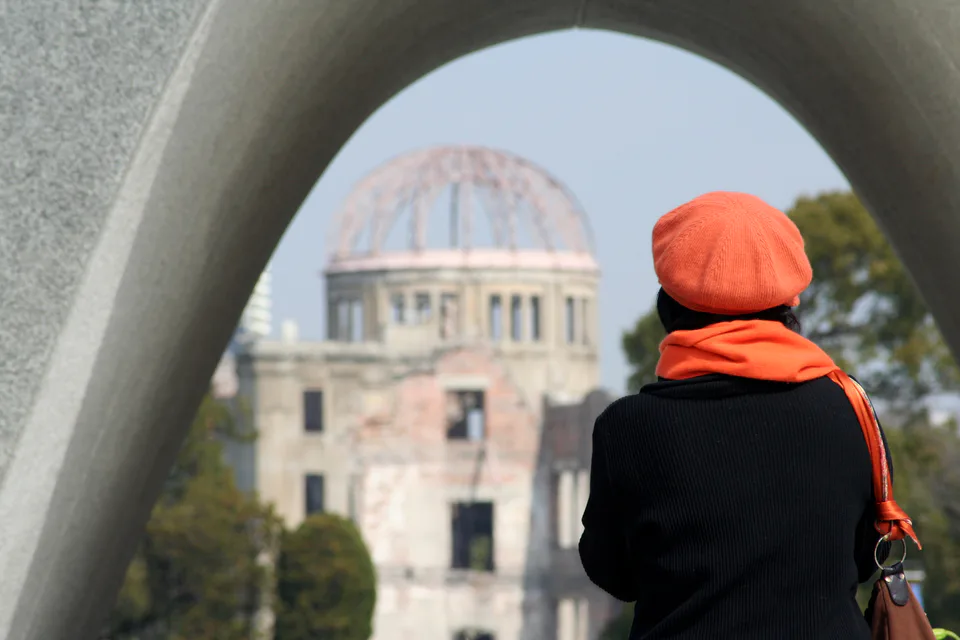
For a first Japan trip with only two western-Japan nights left, I would still choose Hiroshima first if you have never visited Hiroshima or Miyajima. The answer changes on night three: Fukuoka becomes much stronger when that night performs at least two jobs—continuing the route west, opening Kyushu, adding a deliberate food/city evening, or positioning a useful flight home. The decision is therefore not “which city is better?” It is which city gives the marginal night a new job rather than more time in a place that already has enough.
This matters because Hiroshima and Fukuoka have different endpoint geometry. Hiroshima Station is currently about 45–50 minutes from Hiroshima Airport by the official limousine bus. Fukuoka Airport is much closer to the city, but international travellers must not misuse the famous “five minutes from Hakata” headline: the subway station is on the Domestic Terminal side, and Fukuoka Airport currently estimates about 10 minutes by free shuttle between Domestic and International terminals. Fukuoka still has powerful airport value, but the correct comparison is city-to-terminal, not city-to-subway-station.
If the whole first-trip allocation is still moving, start with the 10-, 12- or 14-day Japan itinerary and ask whether Hiroshima belongs on the first trip before treating Fukuoka as a substitute. If Fukuoka itself is not fixed, use Is Fukuoka Worth Visiting on a First Japan Trip?
Hiroshima vs Fukuoka: the 30-second decision
↔ Scroll table left or right
Situation | Choose | Why |
First trip; neither visited; only 2 usable nights | Hiroshima | Peace Memorial sites + Miyajima give the two nights two distinct jobs |
Hiroshima already protected; continue into Kyushu | Fukuoka | The city becomes a gateway rather than a replacement stop |
Night 3 would only be “more Hiroshima” | Test Fukuoka or move on | The marginal value of another Hiroshima night falls unless it buys Misen, Miyajima overnight or slower city time |
Night 3 = Fukuoka evening + FUK departure | Fukuoka gets much stronger | One hotel night now does both destination and departure-positioning work |
Flight leaves Hiroshima Airport | Do not add Fukuoka just for airport convenience | Hiroshima Airport has its own city-airport chain; avoid creating a westbound detour before an eastbound flight |
Hiroshima wins the first two nights because the days have clear jobs
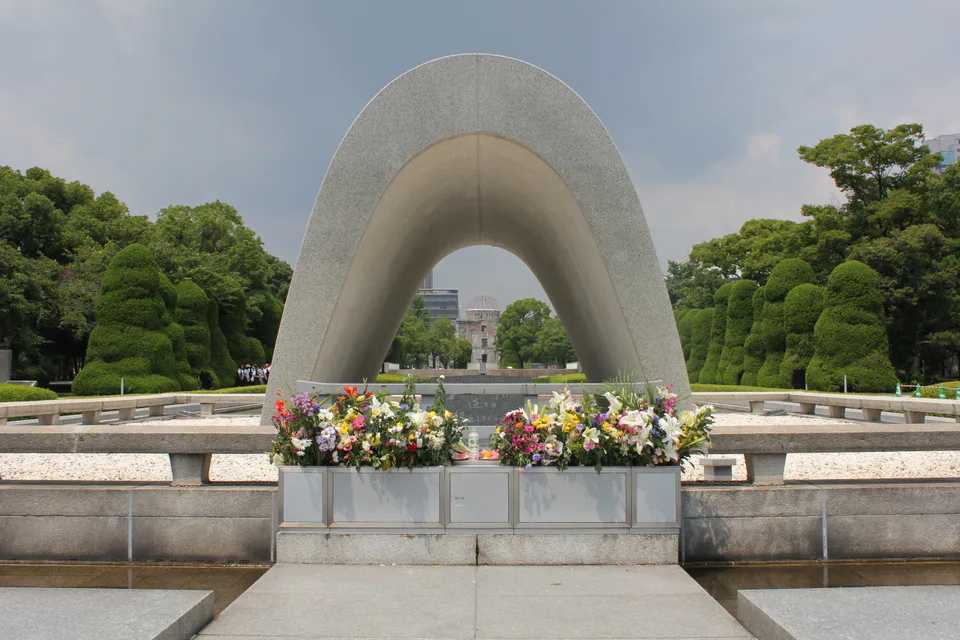
Hiroshima’s first-trip advantage is the combination of Peace Memorial Park and Museum in the city with Miyajima on a separate day. Those are different experiences rather than more of the same sightseeing. Hiroshima’s official tourism site publishes model routes that show the city and island can technically be compressed, but compression is not automatically the best use of a first visit.
For most first-timers, I would protect real time around the museum rather than turn it into a checkpoint before the ferry. Museum reservation rules and seasonal opening hours can vary, which is another reason to build Day 1 around the actual museum slot rather than assume a generic morning will always work.
Use the one-day Hiroshima city route for the city day, then the Hiroshima + Miyajima two-day itinerary to decide how much of Day 2 belongs on the island. If the third night specifically buys an island evening and early morning, compare Hiroshima city vs Miyajima for one night.
Night three needs a job of its own
The first two Hiroshima nights have a strong first-trip case. The third night should be held to a higher standard. It earns its place when it buys Mount Misen without rushing, an overnight on Miyajima, slower museum/city time after a late arrival, or a deliberately relaxed departure. If none of those are true, “we are already here” is not enough.
Fukuoka should pass the same test. A third night there is strong when it adds a Fukuoka evening and then starts Kyushu, positions a Fukuoka flight, or supports a named side trip. It is weak when you move hotels only to eat one bowl of ramen and then immediately reverse direction.
ValueNavi third-night test: give the marginal night to the city that performs at least two useful jobs. If neither city can name two, move the night back to Tokyo/Kyoto or forward to the next destination.
Fukuoka wins when the extra nights open another region
Fukuoka’s strongest role is structural. Hakata and Tenjin combine food, transport and nightlife, then connect onward into Kyushu. Fukuoka City’s current official tourism guidance estimates Hiroshima to Hakata at about 1 hour 10 minutes by Shinkansen. That is a relatively small additional westbound move after Hiroshima compared with creating a fresh out-and-back from Kansai.
If the route is becoming a Kyushu trip, use the 5- or 7-day Kyushu itinerary and check how many days in Fukuoka before automatically giving the city all three nights.
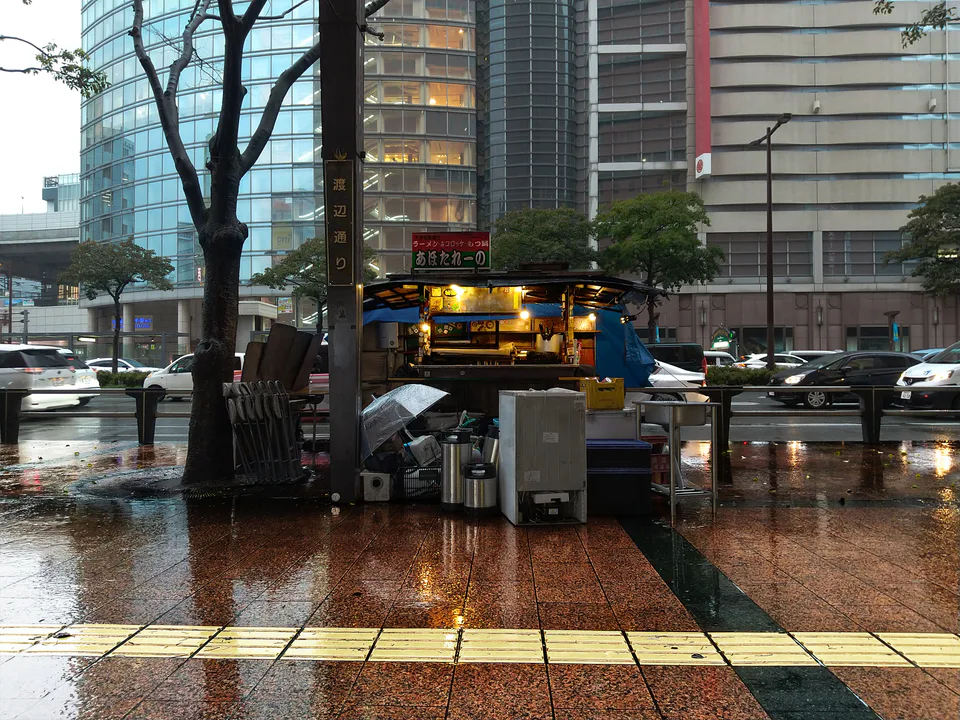
For a city-first stay, the three-day Fukuoka itinerary shows what Day 3 actually buys. If Yufuin is already the next stop, the Fukuoka to Yufuin transport comparison can make Fukuoka a staging point rather than a three-night destination.
Airport credit: compare the hotel door to the correct terminal
Airport convenience is where the third-night calculation often gets oversimplified.
Hiroshima: Hiroshima Airport currently lists the limousine bus from Hiroshima Station Shinkansen Gate at about 45–50 minutes and JPY 1,500. The Bus Center route is about 55 minutes. These are published journey estimates, and road conditions can change the actual time. A Hiroshima final night therefore includes a substantial road leg before the terminal.
Fukuoka: the Domestic Terminal is connected directly to the subway. The familiar Fukuoka-city headline is about five minutes between Hakata and Fukuoka Airport Station. International passengers, however, use a separate terminal building. The airport currently states that the free shuttle between Domestic and International terminals takes about 10 minutes and can be delayed by road conditions.
This does not mean every international passenger must use the Domestic Terminal shuttle; direct buses and taxis can be better for some hotels. The point is narrower: do not claim that an international Fukuoka departure is literally a five-minute Hakata-to-terminal trip.
Even after that correction, Fukuoka often keeps a large endpoint advantage because the city and airport are unusually close. That advantage is most valuable when the route was already moving west. If you were going to take Hiroshima → Hakata anyway and then fly from FUK, the Fukuoka night gets both route credit and airport credit. If you have to travel west to Fukuoka only to fly east again or return to Kansai, much of that value disappears.
A Fukuoka departure flight should change night three only when the flight itself is sensible
A Fukuoka departure can make the final night do two jobs: destination evening + departure positioning. But this is not a rule to buy a worse airfare. Compare the actual flight fare, baggage allowance, connection quality and departure time.
For an international departure, work backward to the International Terminal rather than the subway station. For a domestic departure, the subway-to-Domestic geometry is much cleaner. Once the flight is fixed, compare Hakata vs Tenjin and, for an early flight, Hakata or Tenjin for the last night.
The recommendation reverses if Hiroshima Airport is the actual flight endpoint. In that case, moving to Fukuoka solely because “Fukuoka Airport is easier” adds a hotel move and westbound rail journey that the itinerary did not otherwise need.
On a longer westbound trip, “both” is often better than forcing a replacement
Hiroshima and Fukuoka sit on the same westbound Shinkansen corridor, so a longer trip can keep their roles separate. Hiroshima handles the Peace Memorial experience and Miyajima; Fukuoka handles food, airport positioning and the next Kyushu branch.
If luggage is what makes another hotel move unattractive, the Japan luggage-forwarding guide can reduce the move without deleting the destination. On a 7–10 day first trip, however, the opportunity cost is much higher; protect Tokyo and Kyoto first, then Hiroshima before adding Fukuoka unless Kyushu is one of the trip’s core goals.
Who should skip one of the two cities?
Skip Fukuoka when the trip is already short, Kyushu is not continuing afterward and adding the city would reduce Tokyo, Kyoto or Hiroshima to rushed one-night stops. “Easy airport” alone is not enough reason to weaken the route.
Skip Hiroshima when you have already visited the Peace Memorial sites and Miyajima, or when Kyushu is the actual purpose of this trip and Hiroshima would be a repeat stop with no new job.
Keep both when Hiroshima gets two meaningful sightseeing days and Fukuoka then performs at least two functions—food/city time plus Kyushu continuation or departure positioning.
Final verdict: Hiroshima first; Fukuoka when night three earns route credit
Choose Hiroshima for the first two western-Japan nights on a first trip if you have not seen Hiroshima or Miyajima. Give Fukuoka the third night when it does more than add another city: start Kyushu, support a named side trip, or position a sensible Fukuoka departure while the route is already moving west.
The strongest three-night pattern is therefore often not “three nights in Hiroshima” or “three nights in Fukuoka.” It is two high-value Hiroshima nights + one Fukuoka night that has two jobs. If the Fukuoka night has only one weak job, keep Hiroshima or give the night to a destination that changes the trip more.
Fukuoka Late-Arrival Hotels: Make the First Night Easy Before You Chase Tenjin
Okinawa Guys’ Trip Hotels: The Best Base Is Where You Can Stop Driving at Night
References
Hiroshima Airport — public transport times and fares · Fukuoka Airport — airport access · Fukuoka Airport — inter-terminal transfer · Fukuoka City Official Tourist Guide — Shinkansen access estimates. Checked August 25, 2026. Airport buses, terminal transfers, rail times and flight schedules can change; recheck the actual travel date.