Fukuoka is worth adding to a first Japan trip when it works as an endpoint, a gateway or a bridge to Kyushu. It is usually not worth adding as an isolated out-and-back city from Kansai. That distinction matters more than whether you like ramen, yatai or shopping. The same two-night Fukuoka stay can be a low-friction extension after Hiroshima or a five-hour-plus rail detour if you travel from Shin-Osaka to Hakata and then return east.
My default is to skip Fukuoka on a 7–10 day Tokyo–Kyoto–Osaka first trip, add it selectively around 11–12 days only when the route is already moving west or a Fukuoka flight removes backtracking, and give it two nights on a 13–14+ day trip when Kyushu, Hiroshima or an open-jaw flight gives the city a second job. One night can make sense as positioning; as a destination, two nights is the more useful minimum.
↔ Scroll table left or right
Your trip shape | Default call | Why | What reverses it |
7–10 days, Tokyo + Kyoto + Osaka still need time | Skip Fukuoka | The western extension usually costs a hotel move and too much scarce first-trip time | Fukuoka/Kyushu is a defining priority or a FUK flight removes major backtracking |
11–12 days, already visiting Hiroshima | Conditional yes | Hiroshima → Hakata is about 1h10 by Shinkansen, so the incremental western move is relatively small | The Fukuoka night would force Tokyo or Kyoto below your minimum useful stay |
11–12 days, travelling from Kansai and returning east | Usually skip | Shin-Osaka → Hakata is about 2h30 each way before local transport and hotel friction | The trip does not return east because you fly out of Fukuoka or continue through Kyushu |
13–14+ days, westbound route or Kyushu continuation | Strong add | Fukuoka becomes an endpoint/gateway rather than another side trip | You are already accumulating too many one-night stops |
One night only | Use only if it performs a transport job | Arrival evening + airport/Kyushu positioning can justify it | If you expect a real city visit, stay two nights instead |
Use route credit: ask how much of the Fukuoka journey you were going to make anyway
The most useful way to judge Fukuoka is to give it route credit. Part of a transfer should not be counted as a Fukuoka cost if the itinerary was already moving in that direction.
Fukuoka City’s current official tourism guidance puts the Shinkansen journey at about 1 hour 10 minutes from Hiroshima to Hakata and about 2 hours 30 minutes from Shin-Osaka to Hakata. Osaka’s official tourism guidance gives the same roughly 2h30 Shin-Osaka–Hakata scale. These are estimated rail times rather than door-to-door hotel times, but they show why the route shape changes the answer.
If the trip is Kyoto/Osaka → Hiroshima → Fukuoka, the extra move after Hiroshima is roughly one more Shinkansen hour plus the hotel transfer. If the trip is Osaka → Fukuoka → Osaka, the rail alone is roughly five hours before station access, check-in and luggage are added. Calling both versions “two nights in Fukuoka” hides the most important cost.
This gives three useful categories:
Endpoint: Fukuoka is the final city before a flight home. Strongest case because the hotel night can also remove an eastbound return.
Gateway: Fukuoka leads into Yufuin, Beppu, Nagasaki, Kumamoto or a wider Kyushu route. Strong case because the transfer opens another region.
Detour: you travel west to Fukuoka, spend one or two nights, then return toward the same Kansai/Tokyo corridor. Weakest case because almost all of the long-distance movement exists only to visit Fukuoka.
If Fukuoka is a detour, the sightseeing has to justify the whole transfer. If it is an endpoint or gateway, only the incremental cost needs to be justified.
The airport is genuinely convenient—but “5 minutes to Hakata” needs a terminal correction
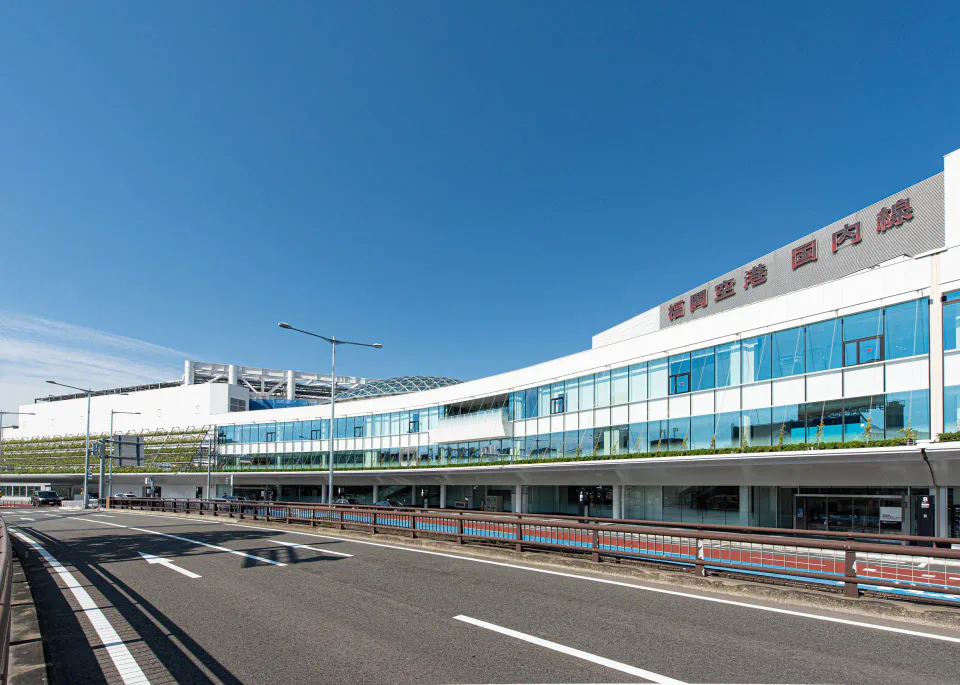
Fukuoka’s city-airport geometry is one of its strongest advantages, but international travellers should read the headline carefully. Fukuoka City Subway currently lists Hakata → Fukuoka Airport Station at five minutes and Tenjin → Fukuoka Airport Station at eleven minutes. That subway station is on the Domestic Terminal side.
Fukuoka Airport’s own current access information says the Domestic and International Terminal buildings are separate. If an international passenger wants to use the subway, the airport provides a free inter-terminal shuttle; the current airport page gives approximately 10 minutes between the International and Domestic terminals and warns that road conditions can make it longer.
So an international arrival is not literally “five minutes from the aircraft terminal to Hakata.” It is immigration and baggage → landside → terminal transfer if using the subway → subway → Hakata. Direct buses or taxis may be better for some hotels, so the shuttle is not compulsory for every traveller, but the domestic-terminal subway geometry should not be silently applied to an international flight.
The same correction matters on departure morning. A hotel near Hakata Station has excellent airport access, but an international passenger should work backward to the International Terminal, not to Fukuoka Airport Subway Station.
An open-jaw flight can make Fukuoka worth more than its sightseeing list
For long-haul travellers, airfare direction can change the verdict more than another attraction. If you can arrive in Tokyo or Kansai and fly home from Fukuoka—or do the reverse—Fukuoka may remove an entire eastbound return. That is open-jaw flight credit: the final city is doing transport work as well as sightseeing work.
This is ValueNavi analysis, not a claim that an open-jaw fare is always cheaper. Compare the actual airfare, baggage rules and schedule. A Fukuoka departure that costs substantially more or requires a poor connection can erase the benefit. But if the fare is sensible, ending west can turn Fukuoka from an extra city into the place that makes the whole route linear.
A clean first-trip example is Tokyo → Kyoto/Osaka → Hiroshima → Fukuoka → fly out. A weaker example is Tokyo → Kyoto/Osaka → Fukuoka → Osaka → Tokyo, where the route repeatedly pays for the same geography.
If the national sequence is still moving, use the 10-, 12- or 14-day Japan itinerary before deciding Fukuoka in isolation.
One night is a positioning night; two nights make Fukuoka a destination
A one-night Fukuoka stop can be excellent when the night has two jobs. For example: arrive from Hiroshima, eat in Hakata/Tenjin, sleep, then fly out or continue into Kyushu the next morning. You still get a Fukuoka evening, but the hotel is primarily solving the route.
That is different from claiming you have “done Fukuoka.” Check-in and checkout consume too much of a one-night stop for the city to have a full rhythm. If Fukuoka itself is one of the destinations you want to experience, two nights is the better default: arrival evening, one complete day and a useful departure morning.
A third night should have a named job. Dazaifu, Itoshima, another city day or a slower food-focused stay can justify it. If Day 3 is merely “more Fukuoka because we are already there,” that night should compete against Hiroshima, Kyoto, an onsen stay or the next Kyushu stop.
Use How Many Days in Fukuoka? after the city has earned a place in the route.
Fukuoka earns time by changing the rhythm of a first trip, not by having another checklist
Tokyo, Kyoto and Osaka already provide enormous sightseeing density. Fukuoka does not need to beat them by listing more attractions. Its stronger contribution is a different trip rhythm: compact urban transport, yatai and late food, neighbourhood time, and the ability to branch into Kyushu without another major repositioning day.
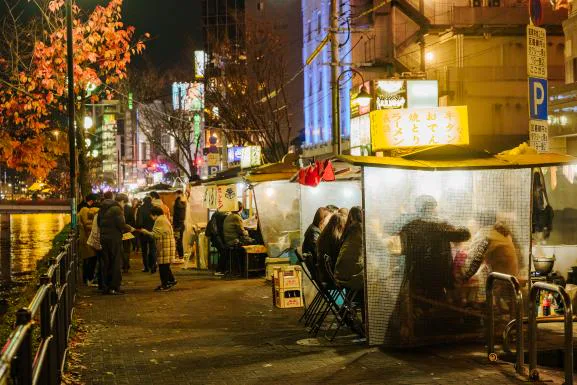
That is why food can be a legitimate reason to add Fukuoka—but only when you protect the hours that deliver it. A one-night stop where you arrive at 22:00 and leave at 07:00 does not suddenly become high-value because the city is famous for food. A westbound arrival in the afternoon, yatai evening and unhurried next morning is a different product.
If food is part of the reason, the Fukuoka breakfast guide shows how the city can add value without another long attraction transfer. If a full local itinerary is the goal, use the Fukuoka 3-Day Itinerary.
Hiroshima usually wins first when only two western-Japan nights remain
If this is a first Japan trip and neither Hiroshima nor Fukuoka has been visited, I would usually protect Hiroshima first when only two western-Japan nights remain. Peace Memorial Park/Museum and Miyajima give those nights two distinct jobs, while Fukuoka’s strongest advantage is often what it unlocks next.
That does not make Hiroshima universally “better.” It means the first-trip marginal value is different. Fukuoka catches up quickly when Hiroshima is already in the route, when Kyushu continues afterward or when a Fukuoka departure flight turns the city into an endpoint.
If those are the two options competing for the calendar, use Hiroshima vs Fukuoka: Where Should You Spend the Extra 2–3 Nights? rather than comparing attraction counts.
Do not fund Fukuoka by cutting the wrong city
Fukuoka is a poor addition if the only way to fit it is to reduce Kyoto to one usable day, turn Tokyo into repeated half-days around Disney/day trips, or create a chain of one-night hotel stays. Fast Shinkansen service makes long-distance movement comfortable; it does not make checkout, luggage, station navigation and check-in disappear.
Use a simple deletion test before adding Fukuoka:
What exact day or night is Fukuoka replacing?
Does Fukuoka also improve the route after that night?
If the city vanished from the itinerary, would you have to backtrack anyway?
If Fukuoka replaces a low-priority extra Osaka day and then positions a flight or Kyushu leg, the trade can be excellent. If it replaces the only early Kyoto morning and then sends you back east, the answer should probably be no.
Hakata or Tenjin depends on which job the Fukuoka nights are doing
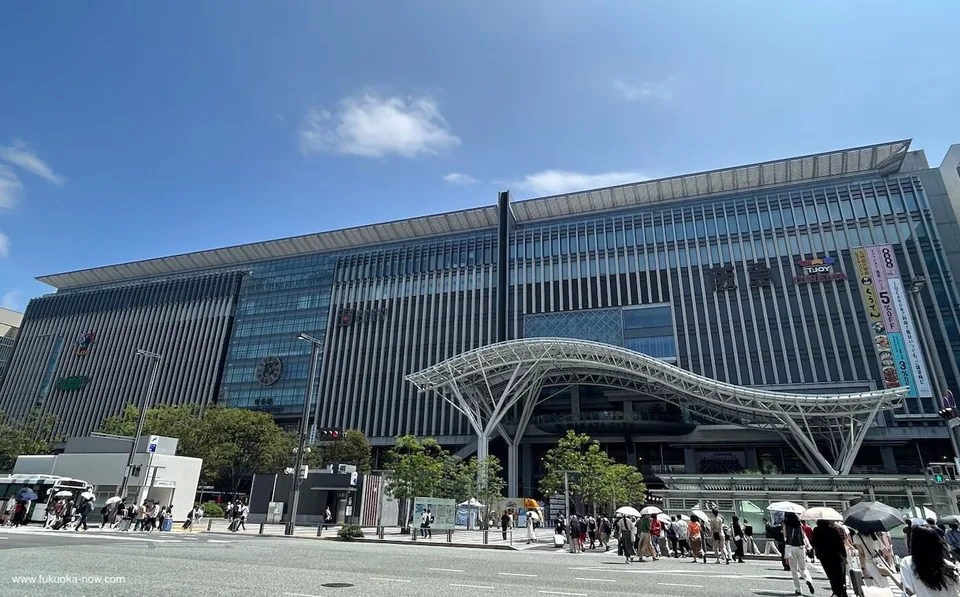
Once Fukuoka has earned the nights, the hotel base should follow the route. Hakata is the natural first check when Shinkansen movement, a Kyushu rail departure or airport sequencing dominates. Tenjin becomes stronger when shopping, nightlife and repeated central-city evenings matter more.
The airport headline should not decide this alone: the subway currently takes about five minutes from Hakata to the airport station and about eleven from Tenjin. For most two-night stays, the six-minute line-haul difference is smaller than the difference between ending every evening near your hotel or making another local transfer.
Use Hakata vs Tenjin after the route job is clear. For an early international departure, also use Hakata or Tenjin for an Early Flight and remember that the subway station serves the Domestic Terminal side.
Three first-trip scenarios
10 days: Tokyo → Kyoto → Osaka → home
Skip Fukuoka. The city can be excellent, but adding a western detour normally damages the core trip more than it improves it. Add Fukuoka only if Kyushu/Fukuoka is a primary reason for travelling or a flight structure fundamentally changes the route.
12 days: Tokyo → Kyoto/Osaka → Hiroshima → ?
Fukuoka becomes conditional. If you continue from Hiroshima and fly out of Fukuoka or enter Kyushu, one positioning night or two destination nights can work. If you must travel back to Kansai/Tokyo afterwards, I would usually keep the extra time elsewhere.
14 days: Tokyo → Kansai → Hiroshima → Fukuoka/Kyushu
Fukuoka is a strong add. Two nights can deliver a real city stay while Hakata also becomes the transport hand-off into Kyushu or the final airport city. A third night is justified only when it buys a distinct day—Dazaifu, Itoshima, slower city time or another purposeful branch.
Final verdict: Fukuoka is most valuable when the geography pays part of the bill
Skip Fukuoka on a tight first Golden Route when it exists only as a western detour. Add it when Hiroshima has already moved you west, when the city opens a real Kyushu leg, or when a sensible Fukuoka flight lets the trip end without backtracking.
For a destination stay, give Fukuoka two nights rather than pretending one rushed night represents the city. For a positioning stay, one night can be excellent because food, airport access and onward transport can all fit into the same stop. The key is to make the hotel night perform more than one job.
The red-team condition is simple: if adding Fukuoka forces Tokyo or Kyoto below the time you actually need, creates an eastbound return you did not otherwise have, or turns the trip into consecutive one-night stops, remove it. Fukuoka should make the route more useful—not merely longer.
Osaka and Kyoto in 7 Days: 3 Nights Each — When One Hotel Move Is Actually Worth It
HOTEL GREAT MORNING Fukuoka: Are 27m² Rooms and F-CON Worth Leaving Hakata Station?
KidZania Fukuoka Tickets 2026: 4 vs 6 vs 8 Hours — and Is the English Program Worth It?
Mt Fuji Day Trip or Overnight: When an Extra Night Is Worth It
References
Fukuoka City Official Tourist Guide — access from Hiroshima, Osaka and Fukuoka Airport · Fukuoka City Subway — Hakata/Tenjin airport travel times · Fukuoka Airport — Domestic/International Terminal transfer · JNTO — Sanyo/Kyushu Shinkansen network. Checked August 25, 2026. Train patterns, airport transfers and flight schedules can change; verify the actual travel date before locking a tight connection.