
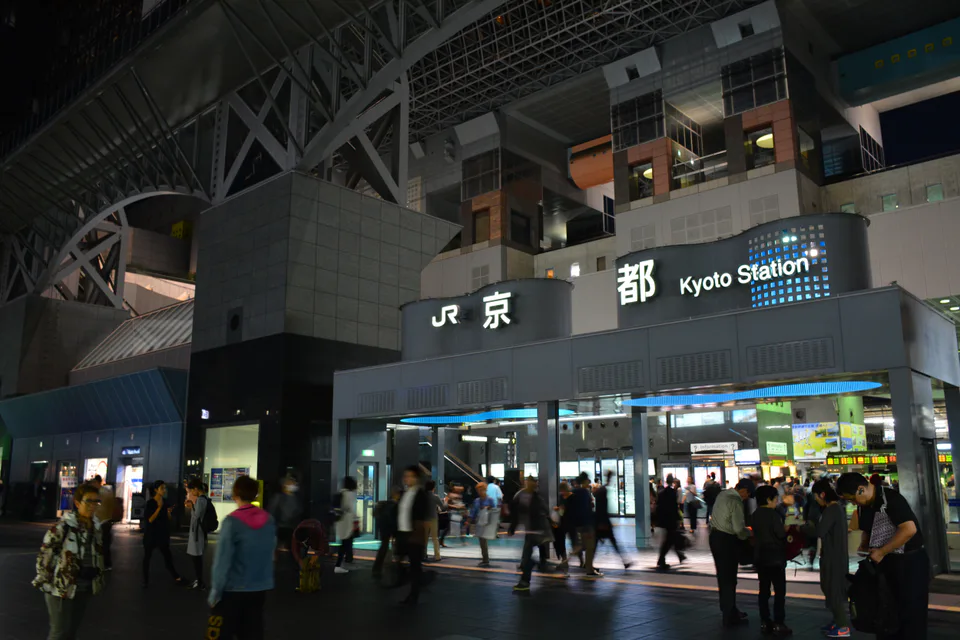
For a standard 7-day, 6-night trip that gives both Osaka and Kyoto real weight, my default split is three nights in Osaka and three nights in Kyoto — with exactly one hotel move. Spend the first half on Osaka city and USJ, move to Kyoto around midday on Day 4, then use the final three nights to buy something a day trip cannot fully give you: two Kyoto mornings before 9:00 AM, at least one evening after 6:00 PM, and a slower final two days without watching the train back to Osaka.
That does not mean every Osaka-and-Kyoto trip should be split. If your Kyoto list is basically Fushimi Inari plus Kiyomizu-dera and Gion on one day, stay in Osaka all six nights. The rail connection is easy enough that a single day trip makes more sense than packing, checking out, storing luggage and checking in again. A hotel move only starts earning its keep when Kyoto deserves at least two full days and you actually care about the city at the edges of the day.
This is not another “best attractions in Osaka and Kyoto” itinerary. It is a hotel-base decision disguised as an itinerary: how many nights should go to each city, when should you move, what do you gain from sleeping in Kyoto, and when does the extra tax, luggage friction and cancellation risk outweigh those quieter hours? If you are still deciding which city should be your main base at all, start with Kyoto vs Osaka for first-time visitors first. If both cities already matter, this 3+3 plan is the next decision.
The 30-second answer: stay in Osaka if Kyoto is one day; split 3+3 if you want Kyoto mornings and evenings
Kyoto is only one sightseeing day: keep one Osaka hotel
A Fushimi Inari + Kiyomizu-dera + Gion day does not justify a hotel change by itself. Leave Osaka early, return after dinner, and keep your suitcase unpacked. This is especially true if USJ, Osaka nightlife and either Nara or Kobe also matter. One stable base is often the lower-friction choice.
Kyoto gets two full days and you care about early mornings: the split starts to make sense
Kyoto City’s official tourism guidance treats before 9:00 AM as morning sightseeing and after 6:00 PM as night sightseeing. Kiyomizu-dera opens at 6:00 AM in 2026 on regular days. That is the real product you are buying with Kyoto nights: not simply a shorter train ride, but access to hours that are harder to use well when your day starts and ends in Osaka.
Kyoto gets three days or one paid cultural experience: three Kyoto nights are the cleanest version
One Kyoto night is often the awkward compromise: you pay the full moving cost but only get one evening and one early morning. Three nights give you two usable mornings, two flexible evenings and room for one tea ceremony, sword experience or rainy-day museum without forcing it into the same afternoon as the headline temples.
Moving twice — Osaka to Kyoto and back to Osaka — is usually the wrong seven-day pattern
On a six-night trip, Osaka → Kyoto → Osaka tends to fracture both Day 4 and Day 7. Unless your KIX departure is so early that Kyoto-to-airport public transport genuinely does not work for your check-in time, do not add a second move merely to “be closer to the airport.” Recalculate the final two nights instead.
First, fix the night count: 7 days and 6 nights means 3 Osaka nights + 3 Kyoto nights
This sounds obvious, but many itineraries casually mix “seven days” with “seven nights.” If arrival day is Day 1 and departure day is Day 7, you have six hotel nights. In this version, you sleep in Osaka on Days 1, 2 and 3; in Kyoto on Days 4, 5 and 6; and leave from Kyoto on Day 7.
If you actually have 7 nights and 8 days, the easiest extension is not another hotel change. Add one Osaka night and make it 4 nights Osaka + 3 nights Kyoto. That gives USJ more breathing room while preserving the two Kyoto mornings that justify the split.
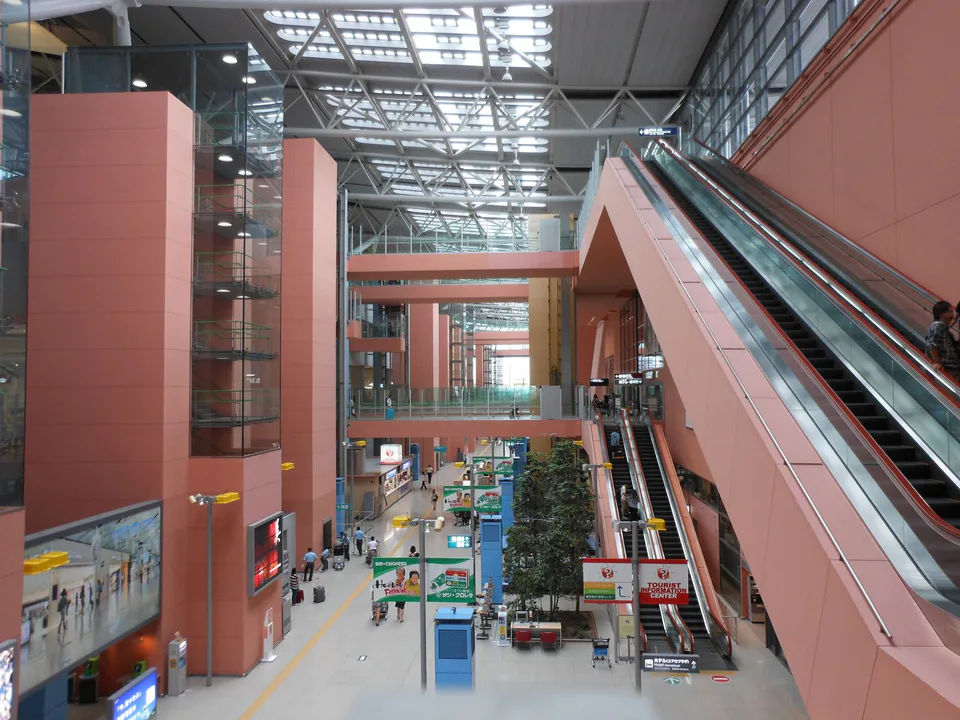
Why not sleep in Osaka all week? Because a Kyoto hotel buys the two hours before and after the normal day-trip window
The Osaka–Kyoto rail ride itself is not a long-distance journey. Hankyu’s current weekend Kyo-train Garaku timetable, for example, shows Osaka-umeda at 9:32 and Kyoto-kawaramachi at 10:15 — about 43 minutes — with no surcharge beyond the normal fare. That is exactly why I do not recommend moving hotels for one ordinary Kyoto day. The intercity ride is too easy to justify a move on transport time alone.
The difference appears at the edges. If you leave Osaka after breakfast, navigate a big station, arrive in Kyoto and then continue to Higashiyama or Fushimi, your meaningful sightseeing often begins well after the city’s quietest period. In the evening, the return trip starts shaping dinner and walking time before you are ready to leave. Kyoto’s official tourism site explicitly highlights before 9:00 AM and after 6:00 PM as separate off-peak sightseeing windows. Three Kyoto nights let you use both without turning every day into a 5:00 AM alarm.
Kyoto has a new 2026 split-stay cost: accommodation tax can no longer be treated as a token fee
Kyoto City revised its accommodation tax from March 1, 2026. The tax is charged per person, per night, based on the accommodation price per person: ¥200 below ¥6,000; ¥400 from ¥6,000 to ¥19,999; ¥1,000 from ¥20,000 to ¥49,999; ¥4,000 from ¥50,000 to ¥99,999; and ¥10,000 at ¥100,000 or more. That means a three-night Kyoto segment can add a meaningful amount, especially for two people in higher-priced rooms.
This does not make Kyoto a bad place to stay. It simply means the real comparison is not “Kyoto hotel costs ¥2,000 more tonight.” Compare the full six-night hotel total, Kyoto accommodation tax, the number of Osaka–Kyoto round trips you avoid, cancellation rules, breakfast you will actually use and any luggage handling you add. Split stays are won or lost on the whole package, not one nightly room rate.
Day 1 — KIX to Osaka: do not put the first night in Kyoto just because Kyoto comes later
Afternoon or evening: enter Osaka first
USJ and Osaka city sit in the first half of this plan, so Day 1 should end in Osaka. Going all the way to Kyoto on arrival night and then returning to Osaka for USJ would create a third logistical base for no meaningful payoff.
Choose Namba or Umeda according to what the first three days actually need. Namba is stronger if arrival-night food, Dotonbori and late shopping matter. Umeda is cleaner if your Osaka half is north-heavy and you want the easiest possible Day 4 move toward Kyoto. Use Namba vs Umeda for the area decision, then match your airport train to the hotel with Kansai Airport to Osaka rather than choosing the fastest train first.
Day 2 — Osaka city: make the Osaka half feel complete instead of “saving” Kyoto for later every few hours
Morning: choose one northern Osaka line
Osaka Castle Park, Nakanoshima, Kitahama and Umeda can form one coherent northern half-day. The goal is not to collect Osaka’s top ten attractions. It is to make the first half of the trip feel like Osaka, with one direction of movement instead of constant backtracking.
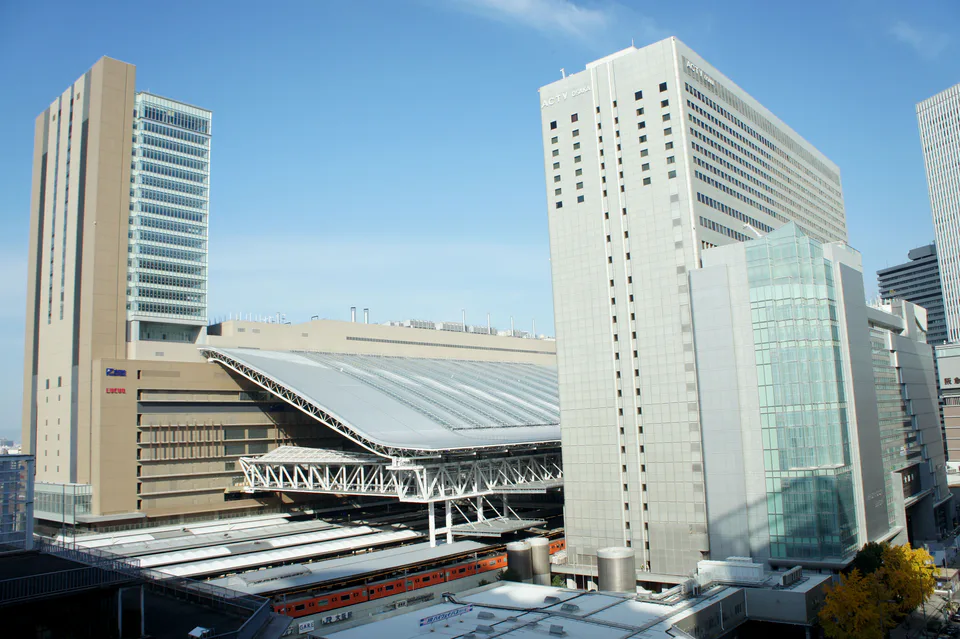
Afternoon: Umeda or Shinsaibashi, not both by default
One advantage of a split stay is psychological: you no longer need to keep “adding Kyoto” to Osaka days. Day 2 can remain fully Osaka. If the first hotel is in Umeda, keep shopping and dinner north. If it is in Namba, return to Shinsaibashi and Dotonbori. If the base is still undecided, the Osaka accommodation decision hub is the better next step than another attractions list.
Evening: keep Osaka nightlife tonight; save Kyoto evenings for the second half
The split only earns a mood change if you let the cities behave differently. Osaka’s food density, shopping and street energy belong here. Kyoto’s Kamo River, Gion, Shirakawa and Higashiyama after dinner belong later. Do not spend Day 2 commuting to Kyoto just to preview the part of the trip you already paid to stay for.
Day 3 — USJ: put the highest-intensity day before the hotel move, not on the move day
All day: USJ is the only headline
USJ belongs while you are still sleeping in Osaka. More importantly, it should not share a day with the move to Kyoto. After a long park day, the useful thing to buy yourself is a shower, a familiar room and sleep — not a late-night suitcase transfer across two cities.
Do not treat Express Pass as automatic just because you have one USJ day. First identify the two or three attractions that would genuinely ruin the day if you missed them, check timed-entry needs and compare the relevant Express bundles. The point of this USJ Express Pass decision guide is to buy certainty where it matters, not to turn a seven-day itinerary into a more expensive one by default.
After USJ: no Kyoto night transfer
It can look efficient to finish USJ and sleep in Kyoto so that Day 4 starts “already there.” In practice, that stacks the trip’s most tiring evening with luggage, platforms, a new station and a new check-in. Keep the Osaka room for one final night and move after breakfast on Day 4.
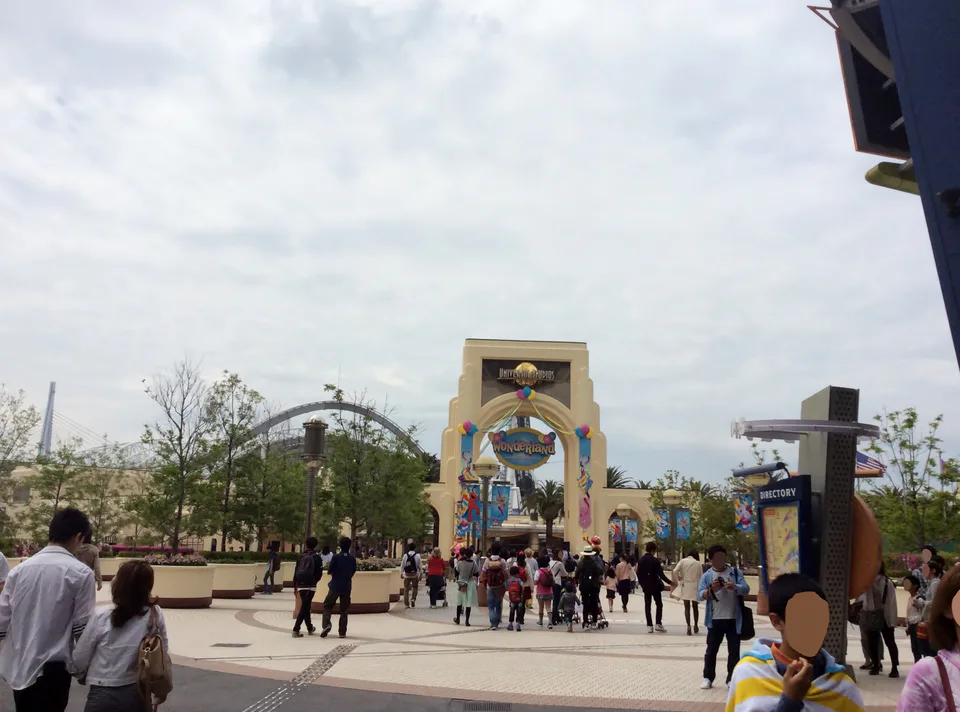
Day 4 — the only hotel move: check out, move to Kyoto, then switch rhythm
Morning: do not add “one last Osaka attraction” after checkout
The easiest way to waste a split stay is to check out, store luggage, shop for half a day and reach Kyoto at 4:00 PM. You paid the moving cost but gave away the first Kyoto evening. My version is simple: breakfast, checkout, travel to Kyoto by late morning or around noon, and get the luggage problem finished early.
If your Osaka hotel is near Umeda, Kyoto Station and Kawaramachi are both straightforward destinations. If you stayed in Namba, accept one additional Osaka-side transfer. Do not invent a Shin-Osaka third base just to avoid carrying a suitcase once. Travellers who genuinely plan repeated Kyoto and Kobe day trips should instead look at the Osaka hotel logic for repeated day trips.
Afternoon: after check-in or luggage drop, use only one Kyoto district
Do not arrive in Kyoto and immediately try to combine Fushimi Inari, Kinkaku-ji and Arashiyama. Moving day already has its own friction. Keep the first afternoon to Higashiyama: Kiyomizu-dera, Ninenzaka and Sannenzaka, Yasaka and a slow walk toward Gion. Kiyomizu-dera opens at 6:00 AM in 2026, but Day 4 does not need that advantage yet — save it for Day 6.
Evening: this is when the split begins to pay back
Have dinner, walk the Kamo River, Gion, Shirakawa or the lower Higashiyama lanes and stop checking the train back to Osaka. Kyoto officially frames after 6:00 PM as night sightseeing. You do not need a paid illumination event to justify the stay; one ordinary hour after dinner can be the thing a day trip never gives you.
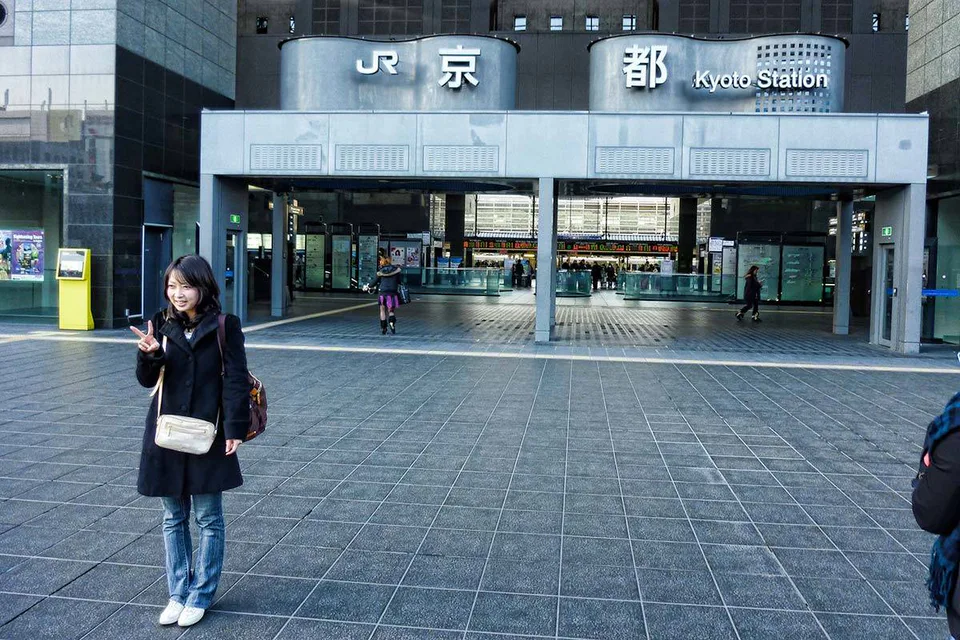
Do not compare one Osaka room rate with one Kyoto room rate — compare the two complete six-night plans
The “all Osaka” version includes six nights in one hotel and more Osaka–Kyoto round trips, but avoids a checkout, a second check-in and Kyoto accommodation tax. The 3+3 split cuts repeated intercity travel and buys earlier mornings, but adds the city tax, different cancellation conditions and a partly logistical Day 4. Those are the two products you are comparing.
Put at least four lines on the same page: total room price for all six nights, Kyoto accommodation tax, the number of intercity round trips, and luggage-related costs. Then add breakfast only if you will use it. If you plan to leave before 7:00 AM on Days 5 and 6, a premium breakfast package may be wasted unless the hotel schedule allows you to return and eat later.
Non-refundable rates amplify split-stay risk
Two non-refundable hotels mean two sets of rules if your flight, USJ date or Kyoto plan changes. The split version is where flexibility can be worth more than the cheapest headline rate. If the Osaka and Kyoto options are close in price, I would rather keep a changeable booking until the USJ day and Day 7 airport plan are fixed.
Day 4 luggage: one city move should stay simple
For one Osaka-to-Kyoto move, most travellers with a normal 20–28 inch suitcase do not need a complicated same-day delivery plan. Check out, take the suitcase to the station, reach Kyoto, leave it with the hotel if pre-check-in storage is allowed, and start the afternoon from there. The key variable is not whether luggage forwarding exists; it is whether your exact hotel will hold your bag before check-in and what size or time limits apply.
Forwarding becomes more attractive with several large bags, a stroller, older parents, or a Kyoto hotel far from a major station. Even then, confirm pickup cut-off, same-day vs next-day delivery and whether the destination hotel accepts the service. A one-move itinerary is supposed to reduce friction. If the luggage solution creates three new deadlines, it has defeated the point.
Kyoto Station has a hidden split-stay advantage: the suitcase journey almost ends when the train does
With large luggage, Kyoto Station is easy to underestimate. Arrive from Osaka, drop the bag nearby, then head to Higashiyama empty-handed. On Day 7, you return to the same major transport node for KIX. Gion gives you stronger evenings and early Higashiyama access, but usually adds a second luggage leg after you reach Kyoto.
Read next — lock the Kyoto hotel area before you lock the final three days
If Day 4 luggage and Day 7 airport access matter most, compare Kyoto Station vs Gion. Kyoto Station also has a fast official route to Fushimi Inari: Kyoto City recommends the JR Nara Line, taking about nine minutes to JR Inari Station.
If the entire point of the split is Higashiyama before 9:00 AM and Gion after dinner, the Gion/Kawaramachi side becomes more valuable. Kyoto City recommends direct Keihan access from Gion-shijo to Fushimi Inari in about 22 minutes, so choosing Gion does not ruin Day 5.
If, after reading both, the move still sounds like more work than value, do not force it. Go back to Kyoto vs Osaka or the Osaka day-trip comparison and use Osaka as the single base. Split stays are not a badge of advanced travel. They are one hotel move in exchange for better Kyoto hours.
Day 5 — Kyoto morning one: Fushimi Inari first, one cultural experience later
6:30–9:00 AM: use Fushimi Inari as the first payoff from sleeping in Kyoto
From Kyoto Station, the official recommended JR Nara Line route takes about nine minutes to Inari. From Gion-shijo, Keihan to Fushimi Inari takes about 22 minutes. Either base lets you leave after 6:00 AM without turning the morning into a cross-city expedition from Osaka.
Walk the main Senbon Torii section before 9:00 AM, then decide whether to continue higher. You do not need to “finish the mountain” for the early start to have value. Kyoto also publishes crowd information for popular areas, so seasonal weekends and holidays are a good reason to swap Day 5 and Day 6 the night before rather than stubbornly follow a fixed order.
Late morning: return toward central Kyoto instead of crossing the city to Arashiyama
Do not reward an efficient Fushimi morning by adding an inefficient westward sprint. Return to Kyoto Station, Shijo, Karasuma or Kawaramachi, eat, rest and let the afternoon stay central. The split version works because each block has one geographic job.
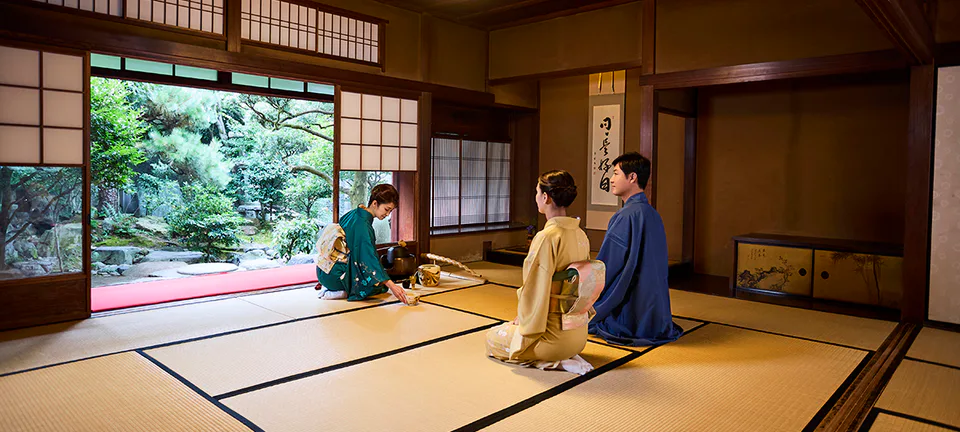
Afternoon: choose tea ceremony or samurai experience — not both
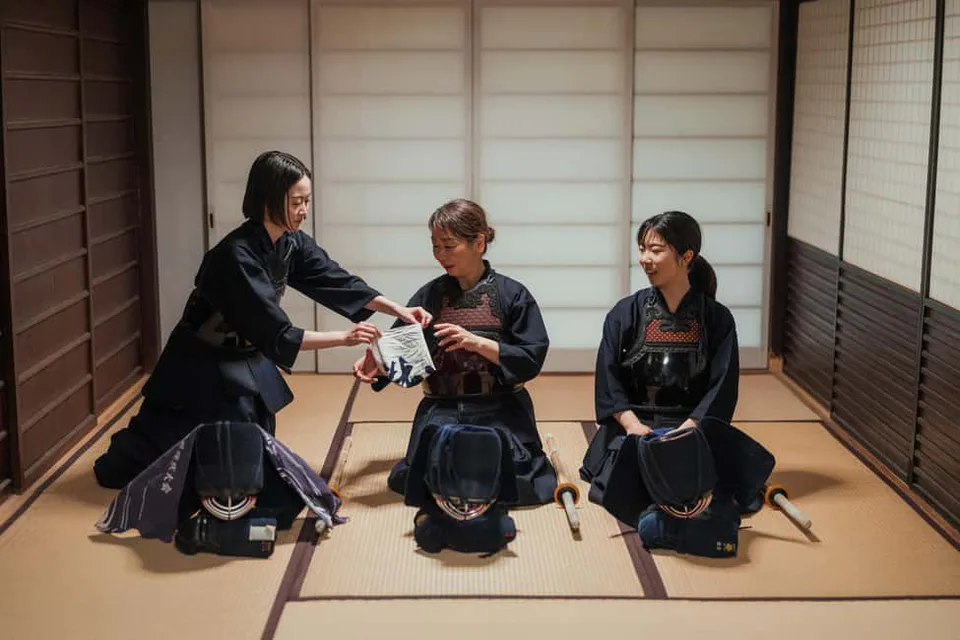
Three Kyoto nights finally create room for one paid cultural experience that is not fighting a same-day commute. If you want a slower, ritual-focused afternoon, use the Kyoto tea ceremony guide. If you want something more physical or interactive, compare Kyoto samurai experiences. Booking both on the same afternoon usually replaces the very flexibility the split stay was supposed to create.
Evening: dinner in Gion or Kiyamachi without a train deadline
The benefit is not that dinner must be expensive. It is that a 7:30 or 8:00 PM meal no longer comes with the mental countdown to Osaka. You can add dessert, a river walk or simply go back to the room when you are tired.
Day 6 — Kyoto morning two: choose Higashiyama or Arashiyama, not two “early mornings” in one day
Option A — Higashiyama: 6:00 AM Kiyomizu-dera, then Ninenzaka before breakfast
Kiyomizu-dera opens at 6:00 AM on regular 2026 days, with later closing during certain special night-viewing periods. This is the easiest split-stay benefit to understand. Visit between roughly 6:00 and 8:00, walk the slopes as the district wakes up, then eat breakfast or return to the hotel. You have not added more attractions; you have moved the same attraction into a better part of the day.
Option B — Arashiyama: give the morning entirely to the west side
If Arashiyama is the Kyoto image you care about most, use the early hours there and keep the whole morning west. Do not race back to Higashiyama at 10:00 just to claim a second “quiet” district. The point of the split is not maximum coverage. It is lower crowd pressure and cleaner geographic blocks.
Rainy afternoon: swap in a central indoor option instead of buying a new distant day trip
If Day 6 turns wet, do not force bamboo groves just because you are already in Kyoto. A central indoor option such as the Kyoto International Manga Museum can replace the affected block. A good rain plan changes one part of the day; it does not rebuild the entire week around a newly purchased excursion.
Final Kyoto night: prepare the airport day instead of adding one more night attraction
The useful final task is confirming your Day 7 KIX route, departure time, luggage and checkout. If your flight is extremely early, this is where the split can fail. Check the actual first trains for your date before deciding that the last Kyoto night is safe.
Day 7 — Kyoto to KIX: do not move back to Osaka just for the airport unless the flight forces you to
JR-West currently advertises direct HARUKA access between Kyoto and Kansai Airport. The exact train and travel time still need to be checked for your date, but the existence of direct service is why the clean 3+3 plan can end in Kyoto rather than requiring a Day 6 move back to Osaka.
For an afternoon or evening flight, keep the morning close to Kyoto Station or your hotel: coffee, Higashi Hongan-ji, a final shopping stop, then collect luggage and leave. The success metric for Day 7 is airport buffer, not squeezing in one last famous district while carrying everything you own.
Kyoto Station or Gion? Both work in this itinerary, but they solve different problems
Kyoto Station: best for large luggage, Fushimi Inari, KIX and travellers who want predictable logistics
Kyoto Station is not the most atmospheric choice, but it reduces moving friction. Day 4 arrival with bags, Day 5 Fushimi Inari and Day 7 KIX all become easy to understand. If your Kyoto plan is temples plus one cultural experience rather than late-night neighbourhood wandering, it is often the steadier three-night base.
Gion / Kawaramachi: best if the hours before 9:00 AM and after 6:00 PM are the reason you moved
Gion earns its price through proximity to Higashiyama, the Kamo River, Shirakawa and dinner-to-bed convenience. You do not need to buy a special “night Kyoto” product; the neighbourhood itself does the work. The trade-off is luggage on Day 4 and a less direct KIX departure on Day 7. Use the full Kyoto Station vs Gion comparison before paying for either.
If you need a broader shortlist across Station, Kawaramachi and Higashiyama, the where to stay in Kyoto guide is the wider hub.
Should Nara be squeezed into these seven days? Only if it replaces a Kyoto day
The core itinerary leaves Nara out because the entire point of three Kyoto nights is to promote Kyoto from “day trip” to second base. If you already know Osaka well, or Day 6 Kyoto is not important to you, replace Day 6 with Nara. Do not add Nara on top of the same seven-day structure.
Whether Nara is easier from Kyoto or Osaka depends on your actual hotel and the rest of the day; the Nara from Kyoto or Osaka comparison covers that trade-off. What I would not do is place Nara on Day 4 while moving hotels. Taking luggage through Nara storage and then onward to Kyoto turns a simple transfer into a three-stage logistics problem.
Who should not use the 3+3 split stay?
Families with toddlers, strollers and a lot of daily equipment
The time gained in Kyoto can disappear into packing bottles, strollers, laundry and nap logistics. If the child does not benefit from a 6:00–9:00 temple window, the core reason to sleep in Kyoto is weaker. One Osaka base plus a Kyoto day trip may be the better family product.
Older travellers for whom every station change is a real physical event
One hotel move is not much on paper, but checkout, suitcase handling, platforms and a second check-in form a complete energy block. If Kyoto only gets one daytime route, do not add that block merely for atmosphere.
Very early KIX departures
If your Day 7 flight requires leaving Kyoto before a sensible public-transport option, the final Kyoto night can become expensive or uncomfortable. In that case, reduce Kyoto to two nights, extend Osaka, or keep the whole trip in Osaka rather than forcing a taxi solution.
Travellers who really want Osaka nightlife and only want Kyoto’s headline photos
If the second night in Kyoto already makes you miss late Osaka dinners and bars, you bought the wrong benefit. Stay in Osaka, leave early for Kyoto once, and keep the city you actually enjoy as your base.
The real cost of moving hotels is not the Osaka-to-Kyoto train fare
Count four things: packing time before checkout, the suitcase trip to the station, the storage/check-in gap after arrival, and Kyoto accommodation tax. The rail ride can be easy enough that it makes moving look cheap, but the real cost is what happens to Day 4.
That is why Day 4 should not also contain USJ, Nara or Arashiyama. Higashiyama in the afternoon and Gion after dinner are enough. If you insist on three major sights on moving day, you are probably not valuing the Kyoto hotel for its mornings and evenings — which means the all-Osaka plan may fit you better.
Do not buy a Kansai transport pass just because this itinerary crosses two cities
Osaka, Kyoto, USJ and KIX use a mix of JR, Osaka Metro, Hankyu, Keihan and other systems. The classic mistake is buying something with “Kansai” in the name, then bending the itinerary around the product coverage. Set the Day 1–7 movements first. Compare IC card, individual fares and any relevant pass only after the route exists.
Because you move hotels once and stop commuting between Osaka and Kyoto every day, some passes that look attractive for repeated intercity travel become less useful in the 3+3 version. Do not copy a transport conclusion from an all-Osaka-base itinerary into a split stay without recalculating.
Why one Kyoto night is often the most awkward compromise
Five Osaka nights plus one Kyoto night sounds balanced, but you pay almost all the moving friction for one evening and one morning. It can make sense if the night has a clear purpose — a special ryokan, a fixed evening event, or a deliberate 6:00 AM Kiyomizu-dera start. If the reason is simply “I want to say I stayed in Kyoto,” it is usually weaker than either not moving at all or staying two to three nights.
For six nights, the cleanest structures are therefore surprisingly simple: Osaka all six nights, or Osaka three + Kyoto three with one move. Fragmented patterns such as 4+1+1 usually create more hotel admin than travel value.
Why Osaka first and Kyoto second works especially well when USJ is included
The order is not a law, but it is operationally clean. USJ is a high-intensity day with an uncertain finish. Keeping it in the Osaka half lets you return directly to the same room. Kyoto then becomes a deliberate downshift into mornings, walking and one cultural afternoon.
You can reverse the trip — Kyoto first, Osaka second — but then KIX arrival, USJ placement and final shopping all need to be rearranged. For a first visit, Osaka first and Kyoto second tends to make the single hotel move feel like a change of travel mode rather than just a logistics task.
Rain does not break the split — it actually makes three Kyoto nights more flexible
Day 2 Osaka city, Day 5 Kyoto culture and Day 6 Kyoto outdoors have different weather sensitivity. If Day 6 is wet, move the indoor cultural block there and maximize the better-weather morning on Day 5. The fixed, expensive day that should not be casually moved is USJ once its ticket date and timed elements are locked.
Three Kyoto nights make it easier to separate Fushimi, Higashiyama and Arashiyama across different weather windows. That is another reason the split becomes more useful at two or three Kyoto days than at one.
48 hours before departure, check these seven split-stay failure points
One: confirm whether Day 1 ends in Namba or Umeda. Two: recheck the exact USJ ticket date, operating information and any timed Express elements. Three: confirm whether the Osaka hotel stores luggage after checkout and whether the Kyoto hotel accepts bags before check-in. Four: verify whether Kyoto accommodation tax is already included in the OTA total or payable separately. Five: check the actual early train frequency from Kyoto Station or Gion for Day 5. Six: confirm Kiyomizu-dera or your Day 6 indoor backup’s current operating information. Seven: check the Day 7 Kyoto-to-KIX train against your airline check-in buffer.
If Day 4 luggage or Day 7 airport access fails, recalculate the split before you lock two non-refundable hotels. Those are the two structural points that can turn a good 3+3 plan into unnecessary friction.
Final verdict: split Osaka and Kyoto only if you want to buy two Kyoto mornings
A 7-day Osaka and Kyoto itinerary does not automatically need two hotels. If Kyoto is one concentrated day, Osaka all six nights is the cleaner plan. If Kyoto deserves at least two full days and the city before 9:00 AM and after 6:00 PM is part of what you want, then three nights Osaka + three nights Kyoto is a very sensible split.
The versions I would avoid are the halfway ones: moving once for a single Kyoto night, or moving Osaka → Kyoto → Osaka. The first does not recover enough value from the move; the second fragments the end of the trip. Keep USJ and Osaka nights in the first three days, move once around midday on Day 4, then let Kyoto mornings and evenings control the second half.
Your final test is simple: if removing the two early Kyoto mornings would barely change your trip, stay in Osaka. If those mornings are the reason you are excited about Kyoto, move once and stay three nights.
Sources checked
Dynamic details were rechecked in August 2026. Kyoto morning and night definitions come from Kyoto City Official Travel Guide — Morning & Night. Kiyomizu-dera 2026 opening hours come from Kiyomizu-dera official visitor information. Kyoto accommodation tax brackets come from Kyoto City accommodation-tax information.
Fushimi Inari access times come from Kyoto City Official Travel Guide — Fushimi Inari access. The current Kyo-train Garaku weekend example and no-surcharge rule come from Hankyu Railways. Direct Kyoto–KIX HARUKA service is confirmed by JR-West. Recheck actual train times, hotel tax handling and ticket conditions for your travel date before paying.
USJ Hotels for One Day vs Two Days: When Is Universal City Worth Moving To?
Japan Itinerary 7 Days: One Base — or Tokyo 3 Nights + Kyoto 3 Nights?
Osaka Itinerary With Friends: 7 Days of USJ, Sumo, Food and Kobe — Without Moving as One Group
Osaka and Kyoto 4-Day Itinerary With USJ: Does Kyoto Still Fit?
Wait Until 40 Minutes Before Sunset: When Mojiko Retro Observation Room Is Actually Worth ¥600