Kyoto samurai experiences are easy to misread because the product names all promise some version of swords, samurai culture and hands-on participation. The real choice is not which listing looks the most dramatic. It is whether you want to watch a performance, learn a short set of sword movements, or give roughly two hours to uniforms, protective gear, footwork and a more training-led kendo session. Those are three different travel decisions, even when the booking cards make them look like upgrades of the same thing.
Among the many things to do in Kyoto, a samurai experience only makes sense once you decide whether your limited half-day should go to watching, learning sword work or doing full kendo.
For most first-time visitors, the middle option is the safest buy: a 1.5–2 hour sword class gives you enough participation to feel that you actually did something without forcing the entire half-day to revolve around martial-arts training. A one-hour Kenbu performance is better when Kyoto is already packed with temples and evening plans. Full kendo earns its higher price only when the training itself is the reason you are booking, not because “the most complete experience” sounds automatically better.
The 30-second cut: choose by participation, not by price
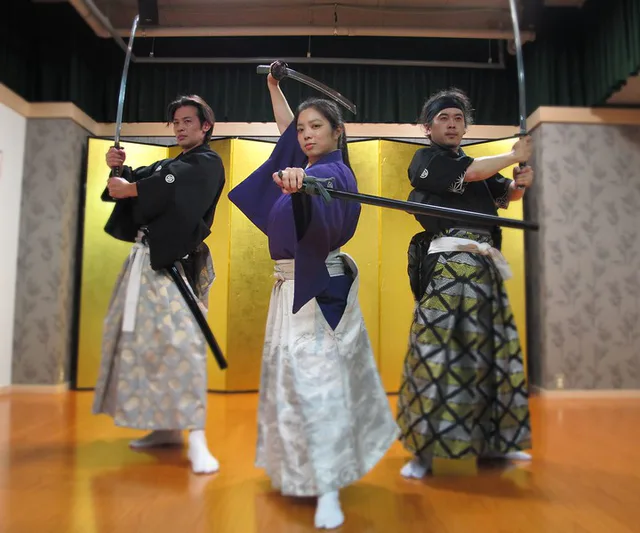
If you mainly want context, stagecraft and a compact cultural stop, choose the Kenbu performance. You are paying for interpretation, choreography and a low-friction hour in the city rather than for extended practice.
If you want to hold a sword, learn how to draw and return it, follow an instructor and leave with the feeling that you participated, the samurai sword class is the strongest middle ground. It takes more time than a show but still fits a normal Kyoto day.
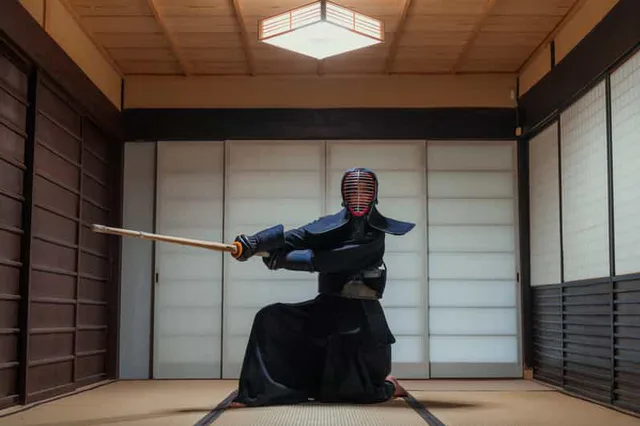
If you specifically want the uniform, protective gear and the physical discipline of kendo practice, then the full kendo experience finally makes sense. The extra cost is not buying “more samurai atmosphere”; it is buying more of your own body and attention inside the session.
Why Kenbu, a sword class and kendo should not be compared as one product
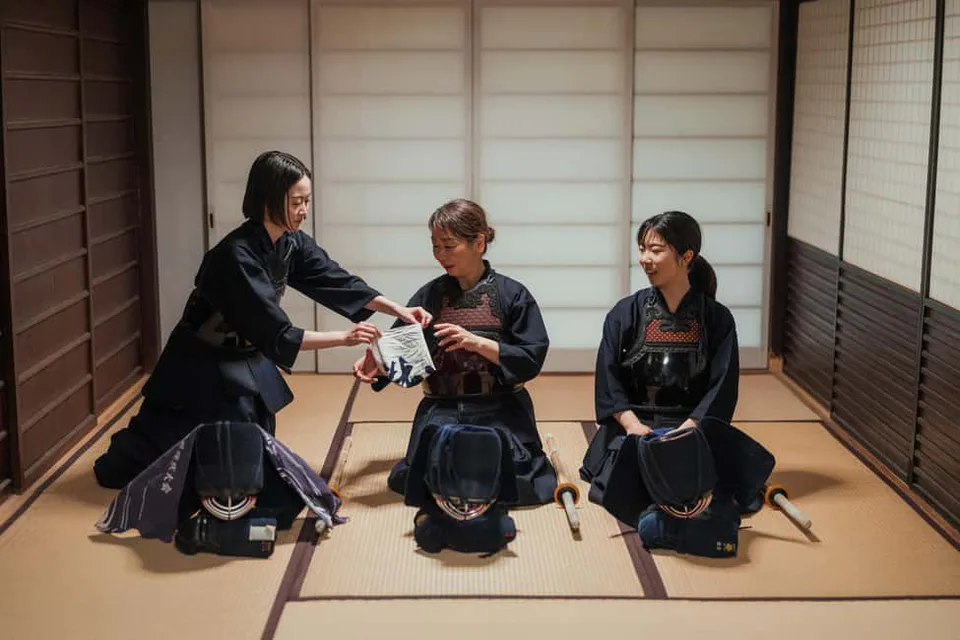
Current Kyoto inventory on GetYourGuide shows three useful tiers. Samurai Kenbu Traditional Sword Dancing Show is built around watching and understanding a staged sword-dance performance, with a short, accessible format. Samurai Sword Class by Experts in Traditional Arts runs around 1.5–2 hours and moves the visitor into the lesson: handling the sword, drawing and sheathing it, learning posture and working through a sequence of Kenbu movements. Kendo and Samurai Experience with Uniform and Gear pushes participation further by making the training component the centre of the booking.
The names are the trap. “Samurai,” “sword,” “experience” and “traditional” appear across several listings, so it is tempting to read the higher-priced option as a deluxe version of the cheaper one. It is more accurate to think of them as three formats: audience, guided practice, and training-led participation. Decide which role you want before comparing the price difference.
What the extra money actually buys
A performance uses your attention. A sword class uses your attention and your coordination. A fuller kendo session also uses your stamina, your willingness to repeat movements and a larger block of the day. That difference sounds obvious, but it changes whether the same two hours feel memorable or frustrating.
If you enjoy learning physical skills, the time spent changing, listening to corrections and repeating basics is the point. If your real goal is a few photos in costume and a story to tell over dinner, that same training time becomes an opportunity cost. In Kyoto, opportunity cost matters because every extra hour can displace Kiyomizudera, Gion, a tea ceremony, shopping or an early dinner reservation.
That is why “two hours for a little more money” is a weak reason to upgrade. Two hours only beats one hour when you want what happens inside the second hour.
Next decision: is the samurai experience the star of the half-day?
If you are also trying to fit Kiyomizudera, Kodaiji, Gion or an evening walk into the same block, map the district first. Our Kyoto Higashiyama itinerary shows how quickly short stops become a full day once walking, queues and meal breaks are added. It is safer to build the neighbourhood route first and then see whether a 1–2 hour fixed-time activity genuinely fits, rather than buying a session and deleting half the area afterward.
Next decision | Build the Higashiyama half-day first
Who should pay for the full kendo experience
The clearest fit is someone who already has an interest in kendo, Japanese martial arts or traditional movement culture. You do not need previous experience, but you should be curious about practice itself. If the only attraction is the costume, the training-led option is solving the wrong problem.
It also works best when everyone in the group wants to participate. A two-hour experience becomes much harder to justify when one person is excited and the rest are effectively waiting. That is particularly important for couples and families, because a culturally “interesting” activity on paper can still be a poor group decision.
Finally, it suits travellers who have given Kyoto enough time. If you are staying two or three nights, a dedicated session can become one of the trip’s anchor activities. If Kyoto is a rushed day trip squeezed between Osaka and another city, the same booking may create more stress than value.
Four cases where I would not book the most complete option
First, Kyoto is a one-day stop and your priority list already includes the major temples, Gion and a fixed dinner. Your scarce resource is not “things to do”; it is route flexibility.
Second, you mainly want photos. The higher-tier experience spends more of the session on instruction and practice, not necessarily on giving you more time to pose. A shorter class can produce the memory you want with less damage to the day.
Third, your group has mixed enthusiasm. One person wanting an immersive martial-arts session is not enough if everyone else would rather shop, sit down or continue sightseeing. A cheaper, shorter performance is often the kinder group decision.
Fourth, this is a hotel-change or intercity travel day. Current product notes for at least one sword-class option warn that there is no suitable space for large luggage or travel bags. Even when another provider has different rules, building a fixed activity between checkout and a train creates avoidable risk. Put the class on a stable Kyoto day instead.
The cheaper alternative is not “skip it”; it is choose the right depth
If your interest is cultural rather than physical, the one-hour Kenbu show is a legitimate end point, not a consolation prize. You get the visual language of sword dance and a guided introduction without turning the entire afternoon into a lesson.
If you want a genuine hands-on memory but are unsure whether full kendo is too much, the sword class is the strongest compromise. It asks more from you than a show but does not require the same commitment to gear and training. For a first Kyoto samurai experience, that is often where the value curve is best.
The strongest counter-option is a tea ceremony
A samurai experience is not automatically the best “traditional Kyoto” booking. If your real goal is to spend one part of the trip inside a structured Japanese cultural practice, a Kyoto tea ceremony competes for the same time and budget. It may suit older travellers, mixed-age groups and anyone who wants a quieter experience with less physical participation.
This is the most important counterargument to full kendo. If your reason for booking is only “I should do one traditional activity in Kyoto,” martial arts has no automatic advantage. Kendo becomes the better choice only when the movement, instruction and martial culture are what you actually want. Otherwise, tea, craft or a slower Higashiyama walk may fit the trip more naturally.
Three spending levels, three different reasons to book
Choose the one-hour Kenbu performance when your Kyoto schedule is already dense. The appeal is low time cost: you still get a focused cultural segment without losing a full afternoon.
Check one-hour Kenbu show availability for your date
Choose the 1.5–2 hour sword class when you want the clearest balance of participation and itinerary efficiency. You get traditional clothing, basic sword handling, instruction and photos without committing to the most training-heavy format.
Compare current Kyoto sword-class times and prices
Choose the full kendo option only when the protective gear, footwork and extended practice are part of the appeal. It does not need to be the default recommendation. It needs to be the right recommendation for someone who genuinely wants to train.
See current full kendo experience time slots
Location can matter more than a small price difference
Kyoto punishes plans that look compact only on a booking screen. A 90-minute class can occupy far more than 90 minutes once you include the trip from your hotel, early arrival, changing, the session itself and the move to the next stop. If a cheaper slot forces you across the city at the wrong time, it can be the more expensive choice in practice.
If your hotel is not settled yet, decide the base first. Kyoto Station vs Shijo Kawaramachi is a more consequential choice than shaving a small amount off an activity ticket, because your base affects every morning and every return journey.
I would also drop a samurai booking entirely if the only remaining time slot forces an awkward cross-city detour. The activity should add a memorable block to Kyoto, not make the whole day orbit one reservation. “Good product, bad time” is still a bad booking.
Verdict: decide whether you want to be an audience member or a participant
There is no universal winner among Kyoto samurai experiences. Watch the Kenbu performance if you want culture with minimal disruption. Take the sword class if you want the strongest first-time balance of participation, photos and schedule control. Pay for full kendo when practising is the point and you are happy to give it a proper two-hour block.
The weakest purchase is the person who mainly wants a photo but buys the most expensive option because “full experience” sounds safer. The better sequence is the opposite: choose your desired participation depth first, then buy the product that matches it. If you still want full kendo after making that distinction, the upgrade has a real reason behind it.
FAQ
Do I need kendo experience before booking a Kyoto samurai activity?
Most tourist-facing sword and Kenbu classes are designed for beginners. Full kendo experiences can still be beginner-friendly, but the physical format and age rules differ by provider, so check the specific session rather than assuming every “samurai” listing has the same requirements.
Is a one-hour samurai show too short to be worth it?
Not if your goal is performance, cultural context and a compact stop. One hour becomes too short only when your main reason for booking is to practise sword movements yourself. In that case, move up to a class rather than assuming the show is poor value.
Which option makes most sense with children?
Start with the provider’s minimum-age and participation rules, then ask whether the child can follow instructions for the whole session. One current sword-class listing excludes children under four and notes that ages five to ten are better suited when they already have relevant martial-arts experience. Other products may use different rules, so do not treat family reviews as universal eligibility.
Source check before booking
This guide was checked against current GetYourGuide listings for Kyoto: Samurai Sword Class by Experts in Traditional Arts, Kyoto: Samurai Kenbu Traditional Sword Dancing Show, and Kyoto: Kendo and Samurai Experience with Uniform and Gear. Session times, prices, age restrictions, languages and cancellation terms can change by date, so confirm the specific product page before payment.
Free Autumn Leaves in Kyoto 2026: Parks, Paths, Ginkgo and Routes
Osaka Solo Travel Itinerary: 7 Days of USJ, Kyoto and Kobe — Without Filling Every Hour
HOTEL GREAT MORNING Fukuoka: Are 27m² Rooms and F-CON Worth Leaving Hakata Station?
Fukuoka Hotels: Stop Ranking Properties—Choose by Trip Shape, Area and Who You Travel With