
The fastest way to choose a Fukuoka hotel is to stop ranking hotels
A useful Fukuoka hotel guide should not begin with a top-10 list. The same hotel can be a brilliant choice for one trip and an expensive inconvenience for another. A traveller landing late with a large suitcase, a couple spending every evening around Tenjin, a family needing real beds, and a visitor taking three JR day trips are not solving the same problem. This hub starts with how your trip works, then narrows the area, room constraints and hotel type. Only after that do the individual hotel reviews become useful.
If this is your first visit and you have not yet decided what matters most, start with the first-time Fukuoka hotel guide. It separates the first night, full sightseeing days and final half-day before asking you to choose Hakata, Tenjin, Nakasu or Gion.
Start with the first-time hotel decision
First layer: choose your traveller type before you choose Hakata or Tenjin
A hub should not make you read every hotel article. Start with the persona that most closely matches your trip, let that article identify the friction that matters, then return here to choose the area, comparison and single-hotel review. These 18 routes are the real first layer of the guide.
↔ Scroll table left or right
Your trip looks like this | Start with this persona | What it solves first |
First visit to Fukuoka | First-time Fukuoka hotels | First night, full days and final half-day |
Family trip | Beds, laundry, nap returns and daily movement | |
Travelling with parents | Repeated walking, transfers, bathrooms and breakfast | |
Couple trip | Where evenings belong and whether hotel time is worth paying for | |
Girls’ trip | Twin beds, bathroom flow, shopping bags and late returns | |
Guys’ trip | Real beds, late nights, bathroom queues and sauna value | |
Solo trip | Small-room tolerance, late returns and shared space | |
Only two nights | Why moving hotels wastes a short trip | |
Many day trips | JR, Nishitetsu and bus departure friction | |
Shopping-heavy trip | Bag drops, room returns and the last 300 metres | |
Food-focused trip | Where dinner ends, breakfast and yatai returns | |
Late arrival | Transfers, luggage and first-night navigation | |
Rain matters | Direct access, underground routes and the last 300 metres | |
Public bath / onsen / sauna matters | Fukuoka hotels with public baths | Usable bath windows rather than facility labels |
Staying 4–5+ nights | Laundry, storage, room time and repeated returns | |
Budget is tight | Nightly rate versus total trip cost | |
Self-drive trip | Which nights actually need the car and when to return it | |
Concert trip | The trip home after the encore, not just venue distance |
Second layer: translate your persona into the friction your trip repeats
A hotel location earns its price through repetition. One five-minute inconvenience may not matter. The same five minutes with luggage on arrival, again before an early train, again after a long day trip and again on departure becomes a real cost. The opposite is also true: paying more for station-direct access makes little sense if almost every full day is spent shopping, eating and returning to the room around Tenjin.
↔ Scroll table left or right
Your trip pattern | Usually start here | Then read |
JR-heavy day trips, early trains, large luggage | Hakata | Day-trip base + Hakata hotel comparisons |
Shopping, cafés, nightlife, midday room returns | Tenjin | Shopping / food / couples guides |
Late dinners, yatai, Nakasu nights | Nakasu / Haruyoshi | Food-focused + late-night hotel reviews |
Short two-night trip | One base only in most cases | Two-night hotel guide |
Mixed itinerary | Count repeated friction, not attractions | Hakata vs Tenjin area comparison |
For the broad area decision, use Where to Stay in Fukuoka: Hakata or Tenjin. If your itinerary is dominated by day trips, go one level deeper with Fukuoka Hotels for Day Trips because JR, Nishitetsu and bus-based mornings create different answers.
Third layer: choose Hakata when your persona points to repeated transport value
Hakata becomes difficult to beat when several important days begin or end there. Airport arrival, JR day trips, early departures and large luggage all increase the value of reducing transfers. That does not mean every traveller should pay for the closest possible hotel. Think in layers: station-direct, roughly one or two minutes away, and seven-to-ten-minute walk hotels can all be correct if the savings are buying something you will actually use.
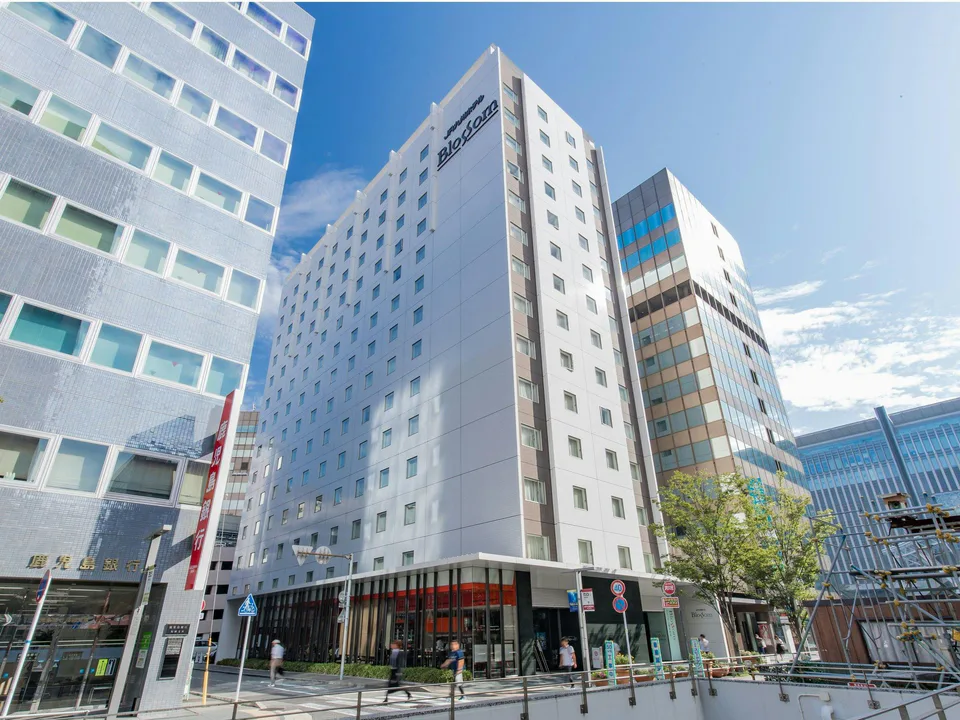
The existing hotel inventory already covers those trade-offs. Miyako Hotel Hakata is the station-direct premium case. JR KYUSHU HOTEL Blossom Hakata Chuo tests whether a very short walk is enough. HOTEL FORZA Hakata Station is another station-side option, while THE BLOSSOM HAKATA Premier asks whether a longer walk is worth more room and a public-bath-style facility. Compare those three directly in the Hakata Station hotel comparison.
Fourth layer: choose Tenjin when your persona points to repeated city-centre returns
Tenjin earns its value differently. It is not only about nightlife. Travellers who shop, stop for coffee, return to drop bags, change before dinner or take a break between daytime and evening plans can use the room as part of the itinerary. That repeated return-to-room pattern often matters more than shaving a few minutes from one subway ride.
Your existing single-hotel reviews give several distinct Tenjin choices: Solaria Nishitetsu Hotel Fukuoka for a central Tenjin base, Tokyu Stay Fukuoka Tenjin when in-room laundry matters on longer stays, Hotel JAL City Fukuoka Tenjin when Akasaka access and room comfort fit better than being directly at Tenjin Station, and ONE FUKUOKA HOTEL when the hotel itself deserves part of the trip budget and time.
Fifth layer: use Nakasu, Haruyoshi or Gion only when your persona actually benefits
The middle of the map can look like the safest compromise, but “between Hakata and Tenjin” is not enough. Nakasu and Haruyoshi work when evenings are important and you value walking back after dinner or yatai. Gion can work when you want access to Hakata without living directly on top of the station, but the final walk still matters with luggage, rain or tired children.
For this cluster, use your existing reviews rather than generic hotel lists: HOTEL RESOL TRINITY HAKATA for Nakasu access and public-bath trade-offs; HOTEL IL PALAZZO for a Haruyoshi/Nakasu-oriented stay; Hotel Torifito Hakata Gion for Gion, twin space and public bath; and Mitsui Garden Hotel Fukuoka Gion when a three-adult room and bath facilities matter.
If you only have two nights, moving hotels is usually the wrong optimisation
A two-night Fukuoka trip has very little slack. Check-in, luggage storage, repacking and moving between bases can consume the same time you were trying to save. Unless there is a hard reason to split the stay, one base normally wins. The two-night Fukuoka hotel guide works backwards from arrival, one full day and the final half-day so you can see which location actually pays back.
Late arrival changes the first-night answer
A hotel that looks perfect on a map at noon can be irritating after a late flight. At that point, fewer transfers, simpler wayfinding and a short final walk become more valuable than nightlife access you will not use. Start with Fukuoka Late-Arrival Hotels. If the final night involves an early flight, compare Hakata or Tenjin for an Early Flight separately rather than forcing the same base to solve both ends of the trip.
Day-trip-heavy trips should choose the morning, not the evening
Three mornings leaving for Yufuin, Kitakyushu, Dazaifu or another Kyushu destination can outweigh one attractive evening district. JR-heavy trips usually increase Hakata value; Nishitetsu-heavy plans can push the answer toward Tenjin; organised bus tours depend on the actual meeting point. Use the day-trip-base guide, then check Fukuoka transport options and the Fukuoka to Yufuin comparison before paying a hotel premium based on an assumption.
Shopping trips should count bag drops and room returns
Shopping is one of the easiest reasons to overpay for the wrong convenience. The question is not simply whether a department store is close. Ask how often you will buy, return to the room to unload, go back out, then come home again. If that rhythm happens repeatedly, Tenjin can beat a technically faster transport base. Use Fukuoka Shopping Hotels to calculate that pattern before comparing individual rooms.
Food trips should choose where dinner ends
A food-heavy itinerary changes the hotel decision after 7 p.m. Breakfast, late ramen, yatai and a second drink all make the return route part of the experience. Staying beside the largest station is not automatically convenient if every night ends elsewhere. Start with Fukuoka Food Trip Hotels and the Fukuoka yatai guide. If breakfast is a priority rather than an afterthought, add the Fukuoka breakfast guide before choosing a hotel breakfast package.
Families: beds and bathroom flow come before the postcode
For families, the first filter is often not Hakata versus Tenjin. It is whether everyone has a real sleeping arrangement, whether a child can sleep while adults are still awake, whether laundry is realistic, and whether the bathroom setup works in the morning. The Fukuoka Family Hotels guide handles those constraints first. Only after that should you decide whether the surviving hotels are in the right area.
If the group is three or four adults rather than a family with children, use Fukuoka Hotels for 3 or 4 Adults. Existing single-hotel inventory such as Mitsui Garden Fukuoka Gion and CROOM Hakata Gion group rooms lets you check whether one larger room genuinely works or merely looks cheaper on the booking screen.
Travelling with parents: remove repeated walking, not all walking
A ten-minute walk once is different from the same walk four times a day. With parents, the expensive mistake is often repeated friction: station exits, stairs, transfers, breakfast runs and the final walk after dinner. Use Fukuoka Hotels With Parents to decide where reducing movement produces the biggest benefit. A direct hotel can be worth a premium here, but only if the group repeatedly uses that convenience.
Couples: decide where your evenings belong before paying for luxury
Couples often pay for a better room, view or hotel facility, then spend every waking hour outside. The better question is whether the trip is built around Tenjin, Nakasu, a hotel spa, or an easy Hakata return after day trips. Fukuoka Hotels for Couples separates those patterns before you compare higher-priced properties such as Miyako, Solaria or ONE FUKUOKA HOTEL.
Girls’ trips and guys’ trips have different room friction
Group labels are less important than the practical conflict they reveal. For a girls’ trip, twin-bed certainty, bathroom queues, mirror space, shopping bags and late returns can dominate. For a guys’ trip, four real beds, drinking-night returns and whether a sauna or public bath will actually be used can matter more. Use the girls’ trip hotel guide or the guys’ trip hotel guide before looking at group-room prices.
Solo travellers should not automatically choose the cheapest room
A compact room can be excellent when you are out all day and returning alone, but a tiny room is less attractive if you work, eat, sort luggage or spend rainy hours inside. Shared lounges can be useful or completely irrelevant. Fukuoka Solo Hotels asks whether you actually use the space you are paying for, rather than treating solo travel as a race to the lowest nightly rate.
Budget travellers: calculate the trip cost, not the room rate
A cheaper hotel can lose its advantage through extra transfers, luggage friction, paid laundry, smaller room tolerance or a location that forces repeated transport. The Fukuoka Budget Hotels guide is designed to expose that false economy. Do not upgrade for features you will not use, but do not save a small amount only to create a daily tax.
Long stays: the fifth day exposes problems the first night hides
Longer stays amplify laundry, luggage storage, desk space, supermarket access and the cost of returning to the room. This is where an existing review such as Tokyu Stay Fukuoka Tenjin can become more relevant than a hotel with a more impressive lobby. The same principle applies to every hotel: repeated utility beats one-time novelty.
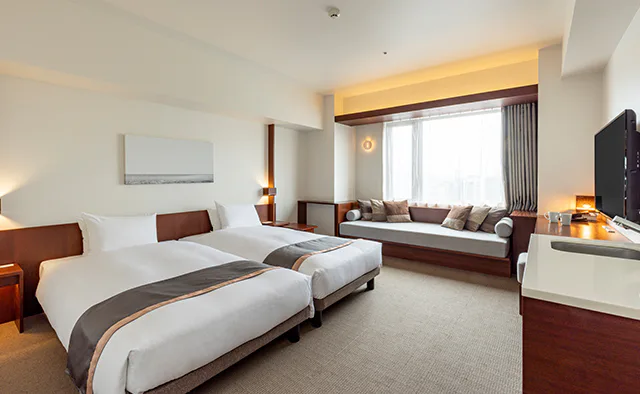
Public bath, onsen and sauna: count usable windows
Do not book a hotel because “it has a bath.” Check whether you will actually return before closing, whether morning access helps, whether everyone in the group will use it and whether the room bathroom is still important. Fukuoka Hotels With Public Baths compares this use-rate logic across your existing hotel inventory, including Miyako, CROOM, Mitsui Garden and THE BLOSSOM Premier.
For direct hotel-level comparisons, use Miyako vs CROOM when late onsen access competes with station convenience, or Miyako vs THE BLOSSOM Premier when station-direct access competes with a different room-and-bath package.
Rainy days make the last 300 metres more expensive
Rain changes the value of station-direct access, underground routes and short final walks. The same 300 metres that feels trivial in good weather becomes a luggage-and-umbrella problem on arrival or departure. Use Fukuoka Rainy-Day Hotels if your dates are wet or if you simply have low tolerance for outdoor transfers. Do not confuse “near the station” with “protected from the station.”
Concert trips: plan the trip home after the encore
For PayPay Dome or Marine Messe, hotel choice should start with the post-event journey. Venue distance alone can mislead because everyone leaves at once. The Fukuoka Concert Hotels guide works backward from the return flow to Hakata, Tenjin or another base. The best hotel on concert night may be the one that gives you the cleanest end to the evening, not the shortest line on a map.
Self-drive trips: decide which nights actually need the car
Keeping a rental car through central Fukuoka can create parking cost and urban-driving friction without adding much value. If the car is only for one or two rural days, separate those days from the hotel decision. Use Fukuoka Self-Drive Hotels before assuming you need a car-friendly hotel for the entire stay.
Hotel shortlist: use the article you already have for the trade-off you actually face
↔ Scroll table left or right
If your real question is… | Existing hotel content to open |
Pay for direct Hakata access or not? | Miyako Hotel Hakata single review + Miyako vs Blossom Chuo |
Hakata station-side shortlist? | Forza vs Blossom Chuo vs THE BLOSSOM Premier |
Hakata or Tenjin at a higher budget? | Miyako vs Solaria |
Tenjin long stay or Nakasu space? | Tokyu Stay vs HOTEL IL PALAZZO |
Three adults: Gion or Tenjin? | Mitsui Garden vs Solaria |
Three adults: Gion or Premier? | Mitsui Garden vs THE BLOSSOM Premier |
Nakasu bath, laundry or book hotel? | RESOL vs Tokyu Stay vs LAMP LIGHT comparison |
Open Miyako vs Solaria when the core decision is Hakata versus Tenjin at the hotel level. Open Mitsui Garden vs Solaria or Mitsui Garden vs THE BLOSSOM Premier for three-adult trade-offs. For Tenjin and Nakasu, use the RESOL / Tokyu Stay / LAMP LIGHT comparison before diving into the single-hotel reviews.
Do not compare prices until the room conditions match
A hotel comparison becomes meaningless if one price includes breakfast, another is non-refundable, one room has two real beds and another relies on an extra bed, or the cancellation windows are different. Before deciding that one hotel is cheaper, match the date, number of guests, bed configuration, breakfast and cancellation conditions. For three or four adults, also compare one-room versus two-room totals.
Compare the Hakata vs Tenjin decision first
A simple order that prevents most booking mistakes
Use this hub in a fixed order. First, identify what repeats: station departures, shopping returns, late dinners, room time or car days. Second, remove areas that create daily friction. Third, remove hotels that fail hard constraints such as real beds, bathroom needs, laundry or late-arrival simplicity. Fourth, use the relevant persona guide for the remaining tie. Fifth, read the existing hotel comparison. Only then open the single-hotel review and check the exact room for your dates.
↔ Scroll table left or right
Layer | Question | What to ignore for now |
1. Trip shape | What repeats every day? | Hotel ranking |
2. Area | Hakata, Tenjin, Nakasu or Gion? | Tiny price differences |
3. Hard constraints | Beds, bathroom, laundry, luggage, late arrival? | Nice-to-have facilities |
4. Persona | Family, couple, solo, friends, parents? | Generic “best hotel” lists |
5. Hotel comparison | Which two or three survivors fit best? | Unmatched room prices |
6. Verification | Exact room, breakfast, cancellation and total cost? | Marketing labels |
When direct access is worth paying for
Direct access is most valuable on arrival and departure, in rain, with parents, with children, with large luggage, or when several early mornings begin at the same station. It is less valuable when full days are centred elsewhere and you rarely touch that transport hub. This is why Miyako Hotel Hakata can be an excellent premium for one trip and unnecessary for another.
When a bigger room is worth walking farther
Room space earns more value when three or four adults share, when luggage stays open, when someone works in the room, or when the stay is long enough to create clutter. A longer final walk may be a fair trade if you gain real beds, a better bathroom or enough space to avoid booking a second room. This is why the individual reviews for THE BLOSSOM HAKATA Premier, Mitsui Garden Fukuoka Gion and larger CROOM Hakata Gion room options are more useful after group size is fixed.
When hotel facilities are mostly marketing to you
A public bath, lounge, premium breakfast, sauna or design lobby has zero practical value if your itinerary prevents you from using it. Count actual usage windows. If you return after midnight, leave before breakfast, spend every afternoon outside and never sit in a lounge, choose the hotel on the parts of the stay you do use. This is one reason a lower-feature station hotel can beat a more impressive property for a short trip.
When it is worth leaving central Fukuoka for one night
A split stay should create a different experience, not just a different address. If one night is genuinely about the coast or resort time, an existing review such as THE LUIGANS Spa & Resort can help decide whether leaving the city is worth it. For a normal two- or three-night city trip, moving hotels usually destroys more time than it saves.
The final shortlist should be small
If you still have ten hotels after reading this hub, you have not finished the decision. A useful shortlist is usually two to four properties that all satisfy the hard constraints but make different trade-offs. At that point, compare the exact date rather than continuing to browse more hotels. The goal is not to discover every good hotel in Fukuoka. It is to remove hotels that are good for somebody else.
Open the Hakata station hotel shortlist
Open the Tenjin & Nakasu hotel shortlist
Once your shortlist is down to two or three hotels, compare Fukuoka availability on Booking.com for your exact dates—then match guest count, bed setup, breakfast and cancellation terms before deciding.
Is Fukuoka Good for Digital Nomads? Who It Fits—and When It Doesn't
Okinawa Trip Cost: 5-Day Budget for Hotels, Car and Activities
Fujiya Hotel Hakone: Which Building and Room Should You Choose?
Okinawa Hotels With Washer-Dryers: On a 3-Night Trip, the Kitchen Usually Matters Less
Okinawa Resort Hotels: If You’re Out All Day, Stop Paying for Empty Afternoons
Sources
This hub routes readers through ValueNavi’s existing Fukuoka hotel reviews, comparisons and trip-planning articles. Hotel room types, operating hours, access details and booking conditions can change; use the linked single-hotel articles and the hotel’s current booking page to verify the exact room, guest count, breakfast and cancellation conditions for your dates.