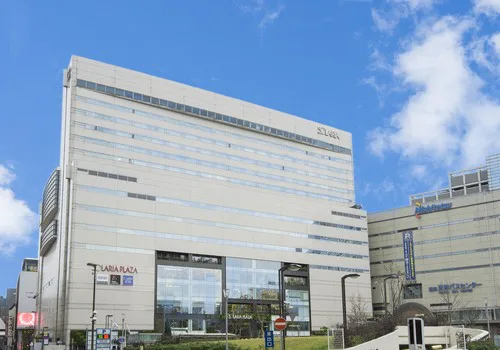
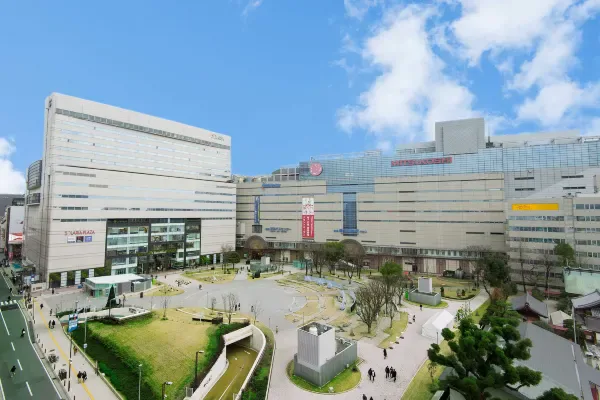
If your final Fukuoka hotel decision has come down to “Hakata is easier for transfers, but Tenjin is closer to where I will actually spend time”, Solaria Nishitetsu Hotel Fukuoka needs to be judged by the itinerary rather than by the district name alone. Its clearest advantage is that Nishitetsu Fukuoka (Tenjin) Station, the Tenjin highway bus terminal and Solaria Plaza operate almost like one connected movement system around the hotel. If you still travel to Hakata every morning for JR, Shinkansen or limited-express services, however, you can cancel much of that advantage yourself.
This guide answers one question: if your trip is led by Tenjin shopping, Nishitetsu day trips and bus routes, is this hotel worth choosing instead of Hakata? My answer is yes, but not because Tenjin is simply busier or more fun. The hotel earns its premium when you repeatedly use the connected Tenjin transport and shopping system. If two out of three days begin by going back to Hakata, I would not pay an unlimited premium just for the word “connected”. Use the Fukuoka three-day itinerary to see which transport hub your actual days keep returning to.
Solaria Nishitetsu Hotel Fukuoka: the 30-second answer
↔ Scroll table left or right
Decision | When | My conclusion |
I would book | You return to Tenjin at least once a day for shopping or dinner, or use Nishitetsu / the highway bus terminal | The location advantage is reused, not enjoyed only at check-in |
I would reconsider | Tenjin and Hakata split the itinerary evenly and the room costs much more than a comparable Hakata option | Compare the same room, date and cancellation terms before paying for the connection |
I would skip | Several days in a row depend on JR or Shinkansen departures for Yufuin, Kumamoto, Nagasaki or other cities | A Hakata base usually removes the repeated trip back to Hakata |
The hotel is not claiming to be closest to every transport mode in Fukuoka. What it compresses unusually well is the daily loop between Nishitetsu, the bus terminal, department stores and the hotel room. For a shopping-led trip, that can change whether you can casually return to drop bags, rest for forty minutes and go back downstairs for dinner. For a JR-led trip, the same advantage has much less value.
Hotel snapshot: what kind of convenience is this?
↔ Scroll table left or right
Item | Verified situation | Trip impact |
Nishitetsu Fukuoka (Tenjin) Station | Tightly integrated with the hotel / Solaria complex | Low friction for Dazaifu, Nishitetsu-line trips and Tenjin days |
Tenjin highway bus terminal | Reached through the connected station / commercial complex | No separate luggage-hauling leg to a remote bus terminal |
Subway Tenjin Station | KNT currently lists about a 5-minute walk | Airport Line remains convenient, but not every platform is under the hotel |
Lobby | On the 6th floor of Solaria Plaza | First arrival includes a vertical route after entering the complex |
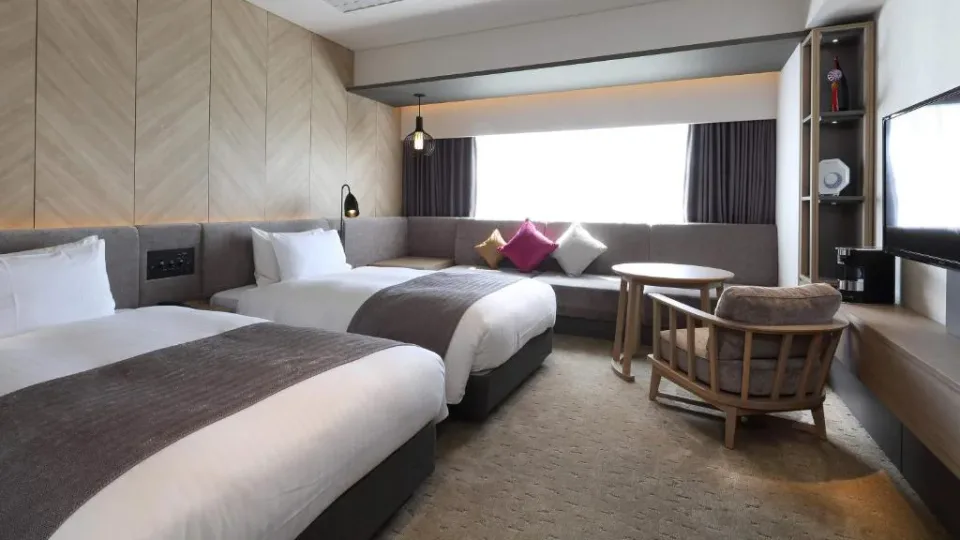
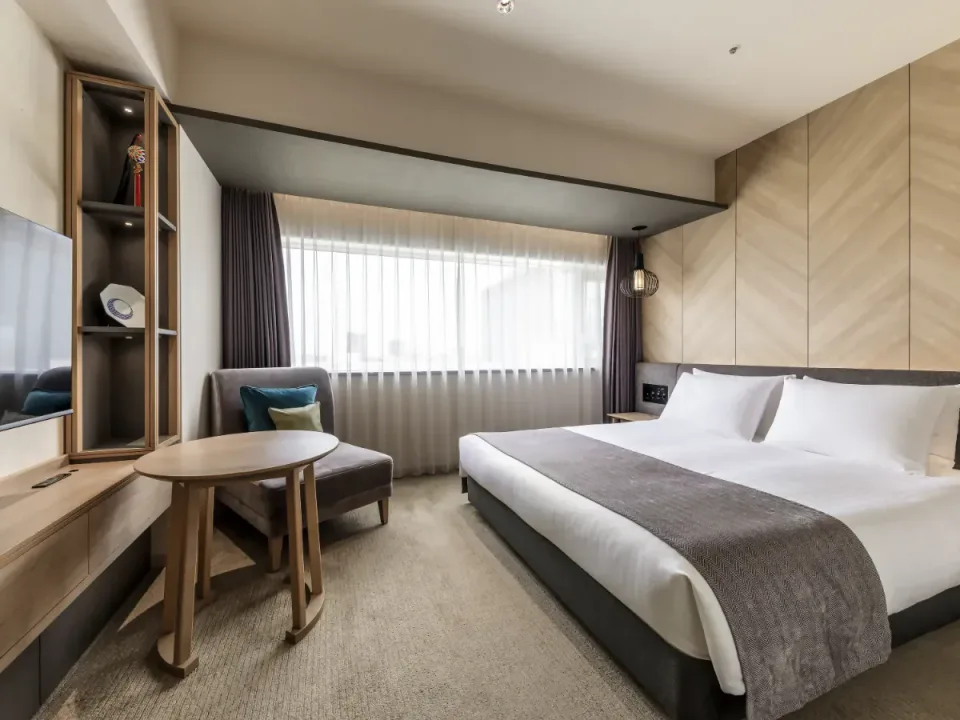
Main twin rooms | Moderate Twin and Superior Twin are both 28.4 m² | Do not explain a Superior upgrade as “more room” without checking the actual plan |
Group rooms | Deluxe Triple / Quad are 41.8 m² | Three or four guests can compare one shared room against two-room total cost |
Arrival reality: Fukuoka Airport to Tenjin is easy, but what happens next?
Tenjin sits on the subway Airport Line, so bringing luggage from Fukuoka Airport to the district is not a high-friction first-day choice. The important distinction is the final section: the hotel's strongest “connected” claim describes the Nishitetsu Fukuoka (Tenjin) Station and bus-terminal system; KNT currently describes the subway Tenjin Station as around five minutes on foot. If you mainly use Nishitetsu or stay around Tenjin, the experience is close to “go downstairs and start the day”. If you use the subway repeatedly, you still walk a short segment.
With large luggage, I would visualise arrival as “Airport Line to Tenjin → underground mall / commercial complex → find Solaria Plaza and the hotel entrance → go up to the 6F lobby”, not simply memorise “direct connection”. That does not make the route difficult; it avoids the first-arrival problem of standing underground and not knowing which floor the lobby occupies. If the next morning already begins with a Shinkansen, the first-day convenience remains, but you still have to reach Hakata on day two. The Fukuoka transport guide is a better way to count that repeated transfer cost.
The first big advantage: you can use the location more than once a day
Many station hotels feel most convenient only on arrival and departure. Solaria Nishitetsu Hotel Fukuoka is different for a Tenjin-led itinerary because the location can be reused several times in the same day. Shop in the afternoon, go back to leave purchases, go downstairs again for dinner, return from Nakasu later, then start a Nishitetsu or bus trip the following morning. The gain is not one giant time saving; it is the psychological ease of removing several small backtracks.
Reverse the itinerary and the benefit largely disappears. If you leave in the morning and do not return until after a day based around Hakata, the “easy to pop back to the room” advantage never happens. At that point, put the rate difference, room type and number of Hakata transfers back into the same decision. For a late central-Fukuoka evening, the Fukuoka yatai guide helps show whether Tenjin really remains part of the night.
Solaria Nishitetsu Hotel Fukuoka room choice: do not let “Superior” make the decision
↔ Scroll table left or right
Room | Area | Best fit | How I would choose |
Moderate Twin | 28.4 m² | Two people on a short stay with two medium / large cases | Use it as the twin-room baseline; do not reject it just because the name is lower-tier |
Superior Twin | 28.4 m² | Two people considering a higher-category plan | The room is not larger; judge floor, outlook, bed plan and date-specific price difference |
Deluxe Triple | 41.8 m² | Three travellers | The larger shared room can reduce the coordination cost of splitting into two rooms |
Deluxe Quad | 41.8 m² | Four travellers or family | Official room information warns not to expect the view; treat it as a space upgrade, not “space + scenery” |
Comfort Japanese-Western | 56.1 m² | A group that needs substantially more shared space | Most generous floor area here; confirm the actual bookable occupancy and plan for your date |
The easiest mistake is assuming Superior Twin must be larger than Moderate Twin. KNT's hotel photo information lists both at 28.4 m². If the OTA price gap is large, the upgrade decision should return to the plan for your dates—floor, outlook, bed layout and cancellation terms—not translate the word Superior directly into more floor area.
The 41.8 m² Deluxe Triple and Deluxe Quad have a more obvious practical role for three or four people because one room can reduce the communication and organisation cost of splitting the group. The Deluxe Quad is also a good example of why a room category needs to be read carefully: current hotel information says the view should not be expected, so the upgrade is about solving group-space needs rather than buying a better outlook.
Bathroom, 6F lobby and breakfast: which facilities actually change the choice?
Twin-room photographs confirm a bathroom with a separate washing area. The practical value for two travellers is not a generic “nicer bathroom” label; showering and getting ready can be staggered more easily without treating the bathtub as the only wet zone. Over two nights that may be a small comfort. Over four or five nights, or for travellers with different routines, it accumulates into a more meaningful use advantage.
The lobby is on the sixth floor, so this is not a standalone hotel tower where you enter from the street and immediately see reception. The first arrival involves understanding the commercial complex and vertical route. Once familiar, the same integration becomes part of the hotel’s core appeal: shopping, dining, station access and the return to your room happen inside one connected environment. That is why this property fits best when Tenjin itself is the itinerary.
Breakfast at the 17th-floor Red Flamma is part of the hotel product, but I would not automatically pay for it. The decision is whether your morning remains in Tenjin. If you need to reach Hakata early for a limited express or Shinkansen, the time cost may matter more than the buffet. If the morning starts in Tenjin, at Dazaifu or later in the day, breakfast is easier to use fully. Reconfirm the operating hours and price for your stay date. The Fukuoka breakfast guide gives alternative early-morning options if the schedule is tight.
If you stay three nights: when does the location advantage actually get used?
A simple three-night model shows the trade-off. Day one: check in, shop in Tenjin, return around 18:30 to drop purchases, then go downstairs again for dinner. Day two: if you go to Dazaifu, the Nishitetsu Fukuoka (Tenjin) starting-point advantage is used directly. Day three: switch to Yufuin or Kumamoto and you first need to reach Hakata; the hotel’s advantage becomes much weaker. That is a more useful way to understand “convenient” than treating convenience as one permanent score.
If the three-night pattern is “Tenjin shopping + Dazaifu + city coffee / yatai”, I would rank Solaria highly. If it is “Yufuin + Kumamoto + Nagasaki”, I would move the base back toward Hakata even if I like the rooms and the complex. The deciding question is not whether you personally like Tenjin; it is how many days actually start from Nishitetsu or the Tenjin bus system. For Dazaifu daytime planning, the Dazaifu food guide fits naturally into a Tenjin-based day. If Dazaifu itself becomes an overnight stop, HOTEL CULTIA Dazaifu is the opposite accommodation decision.
Location × itinerary: where Solaria reduces friction and where it adds it
↔ Scroll table left or right
Itinerary | Main transport logic | Friction from Solaria | Fit |
Tenjin shopping / Daimyo / Nakasu evening | Walking + central-city transport | Low | Strong: returning to the room and going out again is easy |
Dazaifu | Nishitetsu Fukuoka (Tenjin) departure | Low | Hotel base overlaps with the departure system |
Fukuoka Airport | Subway Airport Line | Low to medium | Tenjin arrival is easy, but the final walk / complex route remains |
Yufuin / Kumamoto / Nagasaki | Usually reach Hakata first for JR / Shinkansen | Medium | Possible for one day; Hakata becomes more rational as rail days multiply |
Tenjin highway-bus routes | Connected bus-terminal route | Low | High value when your destination already uses the highway bus system |
For a Yufuin day, compare the Fukuoka-to-Yufuin transport guide before treating the Tenjin base as neutral. For a longer Fukuoka–Hita–Yufuin–Beppu route, the three-day Kyushu route makes the cost of repeated hotel-base transfers even clearer. If Aso is added, the Fukuoka-to-Aso guide is another check on whether Hakata should become the functional centre.
What do you give up by staying here?
The first exchange is Tenjin return efficiency versus Hakata JR starting-point efficiency. Solaria is not a universal transport winner; it biases the trip toward Nishitetsu, buses and central Tenjin. If those are the systems you use, the exchange is very rational. As JR days increase, the same exchange starts working against you.
The second exchange is an integrated commercial complex versus a simple standalone hotel route. Some travellers love moving from station to department store to room without really leaving the complex. Others prefer a clear street entrance and immediately visible lobby. Neither is inherently better, but the first arrival makes more sense once you know the lobby is on 6F. If you want a premium Tenjin hotel with a different kind of direct-access logic, ONE FUKUOKA HOTEL is a useful comparison.
The third exchange is learning not to equate room name with size. Moderate Twin and Superior Twin are both 28.4 m²; Deluxe Quad rises to 41.8 m² but current hotel information says the outlook should not be expected. Pay for what the room solves—bed configuration, group space, floor, view or terms—not simply a more premium-sounding label.
Compare all three booking platforms only after locking the same room
If you have already confirmed that this is a Tenjin-led itinerary, compare Booking.com, Trip.com and Agoda using the same dates, room type, bed setup, breakfast condition, taxes and a similar cancellation deadline. Do not compare only the first headline price. This matters particularly when Moderate Twin and Superior Twin have the same floor area or when a Deluxe Quad is solving a four-person room problem rather than buying a view.
Booking.com — compare Solaria Nishitetsu Hotel Fukuoka rooms
Trip.com — compare Solaria Nishitetsu Hotel Fukuoka rooms
Agoda — compare Solaria Nishitetsu Hotel Fukuoka rooms
Final decision: would I book Solaria Nishitetsu Hotel Fukuoka?
↔ Scroll table left or right
Decision | How I would judge it | Why |
I would book | Tenjin is the main activity area and Nishitetsu / highway buses are part of the trip | The location advantage can be reused throughout the day and returning to the room is easy |
I would reconsider | Tenjin and Hakata are split evenly or the date-specific rate premium is large | Compare the real 28.4 m² / 41.8 m² room and cancellation terms instead of paying without limit for “connected” |
I would skip | Several days in a row depend on JR / Shinkansen departures | Going back to Hakata every morning consumes the value of the Tenjin connection |
My positioning is simple: Solaria Nishitetsu Hotel Fukuoka is not a universal answer that is “more convenient than Hakata”. It is a highly coherent choice when a Tenjin-led itinerary overlaps the hotel with the transport systems you repeatedly use. If you keep using Nishitetsu Fukuoka (Tenjin) Station, the highway bus terminal, Solaria Plaza and the surrounding shopping area, I would book it. If the first task every morning is to reach Hakata for JR, I would spend the budget on a hotel closer to Hakata Station instead.
Solaria Nishitetsu Hotel Fukuoka FAQ
Is it convenient from Fukuoka Airport?
Yes. The Airport Line reaches Tenjin, but you still need to complete the final underground-mall and commercial-complex route to the hotel. On a first visit, treat Solaria Plaza and the sixth-floor lobby as the arrival targets rather than remembering only the word “connected”.
Is the subway Tenjin Station directly under the hotel?
The strongest direct complex relationship is with Nishitetsu Fukuoka (Tenjin) Station and the bus terminal. Current KNT transport information places the subway Tenjin Station at about a five-minute walk, so frequent subway users should include that segment in the daily route.
Are Moderate Twin and Superior Twin different sizes?
Published KNT room information lists both at 28.4 m². Judge whether Superior is worth more by the plan sold on your date, including floor, outlook, bed arrangement and price difference, rather than assuming the room is larger.
Is the hotel suitable for four people?
The Deluxe Quad is published at 41.8 m² and is one of the room types worth checking first for four guests. Current hotel room information also warns that this room should not be chosen for the view, so confirm another category if outlook is a high priority.
Is it a good base for Dazaifu?
Yes. Nishitetsu Fukuoka (Tenjin) Station is one of the hotel's strongest transport connections, so the accommodation base and the Dazaifu departure system overlap. The Dazaifu food guide can be paired with that day trip.
What if I am going to Yufuin, Kumamoto or Nagasaki?
One JR-heavy day can still work from Tenjin. If several consecutive days depend on JR or Shinkansen from Hakata, I would reconsider a Hakata-area hotel. That is not a criticism of Solaria; it means your main transport system no longer overlaps with its strongest advantage.
Fukuoka Itinerary: 3 Days for First-Time Visitors
Fukuoka Transport Guide: JR, Subway, Nishitetsu and Day Passes
Fukuoka Yatai Guide: Nakasu, Tenjin or Nagahama?
Fukuoka to Yufuin: Train, Bus or Rental Car Compared
Fukuoka, Hita, Yufuin and Beppu: 3-Day Itinerary
Fukuoka Coffee and Dessert Walk
Fukuoka Family Hotels: Choose Beds, Laundry and Daily Returns Before Hakata or Tenjin
Fukuoka Self-Drive Hotels: Choose Your Car Days Before You Choose Hakata, Tenjin or Uminonakamichi
Nishitetsu Hotel Croom Hakata: Is 14.6 m² Worth a 1-Minute Bus Terminal and Late Onsen?
Solaria Nishitetsu Hotel Sapporo: Is the Five-Minute Walk Worth It?
Fukuoka Hotels for Day Trips: Choose Hakata or Tenjin by Where Your Mornings Start
References
Solaria Nishitetsu Hotel Fukuoka official website
Kinki Nippon Tourist: Solaria Nishitetsu Hotel Fukuoka property details
Kinki Nippon Tourist: Solaria Nishitetsu Hotel Fukuoka photo library
Booking.com: Solaria Nishitetsu Hotel Fukuoka
Trip.com: Solaria Nishitetsu Hotel Fukuoka