
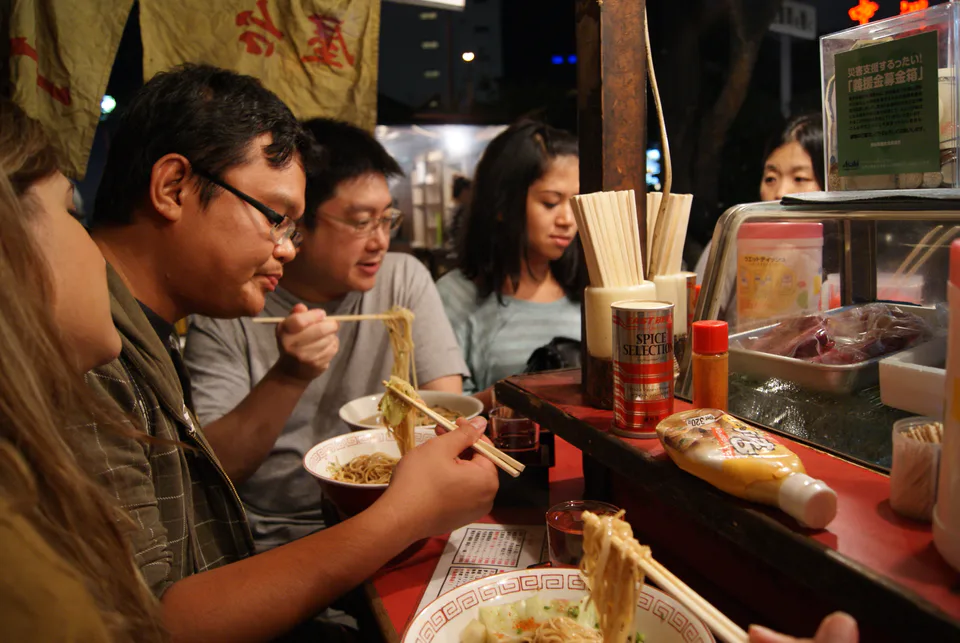
For a first Fukuoka yatai night, choose the area before the stall. Pick Nakasu when the riverfront scene is part of the experience, Tenjin when you want the lowest-friction extension of a shopping/dining night, and Nagahama when its ramen history or one specific stall is the reason to go. Then use Fukuoka’s current official yatai directory to check what is actually open and which stalls fit your group, payment method and accessibility needs.
The biggest correction to older yatai advice is payment. Do not assume every stall is cash-only, but do not assume cards will work either. The current official directory lets you filter individual stalls by card acceptance, cashless payment, receipt issuance, child-friendly, wheelchair access, reservations and no-cover-charge. Carry cash as backup, then trust the live listing for the exact stall instead of an old citywide percentage.
↔ Scroll table left or right
Your priority | Start with | Why |
Iconic first-night atmosphere | Nakasu | The riverfront yatai scene is part of the attraction, not only the meal |
Hotel/shopping already in central Tenjin | Tenjin | Current official listings show the largest cluster here, so switching stalls or moving indoors is easy |
Nagahama ramen history or a named stall | Nagahama | The detour has a specific purpose instead of being “more local” for its own sake |
4+ people who must sit together | Indoor restaurant first | Small yatai counters make one-table group dining fragile |
Rain / strong wind / uncertain opening | Live directory + indoor backup | Outdoor-stall variability should not own the whole evening |
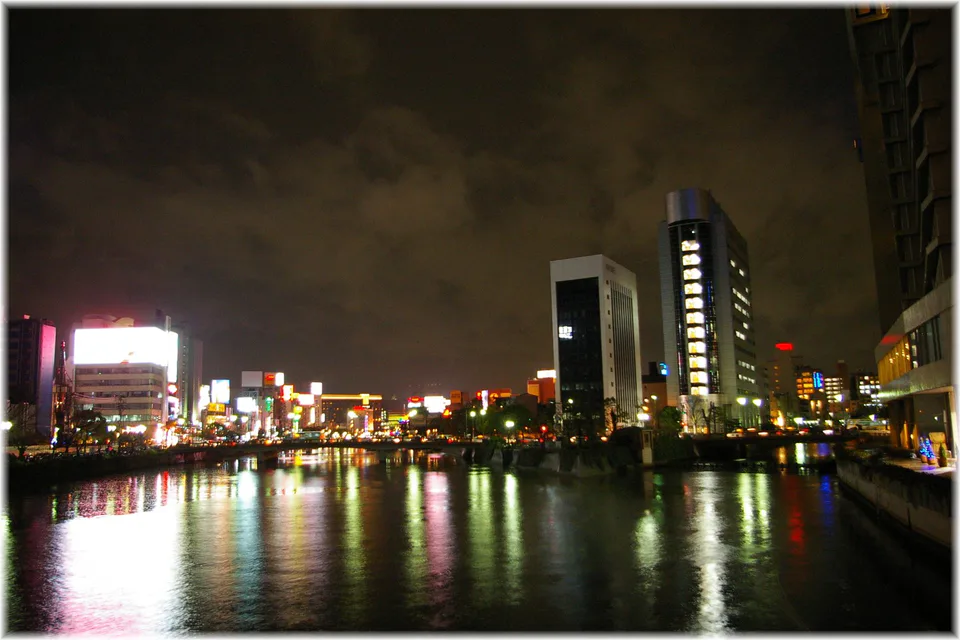
Nakasu: choose the scene, not an obligation to queue for one famous stall
Nakasu is the easiest first-time answer when the neon riverfront yatai image is part of what you came to Fukuoka for. The mistake is turning that into “I must eat at the one stall I saved six months ago.”
If a line is long, ask what you are actually buying. If the chef or one dish is the point, wait. If the yatai atmosphere is the point, another open stall can preserve most of the value and save half the evening.
A strong first-timer pattern is either:
Yatai-first: arrive earlier, check open stalls and eat where the queue/menu fit.
Scene-first: eat a proper indoor dinner, walk Nakasu and add one yatai drink/dish if a good seat appears.
The second pattern is especially resilient for families, larger groups and anyone arriving tired.
Tenjin: the strongest default when you want optionality
Fukuoka’s current official yatai directory lists 98 stalls citywide and, at the time of this check, 51 under the Tenjin filter. The exact count can change, but the planning implication is stable: Tenjin gives you a large cluster plus department stores, restaurants, bars and transport nearby.
That means a bad yatai outcome costs less. If the first stall is closed, the queue is poor or the weather turns, you have alternatives without rebuilding the evening.
This is why Tenjin can beat Nakasu for a traveller who values logistics over the postcard scene. You sacrifice some riverfront atmosphere and gain more fallback density.
If your hotel is still undecided, use Hakata vs Tenjin for the whole stay. A single yatai night should not choose a four-night hotel base for you.
Nagahama: make the detour earn its transport
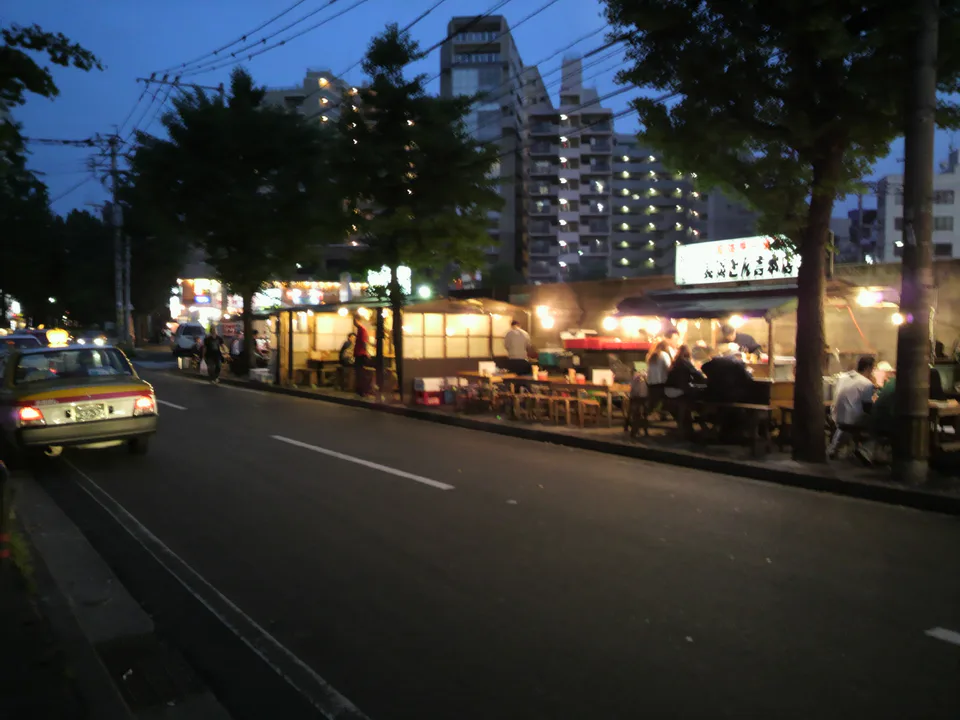
The current official directory showed six Nagahama stalls during this check. That smaller cluster is not a weakness when Nagahama itself is the objective: ramen history, a specific stall, or an evening already around Akasaka/Nagahama.
It is a weak choice when the only reason is “tourists go to Nakasu, so Nagahama must be more authentic.” If you are staying near Hakata or Tenjin, transport is now part of the price. The smaller cluster also gives you less fallback if the one stall you wanted is unavailable.
Choose Nagahama with intent; do not use it as anti-tourist signalling.
The official directory is now part of the decision, not just a map
Fukuoka’s official yatai search currently lets you filter by area, weekday, menu and operational features including multilingual menu, card acceptance, cashless payment, receipt, child-friendly, wheelchair-friendly, reservation, private booking and no-cover-charge. It also has a “currently open” filter.
That changes how an international visitor should plan:
Choose Nakasu, Tenjin or Nagahama from the rest of the evening.
Check current/open stalls.
Filter for the constraint that matters — card, child, wheelchair, reservation, language.
Then compare menu and queue.
This is stronger than memorising a ten-best-yatai article because the operational question is date-specific.
Cash is backup; the stall listing is the payment source of truth
Fukuoka’s official English yatai etiquette material still gives sensible conservative advice: carry cash because some stalls do not accept cards. What it does not justify is a permanent claim that only a fixed small percentage of stalls are cashless.
The 2026 official directory shows many stalls marked for cards or cashless payments, while other individual listings still show credit cards unavailable. Payment has therefore become a stall-level attribute.
Carry enough yen to avoid turning payment into a problem, but check the exact yatai rather than assuming the whole category works one way.
Large luggage and yatai are a bad sequence
Yatai are compact. Fukuoka’s official etiquette guide tells visitors to travel light and keep belongings minimal. If you arrive with a full-size suitcase, check in or use luggage storage first.
That extra step is not wasted time. It protects the aisle, your bag and everyone else’s seating. The same logic applies after a heavy Tenjin shopping day: drop the purchases before the yatai stop if practical.
Group size changes whether yatai should be dinner or an experience stop
For one to three people, a yatai can be the meal. For four to six people who insist on sitting together, it becomes much more fragile.
Use three formats:
Small group: yatai can be full dinner.
Larger group: indoor dinner first, yatai second as a drink/dish experience.
Group happy to split: use nearby stalls and regroup afterward.
If children, wheelchair access or reservations matter, filter those attributes in the official directory rather than applying one generic rule to every yatai.
One stall or a yatai crawl?
Do not turn yatai hopping into another checklist.
One stall is best when a chef/dish is the objective or the group wants a simple night. Two stalls is the strongest first-visit default for people who want contrast without spending the night queueing. Three stalls only makes sense when yatai hopping itself is the evening.
Do not visit Nakasu, Tenjin and Nagahama in one night merely to complete all three areas. Moving between clusters reduces the time actually spent at the stalls.
Weather needs a stop-loss rule
Outdoor stalls can change operation with weather and individual days off. The correct response is not to keep crossing Fukuoka until one yatai opens.
Save one indoor restaurant in the same area before leaving the hotel. If live status is poor, the queue is long and the weather is uncomfortable, use the backup. The yatai experience is valuable because it is flexible; it should not become a fragile reservation-sized problem.
Final verdict
Nakasu for the first-time scene. Tenjin for the best logistics and fallback density. Nagahama when Nagahama itself is the purpose.
After choosing the area, let the live official listing choose the stall with you. Payment, reservations, accessibility and child-friendliness are now explicit stall-level filters. Carry cash anyway, keep an indoor fallback and do not spend forty minutes crossing town for one saved cart unless that cart — not merely “yatai” — is genuinely the attraction.
Official sources and verification
Fukuoka City official tourism — current yatai directory and live filters · official English yatai etiquette guide.
Checked August 25, 2026. Stall count, operating status, menu, payment method and reservation conditions can change; use the current listing on the actual evening.
lyf Tenjin Fukuoka Review: Is a 12m² Room Worth the Shared Kitchen and 24-Hour Lounge?
Hakata or Tenjin for an Early Flight? Where to Stay Last Night in Fukuoka
THE LIVELY FUKUOKA HAKATA: Is Nakasu-Kawabata Worth a 12 m² Room?
Fukuoka Self-Drive Hotels: Choose Your Car Days Before You Choose Hakata, Tenjin or Uminonakamichi
Solaria Nishitetsu Hotel Fukuoka: Is Tenjin Worth Choosing Over Hakata?