
For a Fukuoka stay built around several day trips, choose Hakata when at least two of your hardest mornings start on JR, the Shinkansen or a fixed Hakata meeting point. Choose Tenjin when Dazaifu, Yanagawa or repeated Nishitetsu departures dominate and your evenings also end around Tenjin. One excursion by itself is rarely enough to dictate four hotel nights: Hakata and Tenjin are on the same Airport Line, and Fukuoka Airport’s own published access times imply only about six minutes of in-train difference between them.
The useful question is therefore not “Which district is closer to more attractions?” It is which base removes the most expensive repeated hand-offs. A reserved Yufuin no Mori departure deserves more weight than a flexible local train. A 07:30 group-tour meeting point deserves more weight than a casual shopping morning. And if the transport advantage exists on only one day, keep the hotel that better fits the other three nights.
↔ Scroll table left or right
Your trip pattern | Start with | Why |
Yufuin no Mori, Shinkansen or repeated JR mornings | Hakata | You remove the pre-departure subway transfer on the mornings where missing the planned service costs the most |
Dazaifu + Yanagawa | Tenjin | Nishitetsu Fukuoka (Tenjin) is the natural city-side rail gateway for both |
One Yufuin day + otherwise Tenjin nightlife/city days | Usually Tenjin | One high-friction morning normally does not justify moving the whole stay |
One Dazaifu day + otherwise JR-heavy itinerary | Usually Hakata | Hakata still has a direct Dazaifu bus option and the one-day penalty is limited |
Several paid tours | Use the actual meeting points | “Fukuoka departure” is meaningless if two tours meet at Hakata before 08:00 and one meets in Tenjin |
Only one day trip in a 4–5 night stay | Choose for the city stay | The district should serve the majority of mornings and evenings, not the exception |
The key correction: Hakata and Tenjin are close enough that one day trip should not control the hotel
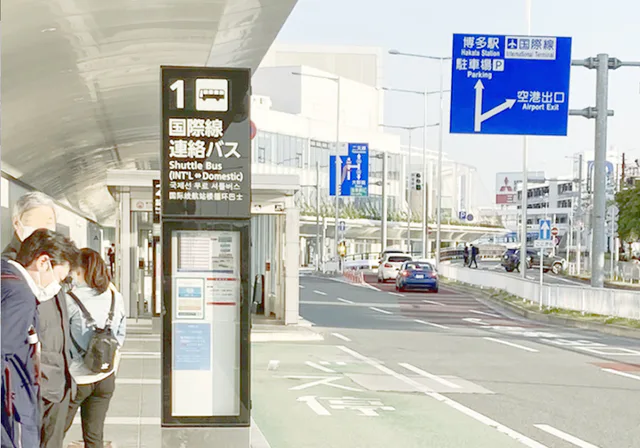
Fukuoka Airport currently publishes about five minutes by subway to Hakata and about eleven minutes to Tenjin. Because both are on the same Airport Line, that gives a useful derived planning benchmark: the train-only gap between Hakata and Tenjin is roughly six minutes. Fukuoka City Subway also says Airport Line trains generally run every four to eight minutes.
That does not mean the real hotel-to-platform difference is only six minutes. A Tenjin hotel can be several minutes from the subway and several more from Nishitetsu Fukuoka (Tenjin); a Hakata hotel can sit on the wrong side of a large station for the platform you need. But it does show why changing a four-night hotel base to save one short transfer is often the wrong optimisation.
ValueNavi two-hard-morning rule: let day trips override your preferred Fukuoka neighbourhood only when at least two mornings have a meaningful, repeated transport advantage in the same direction. One awkward morning is usually cheaper than four nights in the wrong evening base.
Yufuin gives Hakata the strongest single morning advantage
JR Kyushu’s current 2026 timetable lists Yufuin no Mori departures from Hakata at 09:17, 10:11 and 14:38. The sightseeing train uses reserved seating, so the first two departures are not the same kind of morning as catching the next subway after breakfast. If you have specifically booked one of those trains, a Hakata hotel removes one failure point before a fixed departure.
That advantage becomes much stronger when Yufuin is not your only JR-heavy day. Add a Shinkansen excursion toward Kokura, another JR departure, or an early onward train and Hakata starts solving the same problem repeatedly. That is exactly when paying a station-area premium can make sense.
But do not over-read the Yufuin example. If Yufuin is the only fixed rail morning and the rest of the stay is built around Tenjin, Daimyo and late dining, a six-minute subway link plus buffer time may still be cheaper than relocating the entire stay. The Fukuoka to Yufuin transport guide should decide the Yufuin mode first; only then should that day influence the hotel.
Dazaifu is a Tenjin advantage, but not a Hakata veto
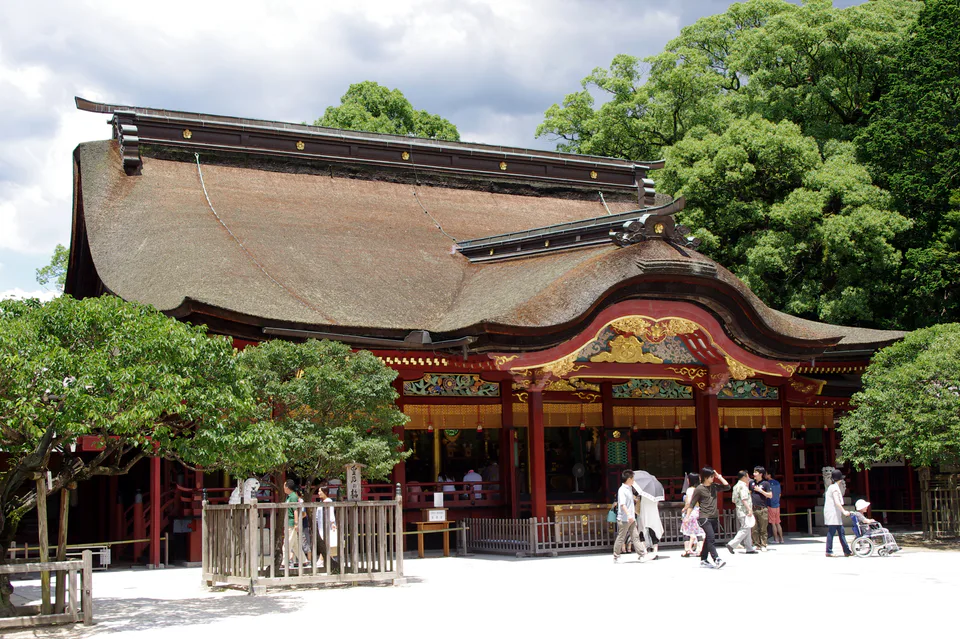
Dazaifu Tenmangu’s official access guide currently gives about 35 minutes by Nishitetsu train from Fukuoka (Tenjin) Station to Dazaifu, normally changing at Nishitetsu Futsukaichi. From Hakata, it gives about 50 minutes by subway plus Nishitetsu, or roughly 45 minutes on the direct sightseeing bus from Hakata Bus Terminal.
That difference is useful but smaller than many hotel comparisons imply. A Tenjin base can save roughly ten to fifteen minutes on the city-side journey before hotel walking is counted. If Dazaifu is one flexible morning, that is not enough by itself to make Tenjin mandatory. If Dazaifu is joined by Yanagawa on another day, the same rail gateway repeats and Tenjin becomes much more persuasive.
This is also why “nearest station” must be defined correctly. The relevant Tenjin node is Nishitetsu Fukuoka (Tenjin) Station, not merely any hotel carrying the word Tenjin in its address. A property close to Tenjin-minami but inconvenient for the Nishitetsu platforms can surrender part of the theoretical advantage.
Yanagawa is where Tenjin becomes a repeated-system advantage
Yanagawa’s official tourism site currently gives about 50 minutes direct from Nishitetsu Fukuoka (Tenjin) to Nishitetsu Yanagawa. From Hakata, the published route first uses about five minutes of subway to the Tenjin side, then the same approximately 50-minute Nishitetsu journey, plus the interchange between systems.
That is a cleaner Tenjin win than many mixed day trips because the city-side departure station is the same one that serves Dazaifu. If your itinerary contains both Dazaifu and Yanagawa, you now have two mornings pointing to the same gateway. That passes the two-hard-morning test even if neither trip individually would justify changing hotels.
There is also a current Nishitetsu digital Dazaifu–Yanagawa sightseeing ticket whose permitted route begins at Fukuoka (Tenjin) or Yakuin and covers the two destinations in either order over the ticket’s valid period. You do not need that ticket to justify Tenjin, but its structure reinforces the underlying network reality: these two excursions naturally belong to the Nishitetsu side of the city.
Itoshima should usually be a tiebreaker, not the base-maker
Itoshima is less useful for deciding Hakata versus Tenjin because it does not have the same single-gateway logic. Fukuoka’s Airport Line runs west to Meinohama, where the network connects with the JR Chikuhi Line toward Itoshima. Depending on the train and your exact destination, through-running services and the western-Fukuoka corridor matter more than whether your hotel began beside Hakata Station or in Tenjin.
That means an Itoshima day should normally receive less weight than a reserved Yufuin no Mori morning or a pair of Nishitetsu days. If the itinerary contains only one flexible Itoshima outing, choose the Fukuoka hotel for the rest of the trip and solve that day separately. If Itoshima contains a fixed activity, rental-car pickup or infrequent bus connection, then weight that specific meeting point rather than the destination name.
Use Itoshima day trip or overnight before letting it control four Fukuoka nights.
A simple weighting system works better than counting destination names
Do not score every day trip as one vote. Use a friction hierarchy:
Highest weight: reserved intercity rail, fixed tour check-in, infrequent connection or a departure where missing the planned service materially damages the day.
Medium weight: direct railway advantage that repeats on two or more days, such as Dazaifu plus Yanagawa from Nishitetsu Fukuoka (Tenjin).
Low weight: flexible commuter rail, a destination with several workable routes, or one excursion inside an otherwise city-focused stay.
Then ask which base protects the two mornings with the highest consequences. If both point to Hakata, stay around Hakata unless room quality or evenings strongly reverse the result. If both point to Tenjin, Tenjin deserves the same priority. If they split, there probably is no transport reason strong enough to dictate the hotel—choose for the rest of the stay.
Return-side value can cancel part of a morning advantage
A day trip is not finished when the train reaches Fukuoka. If every JR excursion ends at Hakata and you want dinner immediately around the station, Hakata converts the transport hub into the end of the day. If you always leave Hakata and continue to Tenjin for shopping, izakaya or bars, you are paying part of the saved morning transfer back every evening.
The reverse is also true. A Tenjin hotel can be ideal for Dazaifu and Yanagawa, but if two other days return late to Hakata and your group is tired, the extra subway ride becomes more noticeable than it looked during planning.
This is why the correct unit is hotel door → excursion → intended evening endpoint, not station-to-station journey time.
Airport access is a tiebreaker, not an automatic Hakata victory
Fukuoka Airport’s unusually central location changes the usual airport-hotel logic. The airport publishes approximately five minutes by subway to Hakata and eleven minutes to Tenjin. Hakata therefore has a real airport-time advantage, but the six-minute onboard difference is too small to justify four nights by itself for most travellers.
Let the airport matter more when the flight is early, the group has several large suitcases, or the final night already points toward Hakata for another reason. If the departure is in the afternoon and Tenjin wins the other four days, moving hotels purely to save a few subway minutes is normally unnecessary.
If the flight itself is the hard constraint, use the Hakata or Tenjin for an early flight guide rather than forcing the airport question into every day-trip booking.

Breakfast and hotel amenities only count when your timetable lets you use them
Three early day trips can turn an expensive breakfast package into poor value. Check breakfast opening time against the time you actually need to leave the room—not the train departure itself. A family may need another 20–30 minutes for lifts, bathrooms and station navigation even when two adults travelling light do not.
The same deletion test applies to lounges, baths and late-night facilities. If you return at 21:30 and use a public bath every night, a slightly longer station walk may buy genuine recovery value. If you come back at midnight and leave at 07:00, those amenities are decoration. Pay for the hotel feature only if it survives the itinerary.

Do not split Hakata and Tenjin just to optimise two short transfers
For a three- or four-night Fukuoka stay, I would almost never split hotels between Hakata and Tenjin. The districts are too close for a routine hotel move to pay back quickly. Checkout, packing, luggage storage, transport and a second check-in can consume more time and attention than two short subway transfers.
A split only starts to make sense when the itinerary itself changes phase—for example, several JR-heavy mornings followed by several Nishitetsu/Tenjin days, with a longer stay and another reason to move. Even then, the second hotel should remove multiple high-friction journeys, not merely save six minutes twice.
For most visitors, the better answer is one base plus deliberate buffer on the minority of mornings that point elsewhere.
What kind of hotel should you book once the area wins?
In Hakata: prioritise the exact station side and real walking route before paying for a brand. Chikushi-side access can be useful for some rail movements; Hakata Exit may fit buses, city access or your evening route better. Use the Hakata Station hotel comparison to decide whether direct connection or a one-to-five-minute walk is worth the premium for your group.
In Tenjin: if Dazaifu or Yanagawa is the reason Tenjin won, prioritise practical access to Nishitetsu Fukuoka (Tenjin) Station, not just the subway. The Solaria Nishitetsu Hotel Fukuoka guide shows the station-integrated end of that spectrum, but another nearby room can be the better value when you do not need absolute minimum walking.
Room layout can still veto the location winner. Three or four adults in an unsuitable room do not become comfortable because the station is downstairs. If group occupancy is the constraint, use the Fukuoka hotels for 3 or 4 adults guide before paying a transport premium.
Three example itineraries
Yufuin + Kitakyushu + one city day
Hakata wins. Two high-value mornings point to JR/Shinkansen infrastructure, while the remaining city day can absorb the short subway ride to Tenjin. A station-area hotel is doing repeated work.
Dazaifu + Yanagawa + two Tenjin evenings
Tenjin wins clearly. The same Nishitetsu gateway handles two excursions and the evenings end near the hotel. Moving to Hakata would improve airport/JR access but worsen more repeated journeys.
One Yufuin day + three Fukuoka city days centred on Tenjin
Tenjin usually still wins. Give the Yufuin morning a larger buffer and take the short subway trip to Hakata. One reserved departure should not automatically control four nights when the rest of the trip points west.
Final verdict
Hakata is the better Fukuoka day-trip base when at least two important mornings depend on JR, the Shinkansen, Yufuin no Mori or fixed Hakata departures. Tenjin is better when Dazaifu and Yanagawa repeat the Nishitetsu advantage and your evenings also favour Tenjin. For a mixed itinerary, do not chase a perfect midpoint. Hakata and Tenjin are close enough that the wrong four-night neighbourhood can cost more than the one or two short transfers you were trying to avoid.
The final test is simple: circle the two departures you most cannot afford to miss. If they point to the same hub, let that hub influence the hotel. If they do not, choose the area that gives you the better Fukuoka stay and build buffer into the exceptional morning.
Tokyu Stay Fukuoka Tenjin vs HOTEL IL PALAZZO: Laundry or More Space for 4 Nights?
Okinawa Trip Cost: 5-Day Budget for Hotels, Car and Activities
Fukuoka Concert Hotels: Pick Your Base by the Trip Home After PayPay Dome or Marine Messe
Fukuoka Late-Arrival Hotels: Make the First Night Easy Before You Chase Tenjin
References
JR Kyushu — Yufuin no Mori timetable, revised March 14, 2026 · Dazaifu Tenmangu — official access from Tenjin and Hakata · Yanagawa City Official Travel Site — access from Nishitetsu Fukuoka (Tenjin) · Fukuoka City Subway — route and service frequency · Fukuoka Airport — subway access times · Nishitetsu — current Dazaifu/Yanagawa digital sightseeing ticket. Checked August 25, 2026. Timetables, train operating dates, tour meeting points and hotel access can change; verify the exact travel date before booking.