
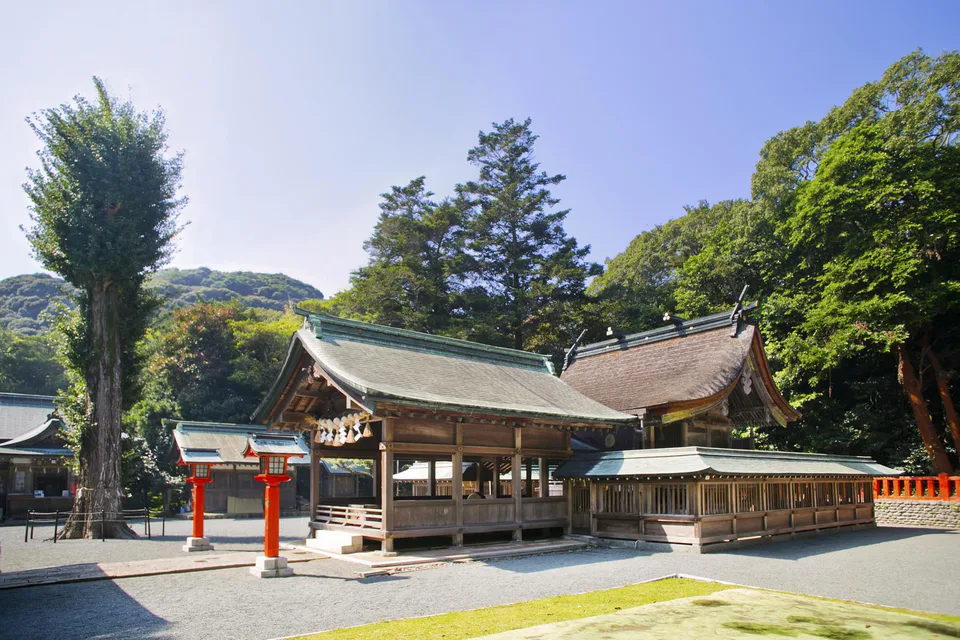
The Oshima Island day tour from Fukuoka is worth considering if Oshima itself is the reason you are going. I would not book it just because the product name says “sunset.” The real value is the island transport: the tour compresses Nakatsu-gu, the Okitsu-gu Yohaisho worship site, lunch, the windmill and battery ruins, roadside shopping and Miyajidake Shrine into one long day without making you solve JR, bus, ferry and island transport on your own. The catch is that the advertised tour price is not the final transport cost, and a Miyajidake Shrine stop is not a guarantee of the famous Path of Light.
When I checked on August 20, 2026, the tour was selling for about US$39. The current schedule is roughly 08:00–18:00, with a 07:50 meet-up near Hakata Station and a small-group format of about 9–20 people. The product page also lists the passenger ferry fare and the vehicle ferry charge as extra. That makes this a very different decision from a normal all-inclusive bus tour: the headline price is low, but you still need to understand what you are paying on the day.
30-second verdict: book it for Oshima, not for a promised Path of Light sunset
If the main attraction for you is Oshima, I like the logic of the tour. The difficult part of visiting the island is not simply getting on the ferry; it is moving between the World Heritage sites, viewpoints, lunch and the return boat without wasting half the day waiting for connections. The official Munakata-Oshima Kyushu Olle route is 11.4 km and takes about four to five hours on foot, rated intermediate to advanced. The tour turns that into a vehicle-assisted sampler instead of asking you to walk the full route.
If your only goal is Miyajidake Shrine’s Path of Light, I would wait. The shrine itself says the sun aligns with the approach twice a year, in February and October. The tour runs outside those windows too, and the current itinerary ends back in Hakata around 18:00. “Sunset tour” therefore cannot mean “the Path of Light is guaranteed on every departure.”
The hidden cost matters more than the tour price: the official ferry is now ¥570 each way
This is the first number I would check before paying. The tour page currently states an individual round-trip ferry fare of ¥1,120 per person, paid separately, plus a vehicle island fee shared among the passengers on the day. Munakata City’s current official fare, however, is ¥570 one way for an adult and ¥290 for a child. For an adult, the published municipal fare works out to ¥1,140 round trip.
I would not try to explain away that ¥20 difference. It may simply be an outdated product-page figure or a different operating calculation. The practical move is to budget from the current municipal fare and bring enough cash for the actual port and group charges. The vehicle fee is also not included in the headline price, so the final cost will be higher than the screen price even if the tour itself looks unusually cheap.
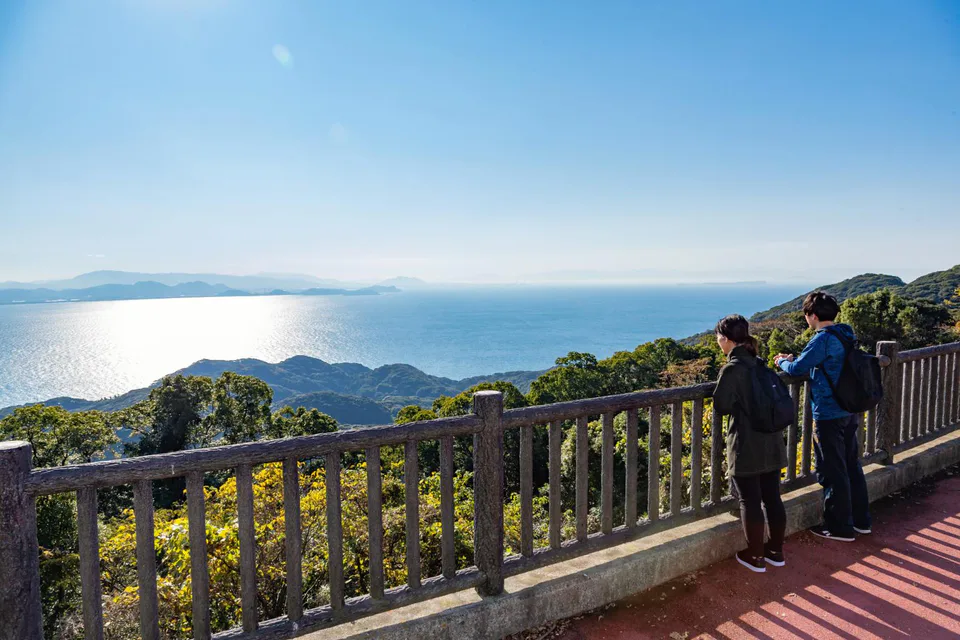
07:50 meet-up, 18:00 return: this is a full day, not a half-day detour
The current itinerary asks you to meet near JR Hakata Station at 07:50 and returns to Hakata at about 18:00. I treat that as a complete day trip. I would not book a 18:30 tasting menu or anything else that becomes expensive if you are late. The island section depends on ferry operations, and road or sea conditions can push the day around.
If you only have a short first trip, put this day back into your overall plan before booking. My How Many Days in Fukuoka? guide is the better place to decide whether one of your limited full days should go to Munakata at all. With only two full sightseeing days, I would usually keep Oshima for a future trip unless island scenery and heritage are already high on your list.
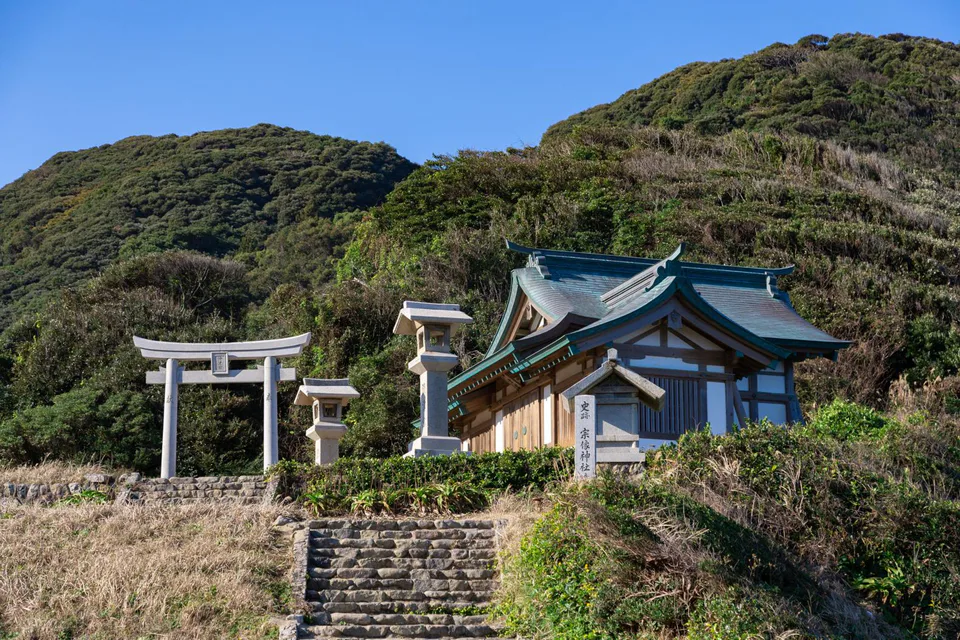
The itinerary says Okitsu-gu, but you are not going to Okinoshima
This is an important expectation check. Munakata Taisha is made up of Hetsu-gu on the Kyushu mainland, Nakatsu-gu on Oshima, and Okitsu-gu on sacred Okinoshima. Okinoshima itself is not a normal sightseeing island and is not open for general visitors to land on. What you can visit on Oshima is the Okitsu-gu Yohaisho, a worship site facing Okinoshima across the sea.
So when a tour itinerary compresses the name to “Okitsu-gu,” do not read that as a trip onto Okinoshima. The 30-minute stop is valuable because it places you inside the religious geography of the Munakata World Heritage story. On a clear day, official tourism information says you may be able to see Okinoshima from Oshima, but visibility is never guaranteed.
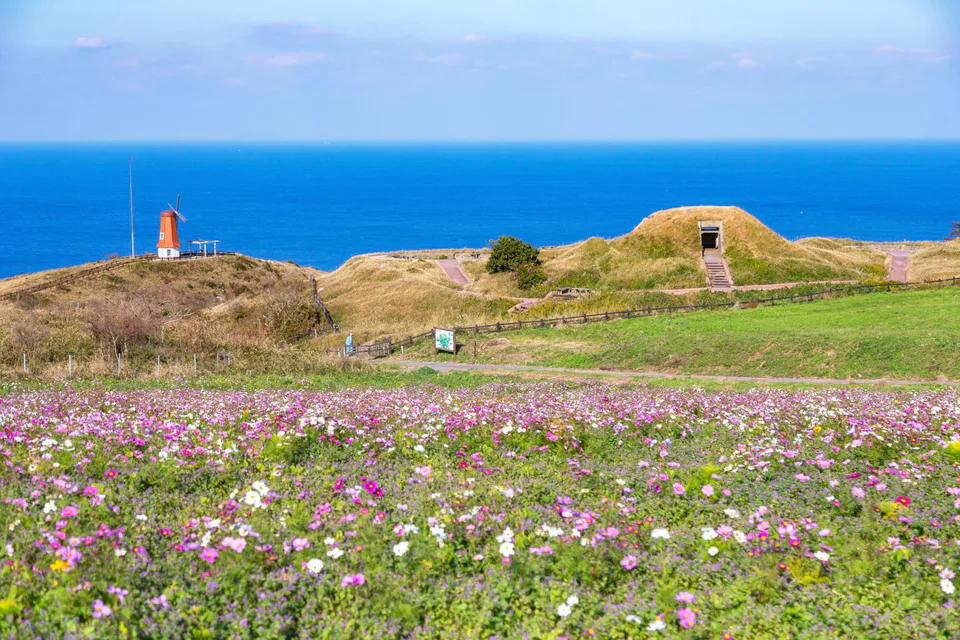
Oshima is not a flat little island: the official walking route is 11.4 km
The official Kyushu Olle route is a useful reality check even if you are not hiking it. It covers 11.4 km, takes four to five hours and is rated intermediate to advanced. Mountains, forest tracks, the windmill observatory, battery ruins and the Okitsu-gu Yohaisho all sit on the route. The guided day trip uses a vehicle, so you do not have to walk the full course, but this is still not a zero-effort sightseeing coach.
The product information itself says the activity is not recommended for people with impaired mobility or for pregnant travelers. I would treat that as a real no-go warning rather than generic small print. Boarding and leaving the ferry, short walks, exposed viewpoints and summer heat add up quickly, especially for older travelers with knee or balance issues.
Thirty minutes at Nakatsu-gu is enough to worship, not enough to study the whole story
Nakatsu-gu is very close to Oshima Port, and the official tourism guide puts it only about 0.3 km from the ferry terminal on the Olle route. Thirty minutes is enough to enter, worship and see the setting. It is not enough time to slowly unpack the Munakata Three Goddesses, the Tanabata associations and the wider World Heritage context on site.
I would therefore learn one simple framework before boarding: Nakatsu-gu is the shrine on Oshima, Hetsu-gu is on the Kyushu mainland, and Okitsu-gu is on Okinoshima, which ordinary travelers do not visit. Knowing that in advance makes a short stop much more meaningful than arriving with no context and only photographing the torii.
The included seafood bowl has practical value because lunch is one less island problem to solve
The current itinerary includes about one hour for a seafood donburi lunch at Kotobukiya Saburo. I do not value it because I expect a luxury omakase. I value it because eating on an island can otherwise break the route: you have to align restaurant hours, sightseeing and the return ferry, and most dining options are concentrated around the port side.
The menu can depend on the day’s catch and supply, so I would not book for a specific fish I saw in a promotional image. The useful part is that lunch is already slotted into the transport plan. On a day this tightly structured, removing one more decision is genuinely worth something.
The windmill and battery ruins are the part that makes the day feel like Oshima, not just a shrine transfer
If I only visited Nakatsu-gu and the port area, I would feel as if I had barely opened the island. The official Olle course treats the windmill observatory, battery ruins and the Okitsu-gu Yohaisho as core stops because Oshima is as much about open sea, grassland and exposed coastal views as it is about the World Heritage label.
This is also where weather changes the value most. On a clear day, the views can become the memory of the trip. In rain, low cloud or strong wind, the sites still exist but the return on your time drops sharply. Because ferry operations can also be affected by bad weather, I would not place this tour on a day when every other reservation in your itinerary is inflexible.
The 48-hour cancellation rule is not the same as a guaranteed full refund for bad weather
The current standard rule gives a full refund if you cancel at least 48 hours before the activity date. But the same terms say a partial refund may be issued if an unforeseen event or extreme weather causes a cruise, ferry or flight cancellation. That wording matters on an island itinerary. I would not simplify it to “bad weather means full refund.”
My practical check is two-part: look at the weather about two days before departure, then check the municipal ferry operation information rather than relying only on a rain percentage in a weather app. A calm rainy day and a day with actual ferry disruption risk are not the same thing.
The biggest sunset misunderstanding: Miyajidake Shrine’s Path of Light is seasonal
Miyajidake Shrine is worth seeing on an ordinary day. The long approach running toward the Genkai Sea is memorable even without a perfect sunset. But the shrine’s own material is clear that the classic Path of Light alignment happens twice a year, in February and October. In 2026, the official February Sunset Festival ran from February 19 to 28, with general viewing tickets distributed from 14:00 and seating beginning around 17:00.
As of August 20, 2026, I could not find an official 2026 October Sunset Festival date announcement on the shrine website. The most recent complete autumn announcement I found is for October 16–22, 2025. That makes October directionally the right season, but it does not justify copying last year’s dates into a 2026 itinerary.
If the Path of Light is your real goal, make Miyajidake Shrine the anchor and plan backward
The Path of Light is a classic date-first attraction. During festival periods, the shrine has historically managed general viewing and special prayer seating, and access to the main staircase can be controlled for sunset viewing. If the photograph of the sun centered on the approach is the reason for your trip, I would wait for the 2026 autumn announcement and then build the day around the shrine.
If you simply want a beautiful coastal shrine to finish an Oshima day, the tour still makes sense outside the exact alignment window. The mistake is using the same success criterion for both trips. One is “I want to experience Oshima and end at Miyajidake Shrine.” The other is “I must see the Path of Light.” Those are different purchases.
DIY vs tour: the ferry is not the hard part — the island logistics are
Doing Oshima independently is absolutely possible. From Hakata, you can take JR toward Togo, connect by bus to Konominato Port, then use the municipal boat to Oshima. Munakata City currently lists the Ferry Oshima at about 25 minutes and the passenger boat Shiokaze at about 15 minutes. The passenger ticket itself is straightforward.
What gets complicated is everything after you arrive. The full walking course takes four to five hours, while lunch, viewpoints and the last useful return ferry all create time constraints. If you enjoy building transport chains and want to walk slowly, I would DIY it. If the part you hate most is watching the clock for three separate connections, that is exactly where the organized tour earns its fee.
If you decide to go independently, use my Fukuoka Transport Guide for the city-to-Togo part, then switch to Munakata City’s current bus and ferry information. A city transport pass does not magically solve the island portion, so do not buy a pass just because this is a “Fukuoka day trip.”
Who should book it? First-time visitors who want a full day beyond Hakata and Tenjin
I would recommend this most to travelers who have already given Fukuoka City enough time and want one full day of island scenery, heritage and shrine culture without renting a car. It works especially well if you like seeing several representative stops rather than spending half a day at one shrine.
If you are still comparing easier day trips, read Dazaifu vs Itoshima. Both are easier to bend around your own schedule. Oshima is the higher-commitment option because a ferry and island transport sit in the middle of the day.
Who should skip it? Path-of-Light-only travelers, mobility-limited travelers and people who hate extra payments
I would skip this specific tour if the Path of Light is the only reason you are going, if the mobility warnings apply to you, or if you dislike paying mandatory transport costs after checkout. I would also skip it if 30–60 minute stops make you frustrated. This product is designed to connect many places efficiently; it is not a slow-travel day.
Six things I would verify before paying
First, the actual price for your date; it was about US$39 when I checked. Second, budget the municipal adult ferry at ¥570 each way rather than assuming the product page’s ¥1,120 round-trip figure is final. Third, confirm how the vehicle ferry charge will be split. Fourth, check sea conditions and ferry operation status inside the 48-hour cancellation window. Fifth, if you are traveling in October specifically for the Path of Light, wait for the shrine’s 2026 official dates. Sixth, make sure a 07:50 meet-up and roughly 18:00 return genuinely fit your trip.
Would I buy it? Only after deciding Oshima — not the word “sunset” — is the reason
For Oshima, yes: the tour has a clear job. It turns a slightly awkward island day into one decision and gives non-drivers access to several representative stops. Even after adding the ferry and vehicle charge, you are paying to remove a transport puzzle that is genuinely annoying to solve if you want to see more than the port area.
For a guaranteed Path of Light, no. I would wait for the exact festival dates and make Miyajidake Shrine the anchor. That distinction is the difference between buying a good Oshima day trip and buying the wrong expectation.
Klook | Check your date, extra ferry costs and 48-hour cancellation terms
This article may contain affiliate links. If you complete an eligible booking through a link, ValueNavi may receive a commission at no extra cost to you. Tour price, departure availability, ferry operations, shared vehicle fees and stop durations can change, so recheck the selected-date booking page before payment.
Final verdict: the Oshima transport is worth paying for; the Path of Light is not guaranteed by the product name
I would describe this as a compressed Oshima tour for non-drivers, not a guaranteed sunset-alignment tour. Its strongest feature is the ability to connect dispersed island stops, lunch, the return ferry and Miyajidake Shrine in one day. Its biggest costs are the extra ferry and vehicle charges, short stop times and the fact that weather can reduce both ferry reliability and scenic value at the same time.
If your priority is “see a lot in one day without building the transport myself,” I would book it. If your priority is “walk Oshima slowly,” “stay longer at the worship site,” or “wait until the sun is perfectly centered on the shrine approach,” I would plan it independently.
Sources and last verification
Last checked: August 20, 2026. The current tour page lists a 07:50 Hakata-area meet-up, roughly 08:00–18:00 itinerary, small group of about 9–20, free cancellation at least 48 hours in advance, and partial-refund wording if a ferry, cruise or flight is cancelled by unforeseen events or extreme weather. It also lists the individual round-trip ferry fare at ¥1,120 and the vehicle island charge as extra. Munakata City currently lists the Oshima ferry passenger fare at ¥570 one way for adults and ¥290 for children.
Primary checks: Munakata City municipal ferry fares, Visit Fukuoka’s official Munakata-Oshima Kyushu Olle guide, Miyajidake Shrine 2026 February Path of Light notice, and the current tour product page.
Osaka Solo Travel Hotels: Pay for Less Friction, Not a Bigger Room
Sapporo Teine vs Sapporo Kokusai: Which Is Better for a Ski Day Trip?
Hiroshima Miyajima 2-Day Autumn Itinerary: Stay in Hiroshima or on the Island?
Okutama Rafting 2026: Tokyo Full-Day Tour vs Local Half-Day — You're Paying for Transport