
Osaka Solo Travel Hotels are easy to overthink because most hotel advice is built for couples or families. A larger room looks safer, two beds look like an upgrade, and a longer amenities list feels like better value. For one traveler, that logic often wastes money. The second bed may never be touched, while a ten-minute late-night walk, nowhere to wash clothes on night four, or having no place to sit except the bed can affect every day of the trip. If you are still deciding where to stay in Osaka, treat this as a routing problem rather than a hotel-ranking problem.
The better order is to choose your Osaka base first. If you have not settled that yet, use the area guide before comparing hotels. Then decide which repeated friction you want the hotel to remove. The useful split for solo travel is not luxury versus budget; it is station friction, room-outside-the-room space, and long-stay routine.
Osaka Solo Travel Hotels: decide which friction you want to remove
For a solo traveler, value compounds through repetition. Saving one awkward luggage transfer is nice; avoiding the same late-night detour four times is much more valuable. A lounge you use twice can matter more than five extra square metres you barely notice. Laundry can be irrelevant on night one and become the reason you packed lighter on night four.
↔ Scroll table left or right
Your travel pattern | Start with | What you are really paying for | When it can be the wrong choice |
Late arrival, early departure, several JR day trips | Hotel Granvia Osaka | Less street-level friction and true single-room options | Most evenings are in Namba or you want a larger room with a view |
You want somewhere to decompress after dinner | Hotel Intergate Osaka Umeda | An 18 m² double plus lounge time and an 18F communal bath | You will never use the lounge or bath and return after everything closes |
Three to five nights, laundry or laptop time matters | Zentis Osaka | A 25 m² Studio plus Room 001 and guest-lounge space | It is a one-night stay and you will not use laundry or common space |
If your shortlist is still split between the north and south of the city, the Namba versus Umeda decision matters more than any room-size comparison below. These three hotels are strongest when the north-side location already fits your actual days.
Hotel Granvia Osaka: the solo upgrade is often less walking, not more floor space
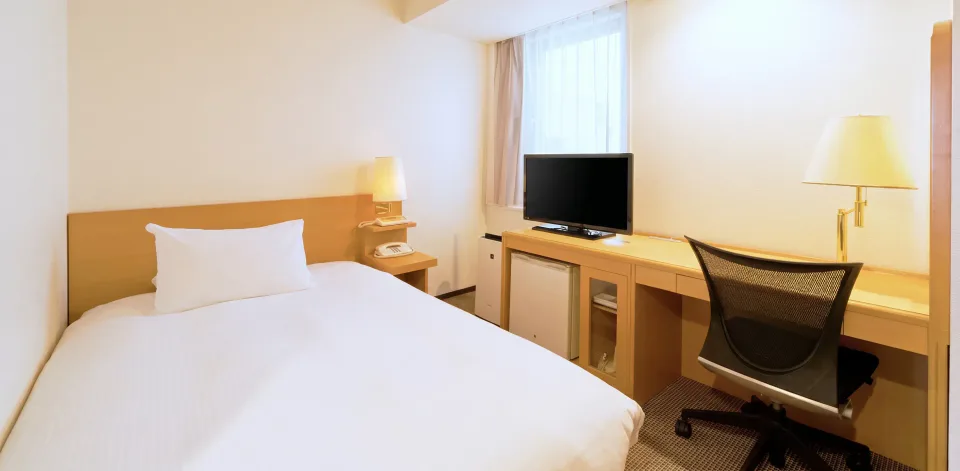
Hotel Granvia Osaka is unusually easy to explain for solo travelers because it has actual single-room categories rather than forcing the decision into “small double versus twin.” The current official single-room lineup includes compact 14.6 m² rooms. The Standard Single is designed for one guest with a 1,200 mm bed; the Business Single is also 14.6 m² but uses a wider 1,400 mm bed. These are not rooms to book for a dramatic view: the official room information explicitly warns that some single categories face inward and do not provide an outside view.
That trade-off becomes rational when JR Osaka Station is part of the trip every day. The existing Hotel Granvia Osaka guide explains the station connection in detail, while the Osaka Station comparison is better if you are still choosing among Granvia, Hankyu RESPIRE and Intergate. For solo travel, the point is simpler: do not pay for a twin just because it looks more “hotel-like” if your real priority is dropping your bag, sleeping, and getting back onto JR efficiently the next morning.
Granvia is particularly strong for a late arrival, an early departure, or an itinerary with repeated Kyoto, Kobe or other JR-heavy day trips. What it buys is not zero walking inside the huge Osaka Station complex. It buys less outdoor wayfinding after you leave the train system: fewer crossings, fewer blocks with a suitcase, and less uncertainty when you return tired.
The advice breaks when your Osaka nights are mostly south of the station. If dinner regularly ends in Shinsaibashi or Dotonbori, paying a location premium at JR Osaka can simply move your late-night journey to the wrong end of the day. It also breaks if a window view and generous in-room space are priorities; the most solo-efficient room may be the least emotionally satisfying one.
Check Hotel Granvia Osaka single-room options and cancellation terms
Hotel Intergate Osaka Umeda: 18 m² can work when the hotel gives you a second space outside the room
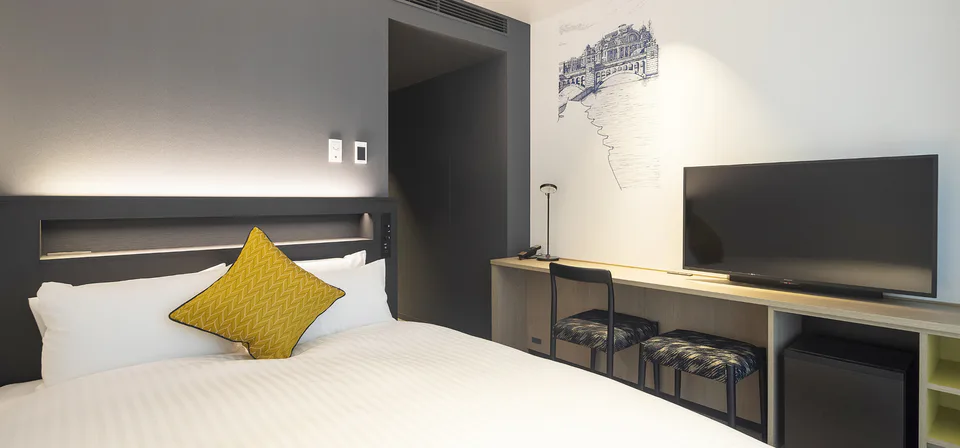
Intergate is a different solo proposition. Its Standard Double is currently 18 m² with a 1,500 mm bed and is sold for one or two adults. With two large suitcases that can feel compact; with one traveler and one bag, the same layout is easier to justify. The real reason to choose it, though, is not that 18 m² is magically enough. It is that the hotel gives you places and services outside those 18 m².
The Intergate lounge-and-bath guide is useful because the lounge is a timetable, not an all-day buffet. Current official service windows include afternoon refreshments from 3 p.m., happy hour from 5–7 p.m., and ochazuke from 8–10 p.m. A solo traveler who returns at 6:30 can use the hotel very differently from one who routinely gets back after 10:30.
The 18th-floor communal bath changes that cutoff. Its current evening hours run from 3 p.m. to 1 a.m., so missing the late-night snack does not necessarily mean missing every useful hotel facility. After a full day on foot, having somewhere to soak before bed can be more meaningful than upgrading to a room that is five square metres larger.
This is also where a late USJ night can expose the weakness. If your park plan regularly pushes you toward the last practical trains, check the late-return guide before paying extra for lounge services you will never reach in time. Intergate is best when the hotel remains part of your evening, not when it is only a place you collapse into after midnight.
Compare Hotel Intergate Osaka Umeda rooms for one traveler
Zentis Osaka: the 25 m² Studio is comfortable, but Room 001 is what changes a longer solo stay
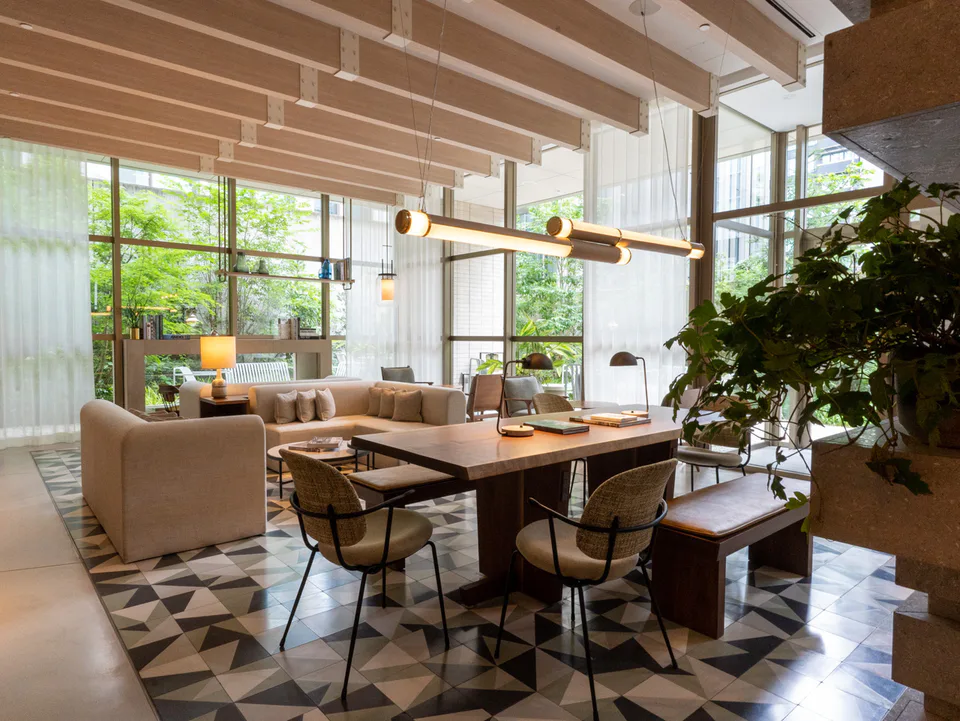
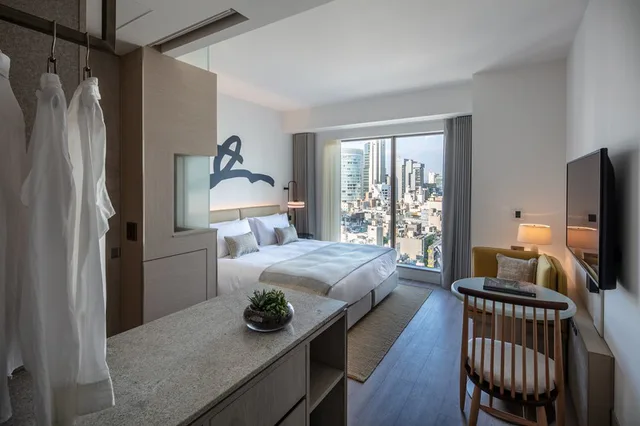
Zentis Osaka is the easiest of the three to oversell by quoting room size. The Studio is 25 m² and sleeps one or two, which is certainly comfortable for one person. But solo travelers do not automatically need to buy floor area that would otherwise serve a second guest. The more interesting value sits outside the room: Room 001, the guest lounge, and a setup that makes a three-to-five-night stay behave differently from a one-night stop.
The existing Zentis Osaka guide goes deeper into Room 001. The current official facilities include self-service washers and dryers, ironing facilities, a microwave and drink station, plus other small maintenance tools. The guest lounge adds sofas and a communal table suitable for working. Instead of treating the room as the only private-ish zone you can use, the hotel spreads practical functions across several spaces.
That matters on night three or four. Laundry can let you pack fewer shirts and underlayers, recover from humid summer days, or reset clothes before the second half of a longer Japan trip. A communal table means editing photos, answering email or planning tomorrow does not have to happen on the bed. These are small differences on a one-night stay and substantial differences once you repeat them.
There are other long-stay answers in Osaka. If having a washer in or near the room is more important than a polished common-space setup, compare the Tokyu Stay Osaka Hommachi long-stay logic too. And if you are moving luggage between several Japanese cities, the luggage-forwarding guide can reduce the amount of hotel convenience you need to buy in the first place.
Zentis becomes less convincing when your stay is short, you pack enough clothes to avoid laundry, and you spend every waking hour outside. It is also not the cleanest answer for someone who wants to step directly into JR Osaka Station each morning. Comfort is real; the question is whether you will use the system around the room enough to justify the location trade-off.
Check Zentis Osaka Studio rooms and longer-stay cancellation terms
One night, three nights, five nights: the same solo traveler can need a different hotel
For one night, arrival and departure dominate. A late Shinkansen, a late airport transfer into Osaka, or an early JR start makes Granvia easier to defend because the convenience is concentrated exactly when you are carrying luggage and watching the clock. Intergate can still win if you arrive early enough to use the bath or lounge. Zentis has less time to convert its long-stay facilities into value.
At three nights, the question shifts from access to whether you will actually use one extra facility. One early return to Intergate can make the lounge meaningful; one late soak can make the bath meaningful. One laundry cycle at Zentis can change what you packed. Granvia still wins if two of those three mornings begin with JR, because station convenience also compounds.
At five nights, routine starts to matter more than the first impression. Laundry, a second place to sit, the walk you repeat after dinner, and how often you pass through Osaka Station all become measurable. This is why a solo stay should not be booked from a room-photo ranking: the “best” room can lose to the hotel that removes the most repeated friction.
When all three recommendations are wrong
A USJ-heavy trip is the clearest counterexample. If two consecutive nights end around park closing, staying around Universal City can be more rational than returning to Umeda or Dojimahama. You are buying back the hardest trip of the day, not choosing a more prestigious address.
Namba-heavy nights are another. If your food, bars and late shopping repeatedly finish around Namba or Shinsaibashi, choosing Umeda first and then praising its station access solves the wrong problem. A south-side hotel can reduce the same late-night friction that Granvia removes for a JR-heavy traveler.
The final exception is budget. Solo travel does not mean you need a full-service or design hotel at all. If the requirement is simply a clean bed, private shower and safe storage, a basic business hotel, capsule or hostel can be the more disciplined choice. Paying for a bath, lounge or larger Studio that you will not use is not “treating yourself”; it is just unspent utility.
Not sure about the area yet? Choose your Osaka base before the hotel
Final decision: pay for the friction you will remove repeatedly
Choose Hotel Granvia Osaka when late arrival, early departure and JR frequency dominate, and when a compact true single room is enough. Choose Hotel Intergate Osaka Umeda when you want the hotel to offer usable evening space beyond the bed—especially if lounge windows and a late communal bath fit your schedule. Choose Zentis Osaka when three to five nights, laundry and a place to work or decompress outside the room are part of the plan.
Then compare prices with one adult, the same dates, the same room type, the same breakfast inclusion, taxes, payment timing and cancellation deadline. A cheaper rate attached to a non-refundable plan is not the same product. Neither is a twin-room upgrade that adds floor area you never use. For solo travelers, the biggest saving is often avoiding an upgrade that solves somebody else’s problem.
Sapporo Solo Hotels: Late Returns, Snowy Walks and Laundry Matter More Than the Cheapest Room
Osaka Kuromon Market Food Tour 2026: You’re Paying for a Guide, Not the Food
Osaka Attractions With Kids: Choose by Age, Rain and Stroller Friction — Not a Must-See List
Centara Grand Hotel Osaka: Is the 40m² Family Room Worth It for Four?
Osaka Hotels for Kyoto and Kobe Day Trips: When 3–5 Minutes to the Station Matter Twice a Day
Sources
Hotel Granvia Osaka — official Single room information
Hotel Intergate Osaka Umeda — official guest rooms
Hotel Intergate Osaka Umeda — official lounge service hours
Hotel Intergate Osaka Umeda — official communal bath hours
Zentis Osaka — official Studio room information